.webp&w=384&q=75)

Loading, please wait...
Loading, please wait...

Artificial intelligence has shifted from experimental research into frontline clinical workflows, fundamentally reshaping administrative duties, diagnostics, and patient management. Developing effective AI leadership in healthcare requires clinicians and healthcare executives to comprehend not only technological capabilities but also the shifting interpersonal dynamics between medical personnel and digital platforms. As intelligent algorithms integrate into hospital departments, doctors must redefine traditional command structures. Medical professionals now interact with computational models as assistants, delegated agents, clinical teammates, and autonomous partners. Consequently, healthcare organizations must adapt their workforce development models. Cultivating modern AI literacy and critical reasoning ensures patient safety, ethical practice, and sustainable technological integration across multifaceted healthcare environments.
Modern clinical practice encounters artificial intelligence across four distinct functional relationships. In the first constellation, AI operates as a collaborative tool. Here, clinicians actively direct algorithms to complete discrete tasks, such as transcribing patient consultations, drafting discharge summaries, or calculating clinical risk scores. The second constellation positions AI as a delegated agent. In this role, clinicians assign semi-autonomous workflows, such as automated triage prioritization, scheduling optimization, and pre-authorization processing, where the system executes tasks under predefined medical parameters.
The third constellation frames AI as an active team member. In multidisciplinary tumor boards or critical care rounds, advanced diagnostic algorithms provide real-time suggestions, flagging subtle radiological findings or cross-referencing rare drug interactions alongside human specialists. Finally, the fourth constellation envisions AI as an autonomous partner. In this advanced state, closed-loop systems adjust physiological parameters, such as automated glycemic management in intensive care units, operating within strict boundary controls established by physicians. Understanding these distinct workplace configurations allows clinical teams to anticipate workflow bottlenecks, establish clear communication boundaries, and maintain oversight across all levels of care delivery.
Integrating artificial intelligence into healthcare environments fundamentally disrupts conventional top-down clinical hierarchies. Traditionally, senior consultants direct residents and allied health professionals through established vertical channels. However, the introduction of intelligent systems requires clinical leaders to reverse their perspective on leadership and followership. In this evolving paradigm, leadership becomes a distributed, co-creative process where human expertise and machine intelligence continuously augment one another.
Clinicians must alternate fluently between leading algorithmic processes and following data-driven insights. For example, when an algorithm identifies an unexpected biomarker anomaly during diagnostic evaluation, the clinician acts as a discerning follower by validating the technological finding against clinical signs. Conversely, when algorithmic outputs exhibit bias or contextual blind spots, the clinician immediately assumes assertive leadership to override the software. Therefore, modern medical leadership demands dynamic role flexibility, intellectual humility, and continuous situational awareness. Cultivating effective followership ensures that junior doctors and nurses feel confident interrogating automated outputs rather than succumbing to automation bias or passive deference.
Successfully navigating human-machine collaboration requires comprehensive competency frameworks tailored for healthcare professionals. Medical institutions must cultivate technical acumen alongside ethical, relational, and cognitive capabilities. At the foundational level, practitioners must master computational literacy, which involves understanding basic machine learning principles, data provenance, model limitations, and algorithmic uncertainty. Clinicians do not need to write code, but they must understand how predictive models generate recommendations.
Furthermore, cognitive competencies represent the cornerstone of safe clinical practice. Healthcare providers must exercise relentless critical appraisal when reviewing algorithmic recommendations. They must recognize that algorithms lack clinical empathy, contextual awareness, and holistic understanding of patient values. Additionally, relational competencies enable clinical leaders to guide multidisciplinary teams through technological change. Leaders must address staff anxiety regarding job displacement, promote transparent communication, and foster an environment of psychological safety. By uniting technical comprehension with robust ethical discernment, clinical leaders guide their teams toward high-value, patient-centered care delivery.
Despite the rapid deployment of artificial intelligence in hospitals, substantial educational gaps persist across undergraduate, postgraduate, and continuing medical education. Traditional curricula rarely provide structured instruction on digital health interaction, leaving clinicians unprepared for collaborative practice. To address this urgent deficit, medical educators must modernize training programs with a strong emphasis on prompt literacy and rigorous critical reasoning.
Prompt literacy is the practical skill of crafting precise, contextually rich instructions for generative and agentic systems. Clinicians who understand structured prompting can extract accurate diagnostic syntheses, generate coherent patient education materials, and interrogate complex clinical datasets efficiently. Moreover, educational programs must train medical students to identify algorithmic hallucinations, demographic data skews, and subtle diagnostic misclassifications. Integrating scenario-based simulations into medical curricula enables trainees to practice human-AI collaboration in risk-free environments. As regulatory bodies emphasize digital competencies, medical schools must institutionalize structured training to ensure future practitioners wield automated technologies with discernment and skill.
While artificial intelligence accelerates diagnostic workflows, ethical accountability remains anchored firmly to human practitioners. Algorithmic outputs cannot bear legal responsibility, ethical liability, or moral duty. Therefore, clinical governance frameworks must ensure that licensed medical professionals retain full authority over patient care decisions. Doctors must never accept computational suggestions without verifying their validity against established clinical guidelines and bedside examinations.
Moreover, ethical implementation requires strict vigilance regarding data privacy, informed consent, and algorithmic bias. Predictive models trained on narrow demographic cohorts frequently underperform when applied to diverse patient populations. Consequently, clinical leaders must advocate for locally validated models that reflect the demographic diversity of the communities they serve. Transparent communication with patients regarding the assistive role of technology maintains the therapeutic alliance. When healthcare organizations prioritize patient safety and algorithmic transparency, they build enduring public trust while capturing the full clinical benefits of technological advancement.
Translating human-AI collaboration theory into clinical practice requires hospital administrators and departmental heads to execute structured implementation roadmaps. First, organizations should conduct comprehensive readiness assessments to evaluate digital infrastructure, staff literacy levels, and operational workflows. Identifying specific clinical challenges, such as diagnostic delays or documentation burdens, ensures that technology deployment addresses genuine institutional needs.
Second, healthcare leaders must establish multidisciplinary oversight committees comprising clinical specialists, informaticians, medical ethicists, and patient advocates. These committees govern algorithm selection, monitor clinical safety metrics, and audit system performance periodically. Third, institutions must invest in continuous, peer-led professional development. Providing accessible workshops, simulation drills, and clear clinical protocols empowers staff to adopt new workflows with confidence. Ultimately, sustainable digital transformation depends on visionary leadership that values human expertise while strategically leveraging computational power to improve healthcare outcomes.
Artificial intelligence fundamentally decentralizes decision-making across clinical hierarchies. Instead of relying solely on senior consultants for routine diagnostic validation, junior doctors and nurses can leverage advanced algorithmic insights. Consequently, leadership becomes a shared, co-creative process where human expertise continuously guides and evaluates computational suggestions. Leaders must foster an environment of psychological safety where team members feel empowered to question algorithmic outputs, maintaining clinical accountability while actively adopting innovative digital tools.
Prompt literacy enables clinicians to communicate precisely with generative and agentic systems. By formulating structured queries with appropriate clinical context, healthcare providers extract reliable diagnostic summaries, research evidence, and administrative documentation. Furthermore, effective prompt crafting minimizes algorithmic hallucinations and prevents misinterpretation of patient records. Mastering prompt literacy empowers clinicians to guide intelligent agents efficiently, ensuring that technology serves as a dependable extension of professional medical judgment in high-pressure hospital environments.
Healthcare institutions must establish clear governance frameworks that designate the human physician as the ultimate decision-maker. Clinicians must routinely scrutinize algorithmic recommendations against clinical evidence, patient history, and bedside examinations before executing treatment plans. In addition, hospitals should deliver continuous training on algorithmic bias, data privacy, and diagnostic limitations. Maintaining rigorous human-in-the-loop oversight guarantees that digital automation strengthens clinical precision while strictly preserving professional responsibility and patient trust.
Disclaimer: This content is for informational and educational purposes only and does not substitute for formal clinical advice or regulatory guidelines. Refer to the latest local and national guidelines for clinical practice.
References

Read summarized clinical updates, watch expert medical content, and earn CME certifications right from your smartphone.
Open your smartphone camera to scan and install.





A scenario-based exploration examines how artificial intelligence transforms leadership and followership in clinical settings, highlighting vital competency frameworks, prompt literacy, and critical thinking required for responsible human-AI collaboration in healthcare.
last month

A recent case shows that exertional rhabdomyolysis can trigger marked transaminase spikes despite moderate creatine kinase elevation. Preserved hepatic synthetic function confirms muscle injury rather than liver failure, guiding conservative hydration and preventing unnecessary invasive diagnostics.
Today

A pharmacometric and machine learning study reveals that specific vaginal bacteria alter cervical antiretroviral exposure, highlighting the need for precision HIV PrEP strategies.
Today

Abdominal aortic aneurysm rupture remains a catastrophic vascular emergency. Groundbreaking research reveals that USP53 accelerates aneurysm progression by reprogramming smooth muscle cell metabolism toward aerobic glycolysis, highlighting a promising target beyond conventional diameter-based surveillance.
Today
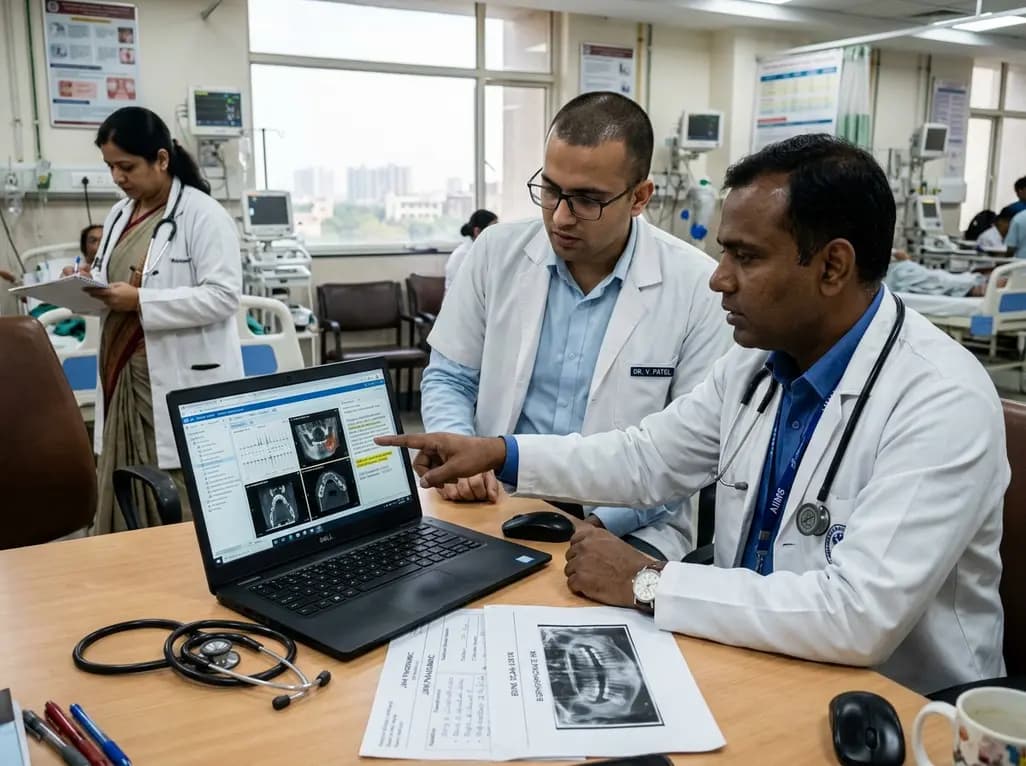
A breakthrough study leverages natural language processing to accurately identify incident medication-related osteonecrosis of the jaw and track antiresorptive drug holidays from clinical narratives in electronic health records, advancing osteoporosis pharmacovigilance and dental safety.
Today
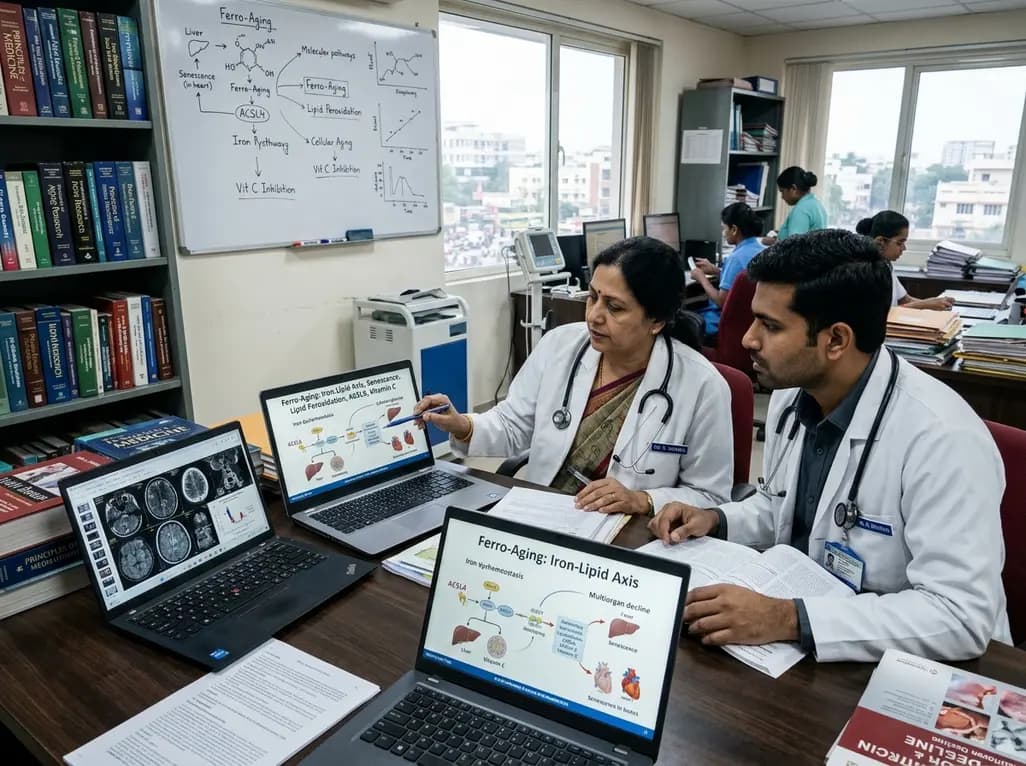
Recent research defines ferro-aging as a conserved iron-lipid axis driving organ decline across primates. Age-related iron dyshomeostasis stimulates ACSL4-mediated lipid peroxidation, promoting cellular senescence. Notably, vitamin C directly inhibits ACSL4, suppressing phospholipid oxidation and multi-organ decay.
Yesterday
