.webp&w=384&q=75)

Loading, please wait...
Loading, please wait...

The implementation of AI in precision health is revolutionizing how clinicians approach complex multimorbidities. Recently, Phase II of the MVP-CHAMPION initiative, a flagship collaboration between the US Department of Veterans Affairs (VA) and the Department of Energy (DoE), highlighted significant strides in this field. By integrating large-scale clinical, geospatial, and genetic data with high-performance computing, the project seeks to maximize healthcare value through advanced analytics.
Researchers initiated eight priority projects addressing high-burden conditions. These include lung cancer screening (MVP 061), suicide risk (MVP 062), and cardiovascular risk in sleep apnea (MVP 063). Additionally, the initiative explores checkpoint inhibitor toxicity, heart failure, and renal complications in diabetes. Consequently, these efforts provide a robust template for data-driven care that Indian healthcare systems can adapt for local population health management.
The study developed multimorbidity-aware analytic frameworks and reusable computational pipelines. These tools facilitated the identification of novel genetic risk factors. For instance, more discriminating prediction models now inform the development and repurposing of medications. Because these findings are poised for near-term application, they promise to reduce clinical trial timelines and improve personalized treatment pathways. Furthermore, the use of high-performance computing allows for processing massive datasets that were previously unmanageable.
Moreover, the project underscores the importance of a strong regulatory and administrative foundation. This foundation supported an unprecedented federal collaboration, yielding significant scientific advances in machine learning. Although the primary focus remains on Veterans, the resulting pipelines provide a scalable blueprint for global health. Therefore, clinicians can expect AI in precision health to accelerate the broader adoption of artificial intelligence in routine hospital workflows, ultimately improving patient outcomes across diverse geographies.
MVP-CHAMPION is a large-scale federal collaboration between the VA and DoE that uses supercomputing and AI to analyze genetic and clinical data for better precision medicine outcomes.
The initiative targets eight key areas, including lung cancer, heart failure, suicide risk, renal complications in diabetes, and post-COVID-19 sequelae.
By identifying novel genetic risk factors and using discriminating prediction models, the research helps in identifying new drug targets and repurposing existing medications for better efficacy.
Disclaimer: This content is for informational and educational purposes only. It does not constitute professional medical advice, diagnosis, or treatment. Always seek the advice of your physician or other qualified health provider with any questions you may have regarding a medical condition. Refer to the latest local and national guidelines for clinical practice.
References

Read summarized clinical updates, watch expert medical content, and earn CME certifications right from your smartphone.
Open your smartphone camera to scan and install.





Explore how the landmark VA-DoE collaboration leverages AI and large-scale data to transform precision medicine across multiple clinical specialties....
5 months ago

This methodological viewpoint establishes ten rules to constrain noise and enhance precision across image scoring, database handling, and data analysis in rheumatology research.
Today

A study in JAMIA Open shows lightweight open-source reasoning LLMs achieve up to 95% sensitivity and accelerate evidence synthesis screening by nearly twentyfold, presenting a cost-effective, scalable AI solution for biomedical research and systematic reviews.
Yesterday
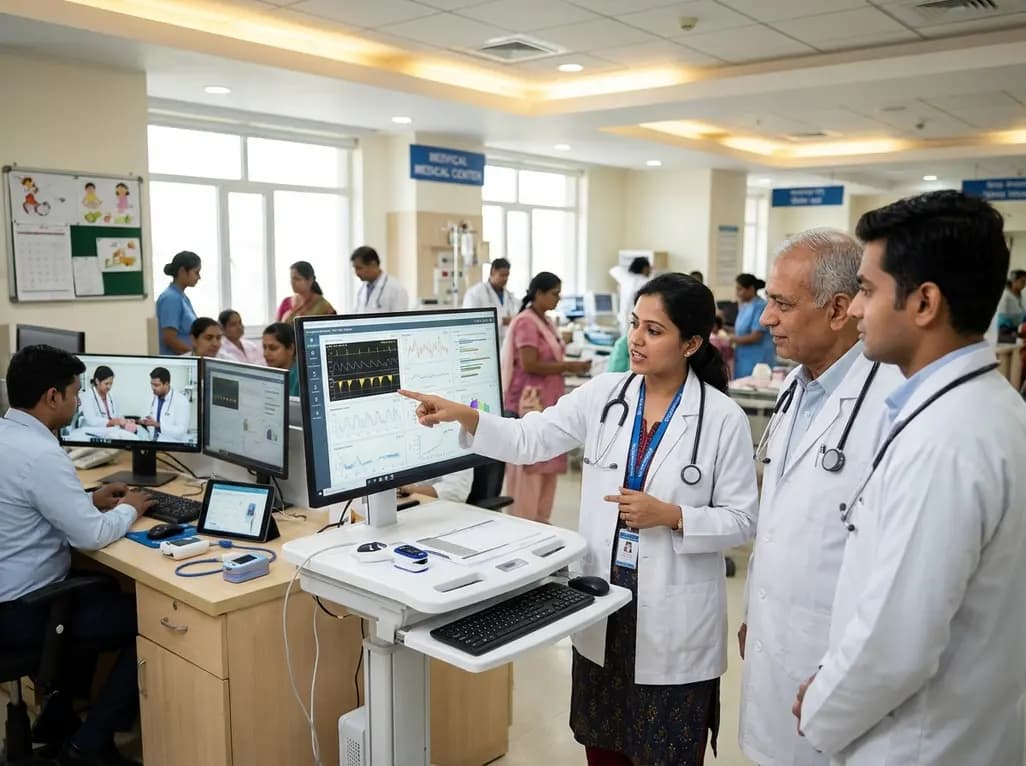
A landmark study details how an enterprise pediatric remote patient management model expanded from a single cardiology pilot to 16 diverse specialty programs by combining centralized digital operations with specialty clinical leadership.
Yesterday

A comparative review of tension band wiring and intramedullary screw fixation in thumb metacarpophalangeal arthrodesis, evaluating union rates, hardware complications, and clinical outcomes.
Yesterday
A nationwide observational study from Norway investigates whether SGLT2 inhibitor therapy improves 5-year metabolic parameters in kidney transplant recipients with post-transplantation diabetes mellitus (PTDM), finding comparable glycemic, renal, and blood pressure profiles between user and non-user cohorts.
Today
