.webp&w=384&q=75)

Loading, please wait...
Loading, please wait...

Union Minister Jitendra Singh recently addressed the evolving role of technology in healthcare. He emphasized that AI in medical education serves as a valuable enabler rather than a replacement for core learning. While digital tools simplify information access, clinicians must first master fundamental principles. Therefore, technology acts as an assistant to a well-trained medical professional.
Minister Singh stressed that a solid clinical foundation is essential for every doctor. Students should not rely on algorithms before they understand the essence of medical concepts. Consequently, hands-on clinical exposure remains the cornerstone of medical training. If a doctor grasps these basics, they can serve society effectively even without advanced gadgets. AI should only facilitate practice once these skills are firmly established.
The healthcare landscape is changing rapidly due to emerging diseases and technological shifts. Thus, medical institutions must continuously upgrade their curriculum. Young professionals should focus on building strong basics before pursuing narrow specializations. Furthermore, the integration of technology must align with these educational goals to maintain high standards of patient care.
Q1: What is the primary role of AI in medical education according to Jitendra Singh?
According to the minister, AI should act as a facilitator and enabler. However, it must only be introduced after a student has established a strong clinical foundation and mastered medical fundamentals.
Q2: Why is hands-on clinical exposure still considered essential?
Hands-on exposure ensures that clinicians can provide care even in the absence of advanced instruments or drugs. This basic learning process is vital for becoming a competent and versatile healthcare provider.
Disclaimer: This content is for informational and educational purposes only. It does not constitute medical advice or replace professional judgment. Refer to the latest local and national guidelines for clinical practice.
References

Read summarized clinical updates, watch expert medical content, and earn CME certifications right from your smartphone.
Open your smartphone camera to scan and install.





Union Minister Jitendra Singh highlights that AI should enable medical practice only after students master core clinical basics and hands-on patient care....
6 months ago

India is advancing preventive healthcare by integrating genomics, artificial intelligence, and quantum technologies. With the SANGAM programme sequencing one million Indian genomes, clinicians can unlock personalized therapies, detect cardiometabolic risks early, and curb the burden of diabetes and heart disease.
Today
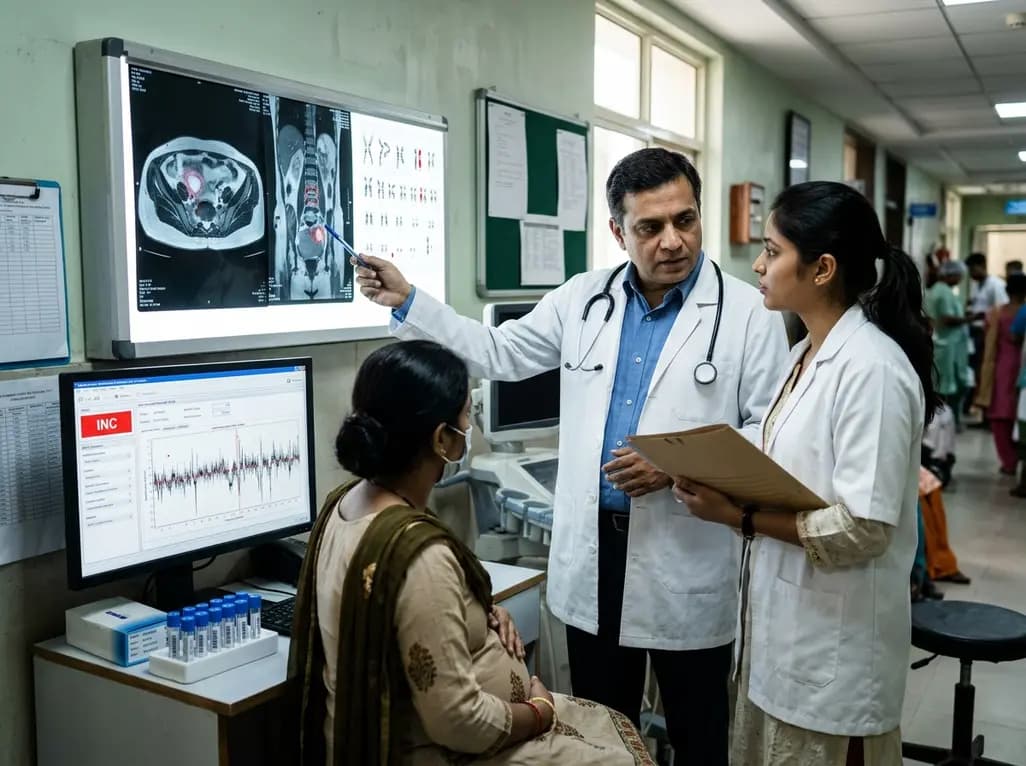
Occult maternal malignancy accounts for 3.82% of persistent unreportable NIPT results with genomic noise. Multiple chromosomal aberrations, notably on chromosome 18, warrant thorough oncological evaluation and whole-body MRI to ensure timely maternal diagnosis while preserving fetal care.
Today
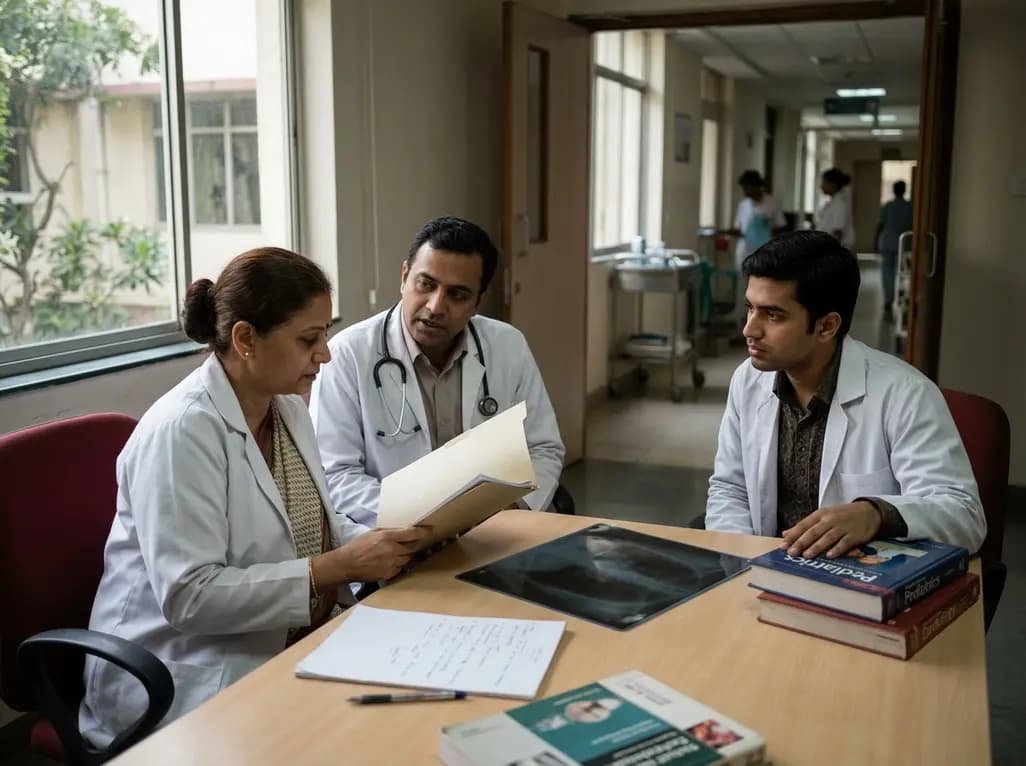
This article reviews the forensic and clinical complexities of acute myocarditis arising on left ventricular hypertrophy in children, highlighting early diagnostic red flags and multidisciplinary postmortem autopsy protocols.
Today

A randomized controlled trial demonstrates that an eight-week dual-task training intervention significantly improves static and dynamic postural control over standard balance exercises in individuals with chronic ankle instability, addressing critical neurocognitive deficits during athletic and daily activities.
Today

A retrospective cohort study of 7,716 ICU patients from the MIMIC-IV database demonstrates that Gradient Boosting Decision Trees significantly outperform traditional SOFA scores in predicting in-hospital mortality among patients with sepsis and diabetes, with SHAP analysis providing clinical interpretability.
Today
