.webp&w=384&q=75)

Loading, please wait...
Loading, please wait...

The rapid acceleration of medical technology has placed digital innovation at the absolute center of modern hospital transformation. Today, AI in Indian healthcare stands at an unprecedented inflection point. While numerous academic centers and digital health startups have launched encouraging pilot programs, few innovations transition into sustained clinical workflows. Modern healthcare delivery requires scalable tools that improve clinical outcomes, reduce operating costs, and integrate seamlessly into daily practice. Medical leaders emphasize that standalone software cannot transform patient care without robust downstream clinical infrastructure. Therefore, clinical organizations must evaluate these digital interventions with the same scientific scrutiny applied to conventional therapeutics.
Many healthcare facilities across India frequently showcase localized artificial intelligence trials. However, the true value of computational medicine emerges only when algorithms achieve continuous deployment across hospital networks. Isolated pilots often generate impressive diagnostic metrics within pristine, controlled testing environments. In contrast, real-world clinical environments present unpredictable data noise, fragmented documentation, and immense patient volume. Consequently, hospital leaders must build an execution pathway that connects initial testing to longitudinal clinical operations.
Healthcare systems provide actual clinical care, whereas automated tools merely assist in identification and screening. A machine learning model may rapidly detect subtle radiographic patterns, but downstream clinical teams must deliver the necessary interventions. For instance, diagnosing an early pulmonary lesion creates little clinical value if local medical resources cannot provide follow-up biopsy, staging, or thoracic surgical care. Therefore, health administrators should evaluate algorithmic utility based on overall care pathways rather than isolated test accuracy. Successful adoption requires comprehensive workflow integration that links automated risk alerts with direct therapeutic pathways. When hospitals bridge this operational divide, digital solutions truly enhance patient survival, optimize resource allocation, and eliminate diagnostic bottlenecks.
Rigorous clinical validation remains essential before deploying algorithms in frontline clinical care. Currently, AI in Indian healthcare requires robust assessment against established institutional standards of care. Medical practitioners cannot accept performance metrics that stem solely from retrospective, single-center studies. Instead, validation frameworks must test computational tools prospectively across diverse tertiary centers, district facilities, and rural clinics. Multi-center evaluations ensure that diagnostic performance remains consistent across variable hardware calibrations and operational protocols.
Furthermore, independent evaluation protects clinical teams from adopting exaggerated algorithmic marketing claims. Regulatory bodies and professional societies now advocate for standardized validation frameworks that assess software safety objectively. For example, the Indian Council of Medical Research has developed explicit ethical principles to guide clinical AI evaluation and governance. These national guidelines mandate rigorous scrutiny regarding algorithmic accountability, diagnostic reliability, and patient safety. Clinicians must actively participate in these multi-institutional verification studies to ensure that digital tools solve genuine medical challenges. Consequently, hospital administrators should demand independent multi-center trial data before capital procurement. By insisting on uncompromising empirical validation, the medical fraternity safeguards patient welfare and strengthens diagnostic consistency across all operational levels.
Algorithmic bias poses a substantial threat to equitable healthcare delivery across heterogeneous populations. Many commercial diagnostic models rely heavily on training datasets gathered from high-income Western institutions. Consequently, these models often underperform when analyzing clinical presentations within Indian demographics. India exhibits immense genetic diversity, distinct epidemiological profiles, and varied environmental exposures. A neural network trained exclusively on foreign datasets may misinterpret common local pathologies or overlook nuanced disease presentations.
Therefore, development teams must train and calibrate models using representative local epidemiological registries. For instance, Indian radiological archives must account for high background rates of healed granulomatous disease, such as previous pulmonary tuberculosis. Without localized training, screening algorithms frequently yield elevated false-positive rates for malignant lesions, prompting unnecessary invasive testing. Moreover, regional differences in diagnostic imaging hardware and acquisition parameters can degrade algorithmic precision. Healthcare systems must actively reject one-size-fits-all algorithms that lack regional contextualization. Instead, medical institutions should partner with data scientists to curate representative datasets from diverse rural and urban demographics. By prioritizing representative training data, clinical teams prevent discriminatory diagnostic errors and ensure dependable diagnostic accuracy for all patients.
Integrating artificial intelligence into routine hospital operations requires thoughtful workflow orchestration rather than fragmented tool deployment. In past years, clinicians frequently resisted technological additions that disrupted their established daily routines. Today, however, clinicians actively pull for practical automation that alleviates heavy administrative and clerical burdens. Busy oncologists, radiologists, and internists manage extensive documentation that consumes valuable clinical time. At leading oncology centers, automated text processing now reduces document summarization tasks from several minutes to under sixty seconds.
Nevertheless, deploying disconnected point solutions creates severe cognitive fatigue for hospital staff. Clinicians should not have to toggle between multiple standalone software interfaces to interpret lab values, imaging studies, and electronic records. Instead, health systems must implement unified, orchestrated platforms that embed intelligent decision support directly into existing electronic medical records. Furthermore, healthcare organizations must maintain absolute human oversight over all therapeutic decisions. Autonomous algorithms cannot grasp holistic clinical nuance, patient socioeconomic factors, or bedside ethical values. While deep learning provides remarkable diagnostic triage, the ultimate medical responsibility stays with the treating physician. Maintaining definitive physician leadership ensures that automated systems augment medical expertise rather than compromise clinical accountability.
Beyond diagnostic precision, artificial intelligence must transform the fundamental economics of modern healthcare delivery. Traditional software additions often increase institutional expenses by introducing complex licensing costs and operational overhead. In contrast, scalable medical AI should exert a genuine deflationary force on overall healthcare expenditures. Advanced algorithms function practically as cognitive labour, handling routine measurement, documentation, and preliminary scan analysis. By automating time-intensive tasks, digital networks permit clinicians to dedicate their time to direct patient care and complex clinical reasoning.
Additionally, intelligent diagnostic networks help bridge the acute specialist shortage outside metropolitan areas. Tier-2 and Tier-3 healthcare centers frequently lack on-site radiologists, cardiologists, and oncologists. Consequently, patients in non-metro regions often endure long journeys and diagnostic delays to seek tertiary consultations. AI-enabled teleradiology platforms can triage urgent cases, detect critical emergency findings, and connect remote facilities with centralized specialists instantly. Smaller community hospitals can thereby leapfrog traditional infrastructure constraints and provide rapid, expert-level interpretations around the clock. Ultimately, this distributed care model lowers travel costs for vulnerable families and democratizes advanced diagnostic medicine across underserved populations.
Q1: Why are isolated AI pilots insufficient for improving healthcare delivery in India?
Isolated pilots demonstrate proof of concept within controlled settings, but they fail to address real-world operational complexities. In clinical practice, algorithmic screening tools must connect directly to downstream treatment capacity, diagnostic workflows, and electronic medical records. Furthermore, isolated pilot projects rarely evaluate long-term financial sustainability, longitudinal patient survival rates, or clinician workload reduction across diverse socioeconomic populations, which ultimately limits their true systemic public health value.
Q2: How does the Indian Council of Medical Research address algorithmic bias in clinical AI?
The Indian Council of Medical Research established comprehensive ethical guidelines that mandate multi-center validation across heterogeneous populations. These guidelines require developers to train computational models on representative demographic and geographic datasets. Additionally, the council highlights algorithmic transparency, continuous performance auditing, and data privacy safeguards. This structured framework prevents algorithmic bias, protects patient autonomy, and ensures that diagnostic software functions reliably across diverse clinical environments.
Q3: How can artificial intelligence reduce operational healthcare costs rather than increasing overhead?
Artificial intelligence reduces operational healthcare costs when deployed as a deflationary operational tool rather than an isolated software layer. By automating labor-intensive documentation, preliminary image analysis, and triage workflows, algorithms substantially decrease turnaround times and administrative overhead. Consequently, clinical specialists can review higher patient volumes accurately, preventing diagnostic delays and unnecessary patient travel to major metropolitan medical centers.
Disclaimer: This content is for informational and educational purposes only. It does not constitute medical advice or replace professional judgment. Refer to the latest local and national guidelines for clinical practice.
References

Read summarized clinical updates, watch expert medical content, and earn CME certifications right from your smartphone.
Open your smartphone camera to scan and install.





Artificial intelligence holds transformative potential for Indian healthcare, but isolated pilots cannot bridge systemic gaps. Healthcare leaders urge multi-center validation, non-siloed electronic medical record integration, and workflow deflation to expand specialist reach across underserved regions safely.
last month
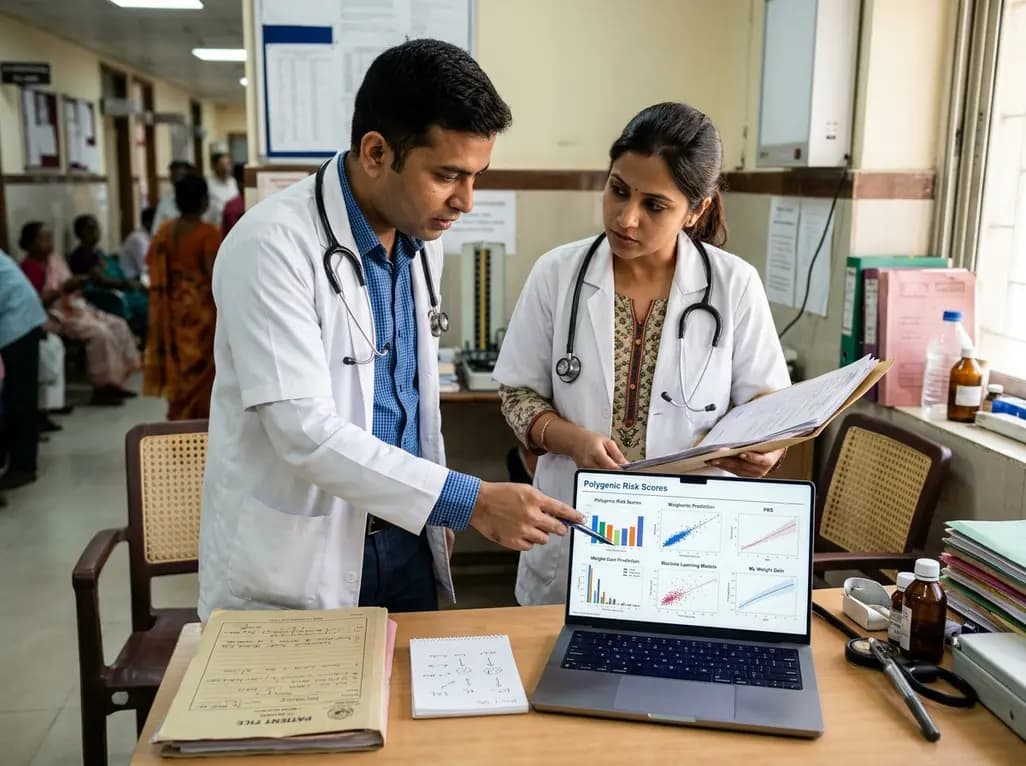
An observational study from the NIH All of Us Research Program reveals that adding a multi-ancestry polygenic risk score to machine learning models provides only modest improvements in predicting adult weight gain, underscoring the enduring significance of routine clinical and lifestyle factors.
Today
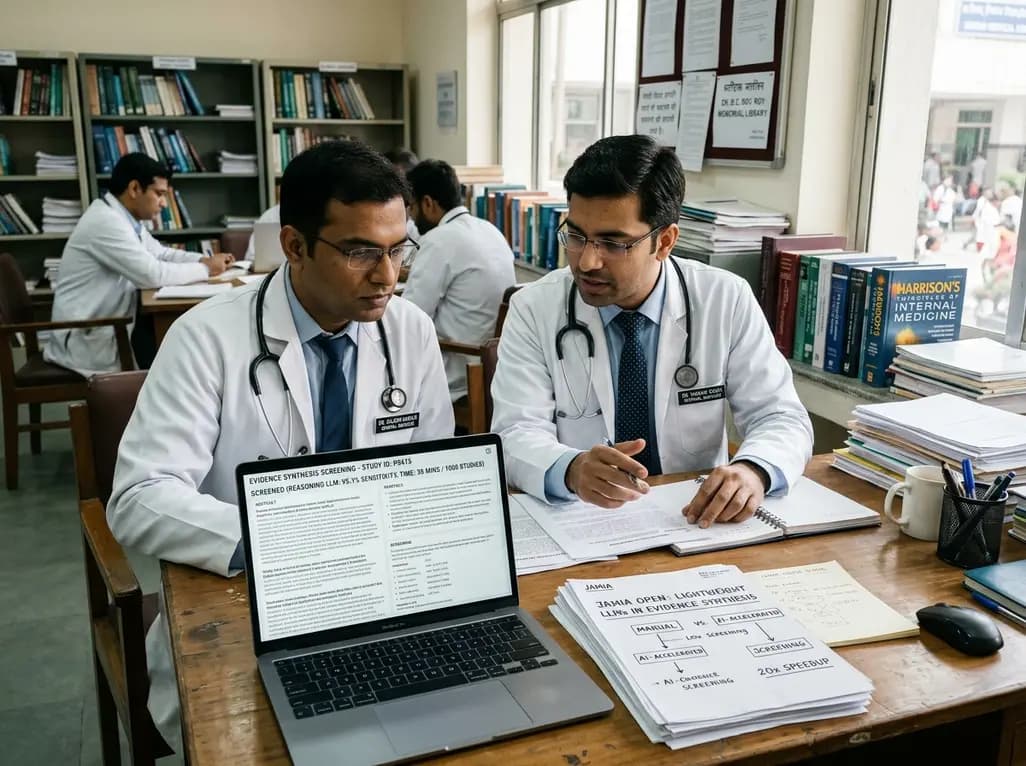
A study in JAMIA Open shows lightweight open-source reasoning LLMs achieve up to 95% sensitivity and accelerate evidence synthesis screening by nearly twentyfold, presenting a cost-effective, scalable AI solution for biomedical research and systematic reviews.
Today
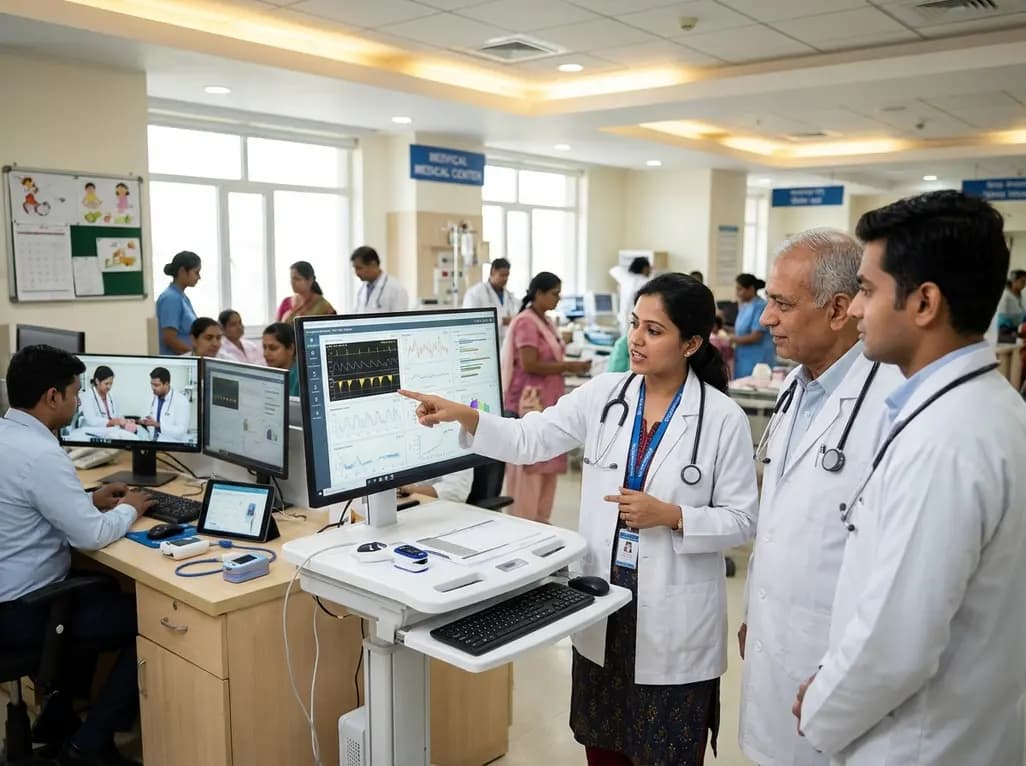
A landmark study details how an enterprise pediatric remote patient management model expanded from a single cardiology pilot to 16 diverse specialty programs by combining centralized digital operations with specialty clinical leadership.
Yesterday
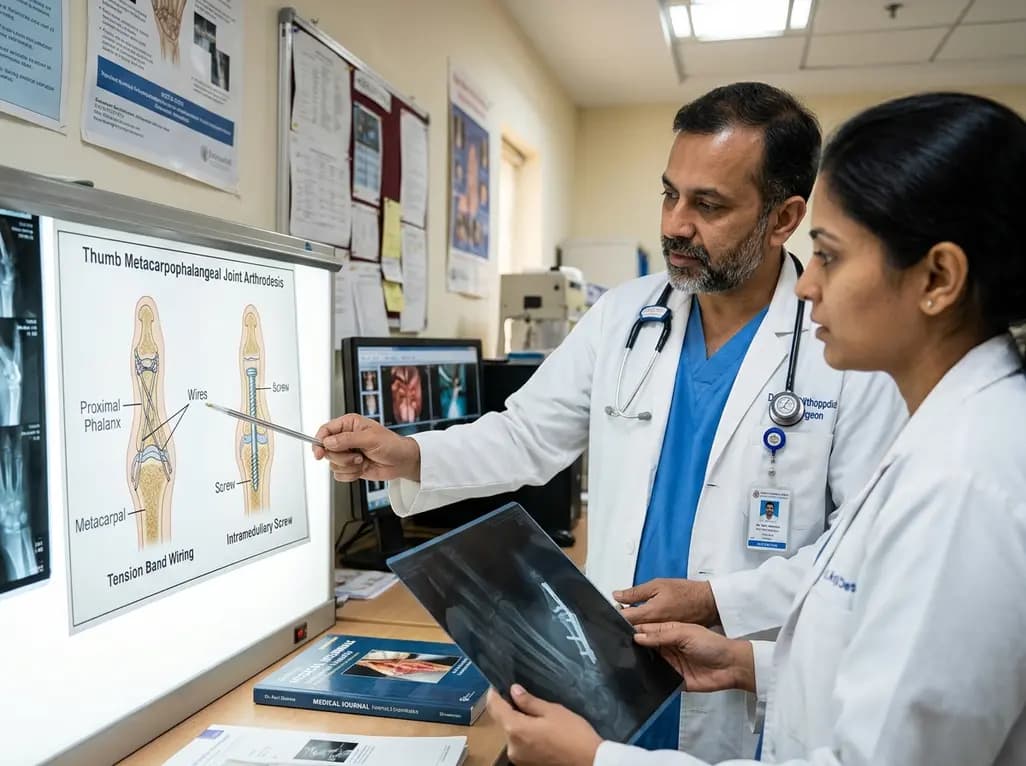
A comparative review of tension band wiring and intramedullary screw fixation in thumb metacarpophalangeal arthrodesis, evaluating union rates, hardware complications, and clinical outcomes.
Yesterday
A breakthrough ultrathin multimodal sensor decouples physical hemodynamic monitoring from disposable electrochemical calibration, achieving long-term wearable glucose prediction with 81.36% accuracy and a 9.12% MARD. This offers a robust, drift-free solution for outpatient metabolic surveillance.
Yesterday
