.webp&w=384&q=75)

Loading, please wait...
Loading, please wait...
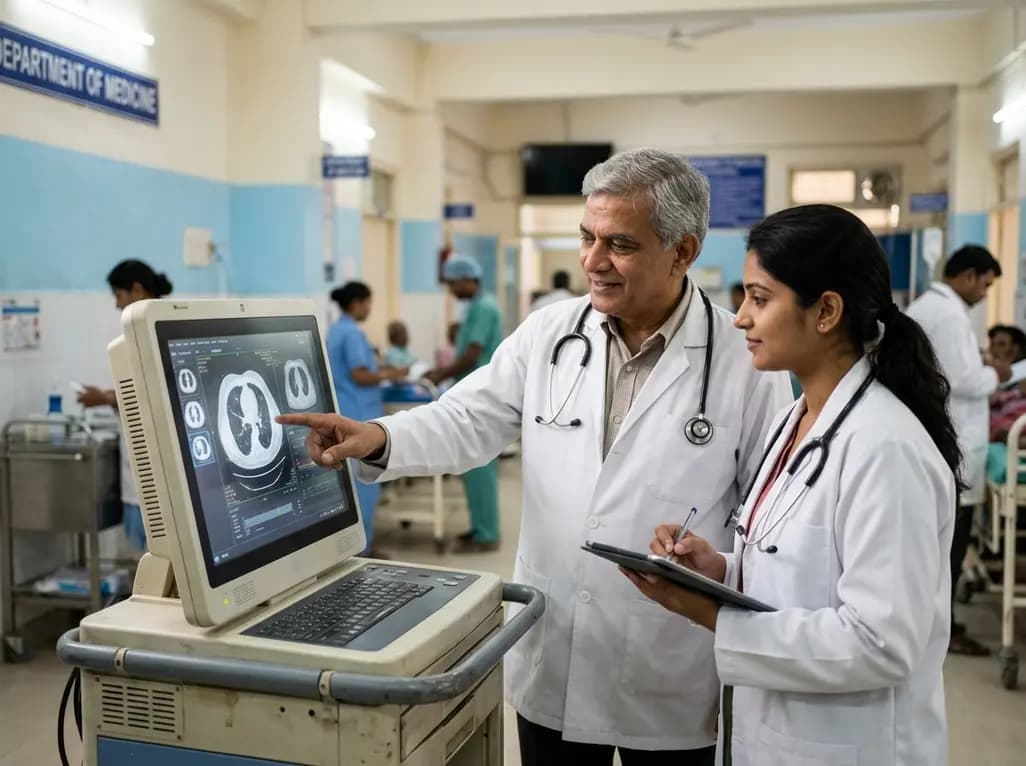
The rapid integration of AI in healthcare presents unprecedented opportunities to enhance diagnostic precision and clinical workflow efficiency. However, medical leadership across India firmly emphasizes that algorithmic platforms must augment clinical acumen rather than replace practitioners. Speaking at the National Consultation on AI Readiness for Healthcare, Education and Research organized under the National Medical AI Mission, National Medical Commission Chairman and President of the National Board of Examinations in Medical Sciences, Dr. Abhijat Sheth, emphasized the necessity of ethical, evidence-based deployment. As artificial intelligence advances, the ultimate responsibility for clinical judgment and patient welfare remains strictly with the treating physician.
Artificial intelligence systems can analyze massive datasets, identify subtle radiological patterns, and synthesize medical literature in seconds. Consequently, these capabilities offer immense value to busy clinicians managing heavy patient volumes across diverse settings. Nevertheless, Dr. Sheth underlined that technology should serve strictly as an assistive tool rather than an autonomous decision-maker. Clinical reasoning involves empathy, contextual nuance, and complex ethical judgment that machine learning models cannot duplicate. Therefore, the treating doctor must always retain complete accountability for diagnostic interpretations and therapeutic interventions.
Furthermore, patient-centered care mandates that individuals understand the human rationale guiding their treatment plans. When algorithmic tools generate diagnostic suggestions or therapeutic pathways, clinicians must critically evaluate those outputs before acting upon them. Placing the patient at the center of clinical decision-making ensures that technology preserves the therapeutic alliance. Moreover, ethical clinical practice requires practitioners to maintain ultimate oversight, protecting patient autonomy and safeguarding against algorithmic fallibility in dynamic healthcare environments.
A major challenge in deploying global artificial intelligence models within Indian healthcare is demographic misalignment. Many commercially available algorithms rely on datasets derived predominantly from Western patient cohorts. Consequently, these models may fail to capture India's vast genetic diversity, distinct epidemiological patterns, and unique disease burdens. Dr. Sheth emphasized that India must prioritize the generation of local evidence and validate diagnostic tools within domestic clinical environments.
Additionally, algorithmic bias can exacerbate health disparities if training datasets underrepresent vulnerable populations. For instance, diagnostic algorithms trained on high-resource tertiary hospital data may perform suboptimally in rural primary healthcare centers. To counteract these risks, researchers and healthcare institutions must collaborate to build comprehensive, representative datasets that reflect regional variations. Clinicians must also understand the intrinsic limitations of machine learning, including statistical hallucinations and dataset shift. By establishing robust validation protocols, Indian medical institutions can ensure algorithmic recommendations remain equitable, reliable, and clinically meaningful across all tiers of healthcare delivery.
Integrating artificial intelligence into routine medical practice requires comprehensive curriculum reform across undergraduate and postgraduate medical education. Dr. Sheth stressed that medical colleges must prepare future physicians to navigate digital healthcare safely. If trainees learn solely within traditional didactic frameworks, a significant disconnect will emerge between classroom instruction and modern clinical workflows. Therefore, regulatory bodies are developing structured learning pathways that introduce digital competencies early in medical training.
At the undergraduate level, curricula should emphasize data literacy, AI-assisted diagnostic reasoning, ethical considerations, and critical appraisal of automated tools. Subsequently, postgraduate education can shift toward specialty-specific applications, such as computer-assisted surgical navigation, automated histopathology analysis, or predictive hemodynamic monitoring in intensive care units. Importantly, medical trainees must learn to identify algorithmic errors and avoid automation bias. By cultivating a disciplined approach to technological integration, medical institutions ensure that young doctors utilize modern tools without compromising foundational clinical skills.
Curricular transformation cannot succeed without substantially upgrading the capabilities of medical educators and institutional infrastructure. Dr. Sheth pointed out that medical teachers require systematic training in digital pedagogy, academic leadership, and algorithmic assessment. Faculty members must evaluate AI-generated outputs effectively to mentor students in evidence synthesis, research methodology, and clinical problem-solving. When educators master these technologies, they can guide trainees toward safe and constructive adoption.
Moreover, medical colleges need modernized digital infrastructure to support data-intensive educational modules and clinical research initiatives. Establishing dedicated bioinformatics facilities, secure clinical registries, and simulation labs enables trainees to gain hands-on experience in a controlled environment. Collaborative platforms between academic medical centers and engineering institutes can also accelerate indigenous innovation. By investing in faculty development and institutional infrastructure, healthcare authorities establish a robust foundation for sustainable digital transformation.
The successful integration of technological tools into public health systems depends upon transparent governance and patient trust. Union Minister of State for Jal Shakti, Raj Bhushan Choudhary, underscored that every healthcare dataset represents an individual human life and a family seeking healing. While machine learning enhances logistical speed and diagnostic triaging, human empathy remains the irreplaceable core of medical care. Clinicians who combine digital proficiency with genuine compassion will provide superior care compared to those who resist modernization.
Furthermore, Dr. Sanghamitra Pati, Additional Director General at the Indian Council of Medical Research, highlighted that ethical governance, competent human resources, and robust data protection frameworks are vital to building an AI-ready ecosystem. Aligning digital health initiatives with national goals, such as Ayushman Bharat and Viksit Bharat 2047, ensures that modern technological advancements reach underserved communities. Through cooperative efforts between regulatory authorities, research councils, and healthcare providers, India can establish a globally respected model for compassionate, accessible, and technologically advanced medical care.
Q1: Why does the NMC emphasize that AI should augment rather than replace doctors?
Medical decisions require clinical empathy, ethical consideration, and contextual understanding that algorithmic models cannot replicate. Artificial intelligence serves as an assistive tool to process complex data efficiently, but the ultimate clinical judgment and accountability for patient safety always remain with the doctor.
Q2: Why is the use of Indian datasets essential for clinical AI models?
Global artificial intelligence tools often rely on demographic data that do not reflect India's genetic diversity, regional disease burdens, and rural-urban healthcare realities. Validating tools on Indian datasets prevents algorithmic bias, ensures diagnostic precision, and delivers reliable outcomes across diverse domestic patient populations.
Q3: How should medical education adapt to technological advancements in healthcare?
Medical training must incorporate digital competency, critical appraisal of algorithmic outputs, and ethical data management into core curricula. Undergraduate programs should focus on foundational digital literacy, while postgraduate courses must provide specialty-specific training alongside rigorous faculty development programs.
Disclaimer: This content is for informational and educational purposes only. It does not constitute medical advice or replace professional judgment. Refer to the latest local and national guidelines for clinical practice.
References

Read summarized clinical updates, watch expert medical content, and earn CME certifications right from your smartphone.
Open your smartphone camera to scan and install.





National Medical Commission leaders call for ethical, evidence-based AI adoption in Indian clinical practice. While algorithmic tools assist diagnostic reasoning, doctors remain accountable for patient outcomes, requiring medical education reforms, localized validation, and robust faculty development.
last month
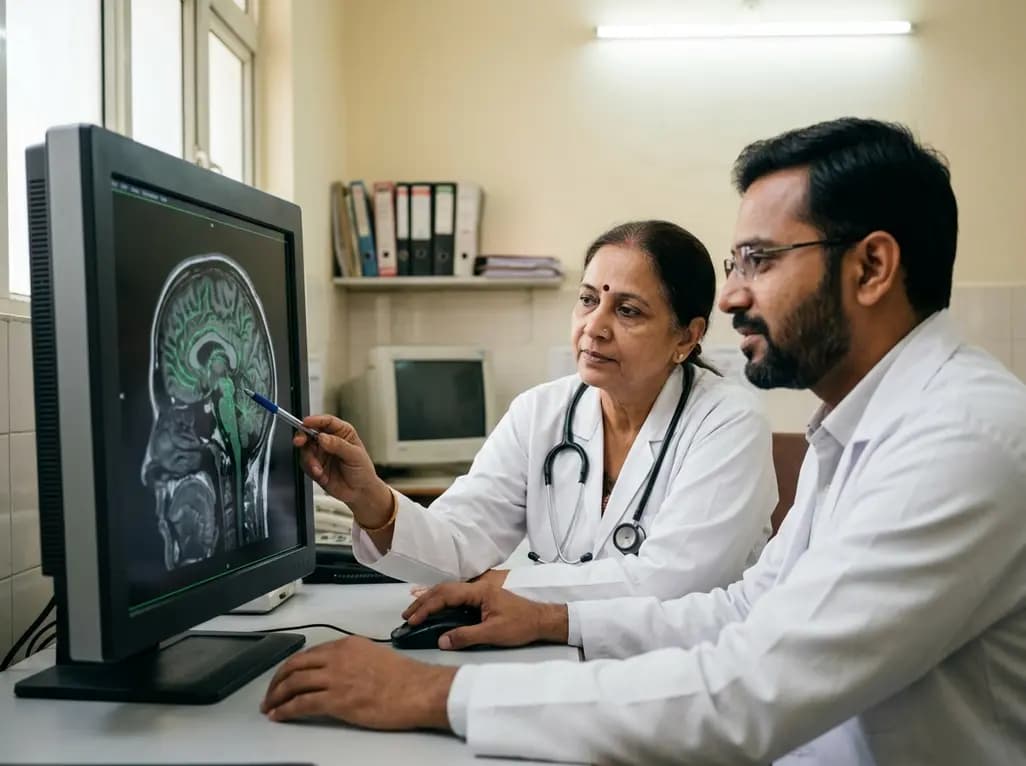
UK Research and Innovation is deploying £80 million across the NHS to trial nine cutting-edge technologies. The initiative features seven-minute brain MRIs, blood biomarker assays, and predictive AI tools, aiming to evaluate 92% of suspected cases within 18 weeks and overcome lengthy diagnostic backlogs.
Today

A mixed-methods study identifies key drivers of PMTCT service utilization among adolescent girls and young women aged 15-24. Highlighting age disparities, PrEP uptake, and systemic barriers, the evidence guides clinicians toward adolescent-responsive, integrated maternal HIV prevention protocols.
Today
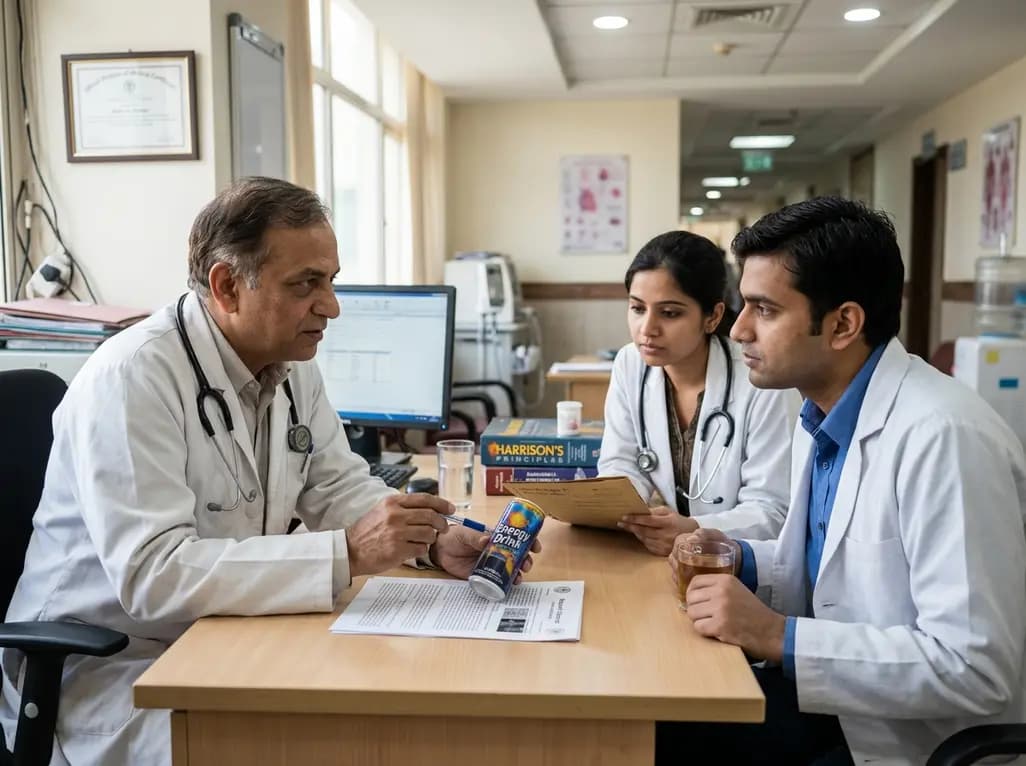
PepsiCo and Monster Beverage have challenged the FSSAI ban on the energy drink label in Indian courts. While companies highlight supply disruptions, regulatory actions spotlight severe cardiovascular and metabolic risks associated with excessive caffeine, sugar, and taurine consumption, especially in adolescents.
Today
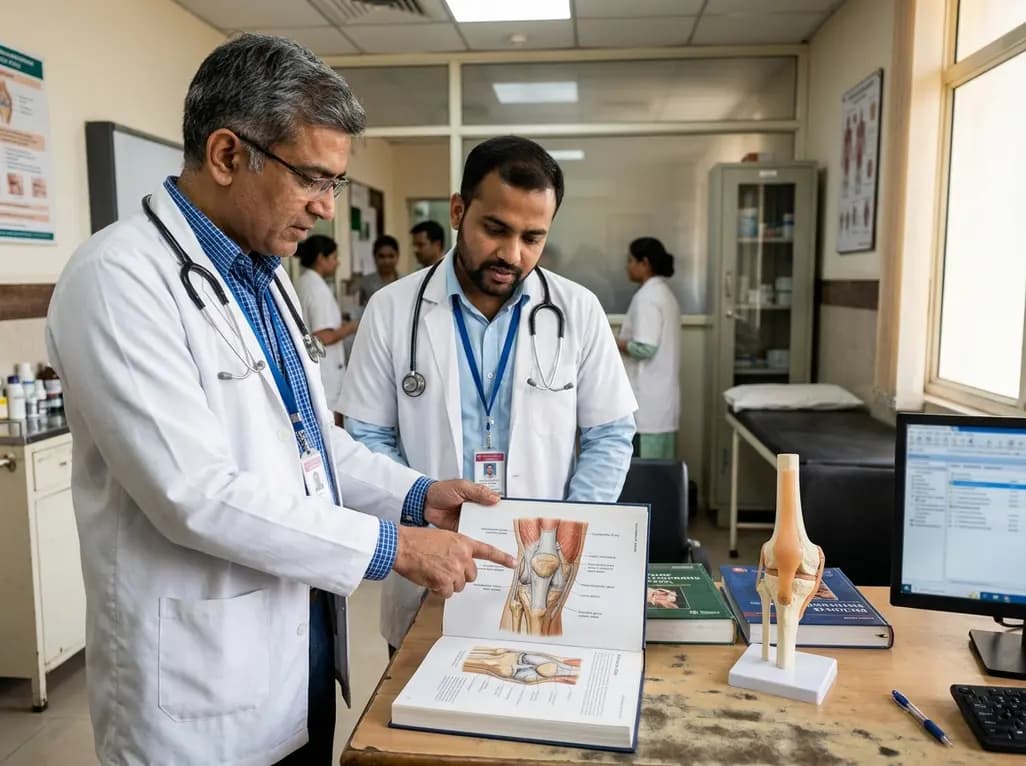
A narrative review investigates whether the articularis genus muscle functions as an independent anatomical entity or blends with the vastus intermedius. We evaluate its morphology, role in retracting the suprapatellar bursa, and direct clinical significance in anterior knee pain and arthroplasty.
Today

A Bayesian multilevel meta-analysis reveals that aerobic training combined with moderate carbohydrate restriction modestly lowers HbA1c in type 2 diabetes. However, sparse data and very low certainty leave incremental benefits over exercise or diet alone unproven, highlighting the need for individualized care.
Yesterday
