.webp&w=384&q=75)

Loading, please wait...
Loading, please wait...
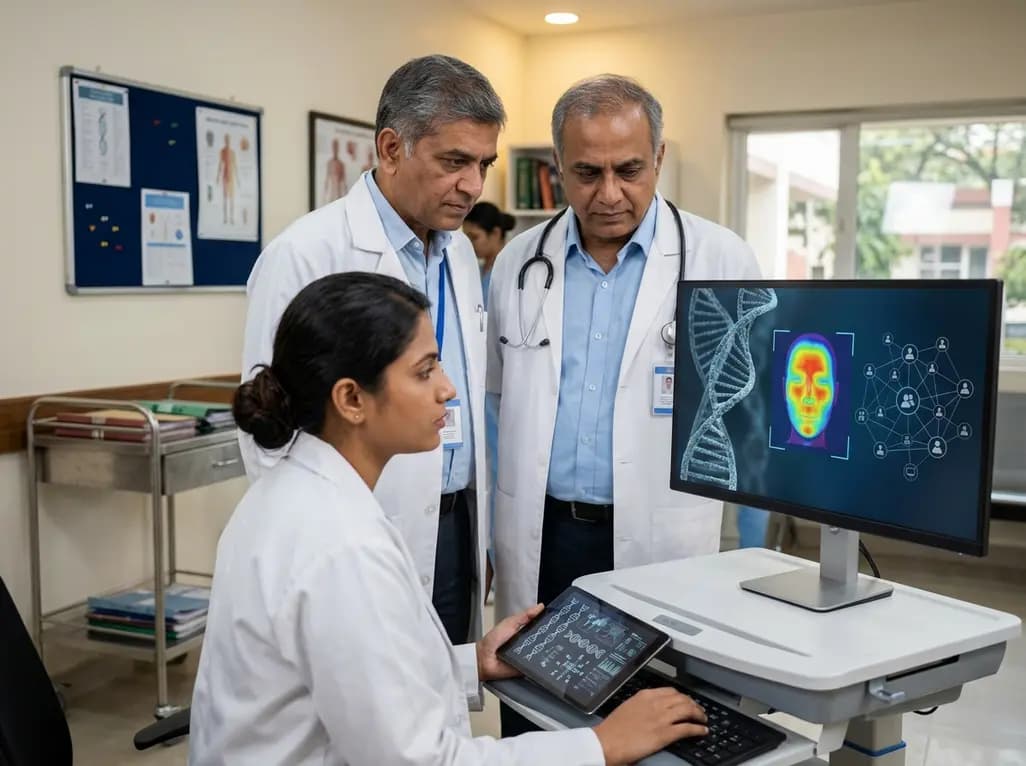
The rapid evolution of medical technology has positioned AI in Clinical Genetics as a transformative force. Digital tools are no longer futuristic concepts but essential aids for diagnosing rare conditions and interpreting massive genomic datasets. However, the integration of these sophisticated systems into daily clinical practice depends heavily on the readiness of the healthcare workforce. A recent study surveying US-based genetics clinicians revealed significant insights into current usage and attitudes. While the potential for improved patient care is vast, a substantial portion of the workforce feels unprepared. This lack of readiness often stems from a disparity between the availability of advanced technology and the provision of formal education. As precision medicine becomes more data-intensive, clinicians must adapt to maintain high standards of diagnostic accuracy. Consequently, understanding the intersection of human expertise and machine intelligence is vital for future geneticists. By leveraging artificial intelligence, medical professionals can navigate the complexities of the human genome with greater efficiency. This article explores the current state of clinician knowledge, the specific applications being utilized today, and the steps required to optimize the role of artificial intelligence in genetic medicine.
Addressing the widespread knowledge gap is a primary concern for the healthcare sector. According to recent research, over half of genetic clinicians report having little to no functional knowledge regarding the use of AI in Clinical Genetics. Specifically, 64.3% of surveyed professionals noted that they had never received formal training in these technologies. This lack of education directly impacts self-reported proficiency levels. Interestingly, the study found a strong correlation between formal training and perceived expertise. Approximately 69.3% of those with formal training reported intermediate to extensive knowledge, compared to only 37.5% of those without such background. Despite these gaps, the desire for professional development is nearly universal. An overwhelming 97.6% of participants expressed a wish for more education, and nearly 90% stated they would enroll in available training courses. Furthermore, clinician engagement significantly increases once they receive even basic tutorials. Initially, many doctors reported not using advanced applications at all; however, after receiving educational exposure, usage rates rose to over 75%. Therefore, structured educational programs are not just a preference but a necessity for the successful implementation of genomic digital tools.
One of the most successful applications of AI in Clinical Genetics involves automated facial recognition for diagnostic purposes. Tools like Face2Gene have revolutionized the way pediatricians and geneticists identify rare syndromes by analyzing subtle phenotypic features. These platforms compare a patient's facial photograph against vast databases of known genetic disorders, such as Down syndrome or Noonan syndrome. In many cases, these algorithms demonstrate diagnostic accuracy that matches or even exceeds that of experienced human specialists. Research indicates that certain deep-learning models can identify the most frequent disorders with over 90% accuracy. This capability is particularly beneficial for clinicians in countries like India, where access to specialized geneticists may be limited in rural areas. By providing a digital assistant that prioritizes likely diagnoses, technology reduces the diagnostic odyssey for many families. Furthermore, these tools help clinicians focus their biological testing on specific gene panels rather than performing expensive whole-genome sequencing unnecessarily. Although facial recognition is currently the most used application, it represents just one facet of the broader digital toolkit available to modern medicine. As these technologies mature, their integration into routine pediatric screenings will likely become a standard component of precision healthcare.
The management of genomic data represents a second critical area where intelligent algorithms excel. A single whole-genome sequencing run produces an immense amount of raw data, often exceeding 100 gigabytes. Manually filtering millions of genetic variants to find a single pathogenic mutation is a Herculean task for any clinical team. Fortunately, advanced software now assists in variant prioritization and classification. These systems use evolutionary signals and structural biology data to predict which mutations are likely to cause disease. For example, some tools can classify nearly 89% of all possible missense variants, a feat that would take human experts decades to complete. Moreover, these pipelines help reduce the prevalence of variants of uncertain significance, which often cause clinical ambiguity and patient anxiety. By using machine learning to integrate phenotypic data with genomic findings, clinicians can achieve faster and more reliable results. This integration is essential for oncology, where rapid identification of driver mutations can dictate life-saving treatment decisions. Nevertheless, while software speeds up the process, expert human curation remains the gold standard for final clinical sign-off. The synergy between rapid algorithmic sorting and nuanced human judgment ensures the highest level of patient safety.
Despite clear advantages, several barriers hinder the full-scale adoption of AI in Clinical Genetics. Many clinicians remain cautious about the black box nature of some algorithms, where the logic behind a specific diagnosis is not immediately transparent. This lack of interpretability can lead to trust issues among healthcare providers who are ultimately responsible for patient outcomes. In addition, there are significant concerns regarding bias in training data. If the databases used to train these models lack diversity, the tools may be less accurate for patients from different ethnic backgrounds, including those in the Indian subcontinent. Furthermore, the survey highlighted that applications like chatbots and large language models are currently underutilized, with only about 11% of clinicians reporting their use. These tools have the potential to automate administrative burdens, such as drafting medical summaries or generating pedigrees, but their reliability in high-stakes clinical environments is still being evaluated. Overcoming these hurdles requires a multi-faceted approach involving better data governance, standardized validation protocols, and inclusive database building. As the workforce becomes more comfortable with these technologies, the focus will likely shift from basic implementation to ethical and regulatory refinement.
The path forward for the genetic workforce involves a commitment to continuous learning and systemic adaptation. As technology continues to rise, medical curricula must evolve to include data science and computational biology. Integrating these subjects into medical education will ensure that the next generation of doctors is equipped to handle the tools of the future. For current practitioners, continuing medical education programs focusing on digital literacy can bridge the existing gap. Moreover, studies demonstrate that even brief tutorials can dramatically increase the clinical adoption of these tools. In a country like India, where the burden of rare diseases is high, these technologies offer a scalable solution to improve diagnostic equity. Consequently, healthcare leaders should prioritize the development of locally relevant applications that address regional genetic diversity. By fostering an environment of innovation supported by rigorous training, the medical community can fully harness the power of artificial intelligence. Ultimately, the goal is not to replace the clinician but to empower them with insights that lead to better patient management. The future of genetics lies in this collaborative partnership between human empathy and digital precision.
AI tools assist by analyzing complex datasets, such as facial phenotypes and genomic variants, to identify patterns associated with rare syndromes. For example, facial recognition software compares patient images against thousands of known cases, providing a ranked list of potential diagnoses. This process significantly shortens the diagnostic timeline for families. By prioritizing the most likely genetic causes, these tools allow clinicians to perform more targeted testing, improving overall diagnostic yields.
Clinicians require a foundational understanding of AI literacy, which includes knowing how algorithms process data and identifying potential biases. The recent survey emphasizes that formal training significantly increases a clinician's confidence and ability to use these tools effectively. Educational programs should focus on practical applications, such as variant interpretation software and digital phenotyping tools. Understanding the limitations of automated systems is equally important to ensure that human expertise remains central to final clinical decisions.
Current evidence suggests that AI is intended to complement, rather than replace, human geneticists. While algorithms can process vast amounts of data more quickly than humans, they lack the nuanced clinical judgment and empathy required for patient care. AI handles repetitive, data-intensive tasks like variant filtering, which frees up specialists to focus on complex counseling and personalized management plans. The most effective clinical outcomes are achieved through a collaborative model where technology supports human decision-making.
Disclaimer: This content is for informational and educational purposes only. It does not constitute professional medical advice, diagnosis, or treatment. Always seek the advice of your physician or other qualified healthcare provider with any questions you may have regarding a medical condition. Refer to the latest local and national guidelines for clinical practice.
References
Berkstresser AM et al. Artificial intelligence in clinical genetics: current practice and attitudes among the clinical genetics workforce. Genet Med. 2026 Jul 09. doi: undefined. PMID: 42429101.
Dias R, Torkamani A. Artificial intelligence in clinical genomics. Genome Med. 2019 Nov 19;11(1):70. doi: 10.1186/s13073-019-0689-8.
Gurovich Y, et al. Identifying facial phenotypes of genetic disorders using deep learning. Nat Med. 2019 Jan;25(1):60-64. doi: 10.1038/s41591-018-0279-0.
"
Read summarized clinical updates, watch expert medical content, and earn CME certifications right from your smartphone.
Open your smartphone camera to scan and install.





As artificial intelligence applications in genetics grow, a new survey reveals significant knowledge gaps among clinicians. Discover how education and tools like facial recognition are shaping the future of diagnosis and why formal training is essential for the modern healthcare workforce.
3 months ago

Recent epidemiological data reveals a dramatic surge in summer heat mortality driven by human-induced climate warming. This analysis explores the pathophysiological impacts on cardiac and renal systems, diagnostic dilemmas in death certification, and essential emergency cooling protocols for acute clinical care.
Today
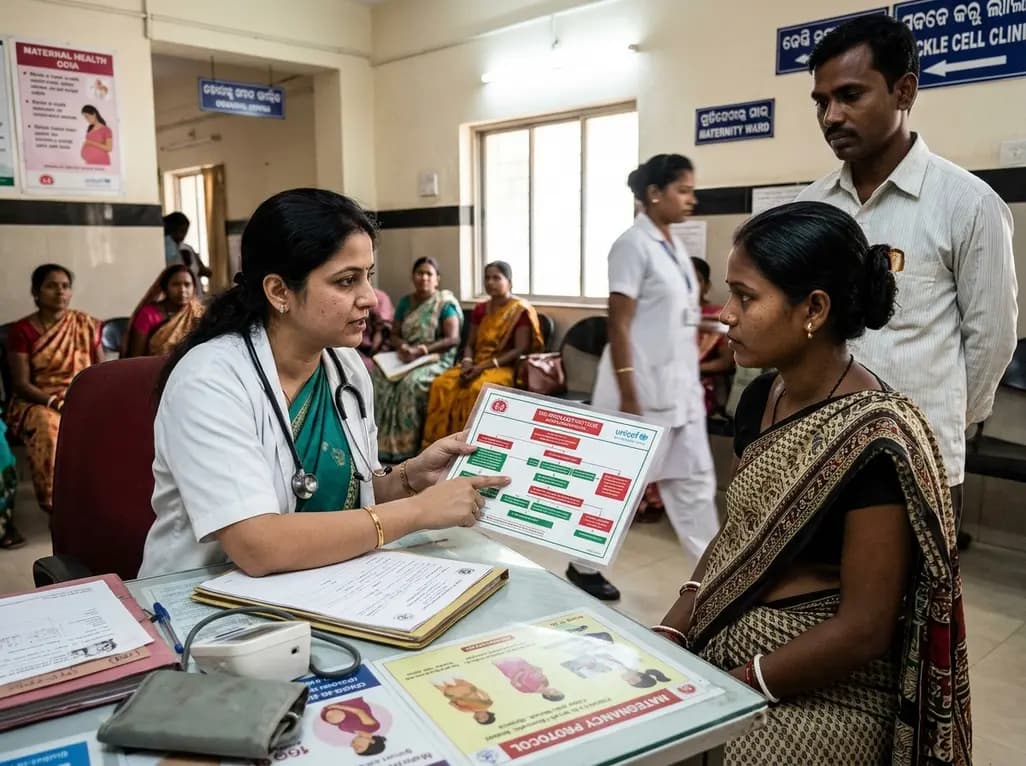
Odisha has established India's first state-level clinical protocol specifically tailored for pregnant women with sickle cell disease. Developed with NHM and UNICEF, the framework provides structured antenatal screening, crisis mitigation, standardized referral pathways, and specialized interdisciplinary care.
Today

India is advancing preventive healthcare by integrating genomics, artificial intelligence, and quantum technologies. With the SANGAM programme sequencing one million Indian genomes, clinicians can unlock personalized therapies, detect cardiometabolic risks early, and curb the burden of diabetes and heart disease.
Today

A randomized controlled trial demonstrates that an eight-week dual-task training intervention significantly improves static and dynamic postural control over standard balance exercises in individuals with chronic ankle instability, addressing critical neurocognitive deficits during athletic and daily activities.
Today

A retrospective cohort study of 7,716 ICU patients from the MIMIC-IV database demonstrates that Gradient Boosting Decision Trees significantly outperform traditional SOFA scores in predicting in-hospital mortality among patients with sepsis and diabetes, with SHAP analysis providing clinical interpretability.
Today
