.webp&w=384&q=75)

Loading, please wait...
Loading, please wait...

Artificial intelligence is rapidly moving from digital assistants to the core of human biology. Mark Zuckerberg and Priscilla Chan recently pledged $500 million to create AI human cell models through the Chan Zuckerberg Biohub. This ambitious project aims to simulate cellular activities to improve our understanding of complex diseases. Consequently, researchers hope to accelerate the development of new treatments and move closer to managing all human diseases. The initiative marks a significant shift in how science approaches the complexity of life.
Launched in April 2026, the Virtual Biology Initiative represents a five-year commitment to AI-accelerated science. The funding is strategically divided to maximize global impact. Specifically, $100 million supports collaborative research outside the Biohub to foster global data sharing. Meanwhile, the remaining $400 million fuels internal technology development. These resources will build sophisticated imaging tools and molecular measurement devices. Scientists believe this infrastructure is essential to create reliable biological representations for AI human cell models.
Building predictive systems is incredibly difficult because human cells are not static. They constantly adapt to their environment and various external influences. Therefore, creating an accurate digital twin requires massive amounts of high-quality data. Current datasets, while large, are still insufficient for truly predictive modeling. To solve this, the initiative invests in near-atomic resolution imaging. This technology allows researchers to track millions of cells simultaneously. Furthermore, these efforts bridge the gap between simple observations and complex computer simulations.
The Biohub does not work in isolation. It collaborates with prestigious groups like the Wellcome Sanger Institute and the Human Cell Atlas. Additionally, technology giants like Nvidia and Microsoft provide the necessary high-performance computing infrastructure. This synergy between tech and life sciences is reshaping modern medicine. For instance, AI can now predict drug toxicity before clinical trials even begin. As these tools evolve, healthcare will likely become more personalized and efficient for patients worldwide.
Q1: What is the primary goal of the Virtual Biology Initiative?
The initiative aims to build AI-powered predictive models of human cells. These models will help scientists understand disease mechanisms and discover treatments much faster than traditional laboratory methods allow.
Q2: Who are the key partners in this $500 million project?
The project involves a global collaboration including the Broad Institute, the Allen Institute, and technology leaders like Nvidia. It also supports major open-data projects like the Human Cell Atlas.
Q3: Can AI actually cure all diseases?
While the long-term vision is to cure or manage all diseases, this remains a massive scientific challenge. AI significantly speeds up research, but breakthroughs in fundamental biology and genetics are still required.
Disclaimer: This content is for informational and educational purposes only. It does not constitute medical advice or replace professional judgment. Refer to the latest local and national guidelines for clinical practice.
References

Read summarized clinical updates, watch expert medical content, and earn CME certifications right from your smartphone.
Open your smartphone camera to scan and install.





The Chan Zuckerberg Biohub's $500M Virtual Biology Initiative aims to build AI human cell models to predict disease behavior and speed up medical treatments...
5 months ago
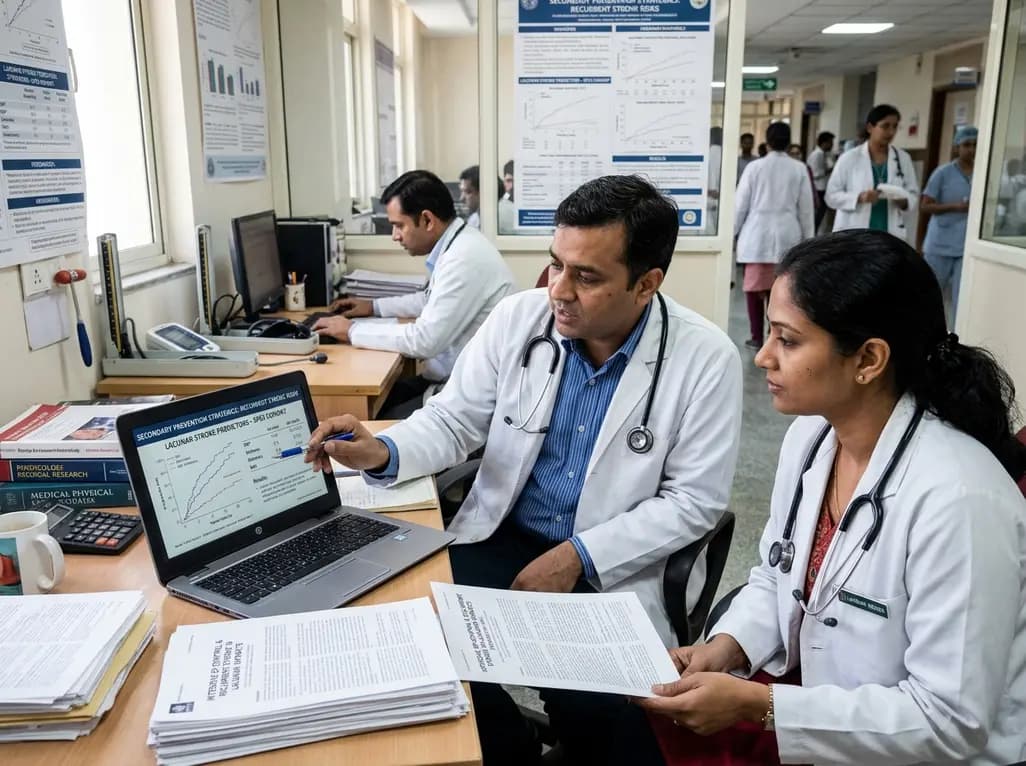
Explore vital recurrent stroke predictors in lacunar stroke patients managed with intensive blood pressure lowering. This analysis examines trial findings from SPS3 to uncover residual vascular risks, metabolic factors, and targeted secondary prevention strategies for high-risk neurological patients.
Today

Odisha has established India's first state-level clinical protocol specifically tailored for pregnant women with sickle cell disease. Developed with NHM and UNICEF, the framework provides structured antenatal screening, crisis mitigation, standardized referral pathways, and specialized interdisciplinary care.
Today

The Directorate General of Health Services directs Indian states to halt the hazardous reuse and reprocessing of single-use medical devices. Discover regulatory implications under the Drugs and Cosmetics Act, critical infection risks, legal liabilities, and operational changes required across clinical specialties.
Today

Mitochondria-targeted nanoparticles self-assembled from EGCG and L-glutamic acid effectively restore mitochondrial homeostasis, suppress synovial inflammation, and attenuate chondrocyte senescence in osteoarthritis, offering a promising disease-modifying nanotherapy.
Today

India is advancing preventive healthcare by integrating genomics, artificial intelligence, and quantum technologies. With the SANGAM programme sequencing one million Indian genomes, clinicians can unlock personalized therapies, detect cardiometabolic risks early, and curb the burden of diabetes and heart disease.
Today
