.webp&w=384&q=75)

Loading, please wait...
Loading, please wait...
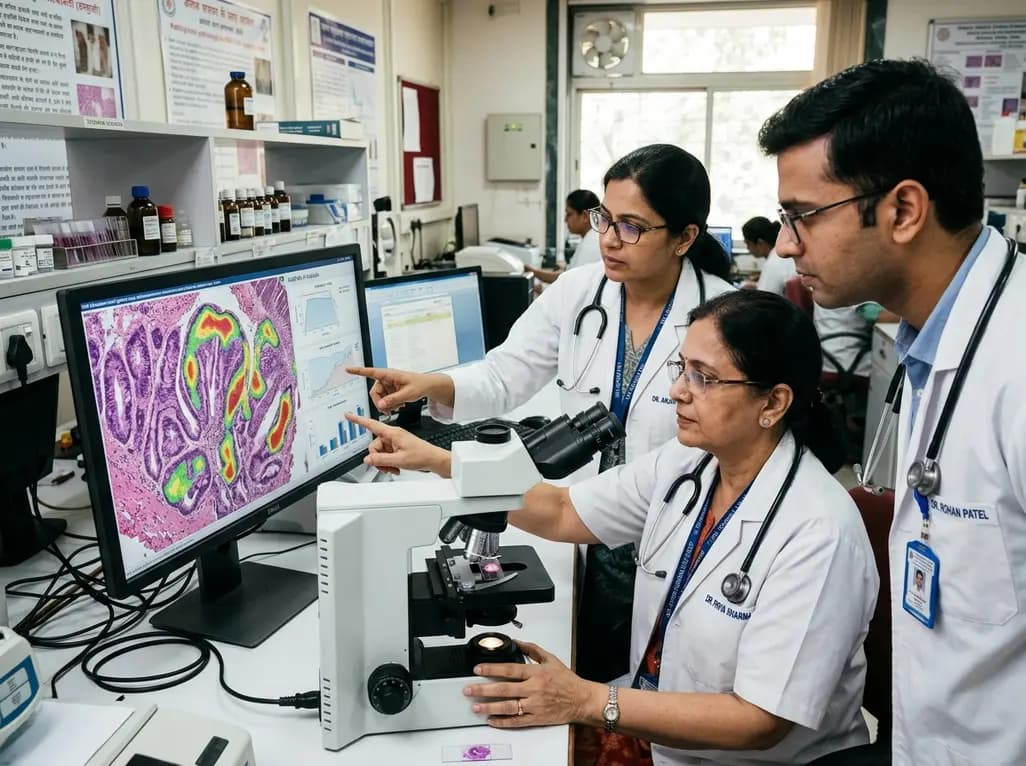
Recent breakthroughs in computational pathology provide valuable assistance for detecting aggressive gynecologic malignancies. Endocervical gastric-type adenocarcinoma (GAS) represents a lethal subtype of cervical cancer that pathologists frequently underdiagnose due to deceptively bland morphological features. To overcome these diagnostic hurdles, researchers designed an endocervical adenocarcinoma AI system named GASPath, enabling high-sensitivity detection directly on routine hematoxylin and eosin (H&E) stained sections.
Gastric-type endocervical adenocarcinoma presents profound diagnostic challenges in everyday gynecologic oncology. Unlike typical human papillomavirus (HPV)-associated cervical neoplasms, GAS develops independently of high-risk HPV infection. Consequently, conventional HPV-based cervical cancer screening assays fail to flag these aggressive lesions early. Furthermore, tumor cells frequently display minimal cytological atypia, pale cytoplasm, and deceptively well-formed glands. These characteristics closely mimic benign endocervical conditions, including lobular endocervical glandular hyperplasia and deep tunnel clusters. Pathologists also struggle to differentiate GAS from endometrioid adenocarcinoma with mucinous differentiation. Because of this substantial morphological overlap, patients frequently endure delayed diagnoses until tumors achieve advanced stages. Although specialized immunohistochemical markers and molecular panels assist diagnosis, their high cost and limited reproducibility restrict routine application in many pathology centers.
To overcome these challenges, investigators developed GASPath using a weakly supervised multiple instance learning framework. The research team curated 309 whole-slide images from 96 GAS cases at Peking University Third Hospital between 2018 and 2025. Notably, this dataset represents the largest GAS cohort assembled for computational pathology research. In addition, researchers incorporated 1,320 slides encompassing normal cervical mucosa, benign endocervical lesions, HPV-associated adenocarcinomas, and endometrioid carcinomas. The deep learning model divides high-resolution digital slides into smaller image tiles. An attention mechanism then aggregates features across all tiles to produce patient-level diagnostic predictions. This specialized pipeline captures fine-grained architectural variations while ignoring irrelevant background tissue, functioning entirely on routine H&E slides without requiring ancillary staining.
The investigators rigorously evaluated GASPath across three progressive validation phases. In the internal validation cohort, the model demonstrated outstanding diagnostic performance, achieving an overall accuracy of 0.980 and an ROC-AUC of 0.995. Subsequently, the team validated the algorithm across 12 independent external retrospective cohorts. In this external evaluation, the system achieved a sensitivity of 0.902, which increased to 0.968 following optimized diagnostic thresholds. On limited cervical biopsy specimens, the model maintained an ROC-AUC of 0.990. Finally, investigators deployed GASPath in a massive prospective real-world trial involving 7,056 consecutive clinical specimens collected between March 2024 and April 2025. In this real-world deployment, the platform achieved a balanced accuracy of 0.953 and identified all 45 confirmed GAS cases with 100% sensitivity.
Interpretability remains critical for integrating artificial intelligence into clinical diagnostic workflows. To ensure clinical transparency, GASPath creates detailed attention heatmaps that highlight suspicious histological regions directly on digital slides. These heatmaps focus on irregular, angulated glandular profiles and subtle loss of nuclear polarity that human observers frequently underestimate. Additionally, the system flags areas with mild cytological atypia and faint mucin alterations. By directing visual attention to these diagnostically critical regions, the algorithm reduces interobserver variability and speeds up slide reviews. Furthermore, these heatmaps provide clear visual justification for model predictions, fostering pathologist trust and serving as interactive educational guides for junior pathology trainees during difficult slide evaluations.
The clinical implementation of this endocervical adenocarcinoma AI system offers several practical benefits for healthcare centers. Because the algorithm operates exclusively on standard H&E-stained tissue, laboratories do not require additional immunohistochemical antibodies or costly genomic tests. Consequently, high-volume pathology laboratories can rapidly adopt the tool without increasing operational budgets. Furthermore, automated digital triage streamlines pathology workflows by prioritizing high-risk biopsy specimens for immediate expert review. This accelerated turnaround enables multidisciplinary oncology teams to initiate definitive surgical and systemic therapies earlier in the disease trajectory. Additionally, the system provides high-level diagnostic consistency to peripheral and community hospitals that lack specialized gynecologic pathologists, effectively democratizing access to expert-level diagnostic precision.
While GASPath demonstrated excellent clinical performance in real-world cohorts, future initiatives will expand its analytical breadth. Researchers plan to integrate histopathological image data with multimodal inputs, such as pelvic magnetic resonance imaging and genomic alteration profiles. Such integrative networks could predict chemotherapy resistance and guide individualized targeted therapy. Moreover, multi-institutional international trials will validate the algorithm across diverse demographic populations and varied laboratory staining protocols. Future iterations may also incorporate detection modules for other rare HPV-independent cervical malignancies, including clear cell and mesonephric carcinomas. Ultimately, adopting comprehensive digital pathology tools will elevate diagnostic accuracy, minimize misdiagnosis, and improve survival outcomes for patients with aggressive cervical neoplasms worldwide.
The GASPath model utilizes an attention-based multiple instance learning framework that detects subtle morphological changes across digital tissue slides. It identifies irregular glandular branching, mild nuclear polarity loss, and slight cytologic atypia. Because it was trained on extensive cohorts of benign mimics and normal mucosa, the system distinguishes deceptively bland malignant glands from benign hyperplastic lesions without requiring additional immunohistochemical stains.
Yes, GASPath demonstrates exceptional diagnostic precision on limited tissue biopsies. During external validation on cervical biopsy samples, the system achieved a remarkable ROC-AUC of 0.990. The model efficiently evaluates fragmented or superficial tissue sections, recognizing minute clusters of malignant glands. This capability enables early, accurate detection before surgical excision, helping clinicians plan appropriate radical interventions without facing undue diagnostic delays in oncology practice.
Routine H&E-based AI offers significant advantages in cost, turnaround speed, and clinical accessibility compared to molecular assays. Molecular profiling and specialized immunohistochemical panels require expensive reagents, sophisticated equipment, and substantial processing time. In contrast, GASPath operates directly on standard H&E slides available in all pathology laboratories, delivering rapid, highly sensitive diagnostic support without increasing laboratory expenses or delaying critical patient management.
Disclaimer: This content is for informational and educational purposes only and is not intended as medical advice. Always consult qualifying medical professionals and refer to the latest local and national guidelines for clinical practice.
References

Read summarized clinical updates, watch expert medical content, and earn CME certifications right from your smartphone.
Open your smartphone camera to scan and install.





A multicenter study validates GASPath, an endocervical adenocarcinoma AI diagnostic tool that achieves high sensitivity on routine H&E slides, preventing misdiagnosis of aggressive cervical cancer.
4 weeks back
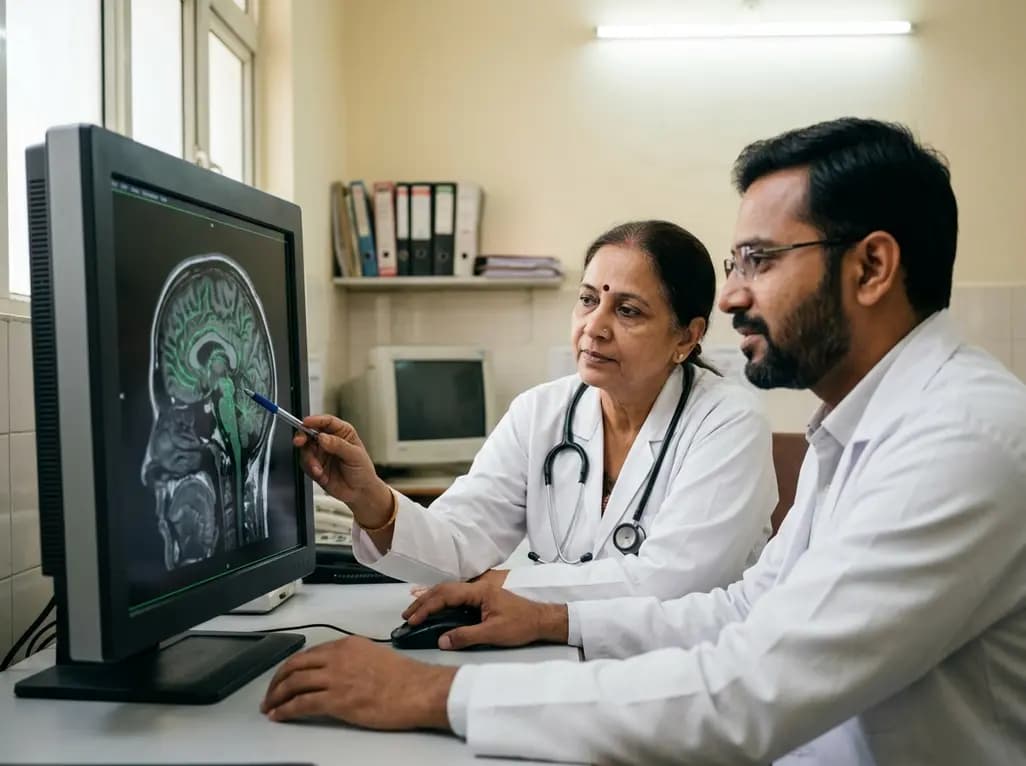
UK Research and Innovation is deploying £80 million across the NHS to trial nine cutting-edge technologies. The initiative features seven-minute brain MRIs, blood biomarker assays, and predictive AI tools, aiming to evaluate 92% of suspected cases within 18 weeks and overcome lengthy diagnostic backlogs.
Today

Discover the crucial distinctions between mesonephric and mesonephric-like proliferations of the female genital tract. Learn the key histomorphologic, immunohistochemical, and molecular differences essential for accurate diagnosis and clinical management.
Today

PepsiCo and Monster Beverage have challenged the FSSAI ban on the energy drink label in Indian courts. While companies highlight supply disruptions, regulatory actions spotlight severe cardiovascular and metabolic risks associated with excessive caffeine, sugar, and taurine consumption, especially in adolescents.
Today

A narrative review investigates whether the articularis genus muscle functions as an independent anatomical entity or blends with the vastus intermedius. We evaluate its morphology, role in retracting the suprapatellar bursa, and direct clinical significance in anterior knee pain and arthroplasty.
Today

A Bayesian multilevel meta-analysis reveals that aerobic training combined with moderate carbohydrate restriction modestly lowers HbA1c in type 2 diabetes. However, sparse data and very low certainty leave incremental benefits over exercise or diet alone unproven, highlighting the need for individualized care.
Today
