.webp&w=384&q=75)

Loading, please wait...
Loading, please wait...
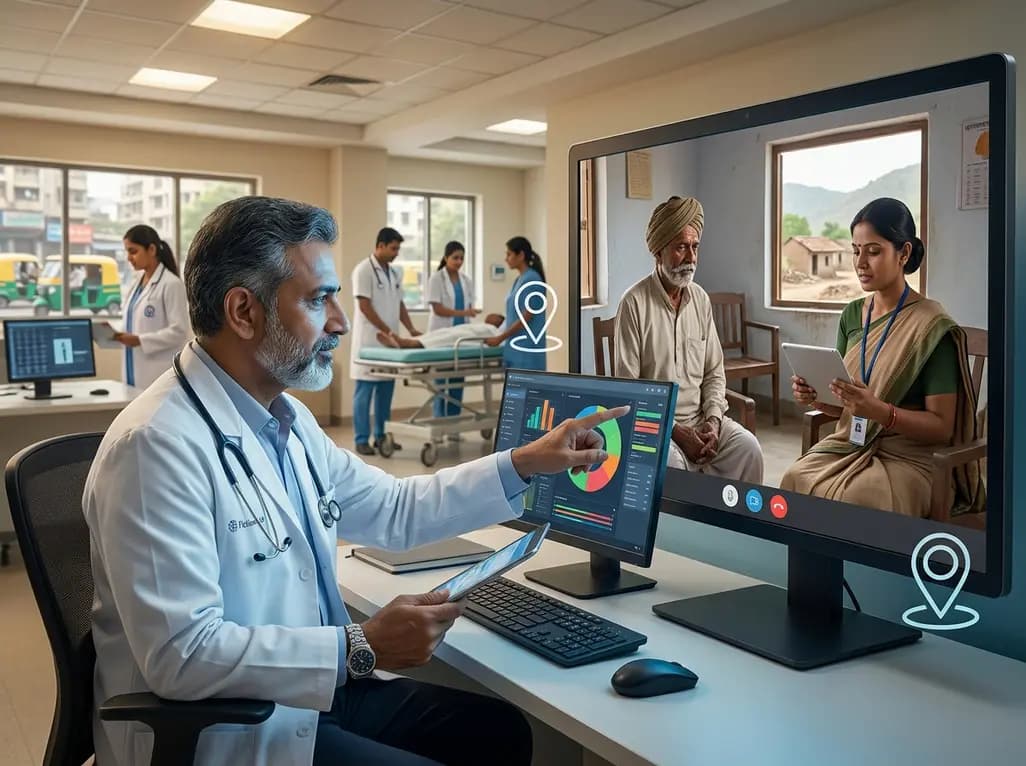
In the rapidly evolving healthcare ecosystem of India, medical practitioners and hospital administrators face significant administrative challenges. Patient care often takes a backseat when healthcare providers must coordinate complex pre-authorizations and insurance coverage details. However, modern digital innovations are introducing highly efficient AI health insurance tools to streamline these cumbersome administrative bottlenecks. For instance, Star Health has scaled its digital application, ATOM PRO, to serve as a real-time smart advisor. Consequently, this strategic deployment clarifies policy details at the point of sale. It accelerates underwriting and reduces hospital billing disputes during claims processing.
Healthcare providers frequently encounter patients who do not understand their policy exclusions, waiting periods, or sub-limits. This lack of transparency regularly causes conflicts in hospital billing offices, especially during emergency admissions. Therefore, integrating intelligent AI health insurance tools into the patient enrollment cycle is a critical step forward. The ATOM PRO platform actively addresses these challenges by acting as an on-screen guide for insurance agents. Consequently, agents can present product features, premium structures, riders, and policy waiting periods in real time on their devices. This upfront transparency directly addresses consumer concerns about hidden clauses. Indeed, these exclusions typically surface only during active emergencies. Furthermore, patients receive clear coverage insights before signing any policy document. Thus, the system eliminates ambiguity and misinterpretation at the point of purchase. By educating customers early, the insurance provider reduces future friction between the hospital administration and patients. Ultimately, this proactive approach fosters trust and ensures a smoother patient journey from admission to discharge.
For a long time, traditional health insurance systems relied heavily on manual processes. Consequently, hospital staff dealt with paper forms, manual checks, and slow underwriting cycles that delayed patient care. Under the older framework, securing policy approvals could take several days. However, Star Health has successfully compressed these timelines by digitizing its retail bookings. Currently, the company processes more than 95% of retail policies digitally. Moreover, they issue approximately 80% of policies within five minutes. This rapid digital issuance completely reshapes the patient experience during the admission phase. Buyers can complete policy selection, secure digital payments, and receive their valid documents in a single sitting. Consequently, when patients arrive at network hospitals, their digital records are immediately accessible. This eliminates administrative overhead for hospital registration desks. Furthermore, it accelerates the pre-authorization process for planned hospitalizations. Therefore, clinical teams can focus on medical management instead of worrying about pending insurance approvals. Ultimately, this digital transition reduces physical stress for patients, families, and busy healthcare providers alike.
The integration of ATOM PRO also brings significant advantages to the claims side of healthcare administration. In the past, submitting reimbursement claims required physical documentation, which caused substantial delays in registration and settlement. However, the platform's backend integration features dedicated digital reimbursement modules. These innovative modules have successfully increased the share of digital claim submissions from 8% to 21%. Furthermore, insurance agents can upload essential medical documents directly from their mobile devices. Consequently, this digital pathway bypasses physical submission steps, reducing administrative delays for hospital billing departments. For doctors, this means patients receive their claims faster, leading to higher overall satisfaction. Additionally, the platform allows real-time tracking of claim status. Therefore, patients no longer inundate hospital staffs with repetitive queries about pending payouts. Instead, they can check their application status transparently through their digital portals. Thus, clinics can reduce administrative congestion at front desks. Indeed, digitizing the paperwork allows hospital staff to focus on clinical coordination rather than tracking lost documents. Ultimately, this streamlined approach ensures a much faster turnaround time for everyone involved.
Historically, the insurance industry focused heavily on internal underwriting algorithms and backend calculations. This focus often left the consumer and the medical provider in the dark regarding actual coverage parameters. However, Star Health's new platform deliberately shifts the focus toward patient-facing clarity. Even though the application operates directly on the agent's device, it simplifies the front-end user experience immensely. Consequently, patients receive a clear breakdown of pricing, premiums, and coverage limits immediately. Furthermore, Anand Roy, the MD and CEO of Star Health, emphasized that buying health insurance should not feel complex. He noted that buyers must understand what a plan offers before making a final decision. Therefore, ATOM PRO helps agents deliver this clarity, building customer confidence. Additionally, this clear presentation reduces post-purchase regret. Consequently, hospitals experience fewer disputes over unpaid medical bills when patients are fully aware of their co-pay terms and deductibles. When patients understand their waiting periods, they do not feel cheated during sudden admissions. Thus, transparent technology serves as an educational bridge, enhancing the overall relationship between healthcare providers, insurers, and patients.
As digital transformation takes center stage, healthcare professionals must stay informed about these commercial developments. Indeed, the company aims to settle 50% of its claims using AI in two years. This aggressive target signals a future of faster cashless approvals and less paperwork for hospital administrative staff. For instance, hospital desks can expect automated verification systems to replace manual checks, accelerating patient discharge times. Furthermore, clear policy explanations mean patients arrive with fewer misconceptions. Consequently, they understand exactly what their policies cover. Therefore, doctors spend less time explaining exclusions and more time discussing clinical plans. Additionally, faster digital reimbursement processes will improve cash flow for medical facilities. This is particularly beneficial for small to medium-sized clinics that rely on timely insurance payouts to manage operational costs. Therefore, hospital managers should encourage patients to utilize these digital submission channels. Ultimately, understanding how these digital systems function will allow healthcare providers to advise their patients more effectively. Indeed, this knowledge ensures that modern clinics can maximize the financial benefits of these advanced insurance platforms.
Q1: What is ATOM PRO and how does it help health insurance buyers?
ATOM PRO is an AI-powered application developed by Star Health to act as a digital advisor for agents. Specifically, the app lists product features, premium pricing, waiting periods, and exclusions directly on the screen during the purchase process. Consequently, this upfront clarity reduces ambiguity, addresses consumer concerns about hidden clauses, and minimizes future claim disputes arising from misinterpretation. Ultimately, it simplifies and accelerates the entire insurance purchasing journey.
Q2: How does the new platform speed up the policy issuance process?
The platform replaces older paper-based forms and slow manual checks with a completely digital workflow. Indeed, the company now processes more than 95% of retail policies digitally. Consequently, the automated system issues approximately 80% of policies in under five minutes. This enables buyers to complete their selection and submit payments quickly. Thus, they receive their documents in a single sitting, bypassing traditional manual underwriting cycles.
Q3: How does the backend integration of this app affect claims submissions?
The application integrates digital reimbursement modules that allow agents to upload hospital bills and medical documents directly from their mobile devices. Consequently, the share of digital claim submissions has already increased from 8% to 21%. Furthermore, bypassing physical submissions significantly reduces delays in claim registration. Ultimately, this leads to faster claims processing and helps the company achieve its goal of settling half of its claims using AI.
Disclaimer: This content is for informational and educational purposes only. It does not constitute medical advice or replace professional judgment. Refer to the latest local and national guidelines for clinical practice.
References

Read summarized clinical updates, watch expert medical content, and earn CME certifications right from your smartphone.
Open your smartphone camera to scan and install.





Explore how Star Health and Allied Insurance is transforming the patient onboarding and reimbursement landscape in India by deploying ATOM PRO, an in-house AI-powered distribution platform designed to accelerate policy issuance and simplify claims.
3 months ago

A retrospective cohort study of 7,716 ICU patients from the MIMIC-IV database demonstrates that Gradient Boosting Decision Trees significantly outperform traditional SOFA scores in predicting in-hospital mortality among patients with sepsis and diabetes, with SHAP analysis providing clinical interpretability.
Today

A prenatal case highlights severe glutaric acidemia type II presenting as bilateral hyperechoic cystic kidneys at 18 weeks. Whole-exome sequencing revealed a novel homozygous ETFDH frameshift variant, demonstrating the power of rapid genetic testing in fetal renal anomalies.
Today
This article reviews the forensic and clinical complexities of acute myocarditis arising on left ventricular hypertrophy in children, highlighting early diagnostic red flags and multidisciplinary postmortem autopsy protocols.
Today

This comparative study evaluates posterior labral tears with and without glenohumeral instability, highlighting distinct demographic patterns, MRI underestimation in stable shoulders, and successful arthroscopic repair outcomes.
Yesterday

A clinical study demonstrates that early intervention with tocilizumab, either as monotherapy or bridged with corticosteroids, achieves significant proptosis reduction and resolves active inflammation in treatment-naive thyroid eye disease.
Yesterday
