.webp&w=384&q=75)

Loading, please wait...
Loading, please wait...
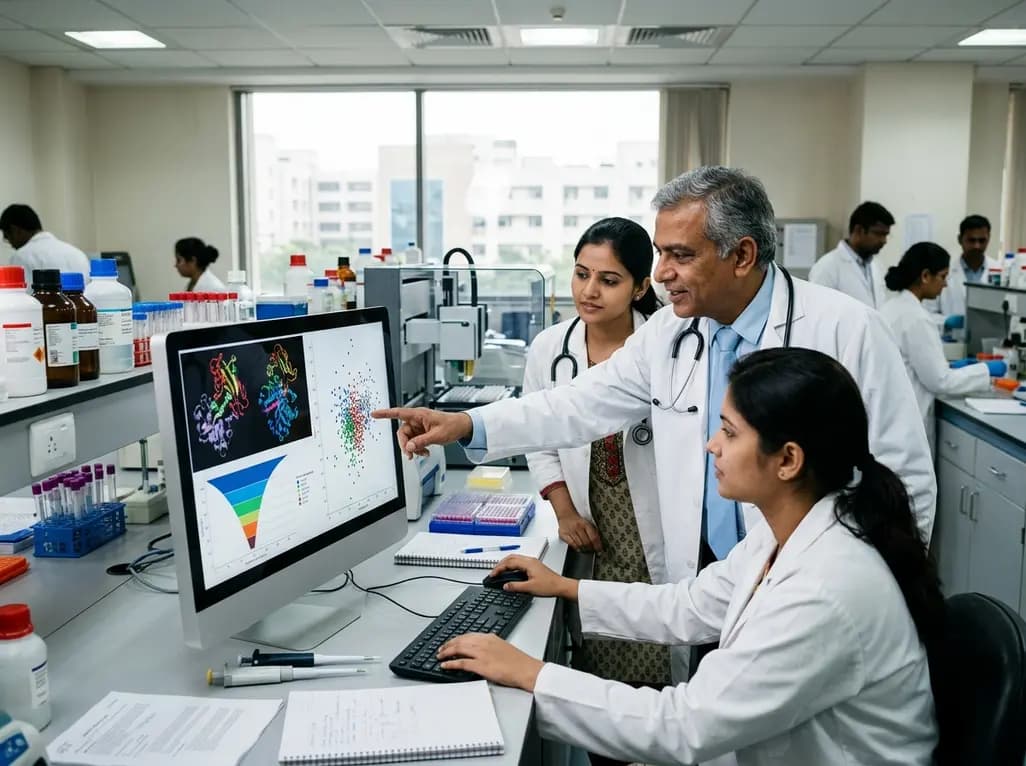
The landscape of modern medicine is witnessing a monumental shift as artificial intelligence permeates the earliest stages of pharmaceutical research. High-throughput screening (HTS) has long served as the fundamental pillar for identifying new lead compounds. However, traditional methods frequently struggle to address the complexities of immunotherapy. These challenges are especially evident when targeting immune checkpoint proteins, which often lack the deep binding pockets found in conventional drug targets. Consequently, the pharmaceutical industry has been searching for more efficient alternatives. The emergence of AI-guided drug discovery through platforms like HTS-Oracle v2 represents a significant milestone in this evolution. This technology does not merely accelerate the process; it fundamentally redefines how we prioritize chemical matter for experimental validation. By utilizing sophisticated machine learning architectures, researchers can now navigate vast chemical libraries with surgical precision, ensuring that laboratory resources are directed toward the most promising candidates.
Traditional high-throughput screening remains the cornerstone of early-phase small molecule discovery, yet it consistently underperforms against the most significant immunotherapy targets. Historically, the validated hit rates for these complex proteins have remained stubbornly low, often falling below 0.1%. This inefficiency stems from the fact that immune checkpoint receptors, such as CD28 or TIGIT, operate through protein-protein interaction (PPI) interfaces. These interfaces are typically characterized by large, shallow, and featureless binding surfaces. Because of this, finding a small molecule that can effectively disrupt these interactions is like finding a needle in a haystack. Furthermore, the sheer volume of compounds that must be screened imposes a massive burden on laboratory infrastructure. Scientists often screen hundreds of thousands of compounds to find just a handful of active binders. This process consumes vast amounts of protein, reagents, and time, which ultimately increases the cost of drug development. Therefore, a more intelligent, predictive approach is necessary to overcome these physical and economic bottlenecks.
To address these systemic inefficiencies, researchers developed HTS-Oracle v2, an advanced computational platform specifically designed for AI-guided drug discovery. Unlike its predecessor, this version features rigorous cross-validation protocols that ensure performance estimates are both honest and reproducible. The model was trained and validated across four clinically significant immune checkpoint targets: CD28, ICOS, LAG-3, and TIGIT. During internal testing, the system achieved exceptional ROC-AUC values of 0.968, 0.969, 0.875, and 0.928, respectively. These metrics indicate a superior ability to distinguish between active binders and inactive compounds. Moreover, the integration of molecular language modeling with cheminformatics allows the system to prioritize compounds based on continuous biophysical binding signals rather than simple binary labels. This nuanced understanding of molecular behavior is crucial for identifying hits that exhibit high affinity. Consequently, the platform provides a scalable framework that can be applied to a wide range of non-enzymatic targets that were previously considered "undruggable" by conventional standards.
The true test of any computational model lies in its prospective performance in a laboratory setting. To validate HTS-Oracle v2, the researchers applied the model to an 8960-compound Enamine Protein Mimetic Library. Instead of screening the entire library, the model selected only 25 compounds per target for experimental testing. This strategy represents a staggering 99.7% reduction in the total screening burden. For the experimental phase, the team utilized temperature-related intensity change (TRIC) technology. This biophysical method is highly sensitive and allows for the precise measurement of molecular interactions. Notably, the results were remarkable. HTS-Oracle v2 identified 4, 5, 4, and 6 validated binders from the small sets of 25 compounds per target. These figures correspond to validated hit rates of 16%, 20%, 16%, and 24%, respectively. In comparison to the traditional hit rate of 0.1%, this represents a hundred-fold improvement in efficiency. Such results demonstrate that AI can accurately predict molecular activity even when physical data is sparse.
The efficiency of AI-guided drug discovery is further highlighted by the enrichment factors achieved in this study. Data analysis revealed that 67-80% of all experimentally confirmed hits across the full 8960-compound library were captured within just the top 25 model-selected compounds per target. This means that by screening less than 1% of the library, researchers could identify the vast majority of active molecules. Specifically, for the CD28 target, HTS-Oracle v2 showed a 28-fold improvement over the earlier version of the model. This level of enrichment is transformative for drug discovery pipelines. It allows smaller research teams and academic institutions to compete with large pharmaceutical companies by reducing the need for expensive robotics and massive compound collections. Additionally, the ability to find high-quality hits with such minimal screening reduces the environmental impact of chemical research. By minimizing waste and maximizing data output, the platform sets a new performance benchmark for hit discovery in oncology and beyond.
The success of HTS-Oracle v2 has profound implications for the future of precision medicine and oncology. As we move toward a more targeted approach to cancer treatment, the demand for novel small molecule modulators of immune checkpoints will continue to grow. Immunotherapy has already transformed patient outcomes, but many patients still do not respond to existing treatments. Identifying new ways to modulate targets like LAG-3 and ICOS could lead to the development of next-generation combination therapies. Furthermore, this AI-driven approach is highly adaptable. It can be retrained for different disease areas, such as infectious diseases or neurodegeneration, wherever PPIs play a critical role. In countries like India, where pharmaceutical R&D is rapidly expanding, the adoption of such cost-effective tools could accelerate the journey from laboratory bench to clinical trial. Ultimately, the integration of AI-guided drug discovery into standard workflows will ensure that life-saving treatments are developed faster and more affordably than ever before.
Traditional high-throughput screening often yields hit rates below 0.1% because immune checkpoint targets have shallow binding surfaces that are difficult to target. HTS-Oracle v2 uses advanced machine learning to prioritize compounds with the highest probability of binding. In prospective trials, it achieved hit rates between 16% and 24% by screening only 25 compounds per target. This represents a significant increase in precision and drastically reduces the number of false negatives during the early discovery phase.
The study specifically focused on four clinically significant immune checkpoint targets: CD28, ICOS, LAG-3, and TIGIT. These proteins are vital regulators of T cell activation and are central to modern oncology research. By achieving high ROC-AUC values across these diverse targets, HTS-Oracle v2 demonstrated its versatility and accuracy in identifying small molecule modulators. These targets are currently at the forefront of clinical trials aimed at overcoming resistance to existing PD-1 and CTLA-4 inhibitors.
A 99.7% reduction in screening burden allows researchers to identify active binders by testing only a tiny fraction of a chemical library. Practically, this means a research team can test 25 compounds instead of nearly 9,000 while still capturing the majority of potential hits. This saves immense amounts of time, reduces the consumption of expensive biological reagents, and minimizes the need for high-end automation. Consequently, it democratizes drug discovery by making it accessible to institutions with limited physical infrastructure.
Disclaimer: This content is for informational and educational purposes only and does not constitute medical advice or professional drug development guidance. Always consult with qualified experts and refer to the latest local and national guidelines for clinical practice.
References
Abdel-Rahman SA et al. HTS-Oracle v2: Prospective Ai-Guided Discovery and Experimental Validation of Small Molecule Modulators Across Multiple Targets. J Chem Inf Model. 2026 Jul 13. doi: 10.1021/acs.jcim.6c01522. PMID: 42440345.
Abdel-Rahman SA, Gabr MT. HTS-Oracle X: AI-Guided Prospective Discovery of Small Molecule Immune Checkpoint Binders. bioRxiv. 2026 Jun 22. doi: 10.1101/2026.06.17.732853.
Lv Q, Zhou F, Liu X, Zhi L. Artificial intelligence in small molecule drug discovery from 2018 to 2023: does it really work? Bioorg Chem. 2023;141:106894. doi: 10.1016/j.bioorg.2023.106894.

Read summarized clinical updates, watch expert medical content, and earn CME certifications right from your smartphone.
Open your smartphone camera to scan and install.





Researchers have unveiled HTS-Oracle v2, an AI-guided drug discovery platform that drastically improves hit rates for immunotherapy targets. By reducing screening burdens by 99.7%, this tool identifies potent small molecule modulators for checkpoints like CD28 and LAG-3 with unprecedented accuracy.
3 months ago
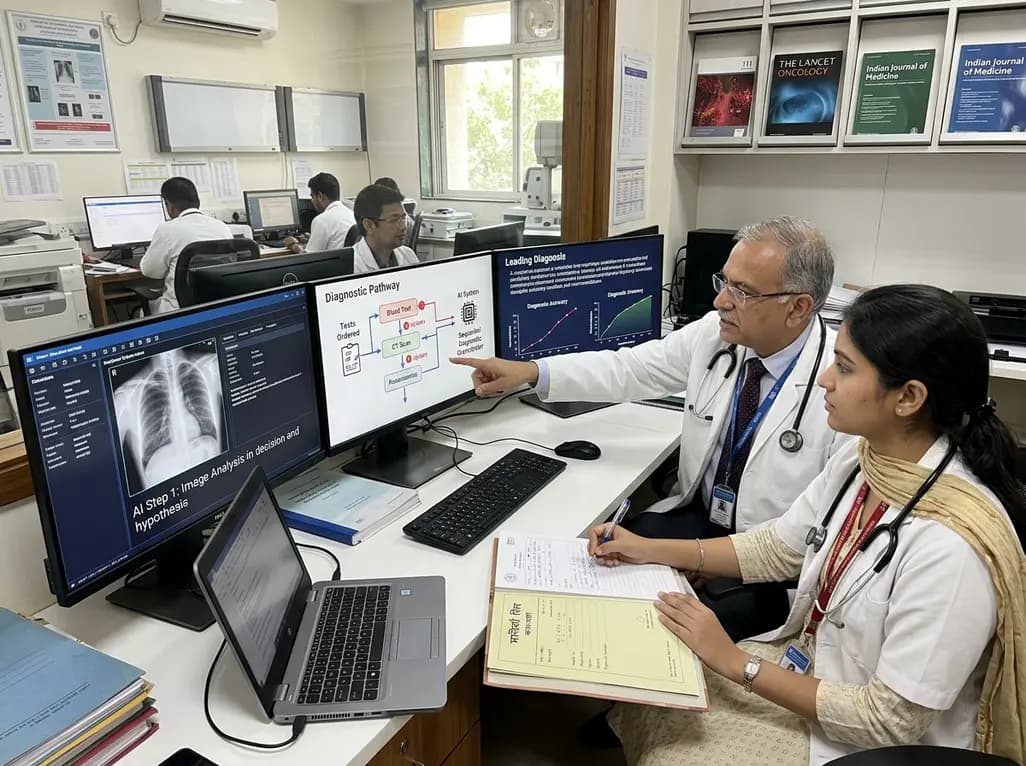
A breakthrough peer-reviewed study demonstrates that a sequential AI diagnosis system can mirror real-world clinical reasoning. By ordering stepwise tests and updating hypotheses dynamically, this multi-agent orchestrator achieved superior diagnostic accuracy while reducing investigative costs.
Today

A prenatal case highlights severe glutaric acidemia type II presenting as bilateral hyperechoic cystic kidneys at 18 weeks. Whole-exome sequencing revealed a novel homozygous ETFDH frameshift variant, demonstrating the power of rapid genetic testing in fetal renal anomalies.
Today

Review how tailored exercise programs benefit frail older patients with heart failure. Explore pathophysiological mechanisms, individualized training prescriptions, and strategies to overcome adherence barriers in clinical practice.
Yesterday

This comparative study evaluates posterior labral tears with and without glenohumeral instability, highlighting distinct demographic patterns, MRI underestimation in stable shoulders, and successful arthroscopic repair outcomes.
Yesterday

A clinical study demonstrates that early intervention with tocilizumab, either as monotherapy or bridged with corticosteroids, achieves significant proptosis reduction and resolves active inflammation in treatment-naive thyroid eye disease.
Yesterday
