.webp&w=384&q=75)

Loading, please wait...
Loading, please wait...
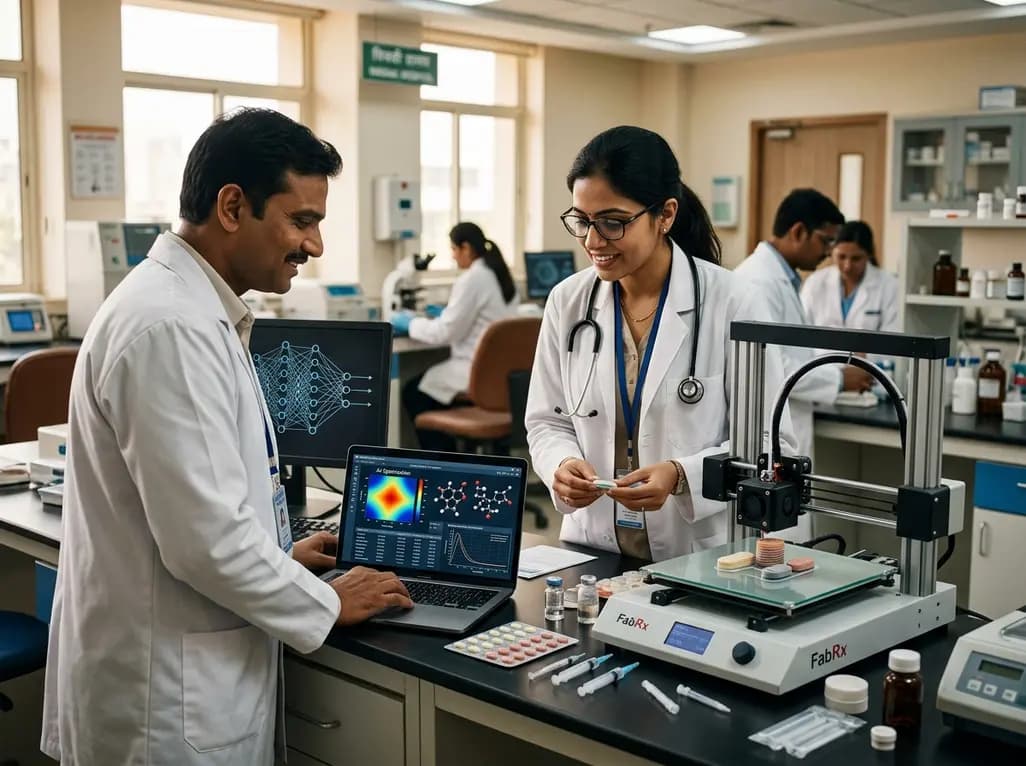
Additive manufacturing is rapidly redefining modern pharmaceutical sciences by shifting drug delivery from standard mass fabrication to on-demand, patient-centric delivery. Creating customized pharmacotherapy requires precise control over spatial geometry, drug loading, and release kinetics. Consequently, the integration of artificial intelligence with 3D printed drug products provides a powerful framework to streamline development pipelines. Machine learning algorithms, deep neural networks, and generative models now assist pharmaceutical scientists across every manufacturing phase. This digital transformation reduces traditional trial-and-error experimentation while significantly elevating formulation success and batch reproducibility across complex clinical environments.
Developing robust pharmaceutical formulations requires a deep understanding of polymer miscibility, thermal properties, and drug-excipient compatibility. In conventional workflows, scientists perform extensive benchtop experiments to determine whether a bioactive compound will mix uniformly with thermoplastic carriers or hydrogel matrices. Artificial intelligence fundamentally transforms this design phase by predicting printability before physical compounding begins. Specifically, machine learning classifiers analyze extensive physicochemical descriptors, such as melting points, glass transition temperatures, and molecular weights. As a result, predictive algorithms can accurately determine optimal drug-loading limits without causing unwanted drug degradation or nozzle clogging.
Furthermore, generative artificial intelligence architectures, including conditional generative adversarial networks, can invent de novo excipient blends tailored to poorly soluble active pharmaceutical ingredients. These computational models analyze historical formulation databases to recommend binder ratios and plasticizer concentrations. Consequently, formulation teams save valuable research time and minimize raw material consumption during early development. By screening molecular interactions virtually, AI ensures that the resulting feedstock exhibits appropriate rheological flow and mechanical elasticity. Therefore, researchers can rapidly transition from theoretical chemical concepts to stable, printable filaments and paste compositions with minimal experimental waste.
The preprinting stage represents a critical interface where digital computer-aided design models translate into tangible medical therapies. During this stage, software must convert three-dimensional geometric structures into precise toolpath instructions for additive manufacturing platforms. Machine learning algorithms optimize these parameters by predicting how structural variations, infill density, and layer height influence dissolution profiles. For example, clinicians can adjust internal surface area geometries to achieve immediate, sustained, or pulsatile pharmacokinetics. Thus, algorithms help engineers tailor drug release curves to match specific chronotherapeutic or physiological needs without changing the underlying chemical dosage.
In addition, finite element analysis combined with neural networks can simulate physical shear stress and thermal distribution during extrusion. Because mechanical failure during extrusion leads to costly batch rejections, predictive stress modeling identifies structural weaknesses before printing initiates. Algorithms evaluate whether a multi-layered polypill will maintain mechanical integrity during packaging, shipping, and handling. Moreover, these digital tools predict potential delamination risks between distinct drug layers containing incompatible therapeutic agents. Consequently, in silico screening ensures that the digital blueprint translates into a mechanically resilient, therapeutically efficacious dosage unit that adheres to stringent pharmacopeial standards.
During the printing phase, maintaining continuous quality assurance is paramount for patient safety. Traditional pharmaceutical manufacturing relies on retrospective destructive testing, which is impractical for small-batch or personalized dosage fabrication. In contrast, integrating process analytical technology with artificial intelligence creates an intelligent, closed-loop fabrication ecosystem. High-resolution optical sensors, thermal cameras, and spectroscopic probes collect real-time data directly from the print bed. Machine learning algorithms process these sensory streams instantly to detect microstructural anomalies, filament slippage, and inconsistent layer deposition.
Furthermore, computer vision models trained on deep convolutional neural networks can identify surface defects and pore irregularities as they occur. When the software detects a drift in extrusion temperature or flow rate, adaptive control systems automatically correct printer settings in real time. This dynamic feedback loop prevents batch failure and ensures consistent active ingredient distribution throughout every printed layer. Consequently, automated process optimization reduces human operational error and minimizes downtime. In hospital-based or compounding pharmacy settings, such continuous validation guarantees that each personalized dose matches exact therapeutic specifications without requiring destructive analytical testing of finished units.
Once fabrication is complete, finished units must undergo rigorous non-destructive evaluation to verify critical quality attributes. Postprinting analysis confirms active ingredient content, spatial uniformity, weight variation, and dissolution predictability. Artificial intelligence significantly enhances these quality control protocols by analyzing spectral imaging data rapidly. For instance, near-infrared spectroscopy and Raman chemical imaging produce complex hypercubes of spectral data. Machine learning algorithms deconvolute these spectra within seconds to quantify active drug concentration and identify polymorphic transitions across the tablet surface.
Additionally, predictive dissolution modeling eliminates the need to dissolve finished tablets in conventional dissolution apparatuses. By correlating structural metrics from X-ray micro-computed tomography with dissolution kinetics, artificial intelligence predicts in vitro release behavior with remarkable accuracy. Therefore, quality assurance teams can clear customized batches for patient dispensing immediately. This non-destructive analytical capability is especially vital for expensive orphan drugs, radiopharmaceuticals, and point-of-care pediatric formulations. Ultimately, AI-driven quality control protocols establish high regulatory confidence while accelerating release times from the printer to the patient bedside.
The convergence of artificial intelligence and pharmaceutical 3D printing holds transformative potential for clinical therapeutics. In hospital wards and outpatient clinics, physicians frequently encounter vulnerable populations, such as pediatric, geriatric, and oncology patients, who require highly personalized dosing regimens. Commercial mass-manufactured tablets often force clinicians to split pills, which introduces significant dosing inaccuracies and erratic plasma concentrations. By leveraging AI-assisted printing, healthcare facilities can establish decentralized modular manufacturing units that print exact, weight-adjusted doses on demand.
Moreover, multi-drug polypills created through additive manufacturing simplify complex medication regimens for multimorbid patients suffering from cardiovascular disease and metabolic disorders. Artificial intelligence optimizes the spatial separation of chemically incompatible active compounds within a single tablet while programming independent release rates for each drug. Consequently, patients receive a single daily pill instead of multiple separate medications, which dramatically enhances treatment adherence and reduces polypharmacy complications. As healthcare systems transition toward precision medicine, automated 3D printing platforms will serve as indispensable tools for individualized patient care.
Machine learning models analyze complex chemical structures, thermodynamic descriptors, and solubility parameters to evaluate molecular interactions between active drugs and polymeric carriers. By predicting glass transition shifts and phase separation risks in advance, these computational algorithms select compatible excipients rapidly. Consequently, researchers avoid unstable formulations and substantially reduce costly physical laboratory experimentation during initial formulation design.
Computer vision systems monitor the print bed continuously using high-resolution cameras and optical coherence tomography. Deep learning algorithms process these image frames in real time to detect surface cracks, filament voids, and dimensional deviations. If anomalies appear, the system alerts operators or adjusts printing parameters immediately, ensuring that defective units are never dispensed to patients.
Decentralized additive manufacturing enables hospital pharmacies to produce customized, small-batch medications on demand at the point of care. Instead of relying on manual extemporaneous compounding or commercial tablet splitting, pharmacists use automated, AI-verified printers to fabricate exact dosages. This capability significantly improves dosing precision for pediatric patients, reduces medication waste, and accelerates patient discharge times.
Disclaimer: This content is for informational and educational purposes only. It is not intended to provide medical advice or to be a substitute for professional medical advice, diagnosis, or treatment. Patients should always consult with their physician or other qualified health care provider for advice regarding any medical condition. Clinicians should use their clinical judgment and not rely solely on the information provided. Refer to the latest local and national guidelines for clinical practice.
References

Read summarized clinical updates, watch expert medical content, and earn CME certifications right from your smartphone.
Open your smartphone camera to scan and install.





Explore how artificial intelligence accelerates formulation development, refines process parameters, and strengthens quality control across all manufacturing stages of 3D printed drug products to advance personalized pharmacotherapy.
last month

A systematic review of 41 preclinical studies reveals that baicalin dampens systemic inflammation, inhibits NF-κB and NLRP3 pathways, and improves organ preservation in sepsis models. However, substantial study heterogeneity and a complete lack of human clinical trials highlight the need for further translational research.
Today
Discover the crucial distinctions between mesonephric and mesonephric-like proliferations of the female genital tract. Learn the key histomorphologic, immunohistochemical, and molecular differences essential for accurate diagnosis and clinical management.
Today
A large UK Biobank study reveals that plasma proteomic signatures capture preclinical organ damage and improve multiorgan risk prediction across early CKM syndrome stages 0 to 2 beyond traditional PREVENT clinical models.
Today
A narrative review investigates whether the articularis genus muscle functions as an independent anatomical entity or blends with the vastus intermedius. We evaluate its morphology, role in retracting the suprapatellar bursa, and direct clinical significance in anterior knee pain and arthroplasty.
Today

A Bayesian multilevel meta-analysis reveals that aerobic training combined with moderate carbohydrate restriction modestly lowers HbA1c in type 2 diabetes. However, sparse data and very low certainty leave incremental benefits over exercise or diet alone unproven, highlighting the need for individualized care.
Today
