.webp&w=384&q=75)

Loading, please wait...
Loading, please wait...

Researchers recently introduced a breakthrough algorithm that significantly improves bioactivity prediction by applying data compression principles to chemistry. Specifically, they used the Minimum Message Length (MML) principle to create an unsupervised learning system. This system identifies essential molecular substructures from a massive database of three million biologically relevant molecules. Consequently, these discovered patterns serve as highly effective descriptors for understanding how drugs interact with biological targets. Additionally, the approach demonstrates that a good compression of data often reveals a superior explanation of its function.
Traditional chemical fingerprints, such as Morgan or MACCS, rely on fixed human-curated rules. However, the MML-based algorithm allows the data to define itself by finding the most efficient way to describe molecular structures. By prioritizing substructures that offer the best compression, the algorithm uncovers both classical functional groups and entirely new patterns. Furthermore, these data-specific fingerprints provide a more granular view of chemical space. This precision is critical for modern pharmaceutical research. Moreover, the methodology uncovers novel larger patterns that carry more specific biological functions than previously recognized.
When tested on 24 distinct datasets, the MML-derived fingerprints showed remarkable accuracy. The researchers trained ridge regression models using these new representations. In fact, they found that these models significantly outperformed standard industry benchmarks. Because the algorithm discovers functional groups tailored to specific datasets, it captures nuances that general-purpose tools often miss. Therefore, this approach could streamline the early stages of drug development. Ultimately, it helps scientists identify viable lead compounds more rapidly than ever before.
MML is a concept from computational learning theory. It suggests that the best explanation for data is the one that achieves the shortest possible description or compression. In this context, it identifies the most meaningful chemical substructures.
Traditional methods like Morgan fingerprints use fixed, universal rules. In contrast, this algorithm discovers data-specific patterns. This allows for more accurate bioactivity prediction across diverse datasets.
Disclaimer: This content is for informational and educational purposes only. It does not constitute medical advice, diagnosis, or treatment. Always seek the advice of your physician or other qualified health provider with any questions you may have regarding a medical condition. Refer to the latest local and national guidelines for clinical practice.
References
Sharma R et al. Compressing Chemistry Reveals Functional Groups. J Chem Inf Model. 2026 Mar 18. doi: 10.1021/acs.jcim.5c02917. PMID: 41849780.
Wallace RS, Boulton DM. An Information Measure for Classification. Comput J. 1968;11(2):185-194.
Rogers D, Hahn M. Extended-Connectivity Fingerprints. J Chem Inf Model. 2010;50(5):742-754.

Read summarized clinical updates, watch expert medical content, and earn CME certifications right from your smartphone.
Open your smartphone camera to scan and install.





A novel unsupervised learning algorithm uses data compression to identify functional groups and significantly improve bioactivity prediction accuracy....
7 months ago
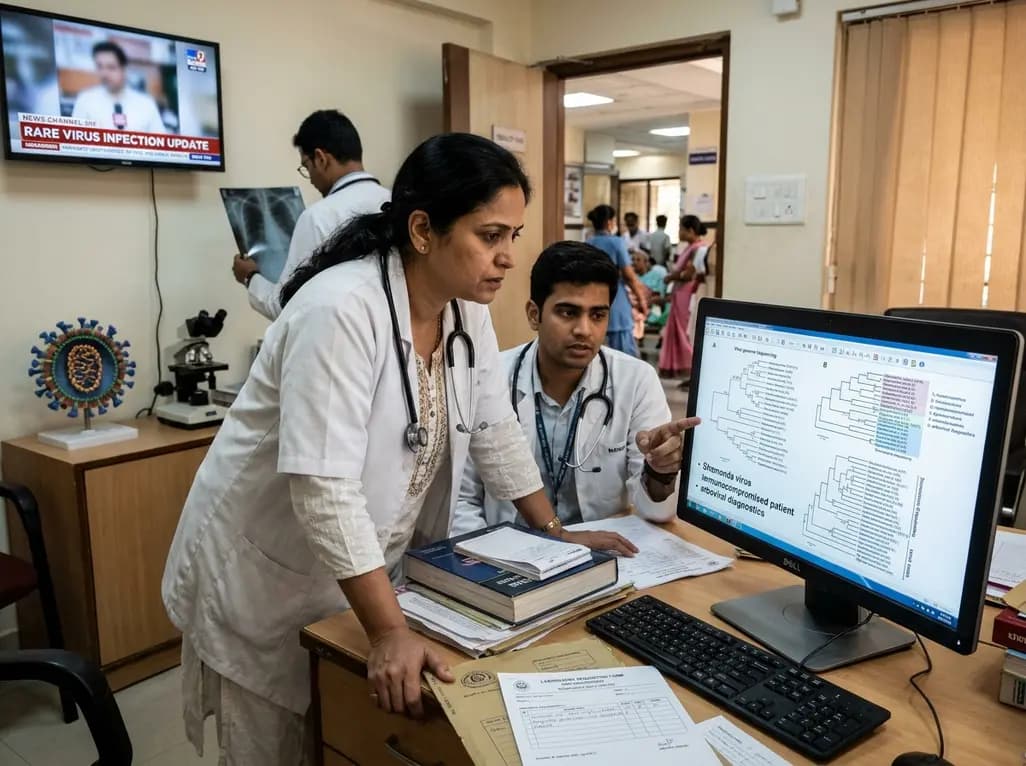
Health authorities recently identified the first documented human infection of Shamonda virus in an immunocompromised individual in France. While the World Health Organization currently assesses wider transmission risk as very low, the event highlights critical One Health vectors and arboviral diagnostic awareness.
Today
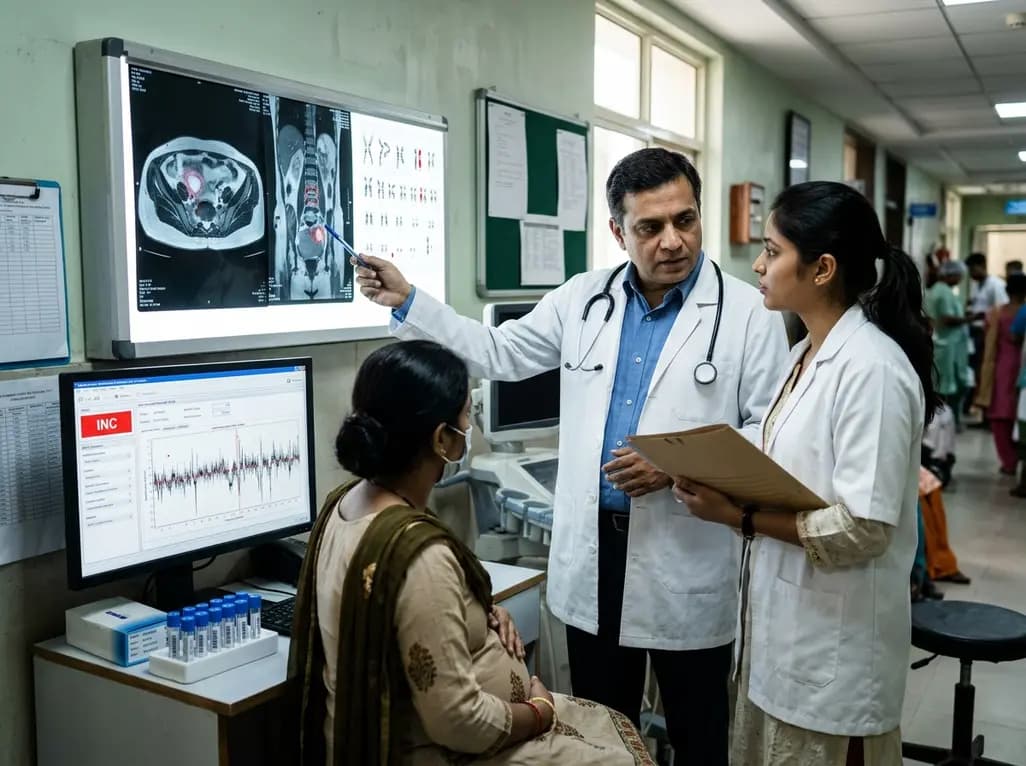
Occult maternal malignancy accounts for 3.82% of persistent unreportable NIPT results with genomic noise. Multiple chromosomal aberrations, notably on chromosome 18, warrant thorough oncological evaluation and whole-body MRI to ensure timely maternal diagnosis while preserving fetal care.
Today

This article reviews the forensic and clinical complexities of acute myocarditis arising on left ventricular hypertrophy in children, highlighting early diagnostic red flags and multidisciplinary postmortem autopsy protocols.
Today
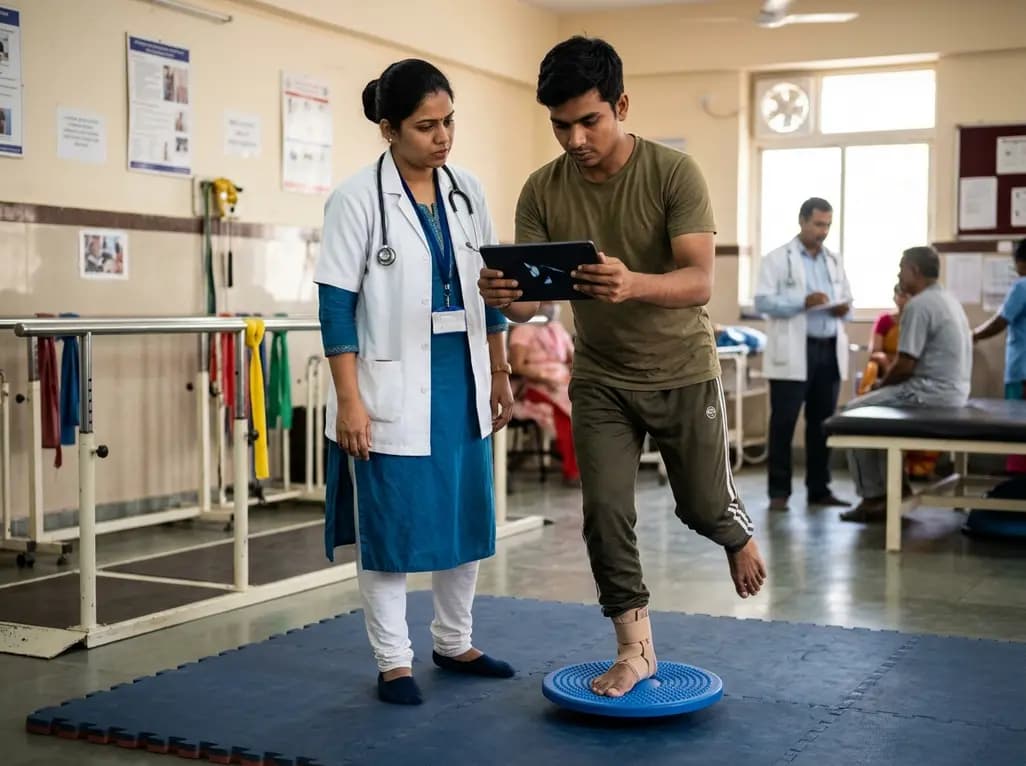
A randomized controlled trial demonstrates that an eight-week dual-task training intervention significantly improves static and dynamic postural control over standard balance exercises in individuals with chronic ankle instability, addressing critical neurocognitive deficits during athletic and daily activities.
Today
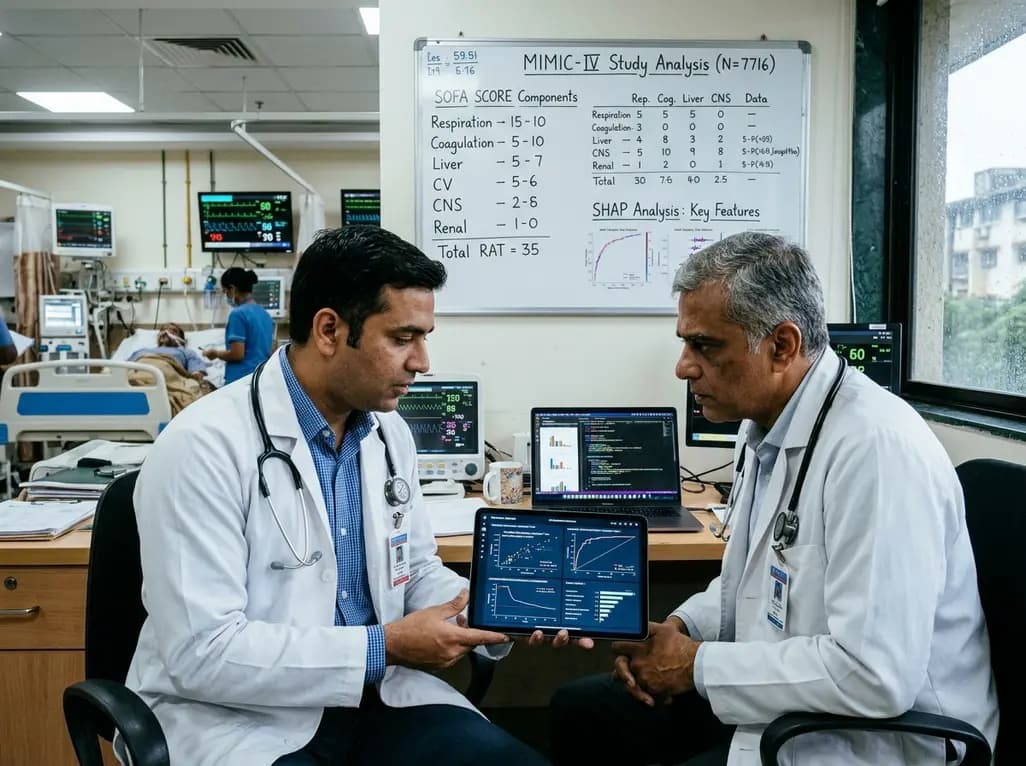
A retrospective cohort study of 7,716 ICU patients from the MIMIC-IV database demonstrates that Gradient Boosting Decision Trees significantly outperform traditional SOFA scores in predicting in-hospital mortality among patients with sepsis and diabetes, with SHAP analysis providing clinical interpretability.
Today
