.webp&w=384&q=75)

Loading, please wait...
Loading, please wait...

Kamla Nehru Memorial Hospital (KNMH) in Prayagraj is currently introducing advanced AI cath lab technology to enhance cardiac diagnostics and treatment. This state-of-the-art facility, scheduled for a June launch, marks a significant milestone for medical infrastructure in Uttar Pradesh. Since the system utilizes high-definition 3D imaging, clinicians can now diagnose complex heart diseases with unprecedented accuracy and speed.
The AI-powered system enables the precise detection of arterial blockages through intelligent navigation. Furthermore, the intelligent catheter navigation system significantly reduces manual errors and limits radiation exposure for both patients and staff. Consequently, patients receive safer and more efficient treatment during delicate procedures. Additionally, integrated smart software detects procedural irregularities in real time, ensuring high standards of safety during every operation.
Hospital director Hari Om Singh reported that this facility is only the third of its kind in India. The project represents a substantial investment of approximately Rs 20 crore and includes integrated diagnostic services like MRI, CT scans, and ultrasound. Moreover, the equipment arrived ahead of schedule from Germany via air transport due to global logistics adjustments. Therefore, the hospital has already installed the machinery and is finalizing a dedicated recovery room. Ultimately, these advancements improve stent placement accuracy and provide greater flexibility for surgeons during complex cardiac interventions.
Q1: When will the new AI cath lab at Kamla Nehru Memorial Hospital become operational?
The facility is expected to be fully operational by June 2026, once the dedicated patient recovery room is completed.
Q2: What are the primary advantages of an AI-enabled cath lab?
It offers high-definition 3D imaging, reduces radiation exposure, minimizes manual errors via intelligent navigation, and provides real-time detection of procedural irregularities.
Q3: How unique is this facility in India?
According to hospital officials, this is the third AI-enabled cath lab in the country and the very first one in the state of Uttar Pradesh.
Disclaimer: This content is for informational and educational purposes only. It does not constitute medical advice or replace professional judgment. Refer to the latest local and national guidelines for clinical practice.
References

Read summarized clinical updates, watch expert medical content, and earn CME certifications right from your smartphone.
Open your smartphone camera to scan and install.





Kamla Nehru Memorial Hospital in Prayagraj is set to launch UP's first AI-enabled cath lab in June, offering 3D imaging and precise cardiac care....
6 months ago

A retrospective cohort study of 7,716 ICU patients from the MIMIC-IV database demonstrates that Gradient Boosting Decision Trees significantly outperform traditional SOFA scores in predicting in-hospital mortality among patients with sepsis and diabetes, with SHAP analysis providing clinical interpretability.
Today
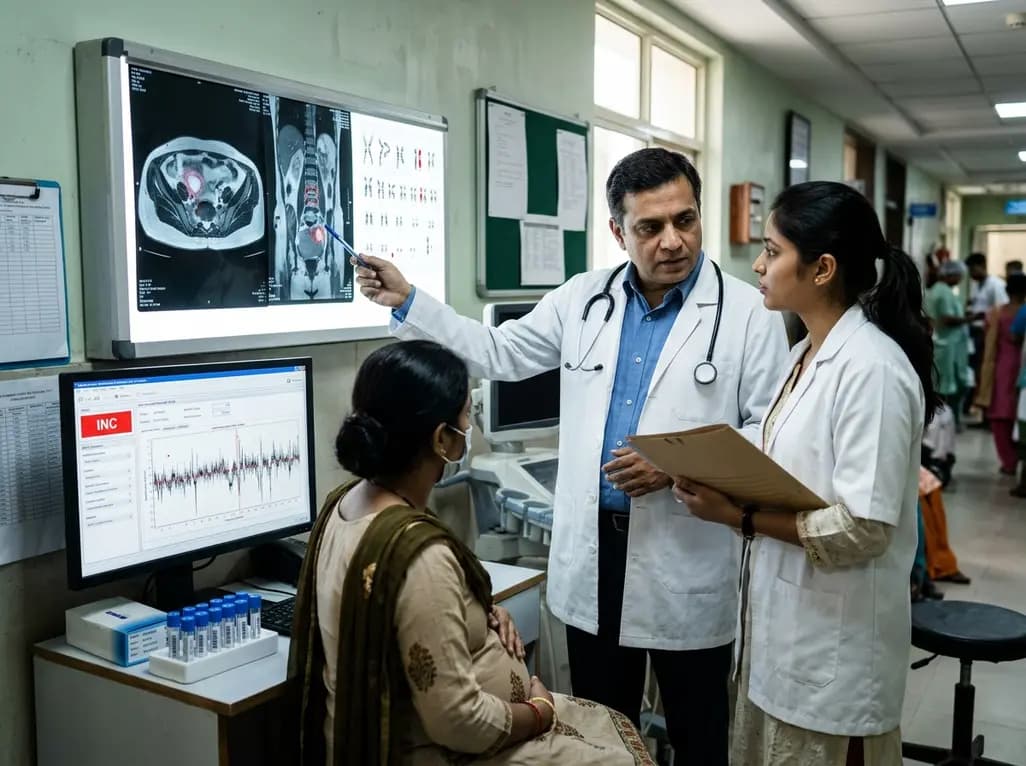
Occult maternal malignancy accounts for 3.82% of persistent unreportable NIPT results with genomic noise. Multiple chromosomal aberrations, notably on chromosome 18, warrant thorough oncological evaluation and whole-body MRI to ensure timely maternal diagnosis while preserving fetal care.
Today
This article reviews the forensic and clinical complexities of acute myocarditis arising on left ventricular hypertrophy in children, highlighting early diagnostic red flags and multidisciplinary postmortem autopsy protocols.
Today

This comparative study evaluates posterior labral tears with and without glenohumeral instability, highlighting distinct demographic patterns, MRI underestimation in stable shoulders, and successful arthroscopic repair outcomes.
Yesterday

A clinical study demonstrates that early intervention with tocilizumab, either as monotherapy or bridged with corticosteroids, achieves significant proptosis reduction and resolves active inflammation in treatment-naive thyroid eye disease.
Yesterday
