.webp&w=384&q=75)

Loading, please wait...
Loading, please wait...
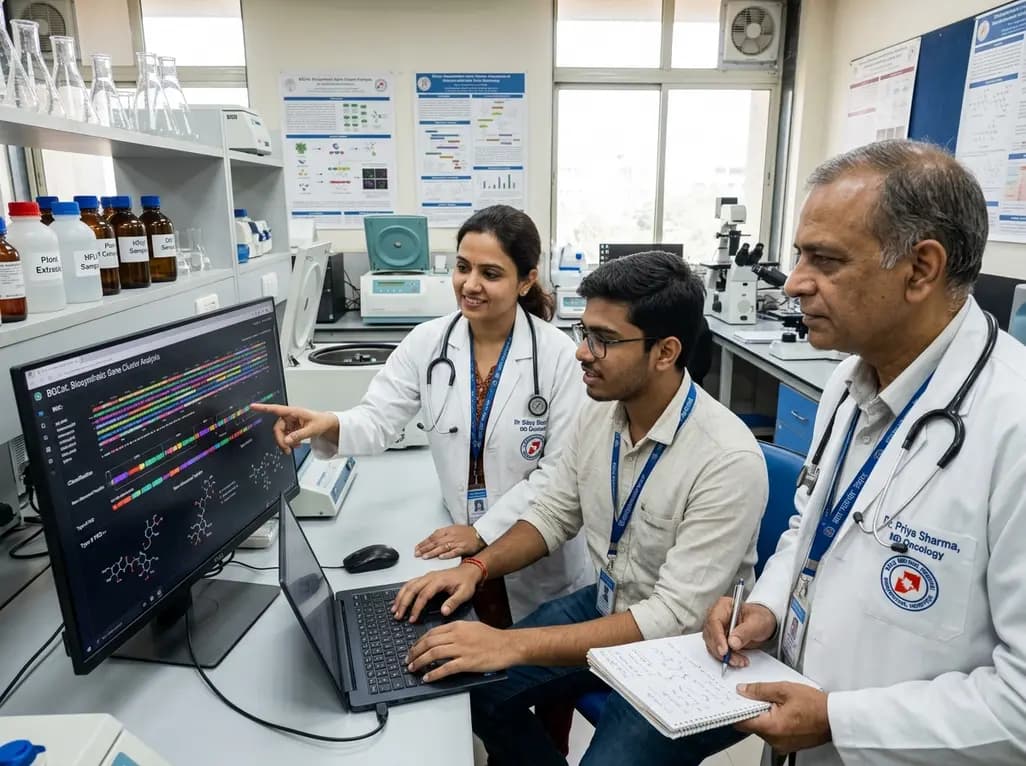
Natural microbial secondary metabolites remain the bedrock of modern pharmacology, supplying life-saving antibiotics, immunosuppressants, and oncology agents. In recent years, genomic sequencing has uncovered thousands of uncharacterized microbial pathways. However, linking genomic sequences to precise chemical entities has remained a substantial bottleneck. A novel machine learning tool now achieves advanced biosynthetic gene cluster classification, opening unprecedented avenues for targeted drug discovery.
Microorganisms assemble specialized metabolites through tightly organized groups of neighboring genes known as biosynthetic gene clusters. Historically, traditional bioassay-guided isolation identified landmark molecules such as penicillin, erythromycin, and daptomycin. Nevertheless, standard laboratory cultivation frequently fails to express silent clusters hidden within bacterial and fungal genomes. Consequently, genomic mining has become essential for cataloging these cryptic sequences across diverse environmental isolates. Effective biosynthetic gene cluster classification allows computational biologists and medicinal chemists to prioritize promising pathways before investing extensive resources in wet-lab expression. By understanding the structural classes encoded by these genomic loci, drug discovery programs can systematically avoid rediscoveries while isolating novel scaffolds with potent clinical relevance.
Although computational tools like antiSMASH can identify candidate genomic regions, predicting the exact molecular architectures of encoded metabolites has remained difficult. Previous automated classifiers generally assigned clusters to broad, coarse-grained categories such as polyketides or non-ribosomal peptides. Unfortunately, these broad labels provide insufficient biochemical detail for modern drug pipelines. Furthermore, substantial disparities exist in public training databases, because only a small fraction of identified clusters have experimentally confirmed molecular structures. As a result, standard machine learning pipelines frequently suffer from severe class imbalance and limited generalizability. Researchers required a more sophisticated algorithmic framework that could bridge the informational gap between primary protein sequences and complex natural product taxonomy.
To overcome these computational challenges, researchers engineered BGCat (BGC annotation tool), an innovative deep learning framework designed for fine-grained structural prediction. The system leverages pre-trained protein language models to generate dense, context-rich numerical embeddings directly from gene sequences. Subsequently, a specialized deep neural network processes these representations to predict fine-grained structural classes utilizing the standardized NPClassifier natural product nomenclature. In addition, the investigators designed a clustering-based augmentation strategy to strengthen sparse relationships between clusters and known products. Therefore, BGCat outperforms previous state-of-the-art computational tools across both coarse and fine hierarchical tiers, demonstrating robust analytical reliability.
Beyond individual predictions, the development team established the concept of product class profiles for gene cluster families. Gene cluster families group evolutionarily related loci across different microbial strains. By assigning probabilistic distributions of product types to these families, the tool offers a multi-dimensional perspective on microbial chemical diversity. Moreover, the investigators applied BGCat to more than one hundred thousand uncharacterized clusters cataloged in the antiSMASH database. Consequently, this massive computational screening provided high-resolution structural predictions for previously unannotated pathways. This expanded functional atlas significantly accelerates natural product chemistry and provides targeted leads for synthetic biology investigations.
The clinical implications of automated metabolite classification are profound, particularly in combating the global antimicrobial resistance crisis. Multidrug-resistant pathogens continue to outpace existing antibiotic development pipelines, creating an urgent clinical need for distinct chemical classes. Fine-grained prediction allows pharmacologists to pinpoint unusual biosynthetic pathways that synthesize novel antimicrobial scaffolds, bypassing existing resistance mechanisms. Similarly, in medical oncology, identifying complex peptide and terpene derivatives provides fresh candidates for targeted cytotoxic or immunomodulatory therapeutics. Accelerating the transition from raw sequencing data to prioritized lead candidates ensures that drug discovery remains ahead of emerging pathogens.
Integrating advanced artificial intelligence with microbial genomics marks a transformative shift in therapeutic development. Future workflows will likely combine fine-grained genomic classification with automated heterologous expression platforms and high-resolution mass spectrometry. In addition, researchers can utilize these predictive profiles to optimize synthetic biology efforts, engineering tailored metabolic pathways to synthesize modified drug analogs. As computational models assimilate larger datasets, predictive accuracy will continue to rise. Ultimately, these algorithmic advances will bridge genomic data science and bedside therapeutics, delivering next-generation anti-infective and anticancer treatments.
Biosynthetic gene clusters are physically grouped sets of genes within microbial genomes that jointly coordinate the synthesis of complex secondary metabolites. These natural products serve as the evolutionary origin for a vast proportion of clinically utilized antibiotics, antifungals, immunosuppressants, and oncology agents, making accurate computational analysis vital for modern pharmaceutical discovery.
BGCat integrates pre-trained protein language models with deep neural networks to extract rich biological representations from gene sequences. By applying the standardized NPClassifier hierarchical taxonomy and a novel clustering-based data augmentation strategy, it accurately predicts detailed chemical classes rather than vague, coarse categories.
By classifying over one hundred thousand previously unannotated microbial gene clusters, this computational pipeline enables researchers to rapidly locate distinct, uncharacterized chemical scaffolds. This targeted prioritization accelerates the discovery of next-generation antibiotics capable of overcoming multidrug-resistant bacterial pathogens and expanding clinical treatment options.
Disclaimer: This content is for informational and educational purposes only. It is not intended as medical advice or to endorse specific diagnostic, treatment, or investigative protocols. Healthcare professionals should verify all scientific claims and drug development insights against current peer-reviewed literature. Refer to the latest local and national guidelines for clinical practice.
References

Read summarized clinical updates, watch expert medical content, and earn CME certifications right from your smartphone.
Open your smartphone camera to scan and install.





Researchers introduce BGCat, an AI model that performs fine-grained structural classification of biosynthetic gene clusters, accelerating natural product drug discovery for infectious diseases and oncology.
last month

A systematic review of 41 preclinical studies reveals that baicalin dampens systemic inflammation, inhibits NF-κB and NLRP3 pathways, and improves organ preservation in sepsis models. However, substantial study heterogeneity and a complete lack of human clinical trials highlight the need for further translational research.
Today
Discover the crucial distinctions between mesonephric and mesonephric-like proliferations of the female genital tract. Learn the key histomorphologic, immunohistochemical, and molecular differences essential for accurate diagnosis and clinical management.
Today
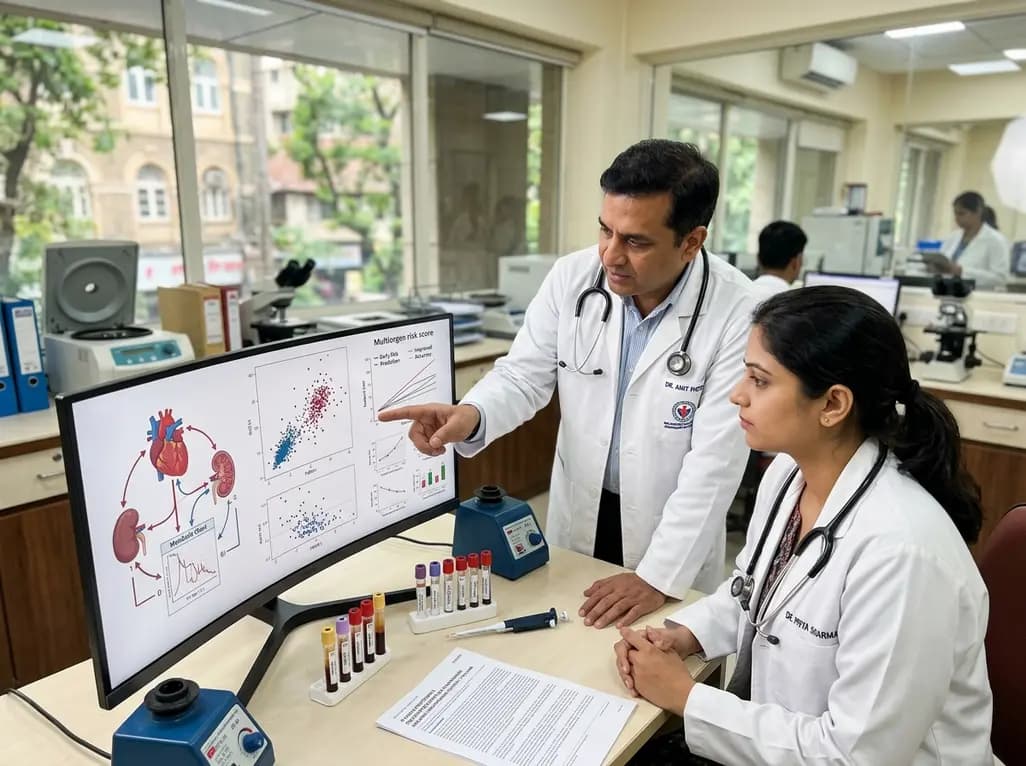
A large UK Biobank study reveals that plasma proteomic signatures capture preclinical organ damage and improve multiorgan risk prediction across early CKM syndrome stages 0 to 2 beyond traditional PREVENT clinical models.
Today
A narrative review investigates whether the articularis genus muscle functions as an independent anatomical entity or blends with the vastus intermedius. We evaluate its morphology, role in retracting the suprapatellar bursa, and direct clinical significance in anterior knee pain and arthroplasty.
Today

A Bayesian multilevel meta-analysis reveals that aerobic training combined with moderate carbohydrate restriction modestly lowers HbA1c in type 2 diabetes. However, sparse data and very low certainty leave incremental benefits over exercise or diet alone unproven, highlighting the need for individualized care.
Today
