.webp&w=384&q=75)

Loading, please wait...
Loading, please wait...

Forcibly displaced populations across the globe face immense psychological distress, resulting in disproportionate rates of post-traumatic stress disorder, major depression, and generalized anxiety. However, structural inequities, language differences, severe provider shortages, and socio-economic deprivation severely restrict access to essential psychiatric services. In response to these widening humanitarian gaps, modern digital innovations have emerged as scalable alternatives. In particular, artificial intelligence offers groundbreaking methods for diagnostic screening, clinical triage, and therapeutic support. A landmark systematic integrative review has mapped the evolving landscape of AI-based approaches to refugee mental health care, establishing a critical foundation for modern clinicians and humanitarian organizations.
Historically, traditional mental health delivery systems have struggled to serve displaced communities effectively. Cultural stigma, displacement trauma, and bureaucratic obstacles frequently prevent vulnerable individuals from receiving timely psychiatric evaluations. Consequently, clinicians require scalable digital tools that respect cross-cultural nuances while optimizing scarce resources. By synthesizing cutting-edge computational architectures, researchers are pioneering novel pathways to bridge the care divide. Furthermore, these emerging computational tools help clinicians identify acute psychological distress long before severe psychiatric decompensation occurs, ultimately safeguarding vulnerable patient populations in resource-constrained environments.
The systematic review evaluated diverse computational models and categorized them into three functional domains. The largest domain, representing nearly two-thirds of the evaluated literature, focuses on detection, prediction, and classification. Within this category, advanced machine learning classifiers and natural language processing algorithms evaluate multi-modal inputs, including clinical text, speech patterns, and digital screening surveys, to detect psychological morbidity accurately. Consequently, healthcare workers can rapidly identify high-risk individuals who require immediate specialized care.
The second functional domain encompasses digital interventions and direct clinical support. Although fewer studies currently populate this category, automated conversational agents and adaptive psychoeducational platforms demonstrate substantial clinical promise. These digital tools provide immediate, culturally adapted coping strategies and basic cognitive behavioral techniques to patients who lack direct access to psychiatrists. Additionally, the third domain involves automated information synthesis, wherein machine learning architectures analyze vast repositories of unstructured humanitarian data. As a result, public health authorities can track community-level mental health trends, optimize resource distribution, and deploy targeted psychological interventions during complex humanitarian emergencies.
The implementation of machine learning tools within humanitarian settings yields several vital clinical strengths. Foremost among these advantages is unprecedented scalability. Because humanitarian crises often overwhelm localized healthcare infrastructure, automated digital screening tools allow small medical teams to assess thousands of displaced individuals efficiently. Therefore, frontline healthcare workers can prioritize emergency consultations without exhausting limited human resources.
Moreover, modern natural language models drastically reduce language barriers that traditionally hinder psychiatric assessments. By supporting automated, multilingual evaluations, AI-driven platforms enable refugees to express complex emotional distress in their native dialects. This technological capability enhances diagnostic precision while fostering therapeutic rapport. Additionally, computational algorithms facilitate early detection of trauma-related symptoms in non-clinical environments, such as refugee camps or community centers. Consequently, humanitarian programs can deliver timely secondary prevention strategies, effectively reducing the long-term burden of chronic psychiatric disability across vulnerable communities worldwide.
Despite significant clinical promise, integrating artificial intelligence into refugee mental health care introduces notable methodological and ethical vulnerabilities. Algorithmic bias represents a primary concern, as most foundational models rely on datasets derived predominantly from high-income, Western populations. Consequently, algorithms may misinterpret cultural idioms of distress, resulting in harmful diagnostic misclassifications or inaccurate risk assessments. Furthermore, these models often lack deep contextual understanding of localized geopolitical trauma and cultural nuance.
In addition to algorithmic pitfalls, substantial infrastructural barriers persist in low-resource humanitarian environments. Unreliable internet connectivity, limited smartphone literacy, and severe electricity shortages can severely restrict digital tool accessibility. Ethical considerations regarding informed consent and data privacy also require rigorous oversight. Because displaced individuals experience profound legal and political vulnerabilities, unauthorized data leaks or surveillance could generate severe real-world consequences. Therefore, clinicians must avoid overreliance on automated outputs, ensuring that artificial intelligence remains a supportive aid rather than a complete substitute for compassionate human clinical judgment.
To overcome existing limitations, researchers and healthcare professionals must prioritize the development of culturally sensitive, human-centered computational models. Future research initiatives should focus on compiling diverse, multi-center datasets that capture varied linguistic expressions, trauma histories, and cultural backgrounds. Moreover, multidisciplinary collaborations between psychiatrists, computer scientists, cultural anthropologists, and refugee advocates are essential to design truly equitable digital health technologies.
Furthermore, rigorous prospective clinical trials must replace preliminary feasibility studies to validate diagnostic accuracy and therapeutic efficacy in real-world humanitarian field conditions. Healthcare organizations should establish transparent regulatory frameworks and algorithmic governance models tailored specifically to crisis settings. By standardizing validation protocols and prioritizing human-in-the-loop workflows, global health systems can responsibly harness digital intelligence. Ultimately, these targeted initiatives will empower healthcare providers to deliver equitable, trauma-informed psychological care to displaced populations across the globe.
Artificial intelligence evaluates linguistic patterns, patient-reported symptom scales, and vocal biomarkers to identify subtle markers of trauma. Natural language processing models analyze translated open-ended responses, while classification algorithms predict symptom severity. Consequently, these automated screening tools help frontline clinicians rapidly detect early post-traumatic stress disorder symptoms, prioritize high-risk patients for comprehensive psychiatric evaluation, and optimize resource allocation in severely constrained humanitarian environments.
The primary ethical concerns include algorithmic bias, cultural insensitivity, compromised data privacy, and inadequate informed consent. Displaced populations face unique sociopolitical vulnerabilities, making unauthorized data exposure particularly dangerous. Additionally, computational models trained on Western datasets may misinterpret cultural idioms of distress. Therefore, developers must enforce strict cryptographic protections, transparent data governance, and continuous human clinical oversight to safeguard vulnerable patient rights.
No, artificial intelligence cannot replace human psychiatrists or trained counselors. Although digital conversational agents provide accessible psychoeducation and basic coping techniques, they lack authentic empathy, clinical intuition, and deep contextual awareness. Instead, artificial intelligence serves as a complementary decision-support tool. It assists clinicians with rapid triage, diagnostic screening, and administrative data synthesis, thereby amplifying the reach and efficiency of human medical teams.
Disclaimer: This content is for informational and educational purposes only, and does not substitute professional medical advice, diagnosis, or treatment. Refer to the latest local and national guidelines for clinical practice.
References

Read summarized clinical updates, watch expert medical content, and earn CME certifications right from your smartphone.
Open your smartphone camera to scan and install.





Discover findings from a comprehensive systematic review exploring artificial intelligence applications in refugee mental health care, highlighting key clinical opportunities, functional domains, algorithmic biases, and ethical pathways for humanitarian health settings.
last month

Explore the therapeutic promise of TLR7 and TLR8 inhibitors in managing systemic lupus erythematosus and monogenic autoimmune diseases. Learn how targeting endolysosomal single-stranded RNA sensing and regulatory checkpoints like UNC93B1 and PLD4 offers precision treatment without broad immunosuppression.
Today
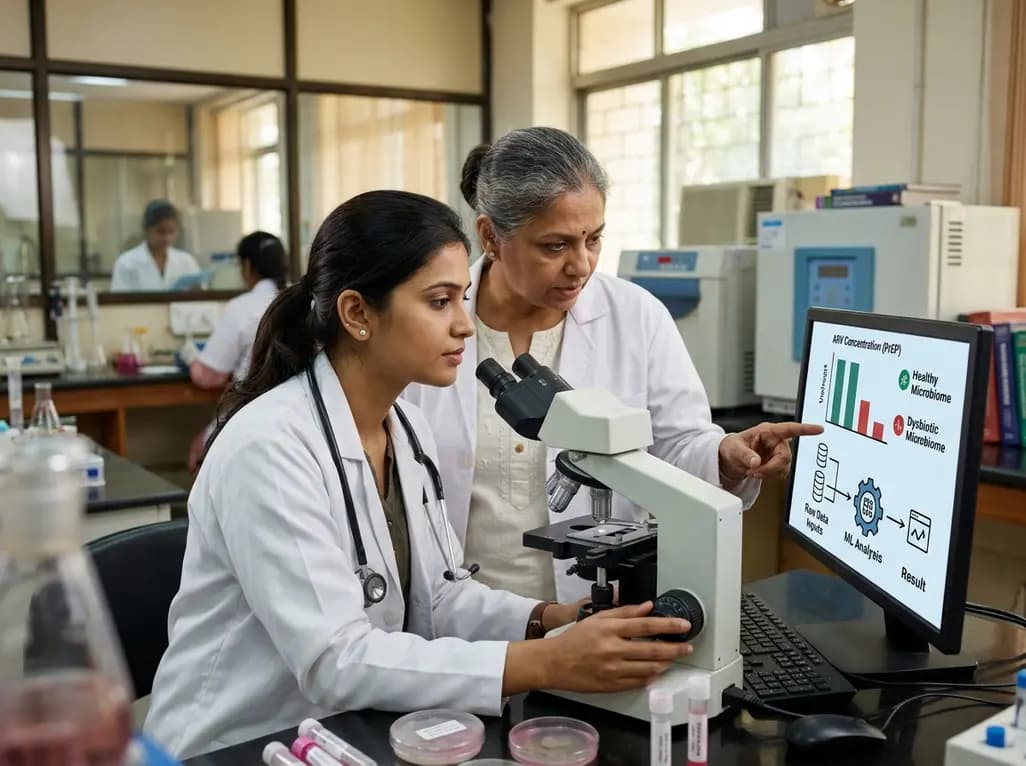
A pharmacometric and machine learning study reveals that specific vaginal bacteria alter cervical antiretroviral exposure, highlighting the need for precision HIV PrEP strategies.
Today
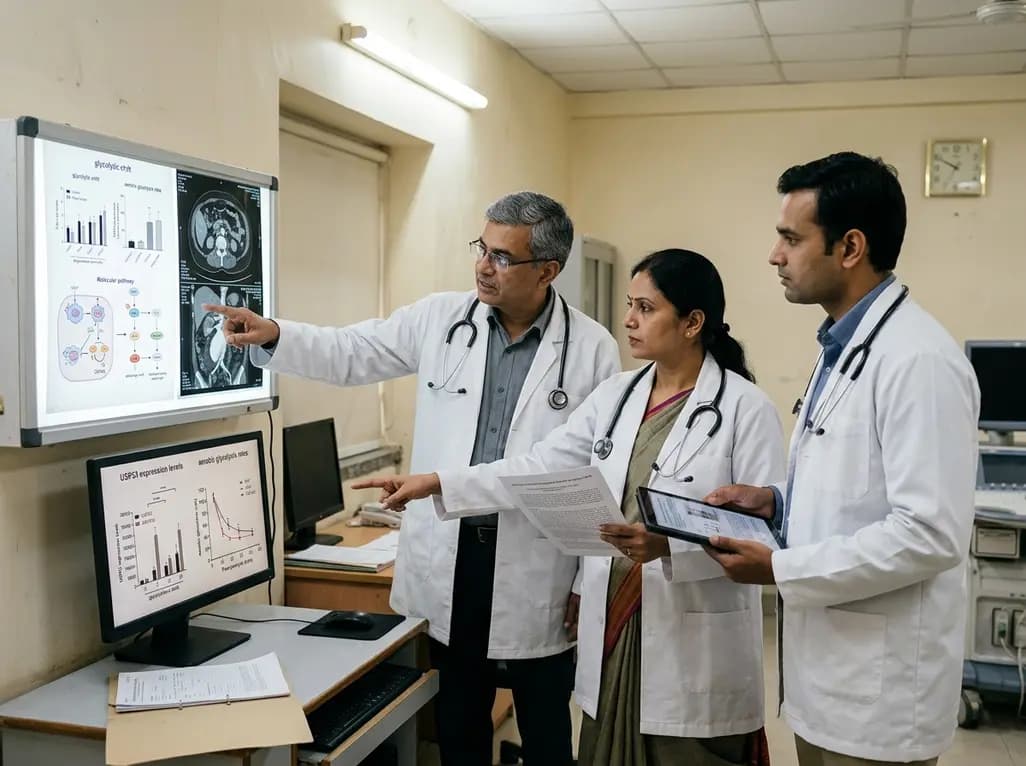
Abdominal aortic aneurysm rupture remains a catastrophic vascular emergency. Groundbreaking research reveals that USP53 accelerates aneurysm progression by reprogramming smooth muscle cell metabolism toward aerobic glycolysis, highlighting a promising target beyond conventional diameter-based surveillance.
Today
A breakthrough study leverages natural language processing to accurately identify incident medication-related osteonecrosis of the jaw and track antiresorptive drug holidays from clinical narratives in electronic health records, advancing osteoporosis pharmacovigilance and dental safety.
Today
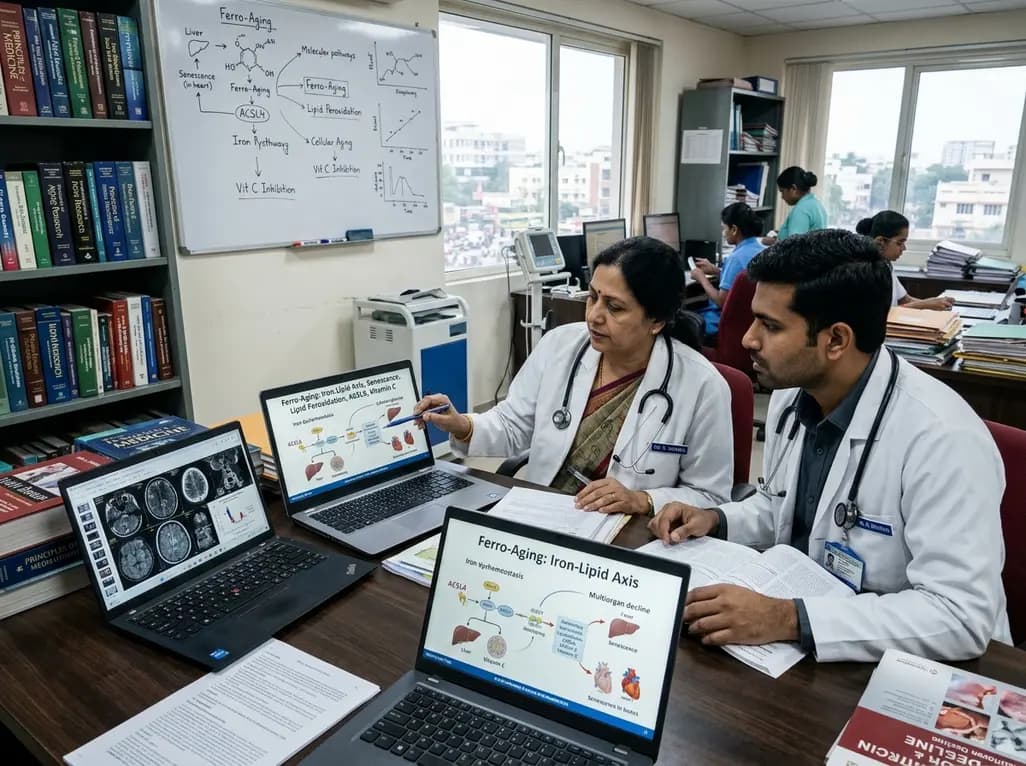
Recent research defines ferro-aging as a conserved iron-lipid axis driving organ decline across primates. Age-related iron dyshomeostasis stimulates ACSL4-mediated lipid peroxidation, promoting cellular senescence. Notably, vitamin C directly inhibits ACSL4, suppressing phospholipid oxidation and multi-organ decay.
Today
