

Loading, please wait...
Loading, please wait...

Transitioning from skilled nursing facilities back into home environments poses severe clinical and logistical challenges for vulnerable adults. Fortunately, modern aging in place technology provides practical solutions to bridge critical care gaps after institutional discharge. When formal transition programs end, many individuals experience rapid functional decline and avoidable hospital readmissions. Rural and under-resourced communities suffer disproportionately from these care deficits. Traditional healthcare models often lack the resources for continuous home monitoring. Consequently, minor health changes frequently escalate into severe medical emergencies. Interprofessional teams require reliable, objective data to detect subtle changes in daily activity patterns. By leveraging affordable digital tools, healthcare systems can support vulnerable individuals during this perilous transition phase. This proactive strategy protects patient independence and reduces the overall burden on acute care facilities.
The ASSETs (Age-Friendly Smart, Sustainable, and Equitable Technologies) demonstration project evaluated a novel model for long-term community maintenance. Specifically, researchers followed nineteen older and disabled adults for twelve months after discharge from Missouri's Show-Me Home program. Participants had previously completed their initial transitional support period, leaving them vulnerable to unmonitored decline. To counter this risk, the investigative team deployed consumer-grade wearables and open-source smart home sensors within participant residences. These ambient sensors continuously gathered data regarding daily movement, sleep routines, and room transitions. Simultaneously, consumer smartwatches captured physiological indicators and gross physical activity. Rather than requiring active input from frail clients, these passive sensors collected vital indicators unobtrusively. Consequently, the technology minimized user burden and supported sustainable daily compliance. Clinicians accessed this continuous data stream to supervise individuals who lived far from medical centers. Ultimately, this technical framework provided an affordable, scalable blueprint for remote longitudinal oversight.
Continuous sensor streams require structured clinical interpretation to generate meaningful health benefits. In the ASSETs framework, an interprofessional team coordinated patient care through structured data reviews. This dedicated team included a registered nurse, an occupational therapist, and a licensed clinical social worker. Each discipline contributed unique clinical expertise during regular case conferences. For example, the occupational therapist identified environmental mobility barriers and evaluated fall hazards. Meanwhile, the registered nurse monitored chronic disease indicators, vital trends, and medication compliance. Concurrently, the social worker tackled food insecurity, utility assistance, and community transportation access. When ambient sensors revealed abnormal sedentary behavior, the team investigated immediately. Clinicians conducted targeted telehealth visits to address emerging issues before catastrophic events occurred. Therefore, digital connectivity empowered interdisciplinary providers to deliver synchronized, timely interventions that reinforced patient stability at home.
Investigators tracked clinical outcomes quarterly over the twelve-month study period using standardized evaluation instruments. Specifically, they utilized the comprehensive interRAI Home Care assessment and the Money Follows the Person quality-of-life survey. Over the full year of observation, participants exhibited remarkable functional and cognitive stability. The study recorded no statistically significant deterioration in cognitive performance, functional status, or instrumental activities of daily living. Furthermore, participant quality-of-life scores remained consistently stable throughout the extended follow-up window. Most importantly, self-reported unmet medical care needs decreased significantly over time. Clients resolved ongoing healthcare deficits through persistent interprofessional communication and rapid clinical navigation. In typical post-discharge cohorts, functional decline occurs frequently once transitional support ends. Thus, maintaining cognitive and physical capabilities represents an exceptionally encouraging clinical achievement for this vulnerable population.
Medical-grade telemonitoring infrastructure frequently imposes unsustainable financial hurdles on public health programs. Proprietary physiological monitoring platforms require expensive proprietary hardware, high software licensing fees, and complex clinical integration. In contrast, the ASSETs protocol selected cost-effective open-source software and commercially available consumer devices. This deliberate choice dramatically lowered deployment costs and logistical barriers. In addition, off-the-shelf smart home sensors proved highly adaptable to diverse home environments. Patients accepted commercial smartwatches and unobtrusive environmental motion detectors without reporting significant privacy concerns. Moreover, open-source architectures enabled technical teams to customize data pipelines to match specific interprofessional workflows. Clinicians received summarized activity dashboards rather than overwhelming raw data streams. Consequently, the team prevented alarm fatigue while maintaining thorough situational awareness. This cost-feasible framework proves that comprehensive digital remote care does not require exorbitant capital investments.
The findings provide meaningful insights for geriatric care delivery in developing healthcare landscapes like India. India experiences rapid demographic shifts alongside a growing burden of multi-morbidity among older citizens. However, formal long-term care facilities remain scarce, making home-based care the default reality for elderly citizens. Programs such as the National Programme for Health Care of the Elderly seek to expand community-level geriatric infrastructure. Integrating affordable digital sensors with family medicine networks could optimize existing clinical human resources. Furthermore, India's Ayushman Bharat Digital Mission establishes a robust technical backbone for longitudinal health data exchange. Primary care physicians, community health workers, and family caregivers can collaborate through unified digital dashboards. Telehealth consultations can bridge geographic divides, reaching rural elders who lack geriatric specialists. Therefore, adopting frugal, technology-enabled transitional care models offers practical pathways to preserve functional independence across diverse Indian communities.
Healthcare providers caring for frail individuals should integrate structured transitional protocols into routine clinical practice. First, clinicians must conduct holistic pre-discharge assessments that address environmental hazards and functional limitations. Second, clinical practices should establish interprofessional referral networks connecting physicians, home nurses, and community social workers. Multidisciplinary collaboration ensures that non-medical drivers of health receive adequate attention alongside medical therapies. Additionally, clinicians should consider recommending simple, non-invasive digital tools to family caregivers. Basic motion sensors and standard consumer wearables can notify relatives and providers about abrupt behavioral shifts. However, successful scaling requires rigorous data privacy protections, reliable network connectivity, and intuitive clinician interfaces. Healthcare leaders must design larger clinical trials to confirm long-term cost savings and reduction in hospitalization rates. Ultimately, sustained interdisciplinary coordination supported by digital innovations will redefine sustainable community care for aging populations worldwide.
The ASSETs model integrates consumer wearables, open-source ambient home sensors, and clinical telehealth consultations. An interprofessional clinical team comprising registered nurses, occupational therapists, and licensed social workers monitors real-time activity metrics. Consequently, clinicians recognize functional declines promptly, modify home environments, address critical social determinants of health, and resolve unmet care needs. This collaborative approach preserves patient independence and stabilizes functional health over extended post-discharge timelines.
Passive ambient sensing relies on motion detectors, door contact switches, and environmental monitors rather than video cameras or continuous acoustic recording. Therefore, the technology captures essential mobility habits, sleep patterns, and daily routine disruptions without capturing visual likeness or private conversations. Patients maintain personal dignity while clinicians receive actionable continuous functional trends. Consequently, individuals accept home monitoring readily, supporting long-term adherence and self-management without creating distressing invasive feelings.
Yes, low-resource settings can replicate this digital model effectively because it utilizes affordable consumer-grade devices and open-source software architectures. Healthcare organizations avoid cost-prohibitive proprietary medical systems. Instead, primary healthcare teams deploy basic smart monitors alongside standard mobile messaging platforms. Furthermore, centralized community nurses and social workers can oversee broad patient cohorts remotely, optimizing clinical human resources and delivering equitable post-discharge care to underserved rural populations.
Disclaimer: This content is for informational and educational purposes only and should not be construed as medical advice or a substitute for professional clinical judgment. Healthcare professionals must evaluate individual clinical circumstances and exercise independent medical judgment when making diagnostic and treatment choices. Refer to the latest local and national guidelines for clinical practice.
References

Read summarized clinical updates, watch expert medical content, and earn CME certifications right from your smartphone.
Open your smartphone camera to scan and install.





A 12-month longitudinal study evaluated the ASSETs program, using consumer-grade sensors and interprofessional coordination (RN, OT, social work) after nursing home discharge. Participants maintained stable functional, cognitive, and quality-of-life scores, with significant reductions in unmet care needs.
Today
A nationwide analysis shows that inpatient lifestyle counseling for type 2 diabetes remains remarkably underutilized despite modest gains. Clinicians must bridge persistent demographic disparities and integrate structured dietary and exercise counseling into routine hospital discharge workflows.
Today
A nationwide survey reveals substantial knowledge gaps among general practitioners regarding fetal pathology and autopsy. Enhanced training and interdisciplinary communication are vital to guide stillbirth evaluation, clarify autopsy consent, and improve preconception counseling for bereaved parents.
Today
A pilot study shows that transesophageal echocardiography with vector flow mapping measures intraventricular energy loss in HeartMate 3 LVAD recipients. Energy loss significantly correlates with controller-displayed pump flow, offering clinicians deeper insights into ventricular unloading and intracardiac fluid mechanics.
Today

A comparative study demonstrates that simple and complex labral tears achieve comparable functional outcomes and low recurrence rates following arthroscopic stabilization for anterior shoulder instability, despite differing clinical presentations and dislocation histories.
Today
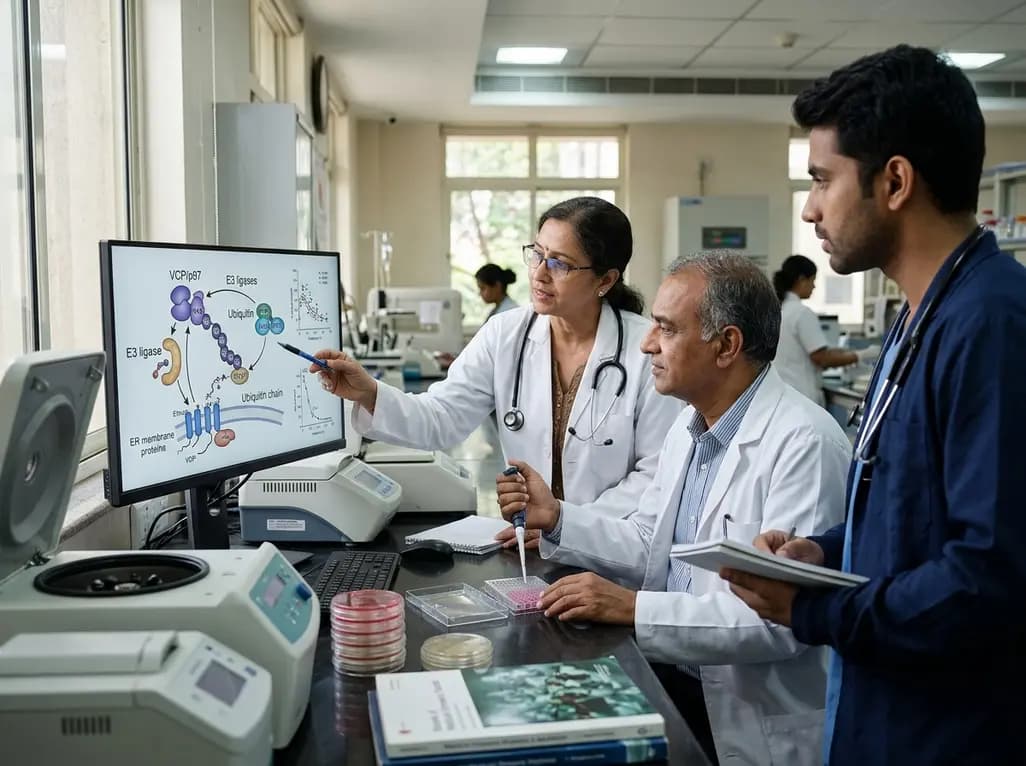
A breakthrough study demonstrates that recruiting cytosolic E3 ligases drives ER protein degradation through the AAA ATPase VCP. This novel mechanism bypasses canonical ERAD machinery and degrades HMGCR, offering transformative potential for managing statin tolerance and challenging membrane targets.
Today
