.webp&w=384&q=75)

Loading, please wait...
Loading, please wait...

Navigating the complex trajectory of ageing with TBI represents a major clinical challenge. As acute emergency neurotrauma management improves survival rates globally, many patients now survive into late adulthood after moderate-to-severe trauma. Consequently, neurologists and geriatricians encounter pressing questions regarding long-term cognitive stability and emotional wellbeing. Recent controlled research provides critical evidence addressing these concerns.
Decades following moderate-to-severe neurotrauma, survivors frequently express deep concerns regarding accelerated cognitive decay. However, clinicians often struggle to distinguish standard physiological senescence from persistent injury-induced pathology. To address this ambiguity, recent controlled research evaluated one hundred forty-three survivors living six to thirty-three years post-injury. The investigators matched these survivors with seventy-one uninjured controls on chronological age, biological sex, and premorbid intelligence quotients. Furthermore, researchers strictly excluded candidates with active substance abuse, psychiatric illnesses, or major cerebrovascular comorbidities to prevent confounding. Notably, both chronological senescence and historical trauma independently reduced cognitive efficiency across multiple objective domains. Therefore, older survivors experience compound neurocognitive vulnerabilities compared to uninjured age-matched peers. Furthermore, the trauma did not trigger a runaway progressive neurodegenerative cascade across the entire cohort. Instead, the enduring baseline deficit lowered overall cognitive reserve, making normal age-related decline clinically prominent. Consequently, neurologists must appreciate how physiological brain ageing unmasks previously compensated cerebral insults over prolonged follow-up periods. Recognizing this distinction prevents misinterpreting stable historical sequelae as rapid dementia. Additionally, Indian practitioners managing ageing patients require clear objective criteria to separate static damage from active neurodegeneration.
Detailed neuropsychological testing illuminates notable discrepancies between healthy controls and chronic trauma survivors. Specifically, individuals with past brain trauma demonstrated markedly reduced scores in processing speed, divided attention, and verbal memory recall. Moreover, working memory and executive task completion showed meaningful performance gaps compared to uninjured peers. These deficits clearly parallel focal diffuse axonal shearing sustained during the primary biomechanical trauma event. However, older age independently degraded cognitive throughput across both study groups at comparable statistical trajectories. In particular, verbal memory revealed an intriguing interaction where increasing age exerted distinctive domain-specific pressures among trauma survivors. Consequently, older survivors find dual-tasking and fast verbal retrieval increasingly demanding in occupational environments. Nonetheless, basic crystallised intelligence and vocabulary knowledge remained preserved across historical decades. Therefore, clinicians must assess cognitive faculties multidimensionally rather than relying solely on superficial screening tools. In clinical practice, administering focused subtests highlights focal processing delays without generating undue patient distress. Similarly, identifying preserved intellectual domains helps therapists construct realistic cognitive compensatory strategies. By recognising these selective neuropsychological vulnerabilities, rehabilitation specialists can tailor memory aids to sustain long-term patient independence.
Cognitive preservation represents merely one facet of healthy survival across late adulthood. In addition, emotional wellbeing, sleep architecture, and health-related quality of life dictate daily functional status. The study highlighted that individuals surviving moderate-to-severe trauma reported significantly elevated emotional distress compared to controls. Furthermore, chronic sleep disturbances and persistent depressive symptoms occurred far more frequently among the trauma cohort. Interestingly, advancing age alone did not dictate poor emotional wellbeing across the cohorts. Instead, the persistent neurotrauma baseline drove long-term emotional distress and diminished health-related quality of life metrics. Consequently, chronic affective instability often impairs patient motivation and vocational engagement far more severely than subtle memory loss. For instance, poor sleep architecture exacerbates daytime fatigue and directly blunts cognitive executive performance. Therefore, holistic clinical management must never treat cognitive complaints in isolation from psychological morbidity. In the Indian clinical context, family caregivers often bear immense social burdens when emotional dysregulation surfaces in ageing relatives. By actively screening for untreated anxiety and disrupted sleep patterns, general physicians provide comprehensive supportive care. Ultimately, treating underlying affective disorders restores dignity and substantially enhances overall quality of life.
A central debate in neurotrauma literature asks whether head injury accelerates biological ageing or merely establishes an enduring static deficit. Importantly, the cross-sectional findings suggest that both age and historical trauma exert separate, additive impacts across most cognitive faculties. Rather than inducing an ongoing runaway degenerative storm, the original trauma permanently lowers cerebral functional capacity. As a consequence, normal age-related neural loss brings the patient closer to clinical impairment thresholds much earlier than uninjured counterparts. This conceptual framework, known as the reduced cognitive reserve model, provides immense therapeutic reassurance to anxious patients. Furthermore, it explains why an older individual with remote trauma struggles with complex multi-step tasks without harboring active Alzheimer pathology. However, clinicians must still monitor for secondary neurodegenerative markers, especially if rapid functional regression occurs over brief intervals. In addition, concurrent vascular conditions and systemic inflammation accelerate cerebral decline in this vulnerable group. Therefore, managing hypertension, dyslipidemia, and diabetes becomes paramount for vascular health. Furthermore, promoting continuous physical activity and mentally stimulating hobbies helps preserve synaptic plasticity into older age. When physicians explain this reserve paradigm clearly, survivors regain clinical agency.
Providing comprehensive long-term care for ageing neurotrauma survivors requires an integrated, multi-system management approach. Primary care doctors and neurologists in outpatient settings must routinely implement structured cognitive assessments alongside emotional wellbeing screenings. In addition, clinicians must vigorously identify and treat obstructive sleep apnea, persistent insomnia, and chronic pain syndromes. Because disrupted sleep degrades neurocognitive recuperation, restorative sleep management produces immediate cognitive dividends for vulnerable brain circuits. Furthermore, physicians should review pharmacological profiles periodically to minimize anticholinergic and sedative burdens that worsen cognitive fog. In India, where multi-generational households often care for elderly patients, empowering family caregivers with psychoeducation diminishes interpersonal frustration. Additionally, structured daily schedules, digital reminder aids, and environmental adaptations substantially lighten cognitive burdens during demanding daily activities. Moreover, engaging survivors in regular cardiovascular exercise boosts brain-derived neurotrophic factor and enhances cerebral perfusion. Collaborating with clinical neuropsychologists and community rehabilitation teams also creates tailored cognitive rehabilitation programs for progressive functional recovery. Consequently, doctors must shift focus from passive observation toward active secondary prevention. Through these proactive measures, healthcare providers ensure that remote trauma survivors achieve resilient, dignified ageing trajectories.
No, historical traumatic brain injury does not inevitably trigger neurodegenerative dementia. Controlled research indicates that trauma establishes an enduring static deficit that lowers total cognitive reserve. Consequently, typical age-related cognitive changes appear more pronounced in survivors. Unless distinct neurodegenerative pathologies develop, patients generally demonstrate stable cognitive trajectories over subsequent decades.
Long-term trauma survivors exhibit significant impairments in processing speed, divided attention, executive functioning, and verbal episodic memory recall. In addition, working memory often demonstrates measurable reductions under high cognitive loads. However, crystallized intelligence, language comprehension, and long-standing semantic knowledge remain remarkably preserved, providing reliable foundations for compensatory cognitive rehabilitation strategies.
Clinicians should systematically screen survivors for obstructive sleep apnea and secondary insomnia using formal sleep studies or validated questionnaires. Furthermore, prioritizing non-pharmacological interventions like cognitive behavioral therapy for insomnia optimizes outcomes. When sleep disturbances resolve, patients experience substantial improvements in daytime alertness, emotional regulation, executive mental functioning, and overall quality of life.
Disclaimer: This content is for informational and educational purposes only... Refer to the latest local and national guidelines for clinical practice.
References

Read summarized clinical updates, watch expert medical content, and earn CME certifications right from your smartphone.
Open your smartphone camera to scan and install.





A controlled study evaluating adults decades post-TBI demonstrates that older age and traumatic brain injury independently reduce cognition across multiple domains. Chronic emotional distress and sleep disruption remain prominent, reflecting reduced cognitive reserve rather than rapid neurodegenerative decline.
Today

A recent case shows that exertional rhabdomyolysis can trigger marked transaminase spikes despite moderate creatine kinase elevation. Preserved hepatic synthetic function confirms muscle injury rather than liver failure, guiding conservative hydration and preventing unnecessary invasive diagnostics.
Today

A pharmacometric and machine learning study reveals that specific vaginal bacteria alter cervical antiretroviral exposure, highlighting the need for precision HIV PrEP strategies.
Today
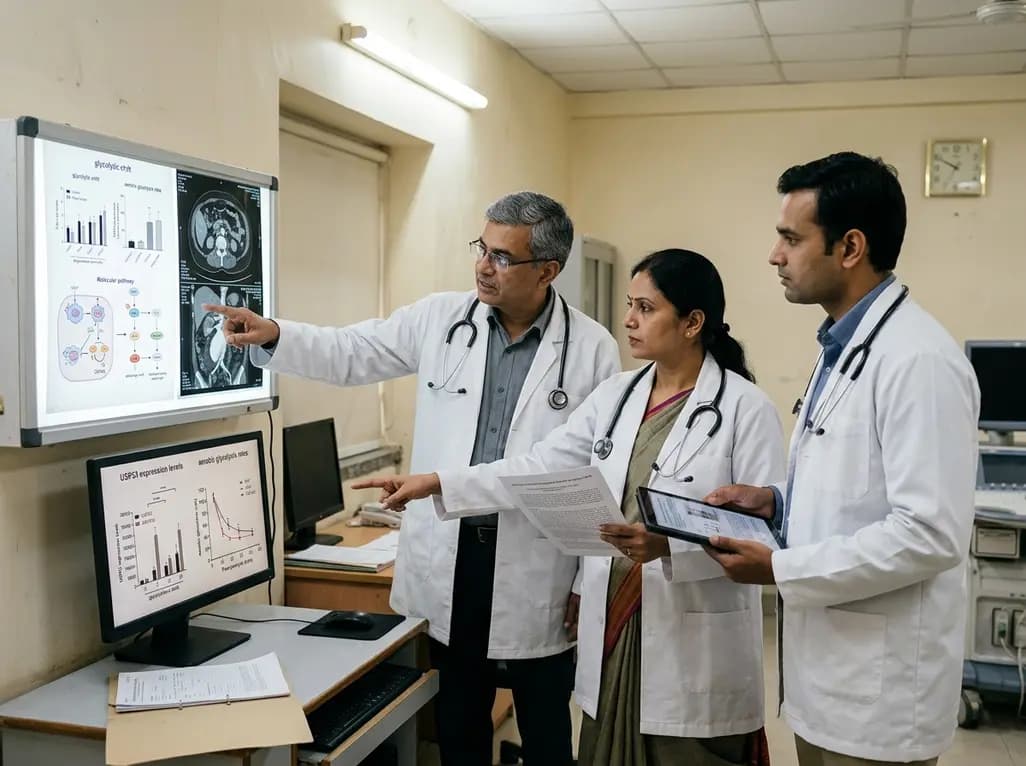
Abdominal aortic aneurysm rupture remains a catastrophic vascular emergency. Groundbreaking research reveals that USP53 accelerates aneurysm progression by reprogramming smooth muscle cell metabolism toward aerobic glycolysis, highlighting a promising target beyond conventional diameter-based surveillance.
Today
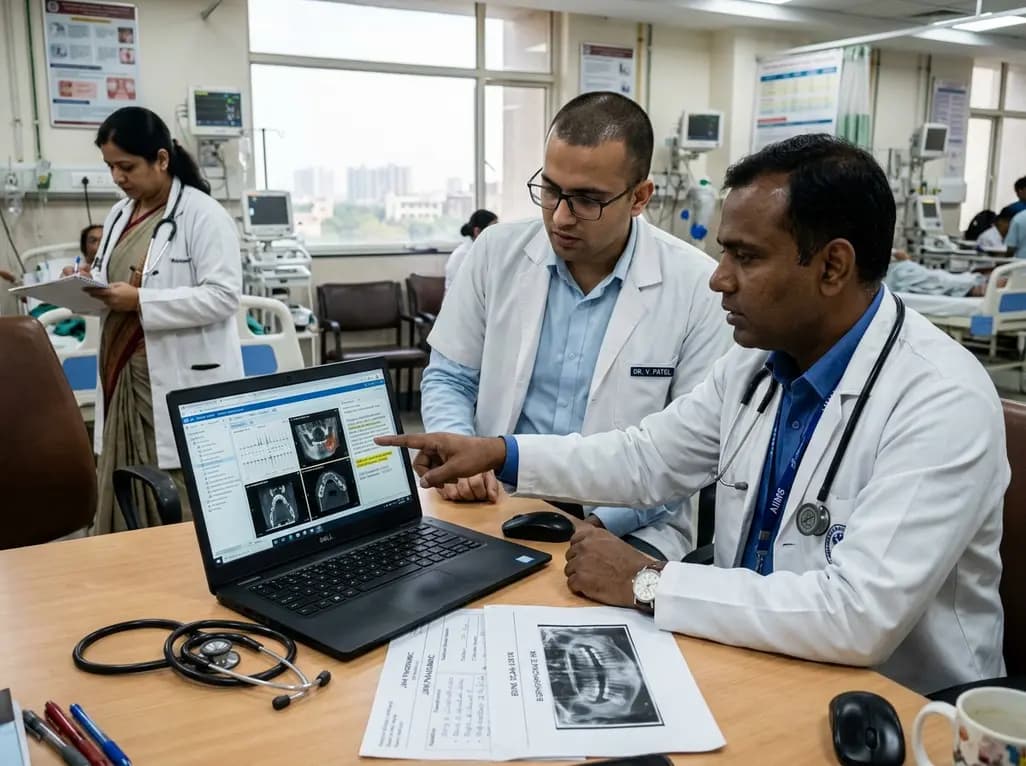
A breakthrough study leverages natural language processing to accurately identify incident medication-related osteonecrosis of the jaw and track antiresorptive drug holidays from clinical narratives in electronic health records, advancing osteoporosis pharmacovigilance and dental safety.
Today

Recent research defines ferro-aging as a conserved iron-lipid axis driving organ decline across primates. Age-related iron dyshomeostasis stimulates ACSL4-mediated lipid peroxidation, promoting cellular senescence. Notably, vitamin C directly inhibits ACSL4, suppressing phospholipid oxidation and multi-organ decay.
Today
