.webp&w=384&q=75)

Loading, please wait...
Loading, please wait...

Healthcare procurement transparency is a vital pillar for the financial sustainability of Indian hospitals. Recently, Affordplan and the Association of Healthcare Providers (India) – Tamil Nadu Chapter (AHPI-TN) signed a strategic Memorandum of Understanding. This collaboration introduces the Procalyx platform to healthcare facilities across the state. Consequently, member hospitals can now access advanced tools for price discovery and procurement optimization. This initiative aims to modernize the supply chain through data-driven decisions.
The healthcare sector in India has long struggled with fragmented supply chain data. This issue often leads to significant price variations for identical drugs and medical consumables. Therefore, implementing a standardized framework is essential for modern hospitals. The Procalyx platform provides real-time market benchmarks to eliminate these disparities. By utilizing such technology, administrators can make more informed purchasing decisions. This move directly enhances healthcare procurement transparency and improves overall operational efficiency for medical institutions.
Digital tools like Procalyx allow hospitals to verify market rates for pharmaceuticals and devices instantly. Moreover, this system reduces the manual overhead associated with traditional procurement processes. Hospitals can also improve their financial visibility without compromising the quality of patient care. AHPI-TN members will receive preferential access and dedicated support for system integration. Furthermore, this partnership marks a significant step toward a resilient healthcare ecosystem in Tamil Nadu. Such advancements ensure that hospitals remain sustainable while providing high-quality services.
Q1: What is the primary objective of the Affordplan and AHPI-TN partnership?
The primary objective is to replace information asymmetry with data-driven decision-making in hospital procurement using the Procalyx platform.
Q2: How does Procalyx benefit hospital administrators?
It enables administrators to benchmark prices for pharmaceuticals and medical devices in real time, leading to smarter purchasing cycles and cost efficiencies.
Disclaimer: This content is for informational and educational purposes only. It does not constitute medical advice or replace professional judgment. Refer to the latest local and national guidelines for clinical practice.
References

Read summarized clinical updates, watch expert medical content, and earn CME certifications right from your smartphone.
Open your smartphone camera to scan and install.





Affordplan and AHPI-TN partner to launch Procalyx, an AI-driven platform enhancing healthcare procurement transparency and cost efficiency in Tamil Nadu....
6 months ago

India is advancing preventive healthcare by integrating genomics, artificial intelligence, and quantum technologies. With the SANGAM programme sequencing one million Indian genomes, clinicians can unlock personalized therapies, detect cardiometabolic risks early, and curb the burden of diabetes and heart disease.
Today
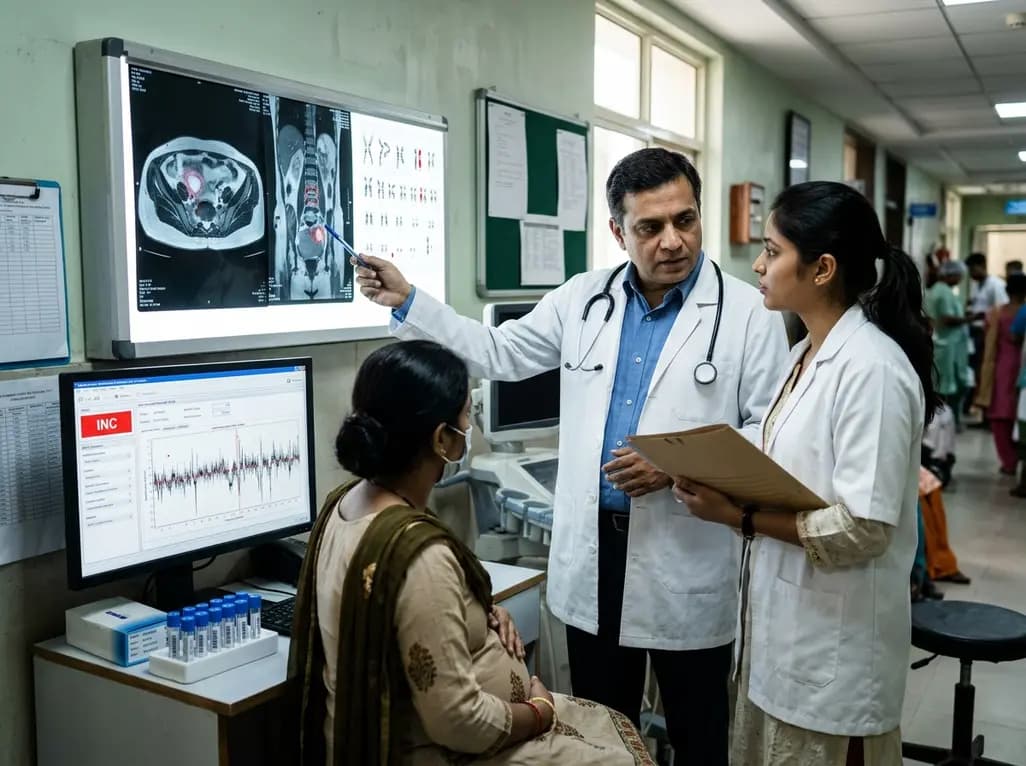
Occult maternal malignancy accounts for 3.82% of persistent unreportable NIPT results with genomic noise. Multiple chromosomal aberrations, notably on chromosome 18, warrant thorough oncological evaluation and whole-body MRI to ensure timely maternal diagnosis while preserving fetal care.
Today

This article reviews the forensic and clinical complexities of acute myocarditis arising on left ventricular hypertrophy in children, highlighting early diagnostic red flags and multidisciplinary postmortem autopsy protocols.
Today
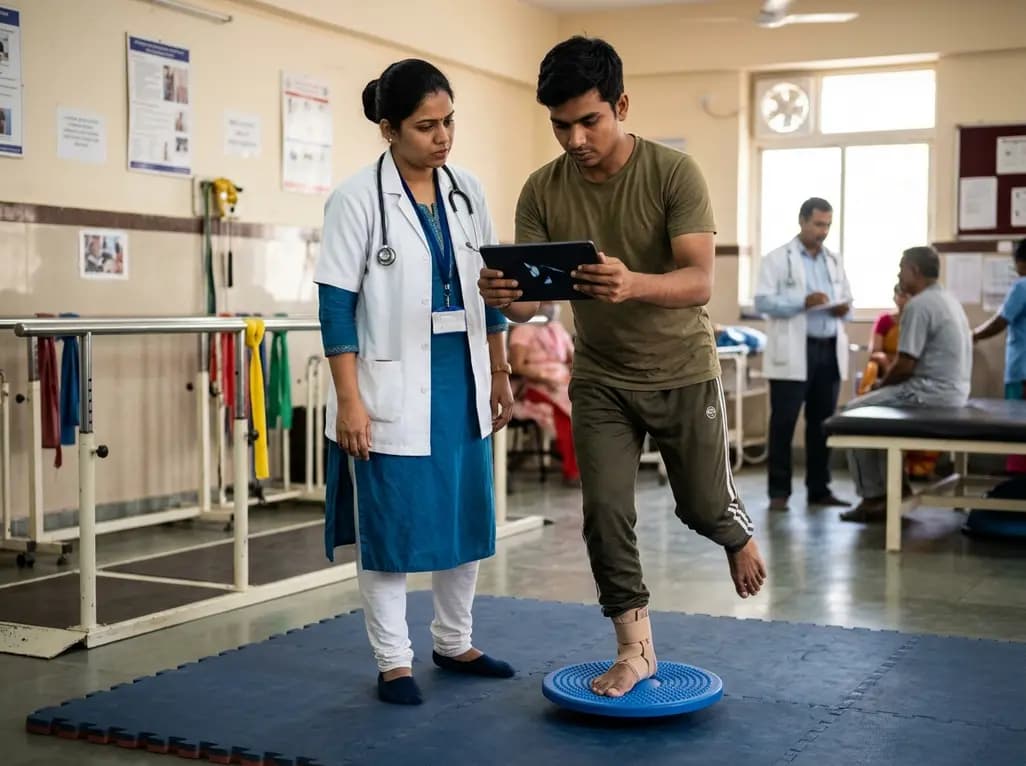
A randomized controlled trial demonstrates that an eight-week dual-task training intervention significantly improves static and dynamic postural control over standard balance exercises in individuals with chronic ankle instability, addressing critical neurocognitive deficits during athletic and daily activities.
Today

A retrospective cohort study of 7,716 ICU patients from the MIMIC-IV database demonstrates that Gradient Boosting Decision Trees significantly outperform traditional SOFA scores in predicting in-hospital mortality among patients with sepsis and diabetes, with SHAP analysis providing clinical interpretability.
Today
