.webp&w=384&q=75)

Loading, please wait...
Loading, please wait...

Adult thalamic gliomas represent a rare, surgically challenging, and biologically distinct subset of neuro-oncological entities. Historically, tumors located deep within central neuroanatomical structures carried uniform, dismal prognoses. However, modern molecular neuropathology continues to uncover remarkable biological heterogeneity across these lesions. Although the 2021 World Health Organization (WHO) central nervous system tumor classification categorizes all diffuse midline gliomas (DMGs), H3-altered, as grade 4 malignancies, evolving clinical evidence indicates that adult thalamic gliomas with DMG biology may display unexpectedly indolent trajectories relative to classic hemispheric glioblastomas. A pivotal retrospective study by Tsuzuki and colleagues has now highlighted key prognostic factors in this unique patient population, demonstrating that telomerase reverse transcriptase promoter (TERTp) mutations, rather than H3K27M alterations alone, heavily dictate long-term clinical survival.
The thalamus serves as a critical relay hub, rendering extensive surgical resection perilous due to profound neurological risks. Consequently, understanding the intrinsic genetic landscape of adult thalamic gliomas is vital for stratifying patient risk and planning targeted management. Diffuse midline gliomas frequently harbor the characteristic histone H3K27M alteration, leading to global epigenetic dysregulation and altered gene transcription. In pediatric cohorts, this mutation universally confers an aggressive clinical trajectory. However, adult-onset thalamic lesions display marked molecular differences from their pediatric counterparts. Research indicates that somatic alterations in adult patients often interact differently with host cellular pathways. In particular, the presence of activating mutations in the telomerase reverse transcriptase promoter creates de novo transcription factor binding sites. This promoter activation promotes telomere maintenance and immortalizes tumor cells, driving pronounced biological aggressiveness distinct from basic histone configurations.
Accurate histopathological and genetic diagnosis remains the cornerstone of modern neuro-oncology. When evaluating adult thalamic gliomas, clinicians must distinguish between diffuse midline gliomas, H3-altered, and IDH-wildtype glioblastomas invading central structures. In the study cohort of adult patients undergoing biopsy or resection, individuals harboring thalamic DMG demonstrated a median overall survival of 24.6 months. In stark contrast, patients diagnosed with IDH-wildtype glioblastoma had a median overall survival of only 12.4 months. This statistically significant difference underscores the reality that adult thalamic DMGs often exhibit a less aggressive natural history than conventional supratentorial glioblastomas. Therefore, clinicians must avoid conflating adult midline gliomas with pediatric pontine tumors or standard IDH-wildtype glioblastomas when discussing expected survival trajectories with patients and multidisciplinary oncology teams.
Multivariate survival analyses provide critical clarity regarding which molecular markers truly drive clinical demise in adult thalamic gliomas. In statistical models adjusting for patient age, WHO histological grade, and H3K27M mutation status, the presence of a TERT promoter mutation emerged as an independent predictor of shortened survival. Specifically, TERTp-mutated cases exhibited a hazard ratio of 1.81 for mortality, signaling a nearly twofold increase in the risk of disease progression and death. Interestingly, H3K27M mutation status was not significantly associated with altered overall survival in multivariate evaluation, demonstrating a hazard ratio of 0.93. These findings confirm that telomerase reactivation serves as a stronger driver of therapy resistance and rapid cellular proliferation than histone methylation status alone in mature adult neural tissue.
Beyond molecular profiling, demographic and clinical factors strongly influence overall survival among individuals treated for adult thalamic gliomas. Younger age at presentation consistently correlates with improved physiological resilience and extended survival duration. Additionally, baseline functional performance scores and tumor laterality play meaningful roles during diagnostic workup and surgical planning. Because extensive debulking within thalamic nuclei carries high risks of permanent hemiparesis and sensory disruption, stereotactic or navigation-guided biopsy remains common. Importantly, clinical evidence reveals that patient outcomes align heavily with biological subtype rather than the absolute aggressiveness of surgical excision. Consequently, contemporary neurosurgical strategies favor safe tissue acquisition for comprehensive molecular genotyping over heroic, high-risk resections that jeopardize neurological independence and postoperative quality of life.
These molecular insights carry profound clinical implications for risk stratification and the design of prospective clinical trials. Given that TERT promoter mutations confer an unfavorable prognosis in adult thalamic gliomas, routine genetic testing for TERTp status must become standard protocol alongside H3K27M and IDH screening. Furthermore, the distinct survival advantage observed in adult thalamic DMGs over glioblastomas supports tailored adjuvant strategies. Emerging targeted therapies, including dopamine receptor antagonists, epigenetic modifiers, and direct telomerase inhibitors, require precise biomarker stratifications to evaluate therapeutic efficacy. By refining risk assessment based on robust molecular profiles, neuro-oncologists can optimize radiation dosing schedules, chemotherapy timing, and novel investigational agent selection for this vulnerable patient cohort.
Adult thalamic gliomas often demonstrate a more indolent clinical course than pediatric diffuse midline gliomas. While pediatric cases carry universally dismal outcomes with rapid progression, adult patients frequently achieve prolonged survival. Furthermore, molecular drivers such as TERT promoter mutations play a more decisive prognostic role in adult cohorts than standard histone mutations.
The TERT promoter mutation reactivates telomerase expression, allowing continuous cancer cell proliferation and enhanced resistance to DNA-damaging therapies. In adult thalamic tumors, multivariate studies show that TERTp mutation serves as an independent adverse prognostic factor, significantly shortening overall survival regardless of patient age or World Health Organization tumor grade.
Because the thalamus contains vital motor and sensory neural pathways, safe tissue acquisition via stereotactic biopsy or cautious partial resection is generally preferred over radical debulking. Molecular subtype heavily determines prognosis, so neurosurgeons prioritize preserving functional independence and securing adequate tissue for comprehensive genetic and biomarker testing.
Disclaimer: This content is for informational and educational purposes only and should not be used as a substitute for professional medical advice, diagnosis, or treatment. Always seek the advice of your physician or other qualified health provider with any questions you may have regarding a medical condition. Refer to the latest local and national guidelines for clinical practice.
References

Read summarized clinical updates, watch expert medical content, and earn CME certifications right from your smartphone.
Open your smartphone camera to scan and install.





A new clinical study evaluates adult thalamic gliomas, revealing that diffuse midline gliomas exhibit better survival than glioblastomas, while TERT promoter mutation serves as a significant independent predictor of poor overall survival.
last month

A recent clinical report details an atypical presentation of bilateral proptosis as the primary manifestation of aggressive multiple myeloma. Explore the diagnostic pathway, imaging findings, and critical multidisciplinary management strategies essential for handling extramedullary plasma cell dyscrasias.
Today

Prenatal evaluation of fetal growth restriction requires an integrated diagnostic approach. While chromosomal microarray remains fundamental, exome sequencing offers significant diagnostic yield in isolated and syndromic cases, especially when ultrasound shows skeletal anomalies or normal placental function.
Today
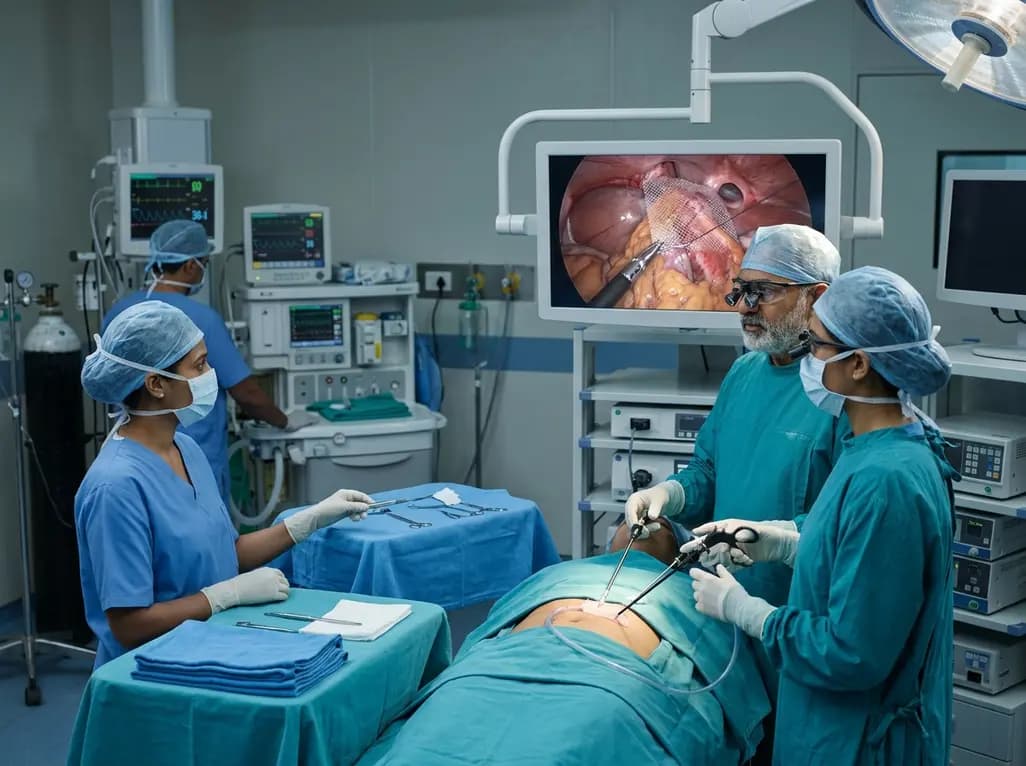
Discover a novel laparoscopic approach for iatrogenic diaphragmatic hernia repair following pedicled omentoplasty. This modified Sugarbaker technique integrates dorsal pedicle lateralization and round ligament reinforcement to secure the diaphragmatic defect while preserving vital omental vascularity.
Today

Evaluating Hill-Sachs lesion size and the distance to dislocation is critical in recurrent shoulder instability. As bone loss concepts shift from binary on-track classifications to continuous risk assessment, clinicians must identify when isolated Bankart repair is insufficient and supplementary procedures are needed.
Today
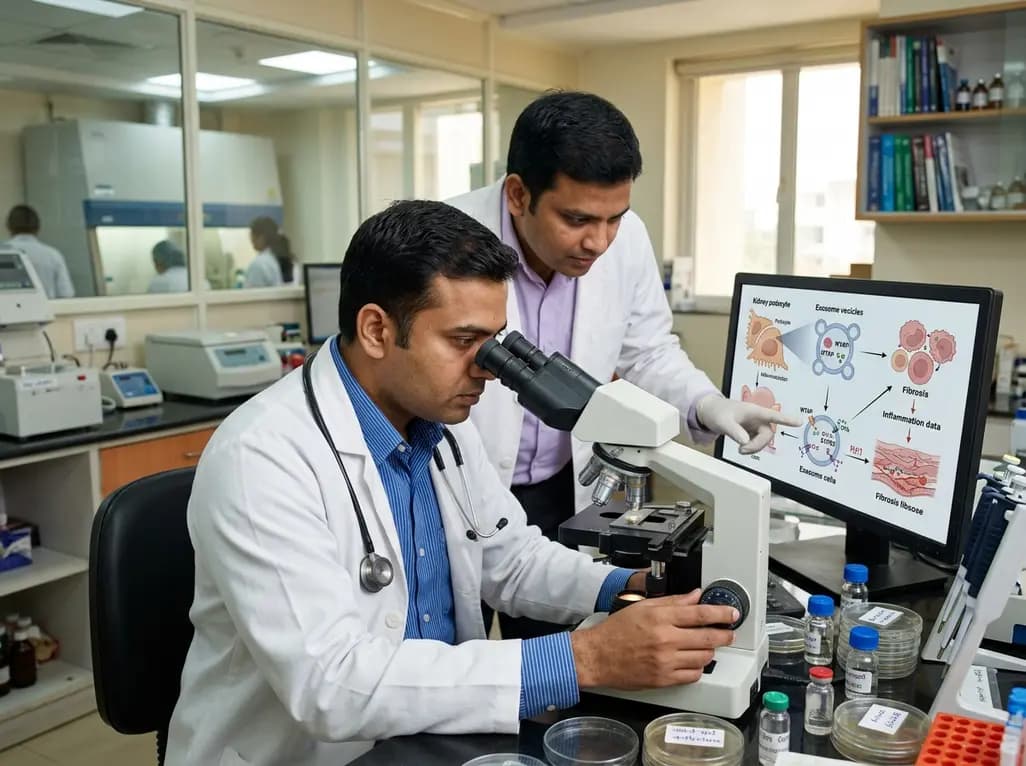
New research reveals that M1 macrophage-derived exosomes aggravate diabetic nephropathy by transferring WTAP to stabilize S1PR2 mRNA. Silencing WTAP in these vesicles attenuates endothelial injury and renal fibrosis, pointing toward innovative nanomedicine therapies.
Today
