.webp&w=384&q=75)

Loading, please wait...
Loading, please wait...
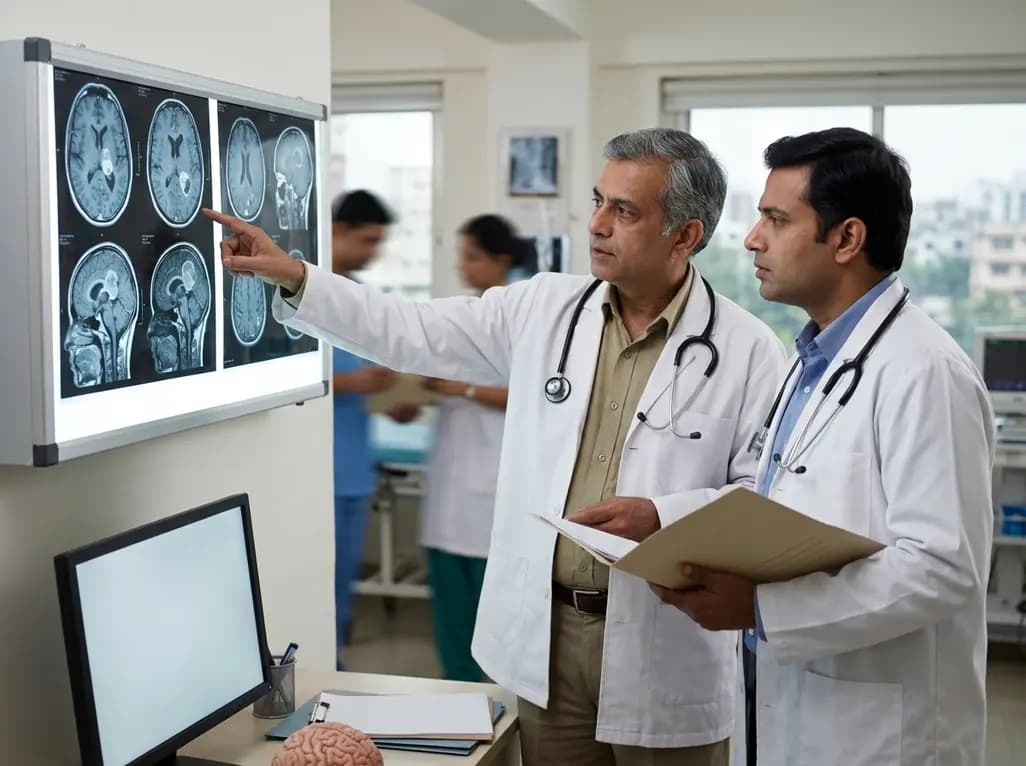
Intracranial ependymomas are relatively rare neuroepithelial tumors in the adult population, representing a distinct clinical entity compared to their more common pediatric counterparts. While pediatric ependymomas are extensively studied, adult cases often suffer from a lack of high-volume prospective data. Consequently, clinicians must rely on longitudinal retrospective analyses to determine optimal management strategies. A recent study evaluating adult intracranial ependymoma outcomes focuses on patients treated with surgery and radiotherapy between 2000 and 2024. These tumors, primarily categorized as WHO grade 2 or 3, arise from the ependymal lining of the ventricular system. In adults, they are more frequently found in the spinal canal; however, intracranial presentations remain a significant surgical and oncological challenge. Furthermore, the clinical course of these tumors is often characterized by a risk of late recurrence, necessitating decades of follow-up. This specific cohort analysis involved 58 patients with a median age of 39 years. Understanding these long-term outcomes is essential for improving survival and quality of life. Specifically, the data highlights that while survival rates are relatively favorable, the management of late-onset toxicities and localized failures remains a critical priority for multi-disciplinary neuro-oncology teams. This article explores the nuances of treatment efficacy and the survival milestones achieved over a ten-year horizon.
Surgical intervention remains the cornerstone of management for intracranial ependymoma. The primary goal of surgery is to achieve gross total resection (GTR), as the extent of initial tumor removal is a well-established prognostic factor. In the analyzed patient group, gross total resection was achieved in 60% of cases. Achieving GTR is often complicated by the tumor's location, particularly in the posterior fossa, which accounted for 74% of the cases in this study. These tumors frequently originate near the fourth ventricle, often adhering to the brainstem or cranial nerves, which increases the risk of postoperative neurological deficits. Consequently, neurosurgeons must balance aggressive resection with the preservation of vital functions. When GTR is not safely attainable, subtotal resection is performed, followed by adjuvant therapies to control residual disease. Interestingly, even with high rates of GTR, the biological behavior of WHO grade 2 and 3 ependymomas suggests that surgical resection alone may not suffice for long-term local control. Furthermore, the data indicates that 76% of these patients had grade 2 tumors, which typically exhibit slower growth but possess a persistent potential for recurrence. Therefore, the integration of postoperative imaging and careful surgical planning is indispensable for improving adult intracranial ependymoma outcomes and preventing early treatment failure.
Adjuvant radiotherapy has become a standard component of the multimodal treatment paradigm for adult intracranial ependymomas, especially for WHO grade 3 tumors or after incomplete resection of grade 2 lesions. In the reviewed study, a substantial majority of patients (88%) received adjuvant local radiotherapy. This high utilization rate reflects the growing consensus that localized radiation effectively bridges the gap left by surgical limitations. Specifically, the delivery of local radiotherapy is aimed at maximizing local control while sparing healthy brain tissue from unnecessary exposure. While chemotherapy is frequently employed in pediatric protocols, its role in adult intracranial ependymoma remains limited, with only 5% of patients in this cohort receiving systemic treatment. Consequently, radiotherapy stands as the primary adjunct to surgery. The implementation of modern techniques, such as intensity-modulated radiation therapy (IMRT) or proton beam therapy, has allowed for more precise dosing. However, even with these advancements, the median time to local failure in this study was reported at 5.4 years. This suggests that while radiotherapy provides excellent initial stabilization, its efficacy may diminish over time, leading to late recurrences. Moreover, the decision to use radiotherapy must be personalized based on the tumor grade and the presence of residual disease on postoperative MRI, which is usually performed within 48 hours of surgery.
Survival metrics provide a clear window into the long-term effectiveness of current treatment protocols. The study reported impressive 5-year and 10-year progression-free survival (PFS) rates of 80% and 64%, respectively. Even more encouraging are the overall survival (OS) rates, which reached 92% at five years and 85% at ten years. These figures suggest that many adult patients can achieve long-term disease stabilization. However, the drop-off between the 5-year and 10-year PFS highlights the persistent risk of late relapse. In this cohort, there were 13 recurrences, representing 22% of the total population. Most of these failures occurred locally at the primary tumor site, with only a small fraction manifesting as distant or leptomeningeal spread. Specifically, nine of the thirteen recurrences were purely local. This localized failure pattern underscores the necessity for durable local control strategies. The 10-year local control rate was 72%, which is respectable but indicates that nearly one-third of patients will face a local recurrence within a decade. Therefore, while adult intracranial ependymoma outcomes are generally positive regarding overall survival, the high incidence of local failures demands vigilant long-term surveillance. Clinicians must maintain a high index of suspicion during follow-up, as late failures can occur even after several years of radiological stability, often requiring salvage surgery or re-irradiation.
As survival rates for adult ependymoma patients improve, the focus of clinical care must shift toward the management of late treatment-related toxicities. In this study, 22% of patients experienced at least one grade 2 or higher late toxicity. These complications are often a direct result of radiotherapy or the cumulative impact of multiple surgical interventions. Common late effects can include cognitive decline, endocrine dysfunction, and focal neurological deficits. Perhaps most concerning is the risk of secondary malignancies; the study noted one case of a potential secondary glioma occurring nine years after initial treatment. Although rare, such events are devastating and highlight the need for lifelong monitoring. Furthermore, the transition from acute recovery to long-term survivorship involves navigating complex neurological changes that can impact a patient's professional and personal life. Consequently, a comprehensive follow-up plan must include regular neuro-imaging and periodic neurological assessments. Moreover, the 5.4-year median time to failure suggests that the typical five-year follow-up window used for many other cancers is insufficient for ependymoma. Ultimately, the goal is to optimize adult intracranial ependymoma outcomes by detecting recurrences early while mitigating the severity of treatment-related side effects. This requires a balanced approach to adjuvant dosing and a deep understanding of the patient's long-term risk profile, ensuring that the benefits of therapy do not come at an unacceptable functional cost.
The management of adult intracranial ependymoma is inherently multidisciplinary, requiring close coordination between neurosurgeons, radiation oncologists, and neuro-oncologists. The favorable 10-year overall survival rate of 85% is a testament to the efficacy of combined surgery and radiotherapy. However, the persistent recurrence rate and the prevalence of late toxicities indicate that there is still significant room for improvement. Future directions will likely involve the integration of molecular subgrouping into clinical decision-making. Recent advances in molecular pathology have identified distinct subgroups of ependymoma that behave differently across age groups and locations. Applying these molecular insights to adult patients could help identify those at higher risk for early failure, allowing for more aggressive or tailored adjuvant strategies. Additionally, the role of chemotherapy or targeted therapies in the recurrent setting needs further exploration through multicenter clinical trials. In the interim, the current standard of maximal safe resection followed by local radiotherapy remains the most effective path. Clinicians should emphasize the importance of long-term adherence to follow-up protocols to their patients. By focusing on both survival and the mitigation of late effects, the medical community can continue to improve the quality of life for those living with this complex diagnosis. Therefore, a focus on personalized, longitudinal care is essential for the next generation of neuro-oncological management.
Recent data indicates that the long-term overall survival for adult intracranial ependymoma is quite favorable. The 5-year overall survival rate is approximately 92%, while the 10-year rate remains high at about 85%. However, progression-free survival tends to decline over time, reaching approximately 64% at the ten-year mark due to late recurrences.
Late treatment-related toxicities are a significant concern, affecting approximately 22% of patients at a grade 2 level or higher. These effects can manifest as cognitive issues, neurological deficits, or endocrine changes. Furthermore, there is a small but critical risk of secondary malignancies occurring years after the completion of radiotherapy treatments.
Recurrences in adult intracranial ependymoma are primarily local, occurring at the site of the original tumor. In many clinical cohorts, about 70% of failures are local, while distant failures or spinal seeding are less common. The median time to local failure is approximately 5.4 years, highlighting the need for extended surveillance.
Disclaimer: This content is for informational and educational purposes only and does not constitute medical advice, diagnosis, or treatment. Always seek the advice of a qualified healthcare provider with any questions regarding a medical condition. Use of this information is at your own risk. Refer to the latest local and national guidelines for clinical practice.
References
van de Langerijt ON et al. Long-term outcomes and late effects of surgery and radiotherapy in adult intracranial ependymoma patients. J Neurooncol. 2026 Jun 25. doi: 10.1007/s11060-026-05680-7. PMID: 42348066.
Ruda R et al. EANO guidelines for the diagnosis and treatment of ependymal tumors. Neuro-Oncol. 2018;20(4):445-456. doi: 10.1093/neuonc/nox166.
Metellus P et al. Multicentric French study on adult intracranial ependymomas: prognostic factors analysis and therapeutic considerations from a cohort of 152 patients. Brain. 2007;130(Pt 5):1338-1349. doi: 10.1093/brain/awm040.

Read summarized clinical updates, watch expert medical content, and earn CME certifications right from your smartphone.
Open your smartphone camera to scan and install.





A comprehensive analysis of adult intracranial ependymoma patients highlights favorable long-term survival with surgery and radiotherapy. While overall survival remains high, clinicians must navigate the significant risks of local recurrence and late treatment-related toxicities in this rare patient population.
3 months ago

A retrospective cohort study of 7,716 ICU patients from the MIMIC-IV database demonstrates that Gradient Boosting Decision Trees significantly outperform traditional SOFA scores in predicting in-hospital mortality among patients with sepsis and diabetes, with SHAP analysis providing clinical interpretability.
Today

Occult maternal malignancy accounts for 3.82% of persistent unreportable NIPT results with genomic noise. Multiple chromosomal aberrations, notably on chromosome 18, warrant thorough oncological evaluation and whole-body MRI to ensure timely maternal diagnosis while preserving fetal care.
Today

This article reviews the forensic and clinical complexities of acute myocarditis arising on left ventricular hypertrophy in children, highlighting early diagnostic red flags and multidisciplinary postmortem autopsy protocols.
Today

This comparative study evaluates posterior labral tears with and without glenohumeral instability, highlighting distinct demographic patterns, MRI underestimation in stable shoulders, and successful arthroscopic repair outcomes.
Yesterday

A clinical study demonstrates that early intervention with tocilizumab, either as monotherapy or bridged with corticosteroids, achieves significant proptosis reduction and resolves active inflammation in treatment-naive thyroid eye disease.
Yesterday
