.webp&w=384&q=75)

Loading, please wait...
Loading, please wait...

Attention-deficit/hyperactivity disorder represents a complex neurodevelopmental condition that significantly affects academic performance, social relationships, and emotional wellbeing across developmental stages. Clinicians frequently encounter considerable difficulty when managing adolescents with ADHD because acute treatment successes often fail to translate into sustained, long-term improvement. Pharmacotherapy provides robust short-term symptom relief, yet therapeutic gains frequently diminish once patients discontinue their medications. Furthermore, adolescence introduces unique psychosocial pressures, increasing academic demands, evolving social dynamics, and treatment non-adherence. Consequently, healthcare providers must explore multimodal interventions that foster lasting behavioral skills rather than relying solely on transient pharmacological suppression. Integrating evidence-based psychotherapy with targeted medical management offers the most promising framework for achieving durable functional success in teenage patients.
The long-term trajectory of attention-deficit/hyperactivity disorder poses persistent clinical dilemmas for pediatricians, psychiatrists, and primary care physicians worldwide. Landmark research, such as the Multimodal Treatment Study of Attention-Deficit/Hyperactivity Disorder, demonstrated that intensive pharmacological and behavioral treatments produce substantial initial benefits. However, extended follow-up analyses revealed that these acute advantages often dissipate over time, particularly after formal study interventions conclude.
This attenuation occurs because pharmacological agents do not teach organizational skills, emotional regulation, or executive functioning strategies. When adolescents stop taking stimulants, their neurochemical support wanes immediately. Consequently, underlying executive deficits resurface, impairing academic functioning, peer relationships, and home life. Moreover, adolescents frequently resist daily medication regimens due to perceived social stigma, emerging desires for personal independence, or troublesome adverse side effects. Therefore, clinicians require durable interventions that impart enduring life skills. Psychosocial treatments offer this distinct promise by teaching structured problem-solving routines and behavioral habits. In addition, early childhood parenting programs have documented sustained behavioral improvements across development. Translating these enduring benefits to teenagers remains essential to optimize long-term psychiatric and educational outcomes.
Licensed mental health professionals play a pivotal role in delivering evidence-based psychosocial interventions for adolescent behavioral disorders. Unfortunately, routine community mental health care frequently lacks the standardization and fidelity observed in rigorous clinical trials. Therapists in community settings often utilize generic supportive counseling rather than disorder-specific, manualized behavioral protocols.
Recent psychiatric literature highlights the necessity of structured interventions, such as Motivational Interviewing-Enhanced Behavior Therapy, to engage resistant teenagers. Specifically, motivational interviewing directly addresses the ambivalence that adolescents often feel toward treatment, academic expectations, and parental guidance. When therapists integrate motivational enhancement with practical organizational training, teenagers develop genuine internal motivation to change. Furthermore, structured protocols emphasize collaborative goal setting between adolescents, therapists, and caregivers. As a result, clinicians observe significant reductions in academic impairment, oppositional behaviors, and family conflict. However, therapists must deliver an adequate protocol dose to achieve meaningful clinical change. Research indicates that higher adherence to evidence-based modules directly correlates with superior twelve-month functional outcomes. Consequently, healthcare systems must invest in comprehensive therapist training to bridge the gap between academic research and routine clinic practice.
Tailoring behavioral interventions to the developmental stage of teenagers is critical for long-term therapeutic success. Unlike young children who rely primarily on parental reinforcement, adolescents with ADHD require interventions that respect their developing autonomy while providing structured external support.
Clinicians must focus on skill acquisition across several core functional domains. First, organizational skills training helps teenagers manage complex academic schedules, plan long-term assignments, and track homework systematically. Second, cognitive-behavioral strategies assist adolescents in recognizing maladaptive thought patterns, managing emotional dysregulation, and curbing impulsive decision-making. In addition, therapists must incorporate family-based communication training. Because parent-teen conflict escalates during adolescence, structured problem-solving sessions help families negotiate household rules and privileges constructively. Therefore, effective psychotherapy does not treat the adolescent in isolation. Instead, it embeds the teenager within a supportive, communicative family structure. Moreover, clinicians should monitor objective functional outcomes, such as academic completion and peer relations, rather than solely tracking symptom rating scales. By prioritizing comprehensive skill acquisition, therapists empower adolescents to navigate secondary education and future adult responsibilities successfully.
Optimal clinical management of adolescent neurodevelopmental conditions frequently demands a comprehensive multimodal approach. Although medication alone fails to provide permanent skill development, it creates a critical neurobiological foundation that enables adolescents to engage effectively in psychotherapy.
Stimulant medications, such as methylphenidate and amphetamine formulations, increase dopamine and norepinephrine availability within prefrontal cortical networks. Consequently, these medications enhance attention span, reduce motor restlessness, and improve inhibitory control. When pharmacological treatment stabilizes core neurochemical deficits, adolescents can better absorb, practice, and retain behavioral skills taught during therapy sessions. Furthermore, clinicians can utilize non-stimulant medications, including atomoxetine and extended-release alpha-2 adrenergic agonists, when patients experience intolerable stimulant side effects or comorbid anxiety disorders. However, medical practitioners must actively collaborate with psychotherapists and educators. Regular multidisciplinary communication ensures that medication adjustments align with behavioral milestones and academic challenges. Ultimately, combined multimodal treatment yields superior functional outcomes compared to monotherapy. Healthcare providers should therefore recommend concurrent behavioral therapy whenever initiating psychopharmacological regimens in adolescents.
Translating evidence-based protocols into routine clinical practice presents substantial structural and systemic challenges. In many healthcare landscapes, access to specialized adolescent mental health professionals remains severely limited, leading to fragmented care and delayed therapeutic interventions.
Consequently, primary care physicians, pediatricians, and general practitioners often manage adolescent behavioral disorders without adequate psychological support. To overcome these barriers, healthcare systems must develop stepped-care models and collaborative care frameworks. In these collaborative models, primary care doctors coordinate directly with embedded behavioral health consultants or master's-level clinicians. Additionally, digital mental health tools and telehealth platforms can extend the reach of evidence-based behavioral interventions to underserved populations. Furthermore, clinicians must advocate for structured school-based accommodations, such as individualized education plans and behavioral classroom management. When schools implement consistent organizational supports, adolescents reinforce therapeutic skills in real-world educational environments daily. Therefore, bridging the implementation gap requires multidisciplinary cooperation among physicians, licensed therapists, educators, and policy makers to deliver equitable, high-quality care.
Managing adolescents with attention-deficit/hyperactivity disorder requires a forward-looking, longitudinal treatment perspective. Clinicians must shift their focus from short-term symptom reduction toward long-term functional independence and skill mastery.
Practitioners should routinely assess treatment adherence, academic functioning, and family dynamics at every clinical encounter. When adolescents demonstrate persistent academic or behavioral difficulties despite medication optimization, physicians must promptly refer them for structured, manualized behavioral therapy. Moreover, clinicians should encourage active parental involvement while fostering adolescent autonomy through motivational interviewing techniques. By combining judicious pharmacotherapy with evidence-based psychosocial protocols, healthcare providers can help adolescents build durable executive coping mechanisms. Ultimately, these comprehensive interventions improve educational attainment, occupational readiness, and overall quality of life as patients transition into adulthood.
ADHD medications alleviate neurochemical deficits in prefrontal pathways during active pharmacological exposure. However, they do not intrinsically teach executive, organizational, or behavioral coping mechanisms. Consequently, when adolescents discontinue medication, core inattentive and hyperactive symptoms promptly re-emerge without established behavioral strategies to mitigate functional impairment.
Motivational Interviewing-Enhanced Behavior Therapy effectively engages adolescents by directly addressing ambivalence toward treatment and behavioral change. By fostering intrinsic motivation and collaborative goal setting rather than enforcing top-down parental demands, this approach improves therapeutic compliance, reduces family conflict, and significantly enhances long-term organizational skills.
Clinicians should establish structured communication channels with licensed therapists, educators, and families. Regular multidisciplinary reviews ensure that pharmacotherapy dosages align with academic demands and psychotherapy goals. Furthermore, collaborative care allows providers to track objective functional milestones, identify non-adherence early, and adjust behavioral interventions dynamically.
Disclaimer: This content is for informational and educational purposes only. It is not intended to be a substitute for professional medical advice, diagnosis, or treatment. Always seek the advice of your physician or another qualified health provider with any questions you may have regarding a medical condition. Refer to the latest local and national guidelines for clinical practice.
References

Read summarized clinical updates, watch expert medical content, and earn CME certifications right from your smartphone.
Open your smartphone camera to scan and install.





Translating acute ADHD treatments into sustained improvement in adolescents requires combining pharmacotherapy with manualized, therapist-delivered psychosocial interventions. This review outlines evidence-based behavioral strategies to optimize long-term functional outcomes in adolescent ADHD.
4 weeks back

A systematic review of 41 preclinical studies reveals that baicalin dampens systemic inflammation, inhibits NF-κB and NLRP3 pathways, and improves organ preservation in sepsis models. However, substantial study heterogeneity and a complete lack of human clinical trials highlight the need for further translational research.
Today
Discover the crucial distinctions between mesonephric and mesonephric-like proliferations of the female genital tract. Learn the key histomorphologic, immunohistochemical, and molecular differences essential for accurate diagnosis and clinical management.
Today
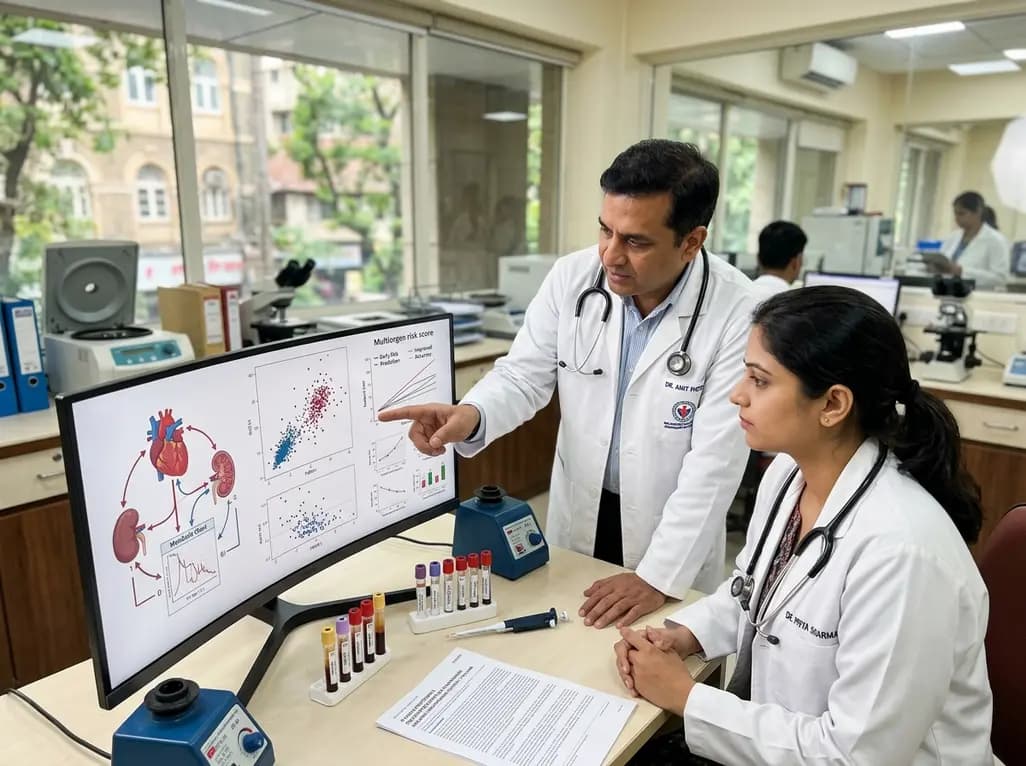
A large UK Biobank study reveals that plasma proteomic signatures capture preclinical organ damage and improve multiorgan risk prediction across early CKM syndrome stages 0 to 2 beyond traditional PREVENT clinical models.
Today
A narrative review investigates whether the articularis genus muscle functions as an independent anatomical entity or blends with the vastus intermedius. We evaluate its morphology, role in retracting the suprapatellar bursa, and direct clinical significance in anterior knee pain and arthroplasty.
Today

A Bayesian multilevel meta-analysis reveals that aerobic training combined with moderate carbohydrate restriction modestly lowers HbA1c in type 2 diabetes. However, sparse data and very low certainty leave incremental benefits over exercise or diet alone unproven, highlighting the need for individualized care.
Today
