.webp&w=384&q=75)

Loading, please wait...
Loading, please wait...

Endoscopic submucosal dissection (ESD) has transformed the management of superficial gastrointestinal neoplasms by enabling en bloc resection. However, post-procedural hemorrhage remains a significant clinical challenge that can lead to emergency re-intervention, prolonged hospitalization, and increased healthcare costs. Clinicians frequently evaluate novel local shielding methods, including biological sealants, to optimize post-ESD bleeding prevention. A comprehensive systematic review and meta-analysis recently investigated whether adjunctive fibrin glue application reduces post-ESD bleeding in patients undergoing resection of gastroesophageal lesions.
Endoscopic submucosal dissection creates extensive artificial mucosal defects, exposing underlying submucosal blood vessels to mechanical friction, digestive enzymes, and gastric acid. Consequently, endoscopists routinely utilize preventive coagulation, hemoclips, and profound acid suppression to minimize bleeding complications. Despite these standard measures, delayed post-ESD hemorrhage still occurs in a notable proportion of patients, especially those with large resection beds or underlying comorbidities.
Fibrin glue consists of concentrated fibrinogen and thrombin solutions that mimic the final stages of the physiologic coagulation cascade. When endoscopically applied to the resection base, the mixture rapidly polymerizes into an insoluble fibrin clot, theoretically sealing exposed microvessels and creating a protective mechanical barrier against luminal contents. Therefore, early non-randomized investigations suggested that spraying or injecting fibrin glue over the artificial ulcer floor might reduce both immediate and delayed hemorrhagic events.
Nevertheless, clinical trials evaluating fibrin glue have yielded conflicting conclusions. While some observational cohorts reported favorable hemostatic outcomes, several randomized controlled trials observed no significant benefit over conventional hemostasis alone. Given these discrepancies, researchers conducted a rigorous meta-analysis to clarify the actual therapeutic efficacy of adjunctive fibrin glue across upper gastrointestinal ESD procedures.
The meta-analysis evaluated seven studies comprising two randomized controlled trials and five observational cohorts, encompassing a total of 2,141 patients who underwent upper gastrointestinal ESD. The primary outcome focused on overall post-ESD bleeding incidence in gastroesophageal lesions. Pooled analysis revealed that adjunctive fibrin glue application did not significantly decrease overall post-ESD bleeding compared to standard hemostatic management.
Specifically, the overall risk ratio stood at 0.67 with a 95% confidence interval spanning from 0.29 to 1.57, demonstrating no statistically significant benefit. Furthermore, the analysis detected substantial statistical heterogeneity among the included studies, reflecting variability in procedural protocols, lesion characteristics, and baseline patient risk profiles. Consequently, routine unselected application of fibrin glue failed to demonstrate superior hemostatic protection.
Subgroup analyses stratified by anatomical site further reinforced these findings. In esophageal ESD cases, fibrin glue use showed a risk ratio of 2.14, whereas gastric ESD cohorts demonstrated a risk ratio of 0.75. Neither anatomical subgroup reached statistical significance. Similarly, stratifying outcomes by temporal onset indicated no meaningful reduction in early bleeding or delayed bleeding events. Therefore, empirical application across unselected gastroesophageal ESD populations appears ineffective.
Understanding why adjunctive fibrin glue fails to confer significant protection requires an appreciation of upper gastrointestinal physiology. The gastric and esophageal environments expose the ulcer base to vigorous peristaltic shearing forces, bile reflux, and acidic secretions. Consequently, isolated fibrin clots often degrade or detach prematurely from the ulcer floor within hours to days following endoscopic application.
Because delayed bleeding frequently occurs between forty-eight hours and two weeks post-resection, a sealant that dissolves quickly cannot protect newly exposed vessels during peak vulnerability. Moreover, conventional thermal hemostasis—achieved through meticulous coagrasper application during ESD—already achieves highly effective primary vessel closure. Adding a topical biologic agent provides negligible incremental stability to deeply seated submucosal vessels.
In contrast, recent tissue-shielding techniques combine fibrin glue with polyglycolic acid (PGA) sheets to create a durable, reinforced scaffold. The synthetic sheet provides prolonged mechanical coverage, allowing the biological adhesive to anchor effectively. Meta-analytic evidence suggests that this combination technique may offer better outcomes than fibrin glue alone, particularly in preventing delayed bleeding in complex gastric ulcers.
These meta-analytic findings have direct practical implications for therapeutic endoscopy units. Because routine fibrin glue application does not reduce bleeding rates, clinicians should avoid unselected deployment. Eschewing routine use helps avoid unnecessary procedural complexity, prolonged operative time, and substantial equipment expenses.
Instead, endoscopists should focus on established, high-yield preventive strategies. These encompass thorough intraprocedural vessel coagulation, complete mucosal defect closure with through-the-scope or over-the-scope clips when feasible, and optimized pharmacologic acid suppression using potassium-competitive acid blockers (P-CABs) or high-dose proton pump inhibitors. Meticulous execution of standard hemostatic techniques remains the cornerstone of complication avoidance.
Importantly, the authors emphasize that future research should target specific high-risk subpopulations rather than broad cohorts. Patients receiving direct oral anticoagulants, dual antiplatelet therapy, or those with end-stage renal disease face disproportionately elevated hemorrhagic risks. Evaluating adjunctive bioadhesives and advanced shielding matrices within these enriched cohorts will determine whether targeted prophylactic protocols offer meaningful clinical utility.
Improving patient safety during advanced endoscopic resection demands a multifaceted, risk-stratified approach. Clinicians must carefully weigh patient-specific factors, including lesion diameter, location within the stomach or esophagus, and concurrent antithrombotic regimens, before selecting adjunct shielding methods. Tailoring the preventive strategy ensures optimal resource allocation and enhanced patient outcomes.
Moreover, ongoing engineering advances continue to introduce novel self-assembling peptide hydrogels, polysaccharide powders, and endoscopic suturing devices. These emerging technologies aim to overcome the rapid enzymatic degradation that limits standalone fibrin sealants. As endoscopic innovation progresses, well-designed prospective trials will be essential to establish their clinical efficacy, cost-effectiveness, and real-world safety profiles.
No, the meta-analysis demonstrated that adjunctive fibrin glue did not significantly lower delayed bleeding rates compared to conventional care. The pooled risk ratio for delayed bleeding was 1.10 with a 95% confidence interval of 0.56 to 2.17. Because delayed hemorrhage typically occurs days after resection, rapid degradation of standalone fibrin glue likely limits its protective efficacy over extended post-procedural periods.
Subgroup analysis showed no statistically significant reduction in post-ESD bleeding for either gastric or esophageal lesions. For gastric resections, the risk ratio was 0.75, whereas esophageal resections yielded a risk ratio of 2.14. Consequently, current clinical evidence does not support using standalone fibrin glue as a routine prophylactic measure at either anatomical location in unselected patient populations.
Proven strategies include meticulous intraprocedural coagulation of visible submucosal vessels, mechanical defect closure using endoscopic clips or loop systems, and potent post-procedural acid suppression with proton pump inhibitors or potassium-competitive acid blockers. Additionally, combined tissue shielding using polyglycolic acid sheets with fibrin sealant has shown promise in specialized high-risk gastric resections.
Disclaimer: This content is for informational and educational purposes only and does not constitute medical advice. Healthcare professionals should rely on their clinical judgment. Refer to the latest local and national guidelines for clinical practice.
References
1. Süffert LC et al. Adjunctive fibrin glue for the prevention of bleeding after endoscopic submucosal dissection of gastroesophageal lesions: a systematic review and meta-analysis. Surg Endosc. 2026 Aug 20. doi: 10.1007/s00464-026-13288-1. PMID: 42622653.
2. Lee HD, Lee E, Kim SG, et al. A randomized controlled trial of fibrin glue to prevent bleeding after gastric endoscopic submucosal dissection. Am J Gastroenterol. 2023;118(5):892-899.
3. Kataoka Y, Tsuji Y, Hirasawa K, et al. Endoscopic tissue shielding to prevent bleeding after endoscopic submucosal dissection: a prospective multicenter randomized controlled trial. Endoscopy. 2019;51(7):619-627.
4. Tsuji Y, Fujishiro M, Kodashima S, et al. Polyglycolic acid sheets and fibrin glue decrease the risk of bleeding after endoscopic submucosal dissection of gastric neoplasms. Gastrointest Endosc. 2015;81(4):906-912.

Read summarized clinical updates, watch expert medical content, and earn CME certifications right from your smartphone.
Open your smartphone camera to scan and install.





A systematic review and meta-analysis of 2,141 patients shows that adjunctive fibrin glue does not significantly decrease overall, early, or delayed post-ESD bleeding in gastroesophageal lesions, underscoring the need to refine targeted strategies for high-risk patients.
last month

A systematic review of 41 preclinical studies reveals that baicalin dampens systemic inflammation, inhibits NF-κB and NLRP3 pathways, and improves organ preservation in sepsis models. However, substantial study heterogeneity and a complete lack of human clinical trials highlight the need for further translational research.
Today
Discover the crucial distinctions between mesonephric and mesonephric-like proliferations of the female genital tract. Learn the key histomorphologic, immunohistochemical, and molecular differences essential for accurate diagnosis and clinical management.
Today
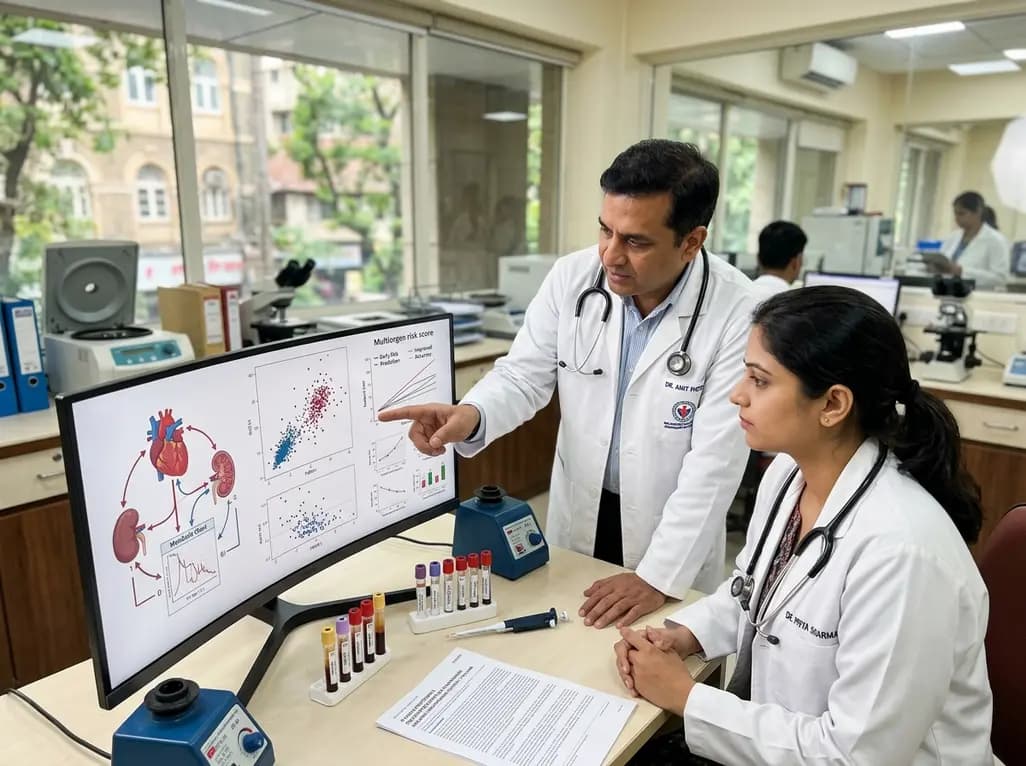
A large UK Biobank study reveals that plasma proteomic signatures capture preclinical organ damage and improve multiorgan risk prediction across early CKM syndrome stages 0 to 2 beyond traditional PREVENT clinical models.
Today
A narrative review investigates whether the articularis genus muscle functions as an independent anatomical entity or blends with the vastus intermedius. We evaluate its morphology, role in retracting the suprapatellar bursa, and direct clinical significance in anterior knee pain and arthroplasty.
Today

A Bayesian multilevel meta-analysis reveals that aerobic training combined with moderate carbohydrate restriction modestly lowers HbA1c in type 2 diabetes. However, sparse data and very low certainty leave incremental benefits over exercise or diet alone unproven, highlighting the need for individualized care.
Today
