.webp&w=384&q=75)

Loading, please wait...
Loading, please wait...

Epilepsy affects millions of people worldwide and remains a significant clinical challenge. Consequently, nearly one-third of these patients suffer from drug-resistant seizures despite existing pharmacological options. This therapeutic gap forces clinicians and researchers to seek novel molecular pathways. Therefore, scientists are investigating the role of adenosine receptors in epilepsy as a promising alternative for seizure management. Specifically, these G protein-coupled receptors serve as endogenous "brakes" within the central nervous system. They effectively regulate neuronal excitability, neurotransmitter release, and neuroinflammation.
Furthermore, the four adenosine receptor subtypes (A1, A2A, A2B, and A3) exhibit distinct signaling mechanisms and expression profiles. While the A1 receptor provides strong neuroprotection by inhibiting excitatory signals, the A2A receptor often facilitates neurotransmission. However, early drug trials faced significant hurdles during clinical translation. Most notably, systemic activation of these receptors frequently caused unwanted cardiovascular effects. Because adenosine impacts heart rate and blood pressure, creating brain-specific therapies is essential.
In addition, recent breakthroughs in pharmacology provide new solutions to past limitations. Researchers have developed highly selective agonists and positive allosteric modulators. These tools target specific brain regions while minimizing impact on the heart. Moreover, biased ligands allow for more precise control over downstream signaling pathways. Consequently, these advancements might transform the management of refractory epilepsy in the coming years. Finally, targeted adenosine modulation offers substantial hope for reducing long-term epileptogenesis and improving patient outcomes.
Adenosine acts as an endogenous anticonvulsant. Specifically, the A1 receptor subtype reduces the release of excitatory neurotransmitters like glutamate and hyperpolarizes neurons to prevent excessive firing.
Systemic adenosine modulation can lead to bradycardia or hypotension. This occurs because adenosine receptors also exist in cardiac and vascular tissues, necessitating the development of brain-selective or allosteric modulators.
Yes, there are four subtypes: A1, A2A, A2B, and A3. Each subtype has a unique role, with A1 generally providing inhibitory neuroprotection and A2A often playing a facilitatory role in neuroinflammation and excitability.
Disclaimer: This content is for informational and educational purposes only. It does not constitute medical advice or a substitute for professional healthcare guidance. Refer to the latest local and national guidelines for clinical practice.
References
Mal'tseva VN et al. Adenosine receptors as emerging therapeutic targets in epilepsy. Rev Neurosci. 2026 Feb 23. doi: 10.1515/revneuro-2025-0121. PMID: 41723857.
Masino SA et al. Adenosine Receptors and Epilepsy: Current Evidence and Future Potential. Int Rev Neurobiol. 2014;119:233-255. doi: 10.1016/B978-0-12-801022-8.00011-8. PMID: 25175969.
Li T et al. Therapeutic Potential Target of Adenosine for Epilepsy from Bench to Bed: Interaction with the Molecular Epileptogenic Network. Preprints.org. 2025. doi: 10.20944/preprints202512.0543.v1.

Read summarized clinical updates, watch expert medical content, and earn CME certifications right from your smartphone.
Open your smartphone camera to scan and install.





Exploring the role of adenosine receptors as novel molecular targets to manage drug-resistant epilepsy and reduce neuroinflammation....
8 months ago
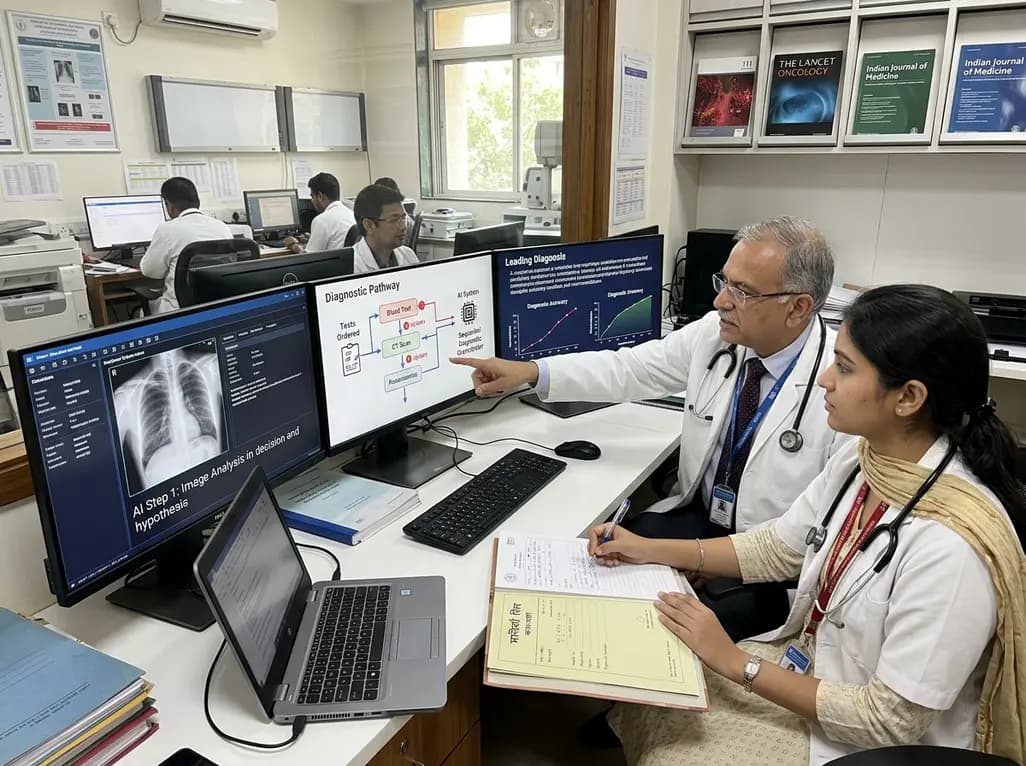
A breakthrough peer-reviewed study demonstrates that a sequential AI diagnosis system can mirror real-world clinical reasoning. By ordering stepwise tests and updating hypotheses dynamically, this multi-agent orchestrator achieved superior diagnostic accuracy while reducing investigative costs.
Today

A prenatal case highlights severe glutaric acidemia type II presenting as bilateral hyperechoic cystic kidneys at 18 weeks. Whole-exome sequencing revealed a novel homozygous ETFDH frameshift variant, demonstrating the power of rapid genetic testing in fetal renal anomalies.
Today

Review how tailored exercise programs benefit frail older patients with heart failure. Explore pathophysiological mechanisms, individualized training prescriptions, and strategies to overcome adherence barriers in clinical practice.
Yesterday

This comparative study evaluates posterior labral tears with and without glenohumeral instability, highlighting distinct demographic patterns, MRI underestimation in stable shoulders, and successful arthroscopic repair outcomes.
Yesterday

A clinical study demonstrates that early intervention with tocilizumab, either as monotherapy or bridged with corticosteroids, achieves significant proptosis reduction and resolves active inflammation in treatment-naive thyroid eye disease.
Yesterday
