.webp&w=384&q=75)

Loading, please wait...
Loading, please wait...

Idiosyncratic drug-induced liver injury remains a formidable diagnostic and therapeutic challenge in modern medicine. When hepatic impairment occurs alongside renal compromise, patient prognosis deteriorates rapidly. Recent multicentric data highlighting acute kidney injury DILI demonstrate that concurrent nephrotoxicity significantly complicates idiosyncratic hepatotoxicity. Clinicians often encounter diverse drug reactions, but dual-organ dysfunction demands immediate recognition and structured intervention. By understanding the incidence, specific causative agents, and clinical indicators associated with combined hepatorenal damage, physicians can optimize clinical pathways and reduce adverse outcomes.
Idiosyncratic drug-induced liver injury represents an unpredictable adverse reaction that lacks a clear relationship with medication dosage. A substantial prospective analysis across the Spanish DILI Registry and Latin American DILI Network revealed that 5.5% of affected individuals present with concomitant renal impairment. While this percentage might appear modest, the clinical consequences are profound. Consequently, identifying high-risk pharmacological triggers is essential for early diagnosis and rapid drug withdrawal.
Among the implicated agents, antibacterial medications stand out as primary contributors. Amoxicillin-clavulanate emerged as the most frequent culprit, accounting for eleven percent of dual-injury cases. Furthermore, anabolic androgenic steroids, antituberculosis regimens, ebrotidine, and ticlopidine each contributed to over five percent of cases. This distribution highlights the vulnerability of patients undergoing routine antibiotic therapies or specialized regimens.
In clinical practice, healthcare providers must maintain high vigilance when administering these medications. Because idiosyncratic reactions do not correlate with standard toxic dose thresholds, prompt cessation of the offending agent remains the most effective intervention. Therefore, understanding these culprit drugs enables physicians to quickly differentiate acute kidney injury DILI from isolated liver disease or unprovoked nephrotoxicity.
Patient demographics and baseline health status heavily influence susceptibility to combined hepatic and renal injury. Multicentric registry data indicate that patients with dual organ dysfunction are significantly older than those with isolated hepatic injury, averaging sixty years of age. Additionally, male patients represent nearly two-thirds of all diagnosed cases. These individuals also carry a substantially heavier burden of baseline chronic comorbidities, including cardiovascular disease, diabetes, and baseline metabolic disorders.
From a laboratory and phenotypic standpoint, idiosyncratic hepatotoxicity presents in several distinct biochemical patterns. Cholestatic liver damage occurs far more frequently in patients with concurrent renal impairment than in those with uncomplicated hepatic injury. Moreover, systemic lymphopenia frequently accompanies this clinical presentation, suggesting underlying immune dysregulation or heightened systemic inflammatory stress.
Clinicians must recognize these distinctive features during routine assessments. When an older male patient with pre-existing chronic conditions presents with drug-induced cholestasis, clinicians should immediately evaluate kidney function. Monitoring absolute lymphocyte counts and baseline serum creatinine provides valuable insight into the patient's physiological resilience. Consequently, early phenotypic recognition allows clinicians to implement protective measures before systemic complications escalate.
The pathophysiological interplay between hepatic and renal impairment involves complex systemic hemodynamic alterations and immune-mediated cascades. Although idiosyncratic toxicity does not follow standard toxicokinetics, severe liver injury disrupts circulating cytokine profiles and vascular tone. Consequently, systemic vasodilation and altered renal perfusion frequently develop, placing extreme physiological stress on the renal parenchyma.
In addition, severe cholestasis directly threatens nephron integrity. Elevated concentrations of circulating bile acids and bilirubin can induce tubular toxicity and cause intratubular cast formation, leading to cholemic nephropathy. This mechanical and biochemical insult reduces glomerular filtration rates and worsens kidney damage. Furthermore, the high prevalence of lymphopenia in affected patients suggests severe immune perturbation, which may amplify tissue injury through unrestrained inflammatory mediator release.
Meanwhile, impaired drug clearance creates a self-reinforcing cycle of cellular injury. Reduced renal clearance impairs the excretion of active drug metabolites, thereby prolonging systemic toxicity. Therefore, renal dysfunction acts not merely as a passive bystander, but as an active driver of multi-organ failure. Understanding these shared pathways reinforces the urgent need for dual-organ monitoring whenever clinicians suspect idiosyncratic drug reactions.
The development of renal impairment in idiosyncratic hepatotoxicity carries ominous prognostic implications. Multivariable regression models demonstrate that concurrent renal damage increases the risk of poor outcomes by more than threefold. Furthermore, rigorous propensity score-matched analyses confirm that renal dysfunction independently elevates the odds of adverse outcomes with an odds ratio of 5.20. These statistical findings emphasize that kidney failure represents a major determinant of patient survival.
Notably, clinical outcomes diverge based on the underlying pattern of liver injury. While cholestatic damage occurs more frequently in these patients, mortality is predominantly concentrated among individuals who exhibit a hepatocellular pattern of liver injury. Marked transaminase elevations combined with acute renal failure indicate extensive parenchymal necrosis and impending liver failure.
Consequently, patients presenting with hepatocellular damage and elevated serum creatinine require intensive monitoring. Both liver-related mortality and all-cause mortality rise significantly in this subgroup. Therefore, risk stratification models must integrate renal function parameters alongside traditional liver enzymes. Recognizing this heightened mortality risk ensures that clinical teams allocate critical care resources and consider liver transplantation assessments without unnecessary delay.
Managing patients with concurrent hepatotoxicity and renal injury requires a disciplined, multi-step therapeutic approach. The immediate and complete discontinuation of all suspected offending medications represents the cornerstone of management. In addition, clinicians must carefully review all concomitant over-the-counter supplements, antimicrobials, and herbal products. Because re-exposure can cause catastrophic liver failure, clinicians must permanently document culprit agents in patient medical records.
Simultaneously, medical teams must implement aggressive renal preservation measures. Clinicians should avoid secondary nephrotoxic agents, such as nonsteroidal anti-inflammatory drugs, aminoglycosides, and iodinated contrast media. Maintaining adequate intravascular volume through balanced crystalloids helps sustain renal perfusion without overloading portal circulation. Moreover, managing electrolyte derangements and metabolic acidosis prevents secondary cardiac and neurological complications.
Finally, collaborative multidisciplinary care improves patient survival. Hepatologists and nephrologists should jointly establish monitoring protocols that track serum transaminases, bilirubin, creatinine, and urine output daily. For patients displaying progressive hepatocellular failure and refractory renal dysfunction, early referral to a specialized liver transplant center is essential. Structured clinical protocols and timely supportive care significantly mitigate mortality risks in this vulnerable patient population.
Amoxicillin-clavulanate is the most frequent medication linked to concurrent liver and kidney injury, responsible for eleven percent of cases. Other notable culprits include anabolic androgenic steroids, antituberculosis medications, ebrotidine, and ticlopidine. Clinicians must promptly recognize these causative agents because immediate drug withdrawal prevents progressive organ damage. Furthermore, carefully reviewing all concurrent prescription and non-prescription treatments helps identify potential drug interactions that exacerbate systemic toxicity.
Although cholestatic injury occurs more frequently in dual-organ dysfunction, hepatocellular injury reflects widespread hepatocyte necrosis and severe parenchymal destruction. When severe hepatic necrosis combines with renal failure, the body loses vital synthetic and metabolic clearance functions. Consequently, toxic metabolites accumulate rapidly, triggering profound systemic inflammation, coagulopathy, and circulatory collapse. Therefore, patients with hepatocellular injury and concurrent renal failure face significantly higher liver-related and all-cause mortality rates.
Clinicians must immediately discontinue all suspected medications and avoid secondary nephrotoxins like nonsteroidal anti-inflammatory drugs. They should monitor liver biochemistry, renal function, electrolytes, and urine output daily to detect deterioration early. Additionally, maintaining euvolemia with balanced intravenous fluids preserves renal perfusion. If patients exhibit deteriorating hepatocellular function, encephalopathy, or refractory renal failure, medical teams must promptly refer them to specialized centers for advanced intensive care or liver transplantation evaluation.
Disclaimer: This content is for informational and educational purposes only and does not constitute medical advice, diagnosis, or treatment. Healthcare professionals should exercise their clinical judgment and refer to the latest local and national guidelines for clinical practice.
References

Read summarized clinical updates, watch expert medical content, and earn CME certifications right from your smartphone.
Open your smartphone camera to scan and install.





A multicentric propensity score-matched study reveals acute kidney injury in 5.5% of idiosyncratic DILI cases, with culprit drugs led by amoxicillin-clavulanate. AKI independently increases mortality over fivefold, particularly in hepatocellular injury.
last month

A Bayesian multilevel meta-analysis reveals that aerobic training combined with moderate carbohydrate restriction modestly lowers HbA1c in type 2 diabetes. However, sparse data and very low certainty leave incremental benefits over exercise or diet alone unproven, highlighting the need for individualized care.
Today

Findings from Project Viva indicate that sustained postpartum weight retention, rather than excessive gestational weight gain alone, directly worsens women's mid-life cardiovascular health, degrading blood pressure and glycemic parameters decades after delivery.
Today
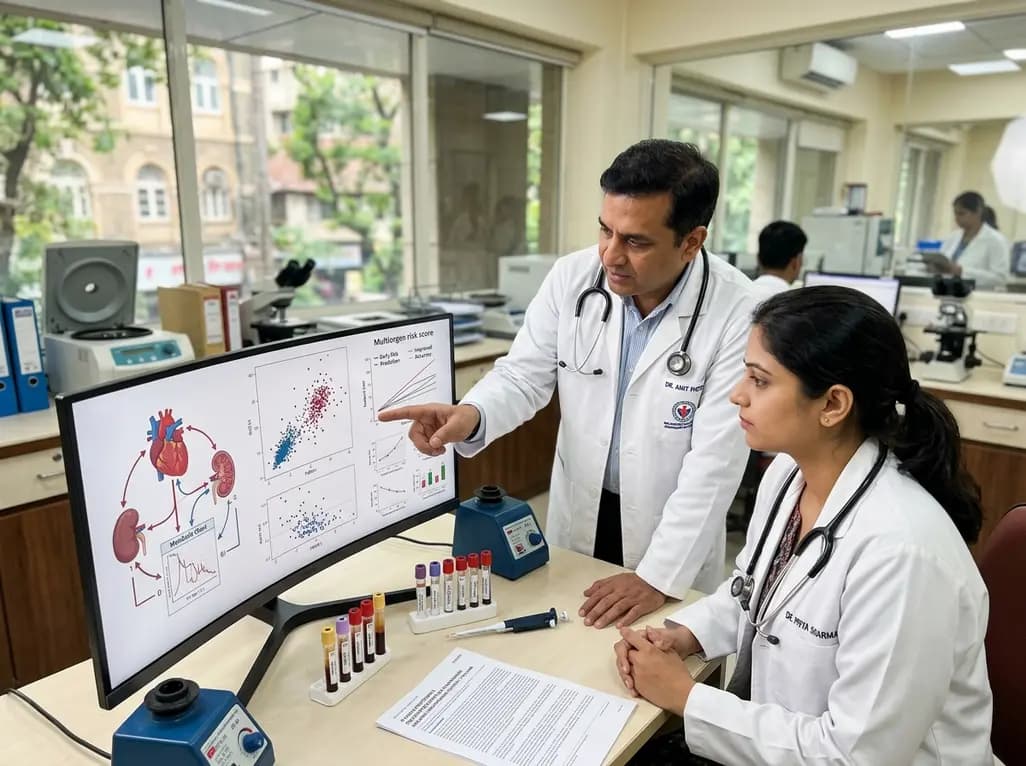
A large UK Biobank study reveals that plasma proteomic signatures capture preclinical organ damage and improve multiorgan risk prediction across early CKM syndrome stages 0 to 2 beyond traditional PREVENT clinical models.
Today

A retrospective CBCT study reveals that superior TMJ space asymmetry correlates moderately with occipital condyle-atlas-axis asymmetry in unilateral TMJ osteoarthritis, highlighting an imaging correlate between jaw biomechanics and upper cervical alignment rather than a standalone diagnostic marker.
Today

A cross-sectional investigation highlights the complex pathophysiological links between serum Klotho deficiency, secondary hyperaldosteronism, and vascular damage in CKD. Discover key insights into non-invasive vascular stiffness markers and targeted therapeutic pathways for cardiorenal protection.
Today
