.webp&w=384&q=75)

Loading, please wait...
Loading, please wait...

Acute breathlessness represents one of the most frequent and complex clinical presentations encountered in the emergency department. Because patients present with diverse underlying etiologies ranging from heart failure to respiratory infections, standard diagnostic categories often fail to capture individual mortality risk. Recent evidence demonstrates that identifying distinct acute dyspnoea subtypes through model-based clustering provides superior prognostic accuracy. Consequently, emergency clinicians can move beyond conventional disease labels to deliver targeted, personalized resuscitation and timely clinical interventions.
Clinical presentations of acute breathlessness frequently overlap across distinct cardiorespiratory conditions. Therefore, investigators applied latent class analysis to large cohorts of emergency department patients to uncover underlying biological patterns. The researchers analyzed data from the prospective LEDA derivation cohort and validated findings in the BASEL V cohort. By evaluating nine admission clinical and biological variables, the model successfully established four reproducible acute dyspnoea subtypes. These clinical clusters transcend traditional organ-specific classifications, such as isolated chronic obstructive pulmonary disease or acute heart failure. Furthermore, this mathematical clustering reveals shared pathophysiological mechanisms that standard diagnostic labels consistently overlook. Clinicians often face diagnostic uncertainty during the initial golden hour of emergency evaluation. Consequently, utilizing unsupervised machine learning models helps clinicians identify biological phenotypes earlier during hospital triage. This data-driven approach enhances risk stratification before comprehensive laboratory panels become fully available.
The statistical clustering model categorized patients into four distinct phenotypes labeled Subtypes A, B, C, and D. Specifically, Subtype A represents a non-inflammatory profile with lower baseline acuity and favorable clinical stability. In contrast, Subtype B characterizes a tachycardic cluster with significant autonomic activation and elevated heart rates upon presentation. Subtype C captures an anaemic phenotype, predominantly featuring older individuals with reduced hemoglobin levels and multi-organ frailty. Finally, Subtype D represents a severe hypoxemic phenotype marked by pronounced oxygen desaturation and severe respiratory distress. Each subtype exhibits unique hemodynamic features and baseline demographic characteristics. Moreover, patients within the same conventional disease category frequently distributed across different subtypes. For example, acute heart failure patients appeared in all four clusters depending on their systemic inflammation, heart rate, and oxygenation. Thus, these phenotypes capture true physiological derangements rather than rigid diagnostic categories.
Biological markers demonstrate striking progressive elevations across the four identified patient clusters. Specifically, cardiovascular and inflammatory biomarker concentrations increased significantly from Subtype A to Subtype D. Patients classified into Subtype D exhibited the highest circulating levels of high-sensitivity troponin, natriuretic peptides, and C-reactive protein. Consequently, this biological gradient highlights escalating myocardial strain, systemic inflammation, and endothelial dysfunction across the spectrum. In addition, renal functional markers and neurohormonal activation indicators followed identical upward trajectories. Subtype C also displayed profound biomarker evidence of chronic disease anemia and subclinical organ malperfusion. Therefore, biomarker profiling confirms that these mathematical clusters reflect real biological differences rather than random statistical variance. By understanding these specific biochemical pathways, emergency physicians can anticipate rapid clinical deterioration in high-risk phenotypes. Furthermore, targeted monitoring of these biomarker trajectories helps track therapeutic responses during intensive resuscitation.
Phenotypic assignment provides robust independent prognostic value for short-term and intermediate clinical outcomes. After adjusting for traditional risk factors and established comorbidities, subtype classification remained strongly associated with 90-day mortality. Notably, patients in Subtype D suffered the worst clinical outcomes, displaying an adjusted hazard ratio exceeding fivefold in validation cohorts. In contrast, patients in Subtype A demonstrated exceptionally low three-month mortality rates. Furthermore, incorporating subtype membership significantly improved the Harrell C-index for mortality prediction compared to traditional linear risk models. This significant prognostic discrimination persisted across diverse clinical subgroups, including elderly patients and individuals with multimorbidity. Thus, identifying high-risk subtypes enables clinicians to identify vulnerable patients who require immediate intensive care placement. Conversely, identifying low-risk clusters allows safe de-escalation and prevents unnecessary hospital admissions.
To facilitate immediate bedside application, researchers derived and externally validated a simplified decision tree. This practical algorithm relies on readily accessible vital signs and point-of-care laboratory parameters available within minutes of arrival. Specifically, oxygen saturation, heart rate, and hemoglobin levels serve as primary decision nodes to classify presenting patients rapidly. As a result, clinicians can assign patients to specific subtypes without complex computational software at the bedside. In busy emergency rooms, rapid decision-making remains vital for patient survival. Therefore, this streamlined decision tree bridges advanced machine learning and practical emergency medicine workflows. Emergency teams can instantly flag hypoxemic or anaemic phenotypes during preliminary triage assessments. Consequently, nursing staff and physicians can initiate targeted oxygen delivery, hemodynamic stabilization, and advanced monitoring protocols immediately.
Adopting phenotype-guided care represents a major paradigm shift for modern emergency medicine and acute critical care. Traditional management often focuses narrowly on isolated organ systems, potentially neglecting systemic inflammatory and metabolic disturbances. However, recognizing unique physiological subtypes allows emergency physicians to administer tailored pharmacological and respiratory therapies. For instance, patients presenting with the hypoxemic phenotype require prompt ventilatory support, aggressive decongestion, and close hemodynamic surveillance. Meanwhile, individuals with the anaemic subtype benefit from targeted oxygen-carrying optimization and conservative fluid administration. Moreover, integrating these algorithmic tools into electronic health records can automate real-time risk stratification during triage. As clinical validation continues across global healthcare settings, subtyping frameworks will enhance clinical outcomes for vulnerable emergency patients worldwide.
The clustering framework identifies subtypes primarily using nine routine admission clinical and biological variables. Specifically, oxygen saturation, baseline heart rate, hemoglobin concentration, and inflammatory markers serve as critical distinguishing factors. By integrating these routine parameters, the derived clinical decision tree rapidly assigns patients into non-inflammatory, tachycardic, anaemic, or hypoxemic phenotypes during initial emergency department triage without requiring delayed testing.
Conventional diagnostic categories often group heterogeneous patients together, masking critical physiological differences. In contrast, subtype classification captures distinct pathophysiological mechanisms, systemic inflammation, and acute organ strain. Consequently, multivariable models demonstrate that phenotypic assignment independently predicts 90-day mortality and significantly improves discrimination metrics, outperforming traditional linear combinations of isolated vital signs and single diagnostic labels.
Patients categorized into the hypoxemic subtype exhibit severe respiratory compromise, elevated cardiovascular biomarkers, and the highest 90-day mortality risk. Therefore, clinical teams must immediately prioritize advanced respiratory support, such as high-flow nasal cannula or non-invasive positive pressure ventilation. Additionally, early hemodynamic monitoring, urgent intensive care consultation, and aggressive treatment of underlying cardiopulmonary congestion remain vital to stabilize these critically ill patients.
Disclaimer: This content is for informational and educational purposes only and does not constitute medical advice, diagnosis, or treatment. Healthcare professionals should rely on their clinical judgment, institutional protocols, and current medical literature when making patient care decisions. The information provided is based on research available at the time of publication and should not be used as a substitute for professional clinical decision-making. Refer to the latest local and national guidelines for clinical practice.
References
1. Čerlinskaitė-Bajorė K et al. Identifying clinical subtypes in acute dyspnoea patients admitted to the emergency department: a secondary model-based clustering of prospective cohorts. ESC Heart Fail. 2026 Aug 25. doi: undefined. PMID: 42641136.
2. Mueller C, et al. Multimarker strategy for risk assessment in acute dyspnea: results from the BASEL V study. Eur Heart J. 2020;41(38):3700-3709.
3. Mebazaa A, et al. Acute dyspnoea in the emergency department: a clinical consensus and diagnostic pathway. Intensive Care Med. 2016;42(8):1201-1212.
4. Ponikowski P, et al. 2021 ESC Guidelines for the diagnosis and treatment of acute and chronic heart failure. Eur Heart J. 2021;42(36):3599-3726.

Read summarized clinical updates, watch expert medical content, and earn CME certifications right from your smartphone.
Open your smartphone camera to scan and install.





A secondary analysis of the LEDA and BASEL V prospective cohorts identified four reproducible acute dyspnoea subtypes that transcend conventional diagnoses and predict 90-day mortality.
last month

The landmark ICMR-funded RESOLVE trial demonstrates that an eight-week course of sofosbuvir-velpatasvir achieves a 98.8% viral clearance rate in non-cirrhotic, treatment-naive hepatitis C patients. This shorter protocol matches 12-week efficacy while significantly reducing out-of-pocket costs and drug burden.
Today

A nationwide South Korean study shows underreporting of smoking among women dropped from 57.4% to 36.4% between 2008 and 2021. However, over one-third of female smokers still conceal their habit, highlighting the critical role of cotinine verification in clinical risk assessment.
Today
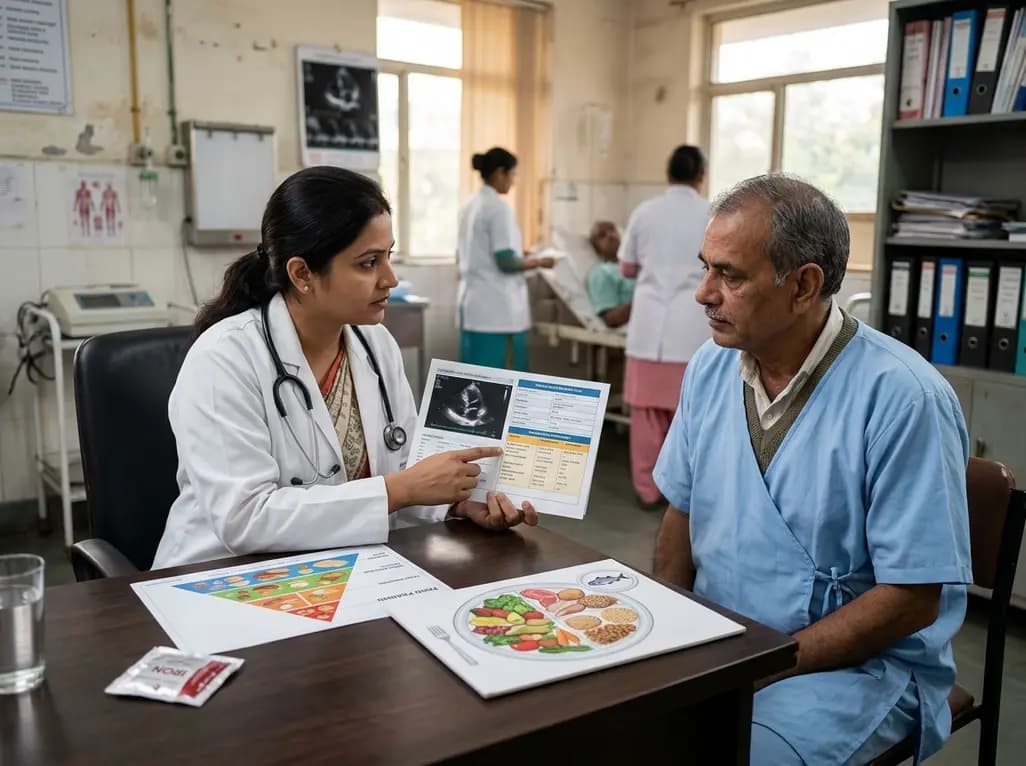
A scientific statement highlights the crucial role of nutrition in managing chronic heart failure. It emphasizes GLIM-based screening, individualized dietary patterns like the Mediterranean diet, appropriate protein and energy intake, avoiding unnecessary fluid restriction, and targeted iron supplementation.
Today

A new study evaluates the rheological stability of decellularized peripheral nerve matrix hydrogels under varied storage conditions. Findings show -80°C storage and freeze-drying preserve gelation kinetics and mechanical stiffness, offering key insights for shipping and translational clinical applications.
Today

A qualitative meta-synthesis highlights the complex interplay between gender dysphoria, minority stress, and eating disorders in transgender and gender-diverse individuals. Clinicians must recognize these distinct drivers to offer supportive, gender-affirming, and interdisciplinary eating disorder care.
Today
