.webp&w=384&q=75)

Loading, please wait...
Loading, please wait...

Managing chronic viral hepatitis in high-burden countries requires constant therapeutic innovation and resource optimization. Clinicians across India have long relied on standard 12-week direct-acting antiviral protocols to treat chronic infections effectively. However, recent evidence indicates that optimizing hepatitis C treatment duration may transform public health strategies. An Indian Council of Medical Research funded multicenter trial has demonstrated that selected patients can safely cut their therapy time by one-third. Consequently, healthcare providers can now evaluate an evidence-based approach that maintains therapeutic efficacy while dramatically improving adherence and affordability. Furthermore, this shift directly addresses common real-world challenges such as patient dropouts, financial strain, and regional healthcare supply constraints.
Chronic hepatitis C remains a major public health challenge across India and neighboring developing nations. Approximately 60 lakh individuals in India live with chronic hepatitis C virus infection. Left untreated, chronic hepatitis C often progresses insidiously toward hepatic fibrosis, end-stage cirrhosis, and hepatocellular carcinoma. Moreover, the economic burden of lifelong liver disease places immense strain on underserved families and public infrastructure. Fortunately, direct-acting antiviral therapies revolutionized clinical practice by achieving viral eradication in over 95 percent of cases. Nevertheless, financial constraints and out-of-pocket spending often delay therapy initiation for rural and lower-income populations. Generic manufacturing within India has lowered drug costs significantly compared to Western nations. Yet, completing a full three-month antiviral course still poses persistent logistical barriers for many vulnerable patients. Therefore, healthcare providers require streamlined treatment regimens that minimize duration without compromising clinical outcomes. Shortening therapy courses reduces patient visits, lowers monitoring expenses, and minimizes loss to follow-up. In addition, simplified treatment pathways align perfectly with national elimination targets and public health programs. As a result, researchers have rigorously pursued shorter therapeutic strategies.
To address whether a shortened antiviral course provides equivalent viral clearance, Indian investigators launched the RESOLVE trial. This landmark multicenter non-inferiority study received funding from the Indian Council of Medical Research. Principal investigator Dr Rakesh Aggarwal led the research team through the prestigious Sanjay Gandhi Postgraduate Institute of Medical Sciences. Additionally, several apex medical centers contributed patient cohorts, including King George Medical University and All India Institute of Medical Sciences. The study enrolled 880 treatment-naive adult patients with chronic hepatitis C who did not have cirrhosis. Investigators randomized 443 participants into an eight-week experimental arm receiving generic fixed-dose sofosbuvir-velpatasvir. Meanwhile, the remaining participants received the standard twelve-week course of the same direct-acting antiviral combination. Ultimately, 816 patients completed their assigned protocols and attended follow-up assessments for sustained virological response at twelve weeks post-treatment. The rigorous multicenter design ensured strong clinical validity across diverse demographic backgrounds throughout northern India. Furthermore, the trial adhered to strict ethical standards and robust monitoring frameworks. Consequently, the findings published in The Lancet provide compelling, high-quality evidence for contemporary hepatology practice.
The primary objective of the RESOLVE trial was proving non-inferior viral clearance rates between the two arms. Notably, the shorter eight-week regimen achieved an outstanding sustained virological response rate of 98.8 percent. In comparison, the standard twelve-week control group attained a 99 percent clearance rate. This minimal difference falls well within established statistical non-inferiority margins. Furthermore, safety and tolerability outcomes were exceptionally favorable across both patient cohorts. Not a single participant reported any drug-related serious adverse events during the study window. Similarly, no patient required premature treatment discontinuation due to adverse side effects or toxicity. These remarkable results demonstrate that pan-genotypic sofosbuvir-velpatasvir maintains excellent therapeutic potency even when clinicians curtail duration. Direct-acting antivirals effectively suppress viral replication within the initial four weeks of therapy in non-cirrhotic livers. Therefore, extending therapy to twelve weeks may provide redundant exposure for uncomplicated cases. Shortened protocols preserve safety while maintaining robust viral eradication. Consequently, this study establishes that optimizing hepatitis C treatment duration achieves clinical cure safely.
Shortening antiviral therapy delivers transformative economic benefits for both individual patients and national healthcare systems. In India, a standard twelve-week course of generic sofosbuvir-velpatasvir currently costs approximately 15,000 rupees. Truncating the course to eight weeks reduces medication costs by exactly one-third. Therefore, each patient immediately saves around 5,000 rupees in direct out-of-pocket medication expenses. When multiplied across the estimated 60 lakh Indian citizens requiring therapy, cumulative national savings reach approximately 3,000 crore rupees. Consequently, national healthcare programs can expand treatment access to thousands of additional patients using existing operational budgets. Moreover, reduced pill burden directly improves patient compliance and decreases clinic default rates. Patients living in remote rural areas save substantial money on travel, lodging, and missed daily wages. Furthermore, this resource efficiency offers valuable implications for other low- and middle-income nations across Southeast Asia and Africa. Streamlined procurement schedules also reduce supply chain vulnerabilities and prevent local pharmacy stockouts. Thus, shorter regimens foster sustainable elimination programs while directly easing patient financial distress.
Despite these impressive trial findings, clinicians must exercise careful patient selection before adopting shorter antiviral courses. Specifically, the RESOLVE trial enrolled only treatment-naive adult individuals without liver cirrhosis. Dr Aggarwal specifically cautioned that these shorter courses do not apply universally to every hepatitis C patient. For instance, patients with compensated or decompensated cirrhosis require full twelve-week or longer regimens to prevent relapse. Similarly, individuals who experienced prior antiviral treatment failure still demand extended therapy, occasionally supplemented with ribavirin. Therefore, accurate baseline staging remains essential before deciding on treatment length. Hepatologists recommend transient elastography or validated non-invasive serum biomarkers like APRI and FIB-4 to rule out advanced fibrosis. Furthermore, clinicians must evaluate potential drug-drug interactions, renal function, and coinfections before starting sofosbuvir-velpatasvir. Meanwhile, ongoing research will investigate whether shortened protocols can eventually benefit patients with established liver cirrhosis. Until updated clinical practice guidelines formally codify these recommendations, physicians must individualize treatment plans. Hence, thorough baseline clinical assessment protects patient safety while maximizing therapeutic cure rates.
Q1: Can all hepatitis C patients safely switch to an eight-week treatment regimen?
No, the eight-week sofosbuvir-velpatasvir regimen currently applies only to treatment-naive patients without liver cirrhosis. Patients with compensated or decompensated cirrhosis, as well as those who failed prior direct-acting antiviral therapies, still require the standard twelve-week or twenty-four-week courses. Clinicians must always perform non-invasive fibrosis staging, such as transient elastography or FIB-4 scoring, to confirm non-cirrhotic status before shortening therapy duration for any individual patient.
Q2: How does the cure rate of the eight-week course compare with standard therapy?
The ICMR-funded RESOLVE trial demonstrated outstanding therapeutic parity between both protocols. Among non-cirrhotic patients completing treatment, 98.8 percent in the eight-week cohort achieved sustained virological response at twelve weeks post-treatment, compared to 99 percent in the twelve-week cohort. This small difference proved statistically non-inferior. Furthermore, neither arm experienced any drug-related serious adverse events or treatment discontinuations, confirming that the shorter course provides equivalent viral clearance safely.
Q3: What are the anticipated financial savings of shortening hepatitis C therapy in India?
An eight-week regimen reduces generic medication expenditure by one-third, saving each patient approximately 5,000 rupees compared to the standard 15,000-rupee course. On a macroeconomic scale across India, where an estimated 60 lakh people require treatment, cumulative public healthcare savings could reach 3,000 crore rupees. These substantial savings allow government health missions to procure more drugs and treat significantly more patients within existing budgetary allocations.
Disclaimer: This content is for informational and educational purposes only. It does not constitute medical advice or replace professional judgment. Refer to the latest local and national guidelines for clinical practice.
References

Read summarized clinical updates, watch expert medical content, and earn CME certifications right from your smartphone.
Open your smartphone camera to scan and install.





The landmark ICMR-funded RESOLVE trial demonstrates that an eight-week course of sofosbuvir-velpatasvir achieves a 98.8% viral clearance rate in non-cirrhotic, treatment-naive hepatitis C patients. This shorter protocol matches 12-week efficacy while significantly reducing out-of-pocket costs and drug burden.
Today

A nationwide South Korean study shows underreporting of smoking among women dropped from 57.4% to 36.4% between 2008 and 2021. However, over one-third of female smokers still conceal their habit, highlighting the critical role of cotinine verification in clinical risk assessment.
Today
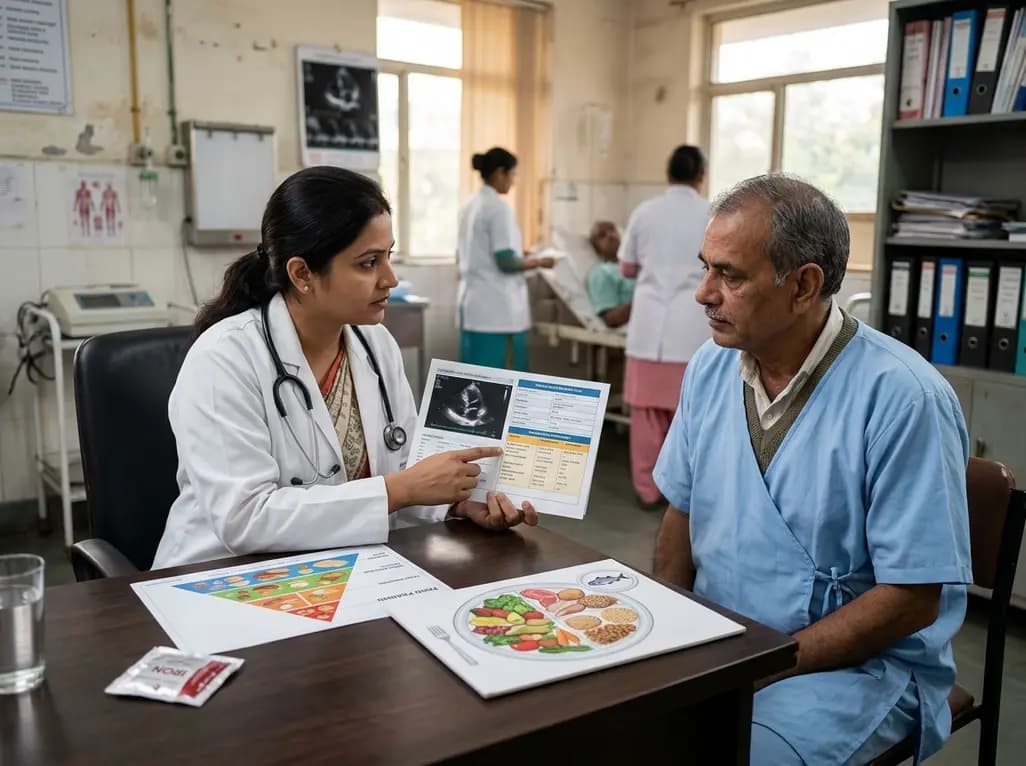
A scientific statement highlights the crucial role of nutrition in managing chronic heart failure. It emphasizes GLIM-based screening, individualized dietary patterns like the Mediterranean diet, appropriate protein and energy intake, avoiding unnecessary fluid restriction, and targeted iron supplementation.
Today

A new study evaluates the rheological stability of decellularized peripheral nerve matrix hydrogels under varied storage conditions. Findings show -80°C storage and freeze-drying preserve gelation kinetics and mechanical stiffness, offering key insights for shipping and translational clinical applications.
Today

A qualitative meta-synthesis highlights the complex interplay between gender dysphoria, minority stress, and eating disorders in transgender and gender-diverse individuals. Clinicians must recognize these distinct drivers to offer supportive, gender-affirming, and interdisciplinary eating disorder care.
Today
