.webp&w=384&q=75)

Loading, please wait...
Loading, please wait...

Anterior cervical discectomy and fusion (ACDF) remains the gold standard for treating various cervical spine pathologies, including degenerative disc disease and radiculopathy. A successful outcome largely depends on achieving solid osseous fusion while maintaining structural stability. Surgeons have historically debated the ideal material for interbody spacers, as the choice directly influences ACDF interbody device outcomes. Currently, structural allografts and polyetheretherketone (PEEK) cages represent the two most prevalent options in modern spinal surgery. While PEEK gained popularity due to its radiolucency and elastic modulus similar to bone, concerns regarding its bio-inertness persist. Conversely, allograft bone offers natural osteoconductivity but carries theoretical risks of collapse or disease transmission. Understanding the comparative efficacy of these materials is vital for optimizing patient recovery and minimizing long-term complications. Recent clinical evidence now provides a clearer picture of how these materials perform regarding fusion success and the necessity for revision procedures.
One of the primary goals of ACDF is to achieve a solid union between adjacent vertebral bodies. Recent meta-analytical data suggests that allograft spacers significantly outperform PEEK cages in this specific domain. Specifically, a pooled analysis of over 1400 patients demonstrated that allograft use correlates with a much lower rate of nonunion. Statistical findings indicate an odds ratio of 0.33, favoring allograft over PEEK for successful fusion. This difference is likely rooted in the biological properties of the materials. Allograft bone provides a natural scaffold that supports osteoblast migration and new bone formation. In contrast, PEEK is a hydrophobic, bio-inert polymer. It often leads to the formation of a fibrous tissue interface rather than true bony bridging. Consequently, patients receiving PEEK cages may face a higher risk of pseudarthrosis. Therefore, surgeons must carefully consider these biological interactions when selecting an interbody device for complex cervical reconstructions. High fusion rates are essential to prevent chronic neck pain and neurological recurrence.
Subsidence occurs when an interbody device sinks into the vertebral endplates, potentially leading to loss of disc height and foraminal narrowing. Both allograft and PEEK have been scrutinized for their potential to cause significant subsidence. Interestingly, current systematic reviews indicate that there is no statistically significant difference in the incidence of significant subsidence between these two materials. Although some studies trend toward lower subsidence rates with allograft, the overall mean amount of subsidence remains comparable. This suggests that subsidence is perhaps more dependent on surgical technique and endplate preparation rather than the material itself. Furthermore, the use of anterior plating can help distribute loads and mitigate the risk of cage migration or sinking. However, the lack of biological integration with PEEK might still predispose certain patients to late-stage instability. Surgeons should prioritize meticulous endplate preservation regardless of the chosen material. Maintaining the structural integrity of the motion segment is a cornerstone of long-term surgical success.
When analyzing ACDF interbody device outcomes, the risk of reoperation stands as a critical metric for both patients and healthcare systems. Evidence shows that PEEK cages are associated with a significantly higher rate of reoperation specifically due to nonunion. Specifically, the odds ratio for revision surgery in allograft patients was 0.28 compared to those with PEEK. This finding highlights a major clinical advantage for allograft bone in avoiding the morbidity of secondary procedures. While PEEK is often preferred for its ease of use and consistent supply, the biological superiority of allograft cannot be ignored. In many surgical centers, the shift toward bioactive materials or allografts is gaining momentum to improve these long-term metrics. Furthermore, avoiding revision surgery reduces the total cost of care and improves overall patient satisfaction. Therefore, clinical decision-making should weigh the immediate convenience of PEEK against the robust fusion profile of allograft. The long-term safety of the patient must remain the primary guiding factor in device selection.
The performance of any interbody device is dictated by its interaction with the host bone. Allograft, typically sourced from cortical bone, possesses a modulus of elasticity that is higher than PEEK but lower than titanium. This allows for a favorable stress distribution that encourages bone remodeling. Additionally, the process of creeping substitution eventually replaces the graft with the patient's own bone, creating a seamless biological unit. PEEK, while having a modulus closer to cancellous bone, lacks this regenerative potential. Research into surface-modified PEEK or titanium-coated PEEK aims to address these limitations. However, structural allograft remains the current benchmark for biological fusion. Moreover, in the Indian healthcare context, cost-effectiveness is a significant consideration. Allografts can sometimes be more accessible through established bone banks. Consequently, the combination of superior biological integration and economic viability makes allograft a compelling choice. Surgeons must evaluate the specific needs of each patient, considering bone density and smoking status, which also impact fusion success.
Ultimately, the choice between allograft and PEEK cages should be tailored to individual clinical scenarios. Current high-level evidence strongly suggests that allograft provides a more reliable path to successful fusion. It reduces the likelihood of nonunion and subsequent revision surgery, which are significant burdens for any patient. Although PEEK cages offer excellent radiographic visualization, the high rate of pseudarthrosis remains a noteworthy drawback. Future advancements in 3D-printed porous titanium or silicon nitride may eventually challenge these traditional materials. Until then, structural allograft remains a highly effective and evidence-based option for ACDF. Surgeons should remain informed about the latest meta-analytical data to refine their practices. By prioritizing materials with high fusion potential, the orthopedic and neurosurgical communities can continue to improve clinical outcomes. Therefore, the strategic selection of interbody spacers is a vital component of successful cervical spine management. Consistently achieving solid arthrodesis ensures that the clinical benefits of ACDF are maintained over the patient's lifetime.
Allograft bone spacers generally offer significantly higher fusion rates compared to PEEK cages. This is because allografts are osteoconductive, providing a natural biological scaffold for bone growth. PEEK is bio-inert and hydrophobic, which can lead to a fibrous tissue interface rather than a solid bony union in some patients.
PEEK cages exhibit higher reoperation rates because they are more likely to result in pseudarthrosis or nonunion. Because the material does not integrate biologically with the vertebral bone, the construct remains dependent on mechanical stability. If fusion fails to occur, the resulting instability often necessitates revision surgery to achieve stabilization.
Current research suggests that both allograft and PEEK cages have similar rates of significant subsidence. While allografts are stiffer, they eventually undergo biological remodeling. PEEK has a modulus similar to bone, yet it lacks bioactivity. Ultimately, surgical technique and endplate preparation are more influential factors in preventing subsidence than the material alone.
Disclaimer: This content is for informational and educational purposes only. It does not constitute medical advice or establish a doctor-patient relationship. Always seek the advice of a qualified healthcare provider regarding any medical condition or treatment. Refer to the latest local and national guidelines for clinical practice.
References
Kim CH et al. Which interbody device minimized nonunion, subsidence, and reoperation after anterior cervical discectomy and fusion? A systematic review and meta-analysis comparing allograft versus polyetheretherketone cage. J Neurosurg Spine. 2025 Oct 01. doi: 10.3171/2024.4.SPINE24187. PMID: 39059454.
Niu CC et al. Comparison of allograft and PEEK in ACDF: A systematic review of radiological outcomes and clinical efficacy. Spine Journal. 2023.
Kersten RF et al. Polyetheretherketone (PEEK) versus allograft for anterior cervical discectomy and fusion: A systematic review and meta-analysis of randomized controlled trials. European Spine Journal. 2022.
"
Read summarized clinical updates, watch expert medical content, and earn CME certifications right from your smartphone.
Open your smartphone camera to scan and install.





A systematic review and meta-analysis of 1462 patients suggests that allograft spacers in ACDF result in significantly lower rates of nonunion and reoperation compared to PEEK cages, while subsidence rates remain comparable between the two materials.
3 months ago
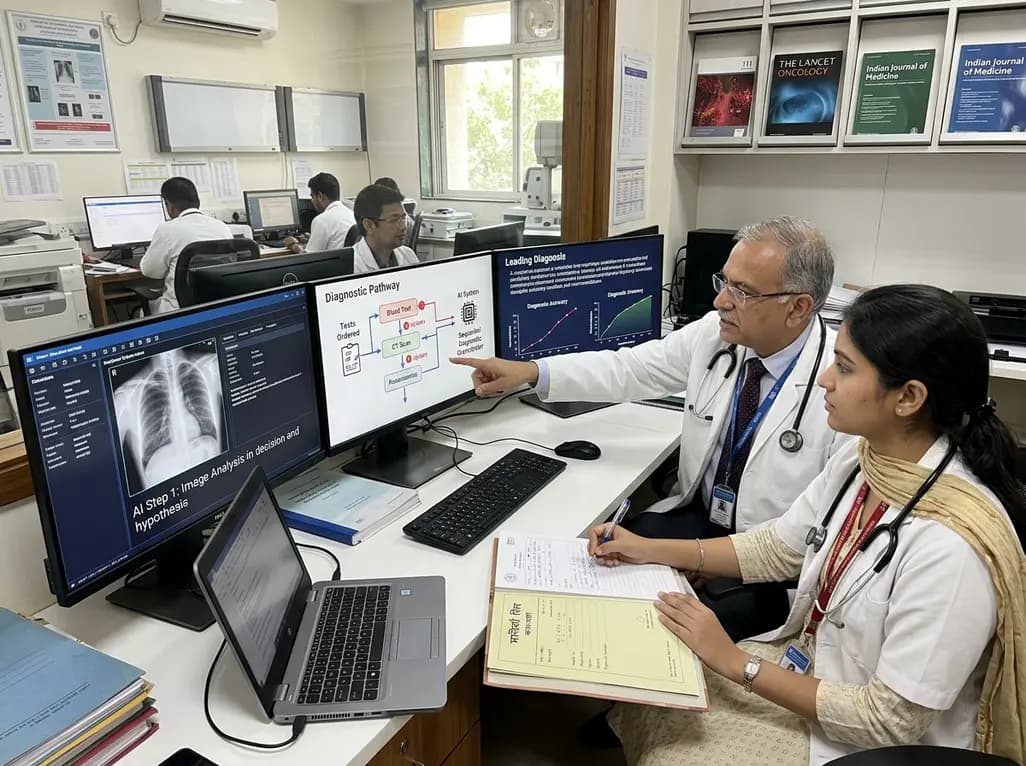
A breakthrough peer-reviewed study demonstrates that a sequential AI diagnosis system can mirror real-world clinical reasoning. By ordering stepwise tests and updating hypotheses dynamically, this multi-agent orchestrator achieved superior diagnostic accuracy while reducing investigative costs.
Today

A prenatal case highlights severe glutaric acidemia type II presenting as bilateral hyperechoic cystic kidneys at 18 weeks. Whole-exome sequencing revealed a novel homozygous ETFDH frameshift variant, demonstrating the power of rapid genetic testing in fetal renal anomalies.
Today

Review how tailored exercise programs benefit frail older patients with heart failure. Explore pathophysiological mechanisms, individualized training prescriptions, and strategies to overcome adherence barriers in clinical practice.
Yesterday

This comparative study evaluates posterior labral tears with and without glenohumeral instability, highlighting distinct demographic patterns, MRI underestimation in stable shoulders, and successful arthroscopic repair outcomes.
Yesterday

A clinical study demonstrates that early intervention with tocilizumab, either as monotherapy or bridged with corticosteroids, achieves significant proptosis reduction and resolves active inflammation in treatment-naive thyroid eye disease.
Yesterday
