.webp&w=384&q=75)

Loading, please wait...
Loading, please wait...

Integrating accelerated nursing graduate courses into undergraduate curricula offers a strategic pathway to expedite professional advancement. This approach helps nurses transition into advanced practice roles more quickly than traditional models. However, the high intensity of these programs often presents unique academic and personal challenges for students. A recent qualitative study published in the Journal of Nursing Education examines the perceptions of accelerated baccalaureate nursing students navigating these advanced requirements. By understanding these lived experiences, educators can better design programs that balance academic rigor with student well-being.
Researchers used individual semistructured interviews and the Colaizzi method to analyze data from fourteen participants. Consequently, the analysis identified four primary themes: program priorities, time constraints, trade-offs, and resources. Students frequently experienced pressure when balancing undergraduate clinical duties with graduate-level theoretical expectations. Furthermore, the condensed timeframe often forced students to make significant personal sacrifices. This highlights the urgent need for robust institutional support and realistic workload expectations.
To improve the integration of accelerated nursing graduate courses, nurse educators should focus on addressing time pressure and resource gaps. Therefore, future curricular designs must prioritize streamlined scheduling and innovative teaching strategies. For example, implementing dedicated mentorship programs can help mitigate the sense of loss students feel regarding their personal time. Additionally, increasing access to specialized academic resources for graduate-level writing ensures that students remain competitive and successful. Ultimately, these findings provide a roadmap for creating a more supportive environment for future nursing leaders.
Students in these tracks often face intense time constraints and struggle to balance undergraduate clinical requirements with graduate-level study. These competing priorities can lead to significant stress and personal trade-offs.
Educators can support success by optimizing course schedules, providing targeted academic resources, and establishing mentorship programs. These interventions help students manage the heavy workload and high expectations of advanced coursework.
Disclaimer: This content is for informational and educational purposes only. It does not constitute professional medical or educational advice. Refer to the latest local and national guidelines for clinical practice.
References
1. Goerke KB et al. Accelerated Nursing Students' Perceptions of Graduate-Level Courses. J Nurs Educ. 2026 Apr 01. doi: 10.3928/01484834-20260217-03. PMID: 41915913.
2. Bailey E, Jullamon M. Exploring Belongingness in an Accelerated Nursing Program: A Qualitative Study. Can J Nurs Des. 2022. doi: 10.17483/2368-6669.1315.
3. Elliott E. Accelerated Baccalaureate Nursing Student and Faculty Perceptions of Blended Learning. Walden University. 2020.

Read summarized clinical updates, watch expert medical content, and earn CME certifications right from your smartphone.
Open your smartphone camera to scan and install.





A qualitative study explores how accelerated nursing students balance undergraduate clinicals with graduate-level coursework, highlighting key challenges....
6 months ago

A recent study demonstrates that spinal oxygen sensors do not require mitochondrial electron transport to trigger sympathetic excitation during acute hypoxia, revealing new insights into how mitochondrial oxidative stress modulates autonomic tone in cardiovascular and neurological diseases.
Today

Demanding exhaustive hormonal profiling can inadvertently discourage clinical studies involving females. Methodological standards must align with the specific scientific question to expand, not restrict, equitable evidence for women.
Today

The Directorate General of Health Services directs Indian states to halt the hazardous reuse and reprocessing of single-use medical devices. Discover regulatory implications under the Drugs and Cosmetics Act, critical infection risks, legal liabilities, and operational changes required across clinical specialties.
Today
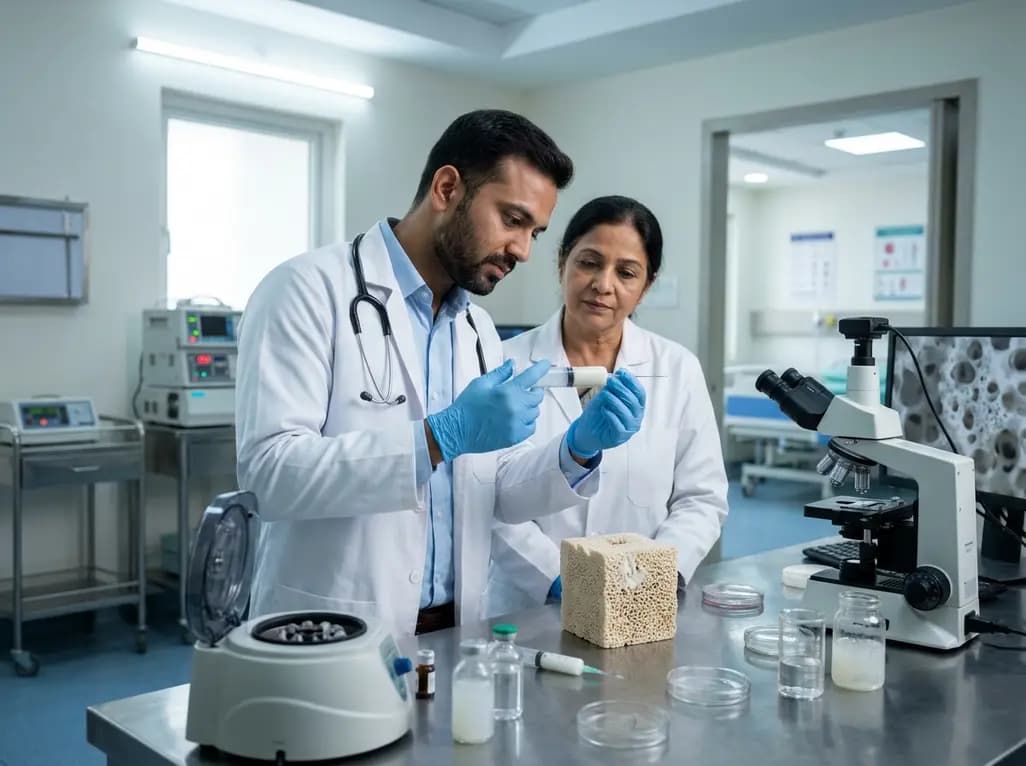
A novel calcium polyphosphate coacervate enables injectable bone implants with in situ hierarchical porosity via phase separation and gas foaming, significantly enhancing cell proliferation, energy metabolism, and osteogenic differentiation for minimally invasive bone defect repair.
Today
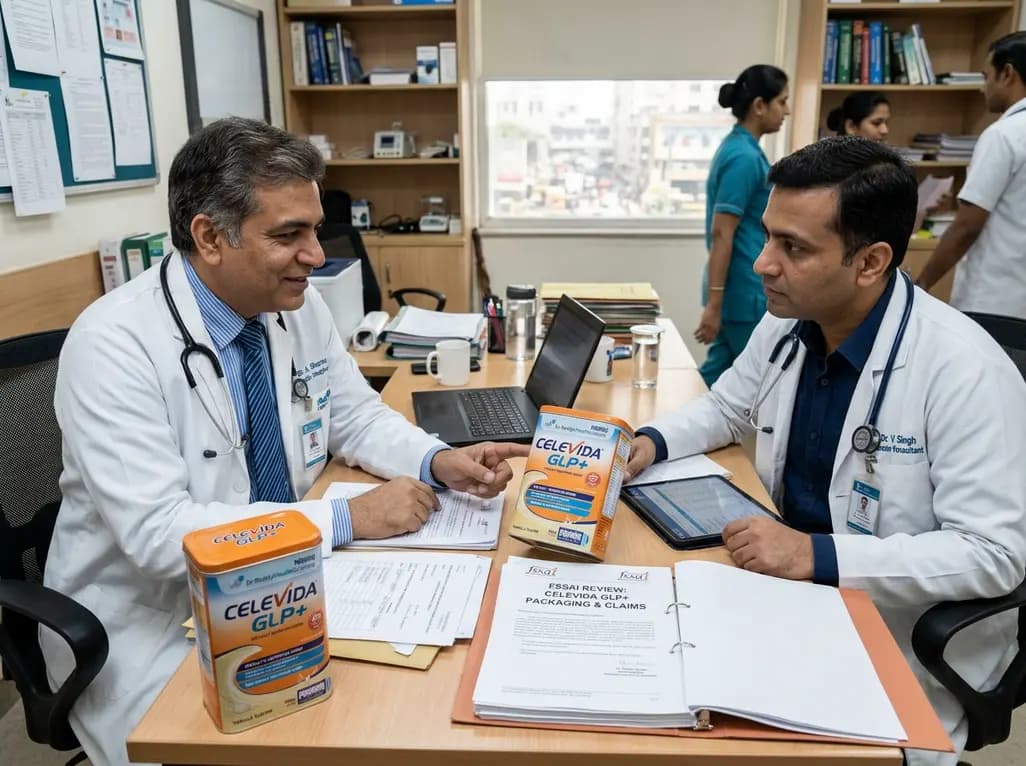
Following regulatory scrutiny from FSSAI regarding promotional representations and lean muscle preservation claims, Dr. Reddy's Laboratories and Nestlé Health Science are currently reviewing the branding and marketing strategy for their joint nutritional supplement Celevida GLP+.
Today
