.webp&w=384&q=75)

Loading, please wait...
Loading, please wait...

Rheumatoid arthritis imposes a substantial clinical burden characterized by persistent synovial inflammation and systemic complications. Furthermore, psychiatric comorbidities frequently affect these individuals, creating severe diagnostic and therapeutic hurdles. Recent epidemiological evidence indicates that phenotypic age acceleration serves as a critical biological bridge linking systemic autoimmunity to psychiatric morbidity. Consequently, clinicians must look beyond musculoskeletal deterioration to evaluate multi-organ biological wear. Importantly, understanding biological aging mechanisms helps healthcare teams optimize multidisciplinary care and functional recovery.
Rheumatoid arthritis affects millions of adults worldwide, causing progressive joint destruction, fatigue, and physical disability. In addition, major depressive disorder occurs at a disproportionately high frequency among these patients. Epidemiologists note that comorbid depressive symptoms reduce treatment adherence and blunt responses to disease-modifying antirheumatic drugs. However, the exact molecular pathways connecting peripheral joint inflammation to central affective symptoms have remained elusive. Chronic pain and physical limitations certainly generate emotional distress. Yet, psychological burden alone cannot fully explain the profound neurobiological disturbances observed in clinical cohorts. Instead, shared pathophysiology suggests that systemic inflammatory cascades directly disrupt central nervous system homeostasis. For example, circulating pro-inflammatory cytokines cross the blood-brain barrier and perturb neurotransmitter synthesis. Furthermore, chronic immune activation alters microglial function and accelerates tissue senescence across multiple organ systems. Therefore, clinical researchers investigated whether biological aging mechanisms drive this psychiatric vulnerability in arthritis patients.
Biological aging reflects accumulated cellular damage and physiological decline that often outpaces chronological time. To capture this divergence, researchers utilize phenotypic age acceleration as a composite biomarker algorithm. Specifically, this metric incorporates chronological age alongside nine routine clinical parameters, including albumin, creatinine, glucose, and C-reactive protein. In addition, white blood cell counts, lymphocyte percentages, mean cell volume, red cell distribution width, and alkaline phosphatase contribute to the score. Elevated values indicate that an individual suffers advanced biological wear compared to chronological peers. Chronic autoimmune disorders promote this premature decline through sustained immunosenescence and cellular senescence. For instance, continuous release of tumor necrosis factor-alpha and interleukin-6 maintains a persistent hyperinflammatory state. Consequently, immune cells acquire a senescence-associated secretory phenotype that accelerates multi-system organ damage. Furthermore, oxidative stress damages telomeres, alters epigenetic patterns, and impairs mitochondrial bioenergetics. Because these biological alterations mirror advanced senescence, phenotypic age acceleration provides a robust clinical window into an individual's actual physiological vitality.
A landmark retrospective cohort study examined 9,834 adult participants from the National Health and Nutrition Examination Survey. The researchers identified patients with rheumatoid arthritis through standardized personal interviews. Furthermore, the team assessed depressive severity using the validated Patient Health Questionnaire-9. By combining routine clinical laboratory values, the investigators calculated biological age metrics for all participants. Survey-weighted multivariable logistic regression models demonstrated compelling associations between autoimmunity, aging, and affective distress. Specifically, individuals with rheumatoid arthritis exhibited significantly higher phenotypic aging compared to healthy controls. Moreover, the prevalence of rheumatoid arthritis correlated strongly with greater depression severity scores. Importantly, mediation analysis revealed that accelerated biological aging explained a meaningful proportion of the total indirect effect on depression. These findings demonstrate that biological wear functions as a true mechanistic intermediary rather than an incidental bystander. Thus, chronic immune activation drives systemic senescence, which subsequently precipitates severe affective distress.
How does accelerated biological senescence drive depressive symptoms in autoimmune illness? First, chronic systemic senescence directly alters the integrity of the blood-brain barrier. Consequently, circulating inflammatory mediators penetrate deep cerebral tissues and activate resting microglia. Once activated, microglia release neurotoxic cytokines, generate reactive oxygen species, and compromise neuroplasticity. Furthermore, neuroinflammation alters the kynurenine metabolic pathway. Instead of producing serotonin, the brain shunts tryptophan toward neurotoxic quinolinic acid production. This metabolic shift depletes critical mood-regulating neurotransmitters and exacerbates anhedonia. In addition, biological aging promotes microvascular dysfunction within frontolimbic cerebral networks. Senescent endothelial cells reduce cerebral perfusion and impair hippocampal neurogenesis. Similarly, persistent immune activation disrupts the hypothalamic-pituitary-adrenal axis, elevating cortisol levels and worsening emotional regulation. Therefore, phenotypic age acceleration reflects systemic biological shifts that directly compromise brain health and foster treatment-resistant depressive states.
These findings carry profound clinical implications for rheumatologists, internists, and primary care physicians. Traditionally, clinicians treat joint manifestations and psychiatric distress as completely separate clinical challenges. However, this study underscores that premature biological aging unifies both disorders. Therefore, physicians must incorporate routine depression screening into standard rheumatology follow-up protocols. For example, utilizing tools like the PHQ-9 during clinic visits allows early identification of vulnerable patients. Moreover, clinicians should monitor systemic metabolic and inflammatory biomarkers to track physiological decline over time. Interventions targeting accelerated senescence may yield dual benefits for musculoskeletal inflammation and mental wellbeing. For instance, aggressive anti-inflammatory therapies that achieve disease remission can potentially slow biological aging cascades. Additionally, lifestyle modifications like structured resistance training and anti-inflammatory diets blunt cellular senescence. Furthermore, collaborative care networks ensure that patients receive timely cognitive behavioral therapy alongside pharmacotherapy. Ultimately, addressing systemic aging provides a practical paradigm to improve both joint prognosis and mental health.
Translating aging science into daily clinical workflows represents a crucial step forward for modern rheumatology practice. Currently, standard clinical assessments focus primarily on swollen joint counts and acute phase reactants. However, evaluating biological aging metrics offers deeper prognostic insights into overall organ preservation. Consequently, healthcare systems must develop multidisciplinary protocols that address cardiovascular, metabolic, and psychiatric risks simultaneously. In addition, clinicians must educate patients about how chronic autoimmune inflammation accelerates cellular senescence throughout the body. When patients understand this systemic connection, they frequently demonstrate improved engagement with medical therapies and lifestyle modifications. Furthermore, future clinical trials must investigate whether anti-aging therapies and targeted senolytics reduce psychiatric comorbidities in autoimmune populations. Meanwhile, primary care teams must maintain vigilant surveillance for depressive symptoms in all arthritis patients. Thus, bridging rheumatology, gerontology, and psychiatry will transform patient care from symptomatic suppression to comprehensive physiological rejuvenation.
Chronological age simply measures the total calendar years a person has lived. In contrast, phenotypic age acceleration assesses physiological health and biological vitality using composite clinical biomarkers. Consequently, individuals with chronic inflammatory diseases often display biological ages that significantly exceed their chronological age, reflecting accelerated multi-organ functional decline.
Rheumatoid arthritis generates relentless systemic inflammation driven by pro-inflammatory cytokines like interleukin-6 and tumor necrosis factor. Furthermore, this chronic immune activation triggers oxidative stress, cellular senescence, and telomere shortening. Over time, these molecular derangements promote widespread tissue damage and exhaust physiological reserves, leading to accelerated biological aging across organ systems.
Yes, effective management of rheumatoid arthritis can significantly alleviate depressive symptoms. When disease-modifying antirheumatic therapies successfully suppress systemic inflammation, they also blunt neuroinflammatory cascades and decelerate biological aging. In addition, integrating lifestyle measures such as structured exercise and psychological support provides synergistic benefits, markedly enhancing long-term mental and physical wellbeing.
Disclaimer: This content is for informational and educational purposes only, and does not substitute professional medical advice, diagnosis, or treatment. It does not establish a doctor-patient relationship nor should it be used to replace institutional clinical judgment. While based on current clinical literature and established evidence-based protocols, medical knowledge rapidly evolves. Healthcare professionals must independently verify information, especially regarding drug dosing, indications, and contraindications. Clinicians should exercise their own clinical judgment for patient evaluation and management, and should not initiate or terminate any therapy based solely on this material. Refer to the latest local and national guidelines for clinical practice.
References

Read summarized clinical updates, watch expert medical content, and earn CME certifications right from your smartphone.
Open your smartphone camera to scan and install.





A retrospective NHANES cohort study reveals that phenotypic age acceleration mediates the association between rheumatoid arthritis and depression severity, emphasizing the need for comprehensive multidisciplinary care targeting systemic biological aging in autoimmune diseases.
Today
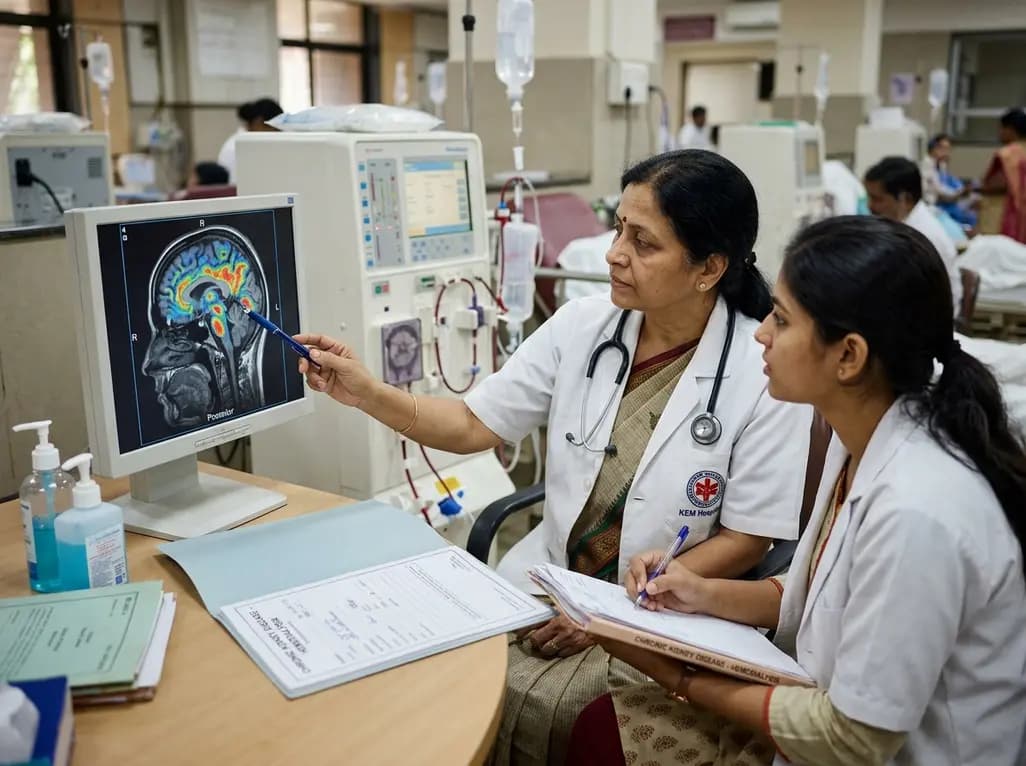
A retrospective clinical analysis reveals that hemodialysis-associated cognitive dysfunction arises from synergistic pathological mechanisms, including severe chronic anemia, worsening renal clearance, abnormal regional brain iron deposition, and an imbalance between neuroinflammatory and neurotrophic factors.
Today

A multiparametric MRI approach combining quantitative T2 shading, apparent diffusion coefficient (ADC) measurements, and morphological signs provides superior diagnostic accuracy over subjective evaluation to differentiate ovarian endometriomas from benign hemorrhagic cysts.
Today

Discover a novel laparoscopic approach for iatrogenic diaphragmatic hernia repair following pedicled omentoplasty. This modified Sugarbaker technique integrates dorsal pedicle lateralization and round ligament reinforcement to secure the diaphragmatic defect while preserving vital omental vascularity.
Today

Evaluating Hill-Sachs lesion size and the distance to dislocation is critical in recurrent shoulder instability. As bone loss concepts shift from binary on-track classifications to continuous risk assessment, clinicians must identify when isolated Bankart repair is insufficient and supplementary procedures are needed.
Today

New research reveals that M1 macrophage-derived exosomes aggravate diabetic nephropathy by transferring WTAP to stabilize S1PR2 mRNA. Silencing WTAP in these vesicles attenuates endothelial injury and renal fibrosis, pointing toward innovative nanomedicine therapies.
Today
