.webp&w=384&q=75)

Loading, please wait...
Loading, please wait...
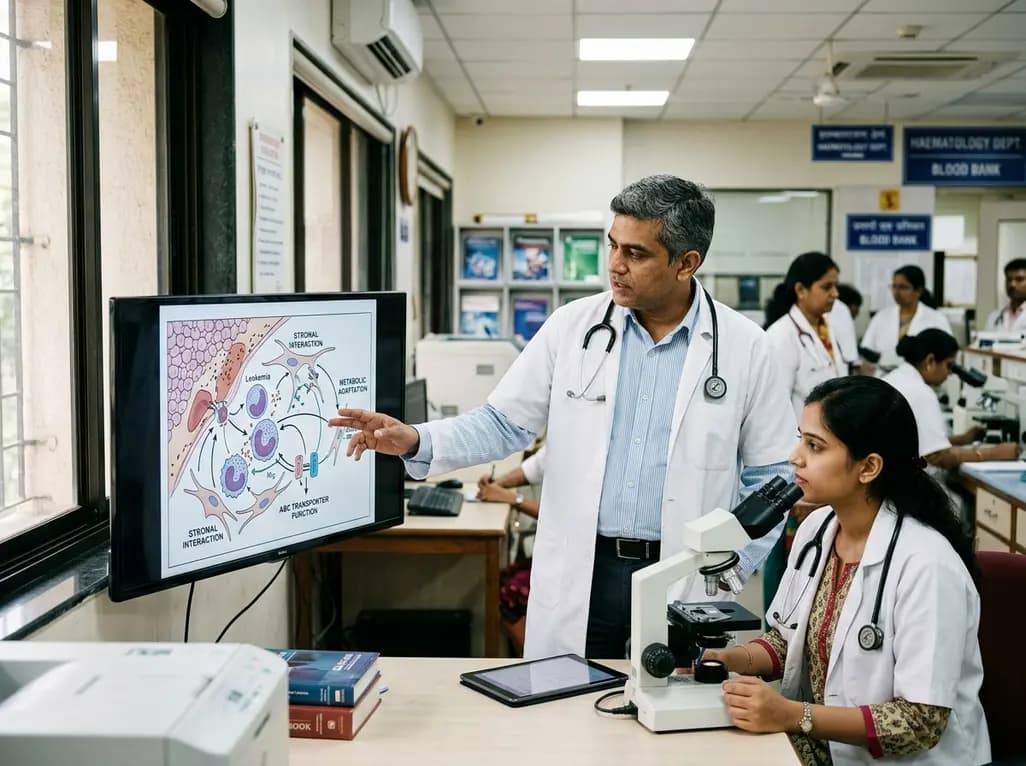
For decades, clinicians viewed ABC efflux pumps as static, isolated drivers of chemotherapy failure in hematologic malignancies. However, emerging translational research redefines ABC transporters in leukemia as dynamic, adaptive regulators embedded within a broader microenvironmental network. Key transporters such as ABCB1, also known as P-glycoprotein, ABCC1, and ABCG2 coordinate cell survival far beyond mere drug extrusion. Consequently, treating leukemia cells as autonomous entities overlooks how external signals preserve malignant clones. In acute myeloid leukemia, leukemic stem cells exploit these molecular pumps to resist cytotoxic agents like daunorubicin and cytarabine. Furthermore, this resistance mechanism functions not merely through basal protein overexpression. Instead, malignant cells activate complex regulatory cascades that alter membrane transport in response to therapeutic stress. Because these efflux systems operate within dense protective niches, direct pump inhibitors historically caused unexpected toxicities without delivering durable survival advantages. Therefore, understanding this multidrug resistance network demands a comprehensive reassessment of leukemia biology. Clinicians must recognize how intracellular pathways and bone marrow factors converge to dictate drug availability. Ultimately, shifting our perspective from rigid pumps to flexible survival networks opens fresh avenues for overcoming refractory leukemia.
Chemotherapeutic exposure induces severe genotoxic and metabolic strain within leukemic blast populations. Rather than undergoing immediate apoptosis, resistant cells initiate robust transcriptional adaptation programs. Specifically, cellular stress triggers the activation of activating transcription factor 4, also termed ATF4, alongside JUN family transcription factors. These transcription factors directly bind regulatory promoter elements of ABC transporter genes, rapidly boosting pump synthesis. In addition, this stress-responsive cascade creates an inducible defense perimeter that shields surviving leukemic stem cells. As a result, low-level drug exposure paradoxically primes leukemic clones to resist subsequent cytotoxic challenges. Moreover, this transcriptional plasticity operates independently of baseline genetic mutations, which explains rapid phenotypic adaptation in clinical settings. When oncologists administer pulse chemotherapy, surviving blasts quickly upregulate ABCB1 and ABCG2 through these stress pathways. Thus, cellular resilience stems from an active, inducible transcriptional rewiring rather than static genetic predetermination. Importantly, blocking these upstream stress programs may silence transporter upregulation before cells achieve full phenotypic protection. Targeting stress sensors therefore presents an appealing strategy to circumvent transporter-mediated chemoresistance. By disabling transcriptional responses, clinicians could sensitize resistant blasts to standard induction regimens.
The bone marrow niche serves as a protective sanctuary for malignant hematopoiesis. Within this microenvironment, mesenchymal stromal cells engage directly with leukemic blasts through complex adhesion cascades. Notably, direct contact stimulates protein kinase C signaling, which subsequently activates downstream NF-κB pathways. This signaling axis triggers sustained transcriptional upregulation of ABCB1 and ABCC1 transporters in residual disease clones. Furthermore, stromal cells secrete protective cytokines, including interleukin-6 and CXCL12, which reinforce anti-apoptotic and drug efflux phenotypes. Consequently, leukemic stem cells sequestered in marrow niches maintain significantly higher efflux competence than circulating blasts. In addition, physical anchorage to extracellular matrix components shields malignant cells from cytotoxic apoptosis. Researchers term this protective state cell adhesion-mediated drug resistance. When leukemic blasts detach from bone marrow stroma, their intrinsic drug sensitivity often returns promptly. Therefore, disrupting stromal interactions represents an essential clinical objective. Agents targeting CXCR4 adhesion receptors effectively dislodge leukemic clones from their protective nests. Once forced into systemic circulation, blast cells lose their stroma-derived kinase signals and experience marked transporter downregulation. Accordingly, combining niche-disrupting agents with chemotherapy offers genuine potential to eliminate elusive minimal residual disease.
Drug resistance mechanisms in acute leukemia intertwine inextricably with altered cellular metabolism. Specifically, multidrug resistance-associated protein 1, encoded by ABCC1, relies directly on metabolic co-factors to drive active xenobiotic transport. Unlike simple uncoupled pumps, ABCC1 frequently exports cytotoxic anthracyclines and antimetabolites in conjunction with reduced glutathione. As a result, leukemic cells deliberately accelerate the synthesis of intracellular glutathione to fuel persistent efflux activity. Furthermore, this metabolic adaptation coordinates closely with the pentose phosphate pathway, which supplies abundant NADPH required for glutathione regeneration. Because elevated glutathione neutralizes dangerous reactive oxygen species, malignant cells simultaneously acquire protection against oxidative apoptosis. In addition, alterations in membrane lipid rafts enhance the structural stability and activity of surface transporters. Cholesterol-rich microdomains anchor ABCB1 and ABCG2 proteins, preventing degradation and optimizing their ATP-dependent transport velocity. Consequently, manipulating leukemic metabolism offers a viable pathway to compromise transporter function without toxic pump inhibitors. For example, depleting cellular glutathione pools through buthionine sulfoximine markedly attenuates ABCC1-mediated drug clearance. Similarly, statins disrupt lipid raft integrity, displacing transporters from the plasma membrane. Thus, integrated metabolic therapies can restore chemosensitivity across refractory leukemia sub-clones.
Within the endosteal marrow niche, severe hypoxia stabilizes hypoxia-inducible factor 1-alpha, driving elevated transcription of ABCB1 and ABCG2. Consequently, hypoxic leukemic stem cells exhibit pronounced intrinsic chemoresistance prior to cytotoxic drug exposure. Furthermore, resistant clones disseminate efflux capabilities across the marrow microenvironment through extracellular vesicles and exosomes. These nanovesicles horizontally transfer functional ABC transporters and regulatory microRNAs directly into sensitive bystander blasts. As a result, receiving cells acquire immediate multidrug resistance without undergoing direct genomic alterations. Historically, measuring static transporter expression failed to predict clinical outcomes accurately because functional efflux activity dictates therapeutic response. Therefore, modern hematologists utilize inhibitor-controlled dye efflux assays with calcein-AM or rhodamine 123 to quantify transporter activity. Moreover, overcoming network-driven resistance requires moving beyond failed first-generation pump inhibitors that produced excessive systemic toxicity. Clinicians now investigate multimodal strategies that combine niche-disrupting agents, metabolic modulators, and targeted kinase inhibitors to extinguish adaptive survival signals. Accordingly, dismantling this microenvironmental network restores chemosensitivity and offers genuine hope for durable remission in refractory leukemia. By targeting extrinsic marrow cues alongside intrinsic cellular defenses, oncologists can finally eradicate resilient residual leukemic stem cells.
ABC transporters actively extrude structurally diverse chemotherapeutic agents from leukemic cells, dramatically reducing intracellular drug concentrations below cytotoxic thresholds. Furthermore, primitive leukemic stem cells sequestered in protective bone marrow niches upregulate these efflux pumps in response to microenvironmental stress signals. Consequently, these residual clones survive standard induction chemotherapy and persist as minimal residual disease. Over time, surviving cells re-establish clonal expansion, driving lethal clinical relapse in acute leukemia patients.
Early direct inhibitors, such as verapamil and cyclosporin A, failed primarily due to lack of specificity and prohibitive systemic toxicity. Normal tissues, including hematopoietic stem cells, hepatocytes, and the blood-brain barrier, express ABC transporters for physiological defense against xenobiotics. Consequently, non-selective chemical inhibition provoked intolerable organ toxicities. In addition, these inhibitors severely impaired the metabolic clearance of co-administered chemotherapeutics, triggering erratic pharmacokinetic spikes and unsafe patient morbidity during intensive clinical trials.
The bone marrow microenvironment protects leukemic blasts through direct physical anchorage, cytokine signaling, and hypoxic gradients. Specifically, contact with mesenchymal stromal cells activates protein kinase C and NF-κB pathways, which upregulate ABC transporter expression. Furthermore, endosteal hypoxia stabilizes HIF-1α, reinforcing baseline drug efflux capacity. In addition, protective stromal cytokines suppress apoptotic cascades while extracellular vesicles transfer active efflux pumps between cells, shielding leukemic stem cells from chemotherapy-induced cell death.
Disclaimer: This content is for informational and educational purposes only... Refer to the latest local and national guidelines for clinical practice.
References

Read summarized clinical updates, watch expert medical content, and earn CME certifications right from your smartphone.
Open your smartphone camera to scan and install.





Recent evidence redefines ABC transporters in leukemia from static drug efflux pumps into dynamic regulators within bone marrow networks. This review explores stress transcription, stromal signaling, and metabolic adaptation driving multidrug resistance, highlighting novel therapeutic strategies.
last month

As monsoon seasons elevate arboviral disease threats, Tamil Nadu has initiated an ICMR-monitored evaluation of the tetravalent dengue vaccine in Tenkasi district. Clinicians emphasize clinical monitoring, public prevention, and high-quality early pediatric care to reduce disease morbidity across endemic regions.
Today

A comparative cohort study evaluates vNOTES vs TLH hysterectomy for benign conditions, demonstrating shorter operative duration, faster return to daily activities, and equivalent female sexual function scores without increased dyspareunia.
Today

Review how tailored exercise programs benefit frail older patients with heart failure. Explore pathophysiological mechanisms, individualized training prescriptions, and strategies to overcome adherence barriers in clinical practice.
Today

This comparative study evaluates posterior labral tears with and without glenohumeral instability, highlighting distinct demographic patterns, MRI underestimation in stable shoulders, and successful arthroscopic repair outcomes.
Today

A clinical study demonstrates that early intervention with tocilizumab, either as monotherapy or bridged with corticosteroids, achieves significant proptosis reduction and resolves active inflammation in treatment-naive thyroid eye disease.
Today
