.webp&w=384&q=75)

Loading, please wait...
Loading, please wait...

India's flagship public health insurance program faces significant scrutiny as strict administrative measures take effect across several states and Union Territories. Recent reports highlight widespread AB-PMJAY guideline violations, triggering decisive disciplinary actions against non-compliant healthcare facilities. Union Health Minister J P Nadda informed Parliament that regulatory bodies have identified systematic irregularities across empanelled hospitals. Consequently, authorities have initiated strict measures to protect public funds and maintain clinical integrity. By combining automated surveillance with rigorous manual audits, the National Health Authority aims to curb fraudulent claims effectively. Furthermore, healthcare administrators must now strengthen compliance protocols to prevent financial recovery, suspension, and criminal proceedings. Understanding these regulatory changes is essential for healthcare providers operating within the national health ecosystem.
The scale of administrative action reflects the government's firm commitment to scheme compliance. Official figures indicate that state authorities have de-empanelled 2,359 hospitals for violating operational protocols. Furthermore, state health agencies have suspended another 1,200 hospitals while investigating suspicious billing activities. In addition to administrative bans, law enforcement agencies have registered 29 First Information Reports against errant facilities. These criminal cases address severe offenses, including deliberate identity theft and forged treatment documentation. Moreover, regulatory bodies have imposed financial penalties amounting to Rs 328.49 crore on non-compliant hospitals. Consequently, healthcare institutions face severe legal and financial consequences when they bypass mandatory guidelines. State Health Agencies continuously monitor billing patterns to identify unexpected surges in package utilization. Therefore, hospital managers must enforce transparent documentation standards to avoid punitive actions and statutory audits.
Modern technology plays a pivotal role in detecting healthcare fraud across the country. The National Anti-Fraud Unit operates under the National Health Authority to oversee scheme integrity. Specifically, the unit deploys advanced Artificial Intelligence and Machine Learning tools to monitor claims continuously. These automated systems generate real-time triggers whenever incoming data deviates from standard clinical norms. Consequently, suspicious claim patterns undergo immediate flagged review within 24 hours of submission. Common triggers include unauthorized billing, duplicate claims, inflated procedure codes, and patient identity misuse. Furthermore, machine learning models compare hospital admission rates against baseline demographic expectations. When algorithms detect abnormal billing spikes, the system halts payment processing automatically. In addition, field officers conduct unannounced spot checks to verify actual patient occupancy. Thus, technology combined with physical verification creates a robust defense against systemic abuse.
Preventative claim screening has yielded substantial fiscal benefits for the national health insurance scheme. The National Health Authority examines flagged claims thoroughly before releasing funds to healthcare facilities. As a result, authorities successfully blocked unpaid fraudulent claims worth Rs 676.14 crore by late July. These savings demonstrate the practical efficacy of automated risk management tools in public healthcare administration. Furthermore, government agencies enforce punitive measures beyond mere claim rejections to deter future violations. Empanelled facilities that commit intentional fraud risk immediate contract termination and heavy financial penalties. In severe cases, state health agencies refer hospital management teams for criminal prosecution under applicable laws. Moreover, central and state authorities coordinate closely to share intelligence regarding repeat offenders. Consequently, non-compliant hospitals face permanent exclusion from government-sponsored healthcare networks nationwide. This comprehensive strategy safeguards taxpayer money while preserving resources for genuine patients.
Despite ongoing administrative crackdowns, the scheme continues to expand its reach across eligible populations. The program provides cashless health insurance coverage of Rs 5 lakh per family annually. This financial protection targets secondary and tertiary hospitalization care for lower-income households. During the recent fiscal year, authorities generated 3.75 crore new Ayushman cards for eligible beneficiaries. Simultaneously, empanelled hospitals managed 2.74 crore authorized admissions nationwide. Furthermore, state health agencies empanelled 5,074 new hospitals after evaluating their clinical and technical infrastructure. The Central Government released Rs 8,438.27 crore to states and Union Territories to support implementation. Fund distribution remains demand-driven and relies on utilization certificates submitted by regional health departments. Consequently, compliant hospitals benefit from steady claim settlements and continuous patient volume growth.
Digital health infrastructure forms the foundation for long-term operational transparency in Indian healthcare. The Ayushman Bharat Digital Mission leads this transformation by establishing standardized digital identity credentials. Notably, national statistics reveal that citizens have created over 95.99 crore Ayushman Bharat Health Accounts. Each ABHA ID consists of a unique 14-digit identifier that links personal health records securely. Furthermore, Gujarat led regional implementation efforts by generating over 5.25 crore ABHA credentials. These digital accounts enable seamless medical record transfers between verified healthcare providers across the nation. Moreover, linking ABHA credentials with hospital management systems reduces identity fraud significantly. Biometric verification at admission and discharge ensures that actual beneficiaries receive necessary medical treatments. Therefore, digital identity integration protects both patient welfare and institutional billing compliance.
Hospital administrators and clinicians must adopt proactive risk management practices to ensure total regulatory compliance. First, clinical documentation must reflect actual patient diagnoses, diagnostic reports, and bedside progress notes accurately. Furthermore, medical officers should double-check pre-authorization requests to prevent unintentional up-coding or duplicate billing. Additionally, hospital IT teams must integrate biometric authentication systems at both patient admission and discharge checkpoints. Staff training plays a critical role in minimizing human errors and administrative oversights during claim submission. Moreover, internal audit committees should periodically review claim histories to identify potential billing anomalies early. By establishing robust internal controls, healthcare providers can prevent administrative suspensions and legal penalties. Ultimately, adherence to standard guidelines fosters trust between healthcare institutions, regulatory bodies, and patient communities.
Q1: What are the primary reasons for hospital de-empanelment under AB-PMJAY?
Hospitals face de-empanelment primarily due to deliberate fraud, unauthorized billing, duplicate claim submissions, and procedure up-coding. Furthermore, misuse of patient identity and submitting fake medical records trigger severe administrative action. State health agencies conduct thorough investigations before revoking empanelment status permanently. Consequently, non-compliant institutions lose access to government insurance programs, face complete financial recovery proceedings, and may encounter criminal prosecution under applicable statutory frameworks.
Q2: How does the National Anti-Fraud Unit detect suspicious insurance claims?
The National Anti-Fraud Unit utilizes advanced Artificial Intelligence and Machine Learning algorithms to analyze claim submissions automatically. These digital tools detect abnormal billing patterns, duplicate entries, and unusual treatment frequencies within 24 hours. Furthermore, flagged claims undergo secondary verification by medical experts and physical field audits before claim settlement. This rigorous multi-tiered review process effectively blocks fraudulent payouts and preserves public funds for genuine patients.
Q3: What role does the ABHA ID play in preventing healthcare fraud?
The Ayushman Bharat Health Account (ABHA) provides a unique 14-digit digital health identity linked to biometric verification systems. By requiring mandatory identity confirmation during patient admission and discharge, ABHA prevents impersonation and ghost admissions. Furthermore, it creates a secure, traceable digital health record across the entire healthcare ecosystem. This seamless integration ensures genuine beneficiaries receive covered secondary and tertiary care without administrative bottlenecks.
Disclaimer: This content is for informational and educational purposes only. It does not constitute medical advice or replace professional judgment. Refer to the latest local and national guidelines for clinical practice.
References

Read summarized clinical updates, watch expert medical content, and earn CME certifications right from your smartphone.
Open your smartphone camera to scan and install.





Union Health Minister J P Nadda reported that over 2,000 hospitals have been de-empanelled and 1,200 suspended for AB-PMJAY guideline violations. AI-driven fraud detection tools enabled the National Health Authority to block fraudulent claims, saving hundreds of crores while enforcing administrative penalties.
Today

Seasonal influenza presents an ongoing global threat through antigenic drift and shift. Effective clinical management relies on rapid molecular diagnostics, early antiviral therapy with neuraminidase or endonuclease inhibitors, and annual vaccination to mitigate severe complications in high-risk patients.
Today

A new study reveals that pregnant women with gestational diabetes show altered neural responses to high-fat visual food cues compared to healthy controls. Using visual evoked potentials, researchers found that these early neurophysiological responses correlate with HbA1c levels and metabolic health.
Today
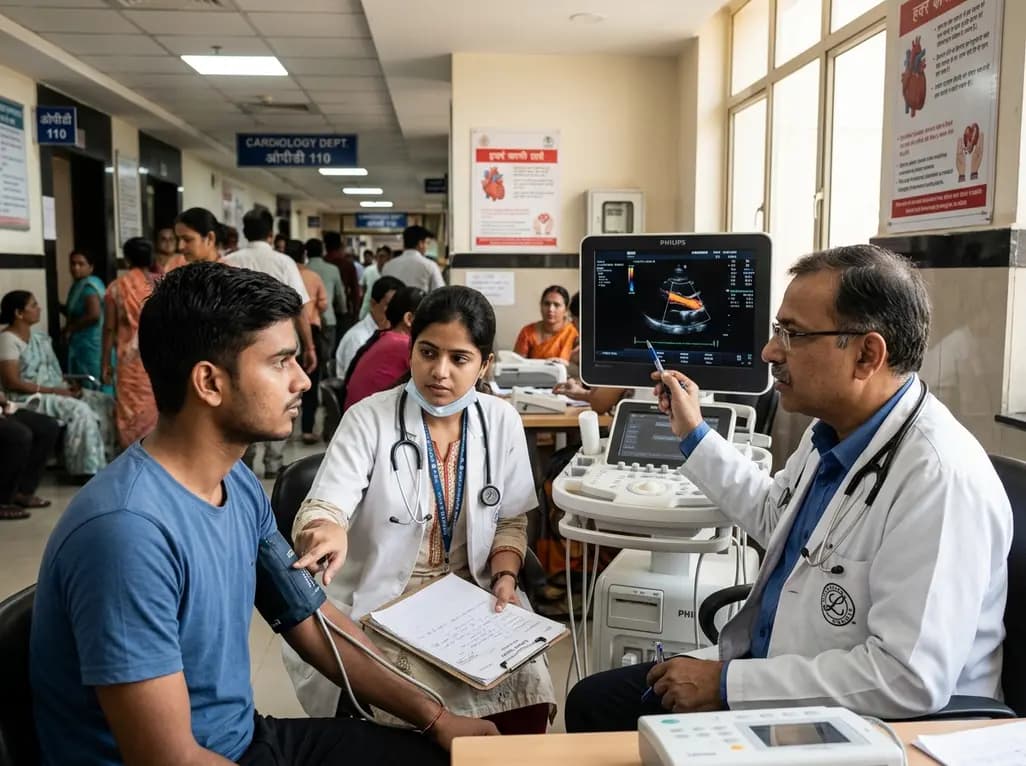
A multi-state Indian study by KMCRI reveals alarming cardiovascular risk markers among healthy adolescents and young adults, including hyperhomocysteinemia and early blood vessel damage.
Today
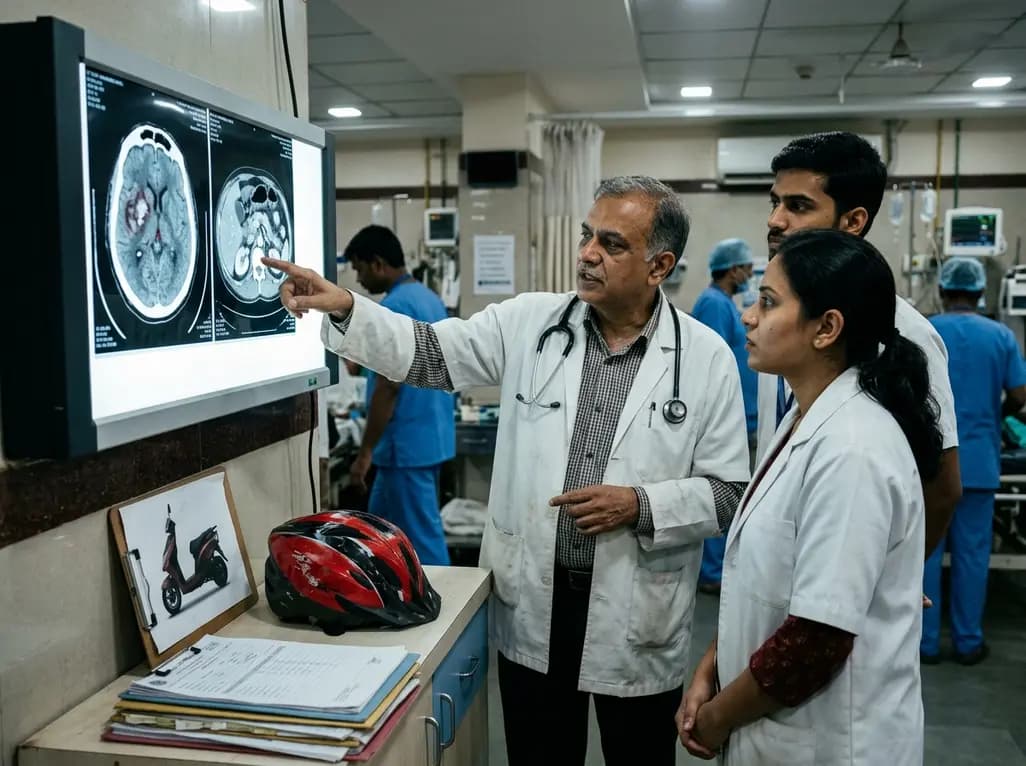
A UK major trauma study reveals e-scooter riders experience significantly higher relative risks of traumatic brain injury, internal organ damage, and vascular trauma compared to motorcyclists and cyclists, while suffering fewer fractures. Helmet use remains alarmingly low among e-scooter riders.
Today
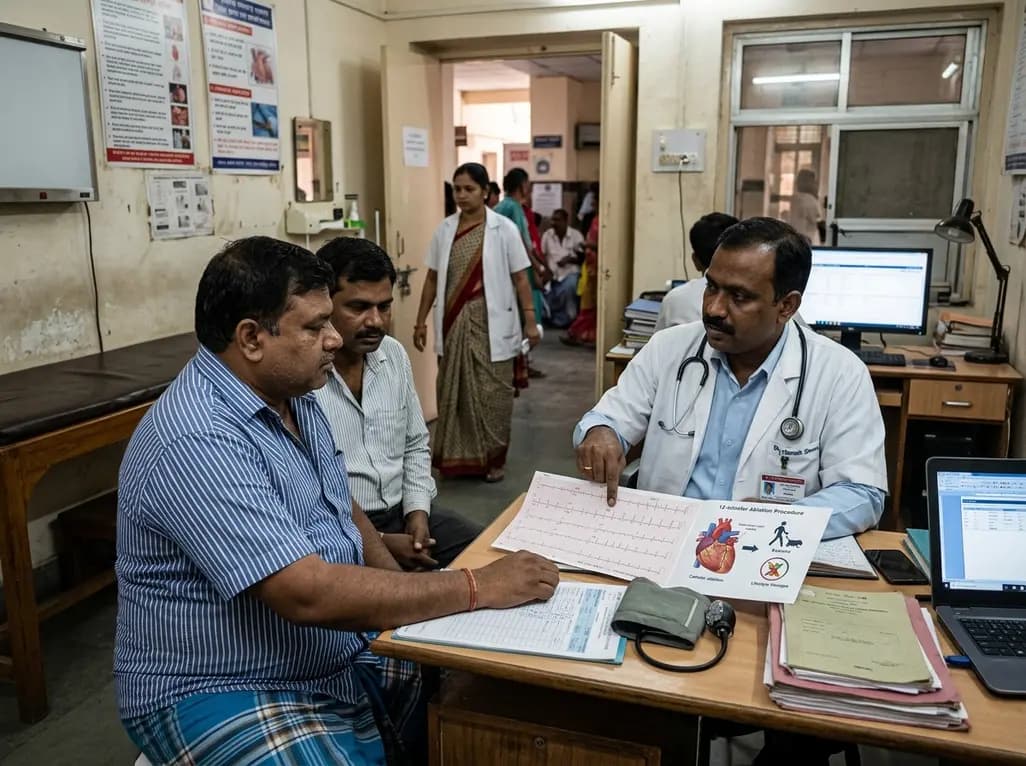
Per-protocol analysis of the PRAGUE-25 trial demonstrates that catheter ablation significantly reduces atrial fibrillation burden, hospitalizations, and emergency visits compared to lifestyle modification plus antiarrhythmic drugs in obese patients.
Today
