

Loading, please wait...
Loading, please wait...

Traumatic spinal cord trauma immediately interrupts descending supraspinal drive, which impairs voluntary motor function and halts independent mobility. Clinicians continually investigate neuroprotective and regenerative interventions to reactivate damaged neural circuits. Recently, experimental models demonstrated that AAV-BDNF gene therapy delivers targeted neurotrophic support directly to damaged spinal segments. This novel therapeutic strategy alters post-lesion motor neuron excitability and restores lost functional pathways. Consequently, understanding these neurobiological adaptations helps neurosurgeons and neurologists develop translational treatments for paralyzed patients.
Traumatic spinal cord injuries instantly deprive sublesional motor neurons of descending supraspinal drive. Consequently, denervated spinal circuits undergo substantial and maladaptive transcriptional remodeling. In particular, motor neurons innervating antagonistic ankle muscles shift toward altered excitability states. However, this spontaneous endogenous shift fails to produce coordinated stepping or body-weight support. Instead, patients typically experience debilitating spasticity, flaccid weakness, or permanent paralysis. Furthermore, the loss of descending serotonergic innervation diminishes intrinsic motor neuron responsiveness. Although spinal cord networks retain innate neuroplasticity, they lack sufficient neurotrophic signals to reorganize productively. In addition, localized molecular shifts within motor pools disrupt the balance between excitation and inhibition. Therefore, targeted restorative interventions must directly address these post-injury cellular alterations. Researchers emphasize the urgent need to reprogram lumbar motor pools precisely. By directing sustained molecular treatments to the lumbar enlargement, clinicians hope to reactivate dormant pattern generators. Ultimately, reversing these pathological disruptions remains the primary goal in restoring functional motor output after trauma.
Brain-derived neurotrophic factor is vital for neuronal survival, synaptic plasticity, and motor control. Therefore, investigators delivered AAV-BDNF gene therapy directly into the lumbar cord following complete thoracic transection. This viral vector strategy ensured stable, sustained transgene expression within the paralyzed spinal cord. Consequently, the local intervention significantly boosted spinal BDNF transcript levels within two weeks. Moreover, the therapy restored tyrosine kinase receptor B expression in lumbar motor neurons. Because endogenous neurotrophin signaling usually collapses following mechanical injury, this genetic restoration proves remarkably advantageous. Furthermore, the persistent neurotrophic presence helps injured motor neurons maintain dendritic integrity and synaptic connectivity. Simultaneously, enhanced signaling reactivates intracellular cascades that drive coordinated motor behavior. In contrast to transient protein delivery, viral transduction provides stable transcriptional regulation across multiple spinal segments. As a result, the treatment rescues vulnerable motor pools from persistent pathological inactivity. In addition, sustained factor release preserves crucial synaptic inputs governing reciprocal inhibition. Thus, direct vector delivery represents an exceptionally efficient platform for long-term spinal circuit repair.
Descending serotonergic fibers normally exert potent neuromodulatory control over ventral horn motor neurons. However, traumatic transection severs these pathways, leaving sublesional circuits functionally deprived. Fortunately, the viral vector treatment produced a profound upregulation of Htr2a, which encodes the 5-HT2A serotonin receptor. Specifically, investigators observed the most prominent receptor increases within extensor motor neurons innervating the gastrocnemius lateralis. This targeted elevation in 5-HT2A expression enhances cellular sensitivity to residual monoamines. Furthermore, heightened 5-HT2A activation facilitates persistent inward currents, which sustain repetitive firing during locomotion. Consequently, treated motor neurons regain the intrinsic electrical excitability required for rhythmic muscle contraction. In addition, this heightened sensitivity helps reconstruct rhythmic locomotor networks below the injury level. In contrast, untreated controls failed to exhibit these vital compensatory receptor adaptations. Therefore, the selective upregulation of serotonin receptors bridges the gap left by severed inputs. Moreover, this molecular adaptation provides a clear mechanism for improved hindlimb weight support. Ultimately, modulating specific receptor subtypes restores the functional responsiveness necessary for purposeful stepping.
Coordinated locomotion requires an exact balance between synaptic excitation and post-synaptic inhibition. Following trauma, injured spinal circuits frequently exhibit chaotic synaptic reorganization, which exacerbates motor deficits. Notably, the gene therapy significantly reduced transcript levels of inhibitory glycine receptor subunits within lumbar motor neurons. Because excessive glycinergic tone suppresses motor output, dampening this inhibitory signaling facilitates coordinated central pattern generation. Simultaneously, the treatment reversed the pathological upregulation of Scn1a, the gene encoding Nav1.1 voltage-gated sodium channels. Following transection, motor neurons aberrantly elevate Scn1a, which destabilizes action potential kinetics. By normalizing Nav1.1 channel transcripts, the viral intervention re-establishes physiologic membrane excitability in both extensor and flexor motor pools. Furthermore, these synchronized adjustments prevent aberrant electrical hyperexcitability while maintaining adequate synaptic responsiveness. In addition, the therapy produced distinct, cell-specific modifications in glutamatergic and GABAA receptor subunits. Consequently, the motor pool achieves an optimized biophysical state supporting rhythmic motor bursts. Therefore, fine-tuning ion channels and inhibitory receptors prevents spasticity while preserving functional capacity.
The molecular improvements translated directly into meaningful functional recoveries in animal models. Specifically, investigators evaluated motor performance using automated treadmill locomotion and open-field assessments. Animals receiving the viral vector exhibited remarkable improvements in treadmill ambulation compared to vehicle controls. Notably, treated subjects demonstrated consistent plantar foot placement and coordinated alternating step-like movements. Furthermore, the therapy enabled significant body-weight support, representing a crucial milestone in ambulatory rehabilitation. In addition, open-field testing revealed substantially greater overall hindlimb mobility and spontaneous joint movements. These motor enhancements directly reflect the underlying transcriptional reprogramming of lumbar motor neurons. Because vector-mediated delivery restores intrinsic spinal capability, it offers genuine translational promise for clinical neurotrauma management. In clinical practice, neurosurgeons and neurologists struggle to reverse chronic paralysis after complete injuries. Therefore, combining molecular gene therapy with task-specific neurorehabilitation could yield synergistic benefits for paralyzed individuals. Consequently, deciphering these motor neuron transcriptional mechanisms opens exciting avenues for definitive spinal cord repair.
AAV-BDNF gene therapy delivers targeted neurotrophic support directly to damaged spinal segments following spinal cord injury. By increasing local brain-derived neurotrophic factor levels, the vector restores tyrosine kinase receptor B expression in lumbar motor neurons. Consequently, this targeted intervention enhances neuronal survival, normalizes cellular excitability, and reorganizes local motor circuits. Therefore, the therapy allows paralyzed animals to achieve functional stepping, body-weight support, and improved overall hindlimb coordination.
Following complete thoracic transection, spinal motor neurons lose crucial descending serotonergic input, which suppresses motor output. However, AAV-BDNF administration selectively upregulates Htr2a gene expression, particularly within extensor motor neurons of the gastrocnemius lateralis. This targeted molecular increase enhances postsynaptic sensitivity to circulating or residual monoamines. Consequently, the motor neurons exhibit augmented persistent inward currents and rhythmic electrical firing. Ultimately, this enhanced receptor activity drives coordinated muscle contractions and facilitates functional walking.
Severe spinal cord injury disrupts the delicate balance between synaptic excitation and inhibition within ventral motor pools. Specifically, injured neurons upregulate Scn1a sodium channels and alter glycine receptor subunits, contributing to spasticity or muscle flaccidity. Fortunately, AAV-BDNF restores normal Scn1a expression and downregulates excessive glycine receptor subunits. Consequently, this transcriptional recalibration prevents pathological hyperexcitability while reducing inappropriate inhibition. As a result, the reconstructed motor network produces coordinated, rhythmic bursts required for purposeful movement.
Disclaimer: This content is for informational and educational purposes only... Refer to the latest local and national guidelines for clinical practice.
References

Read summarized clinical updates, watch expert medical content, and earn CME certifications right from your smartphone.
Open your smartphone camera to scan and install.





A recent study highlights the therapeutic efficacy of AAV-BDNF gene therapy in restoring locomotor function following severe spinal cord injury by regulating 5-HT2A receptors, glycine receptor subunits, and Nav1.1 channels in lumbar motoneurons, providing key insights for neurorestorative medicine.
Today

A review explores whether Borrelia burgdorferi peptidoglycan persists to drive postinfectious Lyme arthritis via NOD2 sensing. Although mouse models show cell wall persistence, human evidence remains unconfirmed, highlighting the need for validated biomarkers and targeted anti-inflammatory strategies.
Today

AIIMS researchers suggest yoga may alleviate gut dysbiosis in Polyendocrine Metabolic Ovarian Syndrome (PMOS) by modulating the gut-brain axis, lowering chronic inflammation, and enhancing parasympathetic tone to support metabolic and hormonal equilibrium.
Today

A prospective cohort study demonstrates that feeding tubes, formula exposure, aortic cross-clamp duration, and socioeconomic deprivation disrupt the neonatal gut microbiome in congenital heart disease, emphasizing the need for targeted nutritional and perioperative gut-protective strategies.
Today
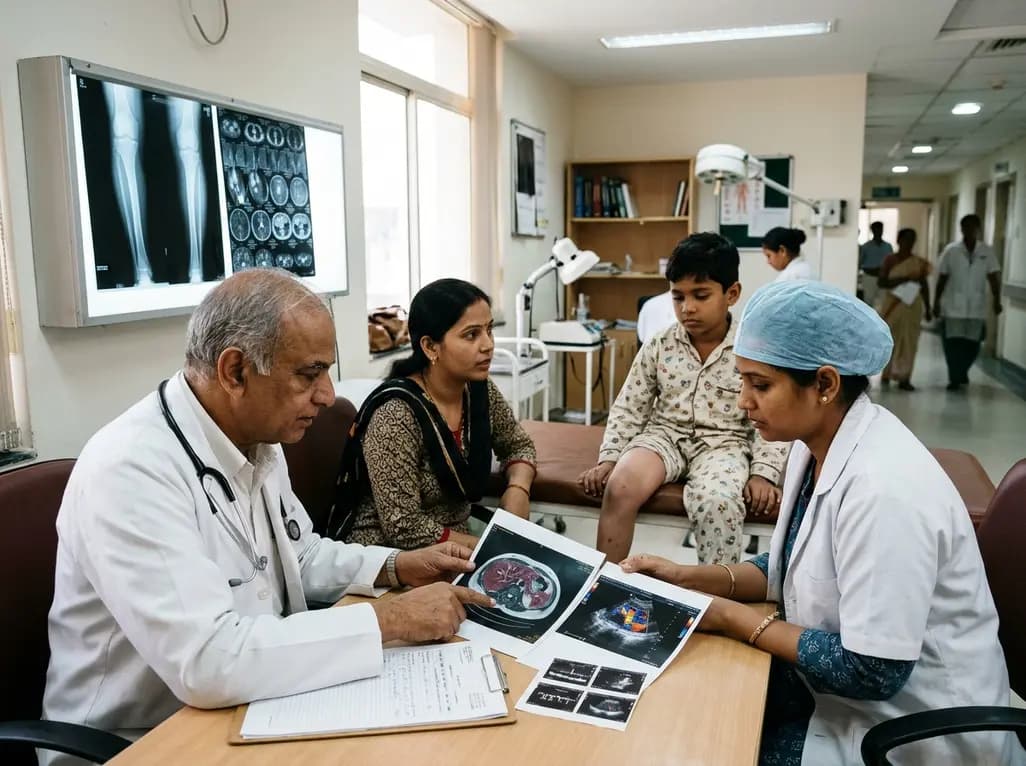
Deep intramuscular vascular malformations in pediatric Klippel-Trenaunay syndrome can mimic Maffucci syndrome. Multimodality imaging with Doppler ultrasound and MRI, along with histopathology, ensures prompt differential diagnosis, targeted surgical debulking, and optimized conservative surveillance.
Yesterday

A longitudinal feasibility pilot study highlights that combining polygenic risk score disclosure with in-person lifestyle counseling significantly enhances genomic literacy in individuals at risk for type 2 diabetes, overcoming educational disparities and reinforcing patient motivation.
Today
