.webp&w=384&q=75)

Loading, please wait...
Loading, please wait...

Intrahepatic cholangiocarcinoma (ICC) presents a significant clinical challenge due to its aggressive nature and poor prognosis. Recently, researchers have turned to 3D bioprinted ICC models to better understand and treat this complex malignancy. These advanced functional platforms allow for rapid drug sensitivity assessment, which is crucial for personalized medicine. This technology is especially vital for overcoming the high level of interpatient heterogeneity seen in biliary tract cancers.
A new study published in Advanced Science highlights the development of a patient-derived bioprinted model. Specifically, the team used a cost-effective GelMA/HAMA composite hydrogel to reconstruct the tumor microenvironment. This scaffold supports the rapid self-organization of primary ICC cells while maintaining high viability levels. Consequently, clinicians can now observe tumor behavior in a more physiologically relevant setting than traditional cultures.
The study results are impressive because the bioprinted models showed high genomic and transcriptomic fidelity. In fact, whole-exome sequencing confirmed that these models preserved the original driver mutations found in patient tissues. Furthermore, the researchers generated clinically actionable drug response profiles within just 10 days. This rapid turnaround is essential for making timely decisions in the clinical setting, where aggressive tumors often progress quickly.
Notably, in vitro drug responses in this study were fully consistent with clinical outcomes for patients receiving neoadjuvant therapy. Moreover, longitudinal follow-up revealed that recurrence occurred only in patients who did not receive the therapies predicted as sensitive by the model. Therefore, this platform offers a reliable strategy for identifying effective personalized adjuvant therapies. Such advancements are particularly relevant in India, where ICC cases often present at advanced stages and require precise intervention.
In summary, the use of patient-specific models helps bridge the gap between laboratory research and bedside treatment. By mimicking the unique characteristics of each patient's tumor, 3D bioprinted ICC models provide a powerful tool for improving survival rates. This technology could soon transform the standard of care for biliary tract cancers globally.
The platform generates clinically actionable drug response profiles within just 10 days. This timeline allows oncologists to make rapid, data-driven decisions regarding a patient's treatment plan.
Traditional 2D cultures often fail to replicate the complex interactions and heterogeneity of real tumors. In contrast, 3D bioprinted models reconstruct the tumor microenvironment accurately. These models preserve the original driver mutations and transcriptional programs of the patient's tissue.
Disclaimer: This content is for informational and educational purposes only. It does not constitute medical advice or a professional relationship. Always consult a qualified healthcare provider regarding any medical condition or treatment. Refer to the latest local and national guidelines for clinical practice.
References
Lu Y et al. Patient-Derived 3D-Bioprinted Intrahepatic Cholangiocarcinoma Models Recapitulate Tumor Autologous Traits and Predict Personalized Adjuvant Therapy. Adv Sci (Weinh). 2026 Feb 08. doi: 10.1002/advs.202522025. PMID: 41655190.
Valle JW et al. Biliary tract cancer: Lancet Seminar. Lancet. 2021;397(10272):428-444. doi: 10.1016/S0140-6736(21)00153-7.
Chen AM et al. 3D Bioprinted Intrahepatic Cholangiocarcinoma Model and 7-Day Perfusion with Gemcitabine and Cisplatin: Modeling the Tumor Microenvironment and Response to Chemotherapy. ATC Abstracts. 2020. Abstract D-307.

Read summarized clinical updates, watch expert medical content, and earn CME certifications right from your smartphone.
Open your smartphone camera to scan and install.





Researchers developed patient-derived 3D-bioprinted ICC models that accurately predict drug sensitivity and clinical outcomes within just 10 days....
8 months ago

A retrospective comparative cohort study evaluated genitourinary safety in HFpEF between dapagliflozin and empagliflozin over six months. Rates of symptomatic UTI and asymptomatic bacteriuria showed no statistically significant differences, supporting comparable safety profiles across both SGLT2 inhibitors.
Today
A novel folate-conjugated tecto-dendrimer nanoplatform successfully delivers siRNA to achieve targeted HK2 silencing, disrupting ovarian cancer glycolysis and suppressing lactate output.
Today
A comparative non-contact study reveals that high-power radiofrequency delivery with the QDOT MICRO catheter induces an artifactual contact force rise. Electrophysiologists must understand this power-dependent thermal and electrical phenomenon to avoid inadvertent catheter withdrawal and ineffective ablation.
Today
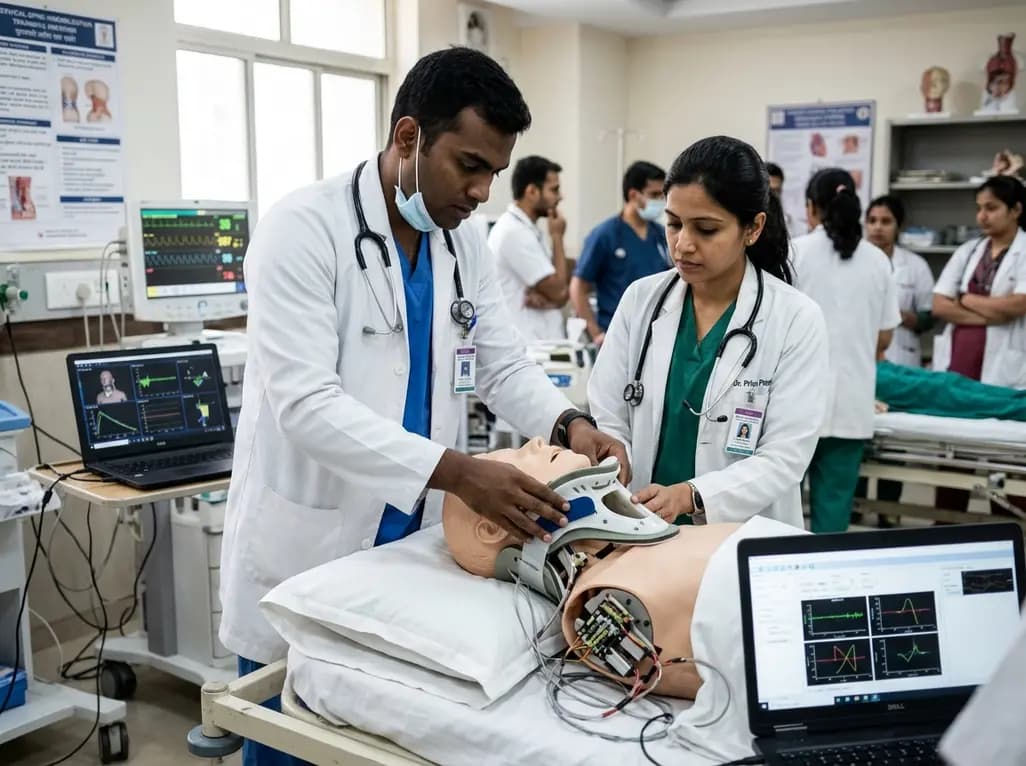
A novel proof-of-concept study presents a six-degree-of-freedom articulated manikin neck equipped with linear potentiometers. The system provides real-time kinematic motion feedback during cervical immobilisation, delivering sub-degree tracking accuracy to improve pre-hospital trauma training and patient safety.
Today
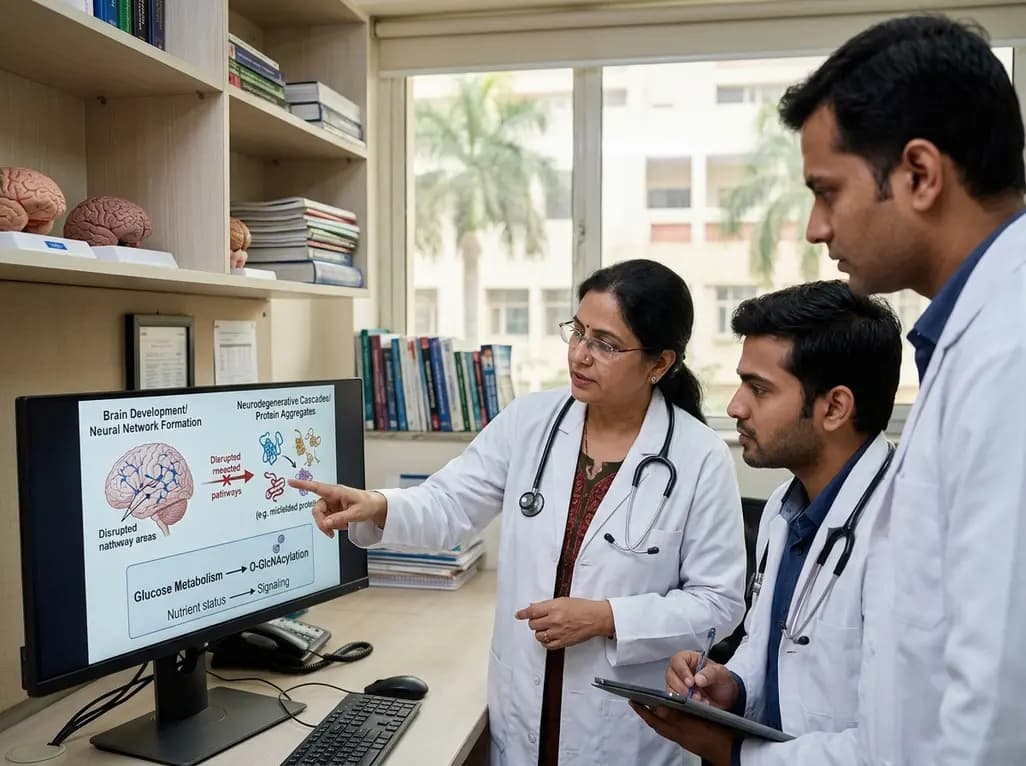
Protein O-GlcNAcylation couples cellular nutrient status to vital neuronal functions. This review explores how disrupted O-GlcNAc cycling drives both neurodevelopmental delays and neurodegenerative cascades, positioning metabolic post-translational modifications as therapeutic targets in clinical neurology.
Today
