.webp&w=384&q=75)

Loading, please wait...
Loading, please wait...

Chronic limb-threatening ischemia represents the end-stage manifestation of peripheral artery disease, frequently leading to non-healing ulcers, gangrene, and limb loss. Interventional specialists have increasingly adopted paclitaxel-coated devices to prevent restenosis and maintain vessel patency after lower extremity revascularization. However, whether local antiproliferative drug delivery translates into meaningful clinical limb salvage remains contentious. New findings from the SWEDEPAD-1 trial now shed critical light on this dilemma.
Vascular specialists frequently confront severe ischemic tissue loss in patients suffering from peripheral arterial occlusive disease. Historically, operators adopted drug-coated balloons and stents because antiproliferative agents suppress neointimal hyperplasia. In coronary interventions, paclitaxel and limus coatings consistently reduce repeat revascularizations. However, applying coronary paradigms to peripheral interventions presents distinct pathophysiological challenges. Specifically, patients with chronic limb-threatening ischemia exhibit severe microcirculatory impairment, extensive tissue necrosis, and systemic comorbidities.
Earlier clinical trials predominantly enrolled individuals with intermittent claudication or milder ischemia. Consequently, clinicians often extrapolated patency data from claudicants to justify using drug-coated technology in limb-threatening scenarios. Nevertheless, limb salvage depends on tissue perfusion and wound healing rather than angiographic lumen diameter alone. Antiproliferative coatings inhibit cellular mitosis, which could inadvertently alter microvascular remodeling in critically ischemic beds. Therefore, researchers recognized an urgent need for robust, randomized evidence evaluating hard clinical endpoints such as major amputation in patients with frank tissue ulceration. The SWEDEPAD-1 investigation addresses this knowledge gap by analyzing real-world outcomes among vulnerable patients presenting with extensive tissue compromise.
The SWEDEPAD-1 trial utilized a nationwide, multicenter, registry-based randomized controlled design across twenty-two Swedish clinical centers. Investigators leveraged the comprehensive Swedish National Registry for Vascular Surgery platform to recruit participants seamlessly during clinical workflows. Specifically, the trial enrolled adult patients presenting with chronic limb-threatening ischemia scheduled for infrainguinal endovascular intervention. After operators successfully crossed the target arterial lesion with a guidewire, the automated registry platform randomized participants in a 1:1 ratio.
Patients received either paclitaxel-coated devices or conventional uncoated devices during the revascularization procedure. For this pre-specified subgroup analysis, researchers focused on 1761 high-risk patients exhibiting Rutherford category 5 or 6 ischemic tissue loss. The cohort exhibited a median age of 77 years, with 60.1% men and 58.4% individuals managing diabetes mellitus. Researchers designated the primary study endpoint as time to ipsilateral major amputation above the ankle. Additionally, secondary endpoints encompassed target vessel reintervention and a composite measure combining major amputation or vessel reintervention. The research team collected prospective data across three months, one year, and five years using adjusted Cox proportional hazards models.
The analysis revealed surprising and clinically significant findings regarding early post-procedural outcomes. Specifically, patients receiving paclitaxel-coated devices experienced higher rates of ipsilateral major amputation within three months compared to the uncoated cohort. The three-month amputation rate reached 10.4% in the paclitaxel group versus 7.5% in the uncoated control group. Consequently, statistical analysis demonstrated an adjusted hazard ratio of 1.43, establishing a statistically significant early hazard.
However, this early divergence in amputation rates did not persist over extended follow-up intervals. By one year, cumulative major amputation rates measured 16.3% in the drug-coated group and 14.6% in the control cohort. Furthermore, five-year tracking confirmed that limb salvage rates remained comparable between the two treatment arms. Investigators noted that the early excess in amputations raised urgent mechanistic questions. For instance, particulate drug shedding or excipient embolization might induce distal microcirculatory occlusion in fragile distal beds. Alternatively, cytotoxic tissue exposure could impair acute cellular proliferation required for ulcer healing. Therefore, while paclitaxel did not worsen five-year limb retention overall, its early safety profile warrants heightened procedural scrutiny.
When examining secondary anatomical endpoints, the trial documented an initial advantage for drug elution. At one year, patients receiving paclitaxel-coated devices required significantly fewer target vessel reinterventions than those treated with plain uncoated balloons or stents. Specifically, the reintervention rate stood at 13.6% in the paclitaxel cohort compared with 18.0% in the uncoated cohort. Adjusted hazard modeling yielded a hazard ratio of 0.77, confirming a genuine reduction in restenosis during the first twelve months.
Nevertheless, this apparent anatomical victory carried an important clinical caveat. When researchers evaluated a composite endpoint comprising major amputation or target vessel reintervention, the statistical benefit attenuated substantially. Because early major amputations occurred more frequently in the paclitaxel group, fewer surviving limbs remained at risk for secondary revascularization. Furthermore, this reintervention benefit disappeared completely as patient follow-up extended toward five years. Long-term surveillance demonstrated identical cumulative reintervention rates between both treatment cohorts. Consequently, the temporary suppression of arterial neointimal hyperplasia failed to translate into durable clinical success or reduced long-term surgical procedures for these multimorbid patients.
These findings carry profound practical ramifications for vascular surgeons, interventional cardiologists, and interventional radiologists worldwide. Clinicians frequently choose expensive drug-coated platforms under the intuitive assumption that superior patency inevitably guarantees limb salvage. However, SWEDEPAD-1 demonstrates that mechanical lumen patency does not directly correlate with wound resolution or extremity preservation in advanced tissue loss. Instead, microcirculatory perfusive adequacy and tissue biology appear to govern clinical outcomes far more decisively.
Moreover, healthcare providers must consider the economic dimensions of peripheral interventions. Drug-coated balloons and stents carry substantial acquisition costs compared to plain balloons. If expensive devices do not improve amputation-free survival, their routine utilization imposes financial burdens without improving long-term health metrics. Furthermore, the early signal of excess limb loss highlights potential hazards in fragile angiosomes. Therefore, multidisciplinary teams should avoid assuming that antiproliferative technology solves ischemic ulceration automatically. Instead, operators must evaluate lesion anatomy, runoff resistance, and microvascular tissue viability holistically before selecting advanced hardware.
The SWEDEPAD-1 trial contributes vital randomized evidence to an ongoing global debate surrounding peripheral drug-eluting technology. Global vascular guidelines already emphasize that limb salvage requires aggressive medical therapy, optimal wound debridement, infection resolution, and offloading alongside revascularization. While drug-coated devices maintain an established role in reducing reinterventions for focal claudication, their routine adoption in Rutherford stage 5 and 6 disease requires critical reassessment.
Vascular specialists must now interpret device performance through the lens of patient-centered clinical endpoints rather than purely angiographic results. Accordingly, future trials should explore novel delivery platforms, alternative antiproliferative coatings like sirolimus, and advanced wound therapeutics tailored to ischemic beds. Furthermore, clinicians must monitor patients vigilantly during the first ninety days following endovascular procedures, ensuring timely wound care to mitigate early amputation risks. By integrating rigorous clinical evidence with individualized risk stratification, operators can deliver judicious, cost-effective revascularization strategies that genuinely protect limb viability.
In this targeted analysis of patients presenting with Rutherford stage 5 or 6 chronic limb-threatening ischemia, paclitaxel-coated devices failed to improve overall limb salvage compared with uncoated balloons or stents. Investigators observed no statistically significant reduction in major ipsilateral amputations at one year or during five years of extended follow-up. Consequently, routine deployment of these drug-eluting tools does not appear to provide any durable protection against long-term extremity loss.
The trial revealed an unexpected increase in ipsilateral major amputations at three months among patients treated with paclitaxel-coated devices compared to uncoated alternatives. Researchers hypothesize that distal embolization of cytotoxic drug particles or localized tissue inflammation might precipitate microvascular compromise in fragile ischemic tissue beds. Consequently, vulnerable microvascular networks in patients with existing tissue loss may tolerate paclitaxel toxicity poorly during the acute post-procedural phase, accelerating tissue necrosis.
Clinicians treating advanced chronic limb-threatening ischemia should carefully weigh individual anatomical factors against the lack of established clinical benefit. Although paclitaxel-coated devices initially reduce one-year target vessel reinterventions, this transient anatomical advantage does not translate into superior limb salvage or survival. Therefore, vascular specialists must prioritize comprehensive wound debridement, infection control, and optimal glycemic control alongside judicious device selection rather than relying exclusively on antiproliferative technology.
Disclaimer: This content is for informational and educational purposes only... Refer to the latest local and national guidelines for clinical practice.
References

Read summarized clinical updates, watch expert medical content, and earn CME certifications right from your smartphone.
Open your smartphone camera to scan and install.





SWEDEPAD-1 trial insights show paclitaxel-coated devices do not improve long-term limb salvage in patients with chronic limb-threatening ischemia and tissue loss. While one-year reinterventions decreased, the devices were linked to a higher risk of major amputation at three months.
Yesterday

A landmark cluster randomized trial demonstrates that community-based mass dog vaccination achieves superior coverage and sustains protective herd immunity against rabies far better than conventional campaign models, offering vital lessons for global and Indian elimination targets.
Today

Explore the crucial link between dietary protein and immunocompetence. This review examines how low-protein nutrition shifts metabolic resources away from pathogen defense toward early reproduction, compromising host survival and immunity against severe bacterial infections.
Today
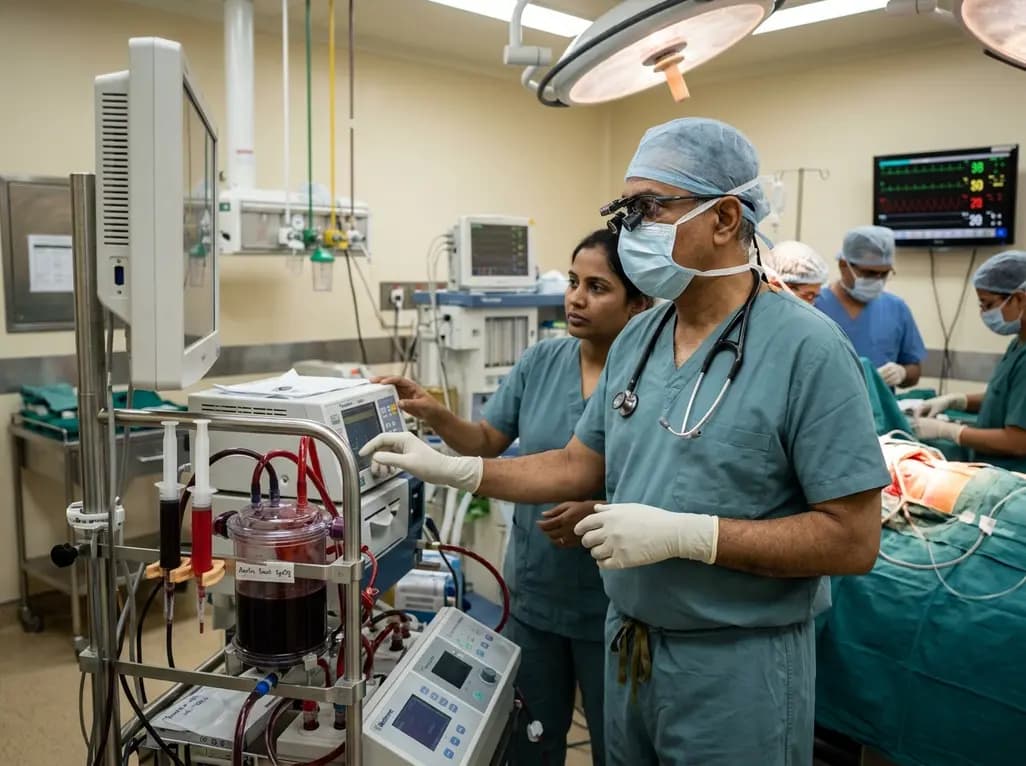
Differential oxygenation during peripheral TA-NRP can cause undetected coronary hypoxemia due to arch vessel clamping. A novel circuit with continuous aortic root monitoring detects desaturation early, facilitating left ventricular unloading and preventing allograft dysfunction and unnecessary heart discard.
Today

A longitudinal study reveals that patients undergoing staged bilateral hip arthroscopy experience progressive contralateral labral deterioration during surgical intervals. However, structural degradation does not compromise 2-year postoperative clinical outcomes or patient-reported satisfaction scores.
Today

A post hoc analysis of the PARM-T2D study shows pemafibrate exerts baseline-dependent effects on LDL-C and particle size in type 2 diabetes and hypertriglyceridemia. It lowers triglycerides and remnants while favorably remodeling atherogenic LDL particles based on initial lipid control status.
Today
