.webp&w=384&q=75)

Loading, please wait...
Loading, please wait...

Body mass index has long served as the standard screening tool for assessing metabolic health and adiposity. However, clinicians increasingly recognize that standard weight metrics fail to differentiate between lean muscle and pathologic visceral fat. A comprehensive cohort study now demonstrates that the weight-adjusted waist index provides superior prognostic accuracy for all-cause and cardiovascular mortality compared to traditional measures. Consequently, this novel metric offers clinicians a practical strategy to overcome the well-known limitations of traditional anthropometry. Furthermore, adopting this refined tool could substantially improve risk stratification across diverse patient populations.
For decades, physicians have relied heavily on body mass index to categorize cardiometabolic risk. Nevertheless, this ubiquitous tool presents significant diagnostic drawbacks in everyday practice. Most importantly, it calculates total weight relative to height without distinguishing between skeletal muscle mass and adipose tissue. As a result, muscular individuals often face misclassification as overweight or obese. Conversely, sarcopenic patients with excessive visceral adiposity frequently present with an ostensibly normal weight status. This clinical blind spot often creates the misleading phenomenon known as the obesity paradox. In this paradox, higher body mass index appears artificially protective in certain chronic diseases. In reality, preserved lean mass, rather than excess fat tissue, confers that observed survival benefit. In addition, conventional anthropometry fails to pinpoint ectopic fat deposition in vital visceral compartments. Thus, reliance on basic weight categories frequently delays vital preventive therapies in vulnerable individuals. Healthcare providers clearly require more nuanced anthropometric tools to evaluate true metabolic risk accurately. By accounting for regional fat accumulation, modern indicators offer much greater diagnostic clarity.
To address the deficiencies of traditional metrics, researchers formulated the weight-adjusted waist index. Clinicians calculate this metric by dividing waist circumference in centimeters by the square root of body weight in kilograms. Consequently, this mathematical adjustment decouples central fat accumulation from overall body mass. Therefore, it effectively isolates abdominal obesity while penalizing for low body weight that might stem from sarcopenia. In contrast, standard waist circumference correlates strongly with overall weight, which obscures independent metabolic hazards. Moreover, recent investigations demonstrate that this calculation correlates robustly with abdominal visceral fat volume measured by advanced computed tomography. It also demonstrates an inverse correlation with abdominal muscle quality and skeletal muscle mass. Thus, this single value captures both excess visceral adiposity and declining muscle reserve. Because primary care physicians already collect height, weight, and waist measurements, computing this value requires no expensive imaging infrastructure. Furthermore, standard electronic health records can easily automate the calculation during routine ambulatory triage. This straightforward accessibility facilitates early identification of high-risk patients before irreversible vascular complications occur.
Rigorous epidemiological data firmly reinforce the diagnostic superiority of this metric. Specifically, investigators evaluated 18,496 adults from the National Health and Nutrition Examination Survey followed over nearly five years. They standardized four separate adiposity indices using z-scores to allow direct, unbiased statistical comparisons. These comparative metrics included body mass index, waist-to-height ratio, relative fat mass, and weight-adjusted waist index. During the follow-up interval, participants suffered 976 all-cause deaths and 291 cardiovascular deaths. Remarkably, the weight-adjusted waist index demonstrated the strongest independent association with all-cause mortality across all models. Each standard deviation increase in this central index elevated all-cause mortality risk by thirty-four percent. In contrast, body mass index showed a modest, non-linear association that weakened after comprehensive demographic adjustment. Furthermore, restricted cubic spline analyses uncovered a monotonic, linear escalation in mortality risk across rising index values. Subgroup assessments confirmed that this elevated risk persisted across sexes, kidney function strata, and multimorbidity levels. Accordingly, these robust epidemiological observations support the adoption of this metric as an indispensable mortality predictor.
Multiple intertwined pathophysiological pathways explain why central adiposity accelerates mortality far more aggressively than peripheral subcutaneous fat. Primarily, visceral adipocytes exhibit heightened lipolytic activity, which releases excessive free fatty acids directly into the portal circulation. Consequently, this continuous lipid flux floods hepatocytes, which triggers hepatic steatosis, dyslipidemia, and systemic insulin resistance. Furthermore, visceral adipose tissue functions as an active endocrine organ that secretes damaging proinflammatory cytokines. These noxious molecules include tumor necrosis factor-alpha, interleukin-six, and plasminogen activator inhibitor-one. As a result, chronic low-grade systemic inflammation damages the vascular endothelium and accelerates coronary atherogenesis. In addition, ectopic fat deposits around the myocardium and renal vasculature impair microvascular perfusion and promote progressive organ fibrosis. Conversely, peripheral subcutaneous fat stores lipids safely and releases cardioprotective adipokines such as adiponectin. Because this new metric specifically isolates visceral fat expansion while reflecting relative muscle wasting, it captures this toxic biological milieu effectively. Therefore, elevated values warn clinicians of severe underlying vascular inflammation and accelerated arterial aging.
Implementing refined anthropometric measurements holds profound clinical value, especially for healthcare practitioners managing high-risk populations. In particular, South Asian individuals characteristically exhibit the thin-fat phenotype, which features normal body mass index alongside elevated central fat. Consequently, traditional weight charts routinely fail to detect their true metabolic and cardiovascular vulnerability. By integrating waist-adjusted assessments into routine health evaluations, physicians can identify concealed cardiometabolic danger much earlier. Moreover, this objective index provides a practical target to monitor the success of lifestyle and therapeutic interventions. For instance, aggressive dietary restriction alone might cause muscle loss alongside fat reduction, producing little change in the overall ratio. In contrast, progressive resistance exercise combined with adequate protein intake preserves lean mass while reducing abdominal girth. Thus, a decreasing index score signals true physiological improvement rather than simple, potentially harmful sarcopenic wasting. Furthermore, clinicians can utilize this metric alongside lipid panels and glycemic biomarkers to guide pharmacotherapy initiation. Ultimately, adopting this parameter empowers doctors to deliver personalized, proactive preventive care.
Clinicians calculate this index by measuring waist circumference in centimeters and dividing that figure by the square root of total body weight in kilograms. For example, an adult with a ninety-centimeter waist weighing sixty-four kilograms has an index of eleven point two five. Healthcare staff can easily record these standard measurements during initial triage. Furthermore, automated clinical software can calculate and track this value instantaneously within digital medical records.
Standard body mass index cannot differentiate between protective lean muscle tissue and toxic visceral adipose stores. Consequently, heavy patients with high muscularity receive false warnings, whereas sarcopenic patients with central obesity remain undetected. In contrast, this refined metric isolates abdominal fat accumulation while simultaneously adjusting for body weight. Therefore, it effectively captures harmful visceral adiposity and progressive muscle loss, both of which strongly accelerate arterial aging, systemic inflammation, and premature all-cause mortality.
Reducing central adiposity requires targeted lifestyle therapies that diminish visceral fat while actively preserving functional skeletal muscle mass. Specifically, patients should combine progressive resistance training with aerobic exercise and a diet rich in unrefined foods and lean proteins. In addition, improving sleep quality and reducing chronic psychological stress helps lower elevated cortisol levels that promote abdominal fat storage. Clinicians should track changes over time rather than focusing solely on overall scale weight.
Disclaimer: This content is for informational and educational purposes only... Refer to the latest local and national guidelines for clinical practice.
References

Read summarized clinical updates, watch expert medical content, and earn CME certifications right from your smartphone.
Open your smartphone camera to scan and install.





A cohort study demonstrates that the weight-adjusted waist index predicts all-cause and cardiovascular mortality more accurately than BMI and conventional adiposity metrics, offering clinicians a practical anthropometric tool for superior cardiometabolic risk stratification.
Today
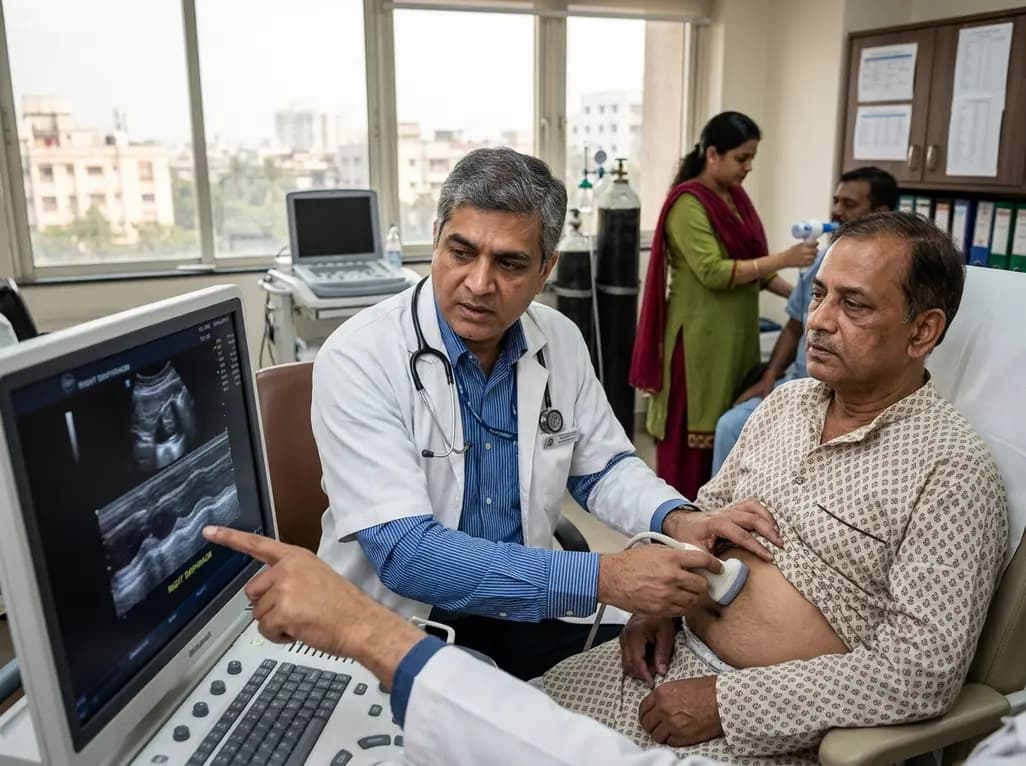
Diaphragmatic dysfunction affects over a third of chronic stroke patients, worsening sleep, mood, and functional mobility. Ultrasound assessment and inspiratory training improve outcomes.
Today

The ClinGen Prenatal Gene Curation Expert Panel evaluated 63 disease relationships across 61 genes, establishing clinical validity for severe fetal phenotypes like hydrops and stillbirth to enhance prenatal genomic interpretation and clinical care.
Yesterday

Managing refractory hypoxemia after cardiothoracic surgery becomes perilous when prolonged air leak limits positive-pressure ventilation. This case-based review details how high-flow nasal cannula, paired with awake rehabilitation, enabled successful extubation and avoided invasive re-intubation.
Today

Idiopathic axillary web syndrome (IAWS) is a rare cause of shoulder pain and mobility restriction characterized by palpable axillary cording without prior surgery or trauma. Early diagnosis, nonsteroidal anti-inflammatory therapy, and physical rehabilitation lead to complete resolution of symptoms.
Today

SWEDEPAD-1 trial insights show paclitaxel-coated devices do not improve long-term limb salvage in patients with chronic limb-threatening ischemia and tissue loss. While one-year reinterventions decreased, the devices were linked to a higher risk of major amputation at three months.
Today
