.webp&w=384&q=75)

Loading, please wait...
Loading, please wait...
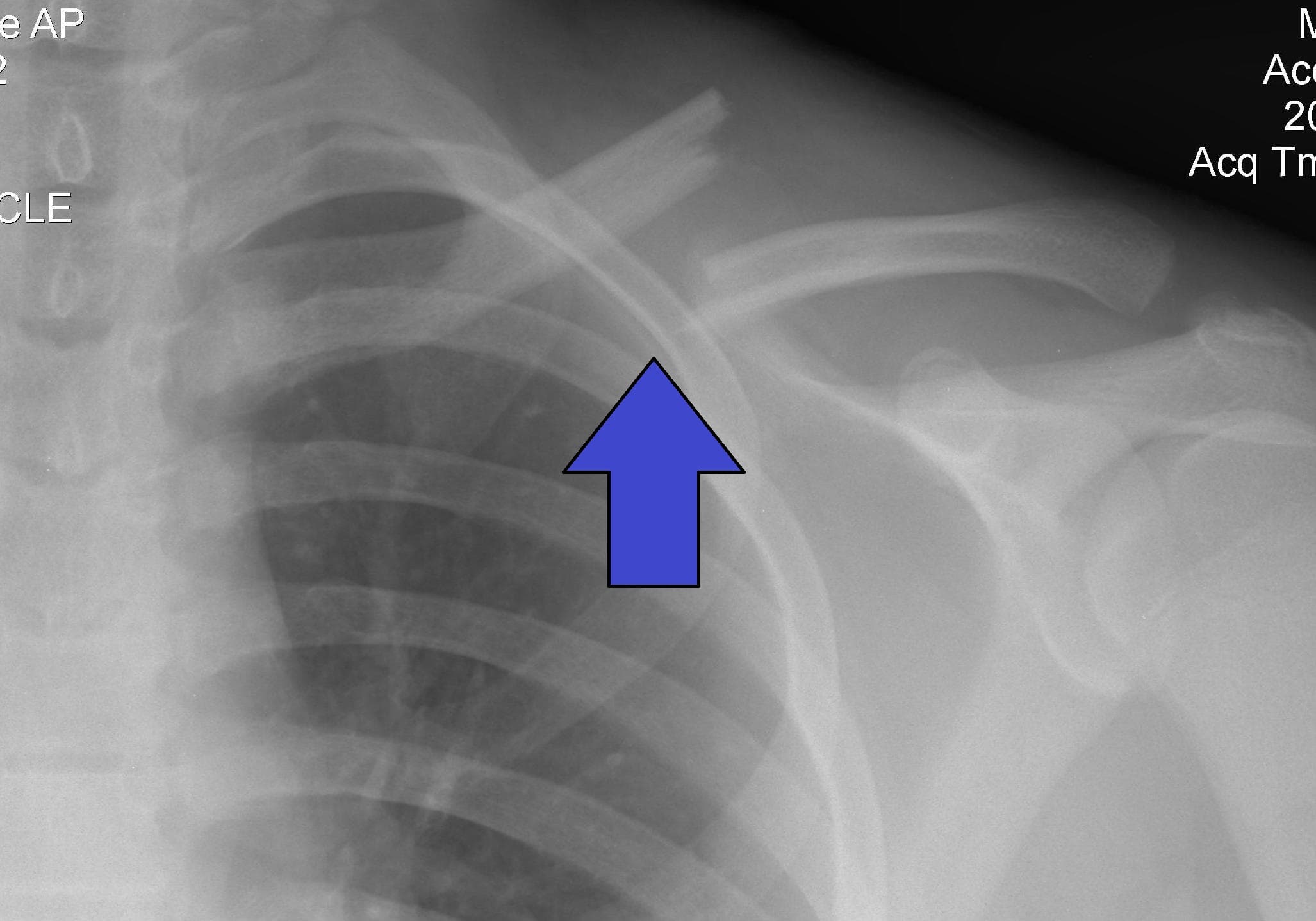
Displaced distal clavicle fractures, particularly Neer type II patterns, have a recognised risk of nonunion because the fracture is unstable and the coracoclavicular ligaments may no longer maintain alignment. This multicentre randomized trial compared operative fixation with nonoperative treatment in adults with completely displaced type II fractures. The study found that surgery produced a lower rate of nonunion and better radiographic union, but the benefit came with implant-related complications and a meaningful need for later hardware removal in some patients. Functional outcomes at one year were not dramatically different across every measure. For clinicians, the important lesson is that the decision to operate should consider fracture instability, displacement, patient activity and tolerance for a possible second procedure. Plate or hook-plate fixation may be particularly attractive when maintaining shoulder function and union is a priority, but the presence of a radiographically displaced fracture alone should not be treated as an automatic indication for surgery. Shared decision-making should include the expected healing course, the risk of nonunion with nonoperative care and the possibility of implant-related reoperation after fixation.

Read summarized clinical updates, watch expert medical content, and earn CME certifications right from your smartphone.
Open your smartphone camera to scan and install.





Displaced distal clavicle fractures, particularly Neer type II patterns, have a recognised risk of nonunion because the fracture is unstable and the coracoclavicular ligaments may no longer maintain alignment. This multicentre randomized trial compared operative fixation with nonoperative treatment in adults with completely displaced type II fractures. The study found that surgery produced a lower rate of nonunion and better radiographic union, but the benefit came with implant-related complications and a meaningful need for later hardware removal in some patients. Functional outcomes at one year were not dramatically different across every measure. For clinicians, the important lesson is that the decision to operate should consider fracture instability, displacement, patient activity and tolerance for a possible second procedure. Plate or hook-plate fixation may be particularly attractive when maintaining shoulder function and union is a priority, but the presence of a radiographically displaced fracture alone should not be treated as an automatic indication for surgery. Shared decision-making should include the expected healing course, the risk of nonunion with nonoperative care and the possibility of implant-related reoperation after fixation.
4 weeks back

A bioengineered oral nanozyme microsupplement converts pathological ROS into a protective polydopamine hydrogel shield. By curbing neutrophil extracellular traps and balancing T cells, this platform outperforms standard 5-ASA in preclinical colitis models, opening new paths for sustained remission.
3 days back

Recent research reveals that downregulating YAP1/TAZ-TEAD via Hippo signaling triggers spontaneous human trophoblast syncytialization in 3D cultures, illuminating placental biology and preeclampsia.
4 weeks back

Abdominal aortic aneurysm rupture remains a catastrophic vascular emergency. Groundbreaking research reveals that USP53 accelerates aneurysm progression by reprogramming smooth muscle cell metabolism toward aerobic glycolysis, highlighting a promising target beyond conventional diameter-based surveillance.
4 days back

A breakthrough study leverages natural language processing to accurately identify incident medication-related osteonecrosis of the jaw and track antiresorptive drug holidays from clinical narratives in electronic health records, advancing osteoporosis pharmacovigilance and dental safety.
4 days back

Recent research defines ferro-aging as a conserved iron-lipid axis driving organ decline across primates. Age-related iron dyshomeostasis stimulates ACSL4-mediated lipid peroxidation, promoting cellular senescence. Notably, vitamin C directly inhibits ACSL4, suppressing phospholipid oxidation and multi-organ decay.
5 days back
