.webp&w=384&q=75)

Loading, please wait...
Loading, please wait...

SPRINT-MIND examined whether intensive systolic blood-pressure control could reduce cognitive decline in adults at elevated cardiovascular risk. Although the primary endpoint of probable dementia was not significantly reduced, intensive treatment produced a statistically significant reduction in the risk of mild cognitive impairment and the combined outcome of mild cognitive impairment or dementia. The findings broaden the consequences of hypertension management beyond stroke, myocardial infarction and heart failure. For internists, the result supports careful attention to blood pressure across the life course while avoiding simplistic claims that “lower is always better” for every older patient. Individualized treatment should consider frailty, orthostatic symptoms, kidney function and polypharmacy. The study is especially relevant to patients with both cardiovascular and cognitive risk factors, because effective vascular prevention may have downstream neurologic benefits. It also reinforces the importance of accurate BP measurement and longitudinal follow-up rather than isolated clinic readings.

Read summarized clinical updates, watch expert medical content, and earn CME certifications right from your smartphone.
Open your smartphone camera to scan and install.





SPRINT-MIND examined whether intensive systolic blood-pressure control could reduce cognitive decline in adults at elevated cardiovascular risk. Although the primary endpoint of probable dementia was not significantly reduced, intensive treatment produced a statistically significant reduction in the risk of mild cognitive impairment and the combined outcome of mild cognitive impairment or dementia. The findings broaden the consequences of hypertension management beyond stroke, myocardial infarction and heart failure. For internists, the result supports careful attention to blood pressure across the life course while avoiding simplistic claims that “lower is always better” for every older patient. Individualized treatment should consider frailty, orthostatic symptoms, kidney function and polypharmacy. The study is especially relevant to patients with both cardiovascular and cognitive risk factors, because effective vascular prevention may have downstream neurologic benefits. It also reinforces the importance of accurate BP measurement and longitudinal follow-up rather than isolated clinic readings.
last month

Researchers have developed a validated gradient boosting machine learning tool to predict primary tumor origin in cancer of unknown primary using clinical and metastatic variables, achieving high accuracy without initial pathology or genomic testing.
2 days back

An all-printed immunosensing microchip detects urinary sFlt-1 in just 10 minutes with 3.61 pg/mL sensitivity. By leveraging photonic bandgap engineering, this low-cost, cleanroom-free platform provides non-invasive preeclampsia screening, offering substantial benefits for point-of-care obstetric triage.
Yesterday

Wearable ultrasound patches are transforming healthcare by shifting medicine from episodic evaluations to continuous monitoring. Discover how flexible acoustic transducers advance cardiovascular tracking, musculoskeletal imaging, neuromodulation, and on-demand closed-loop theranostics.
Yesterday
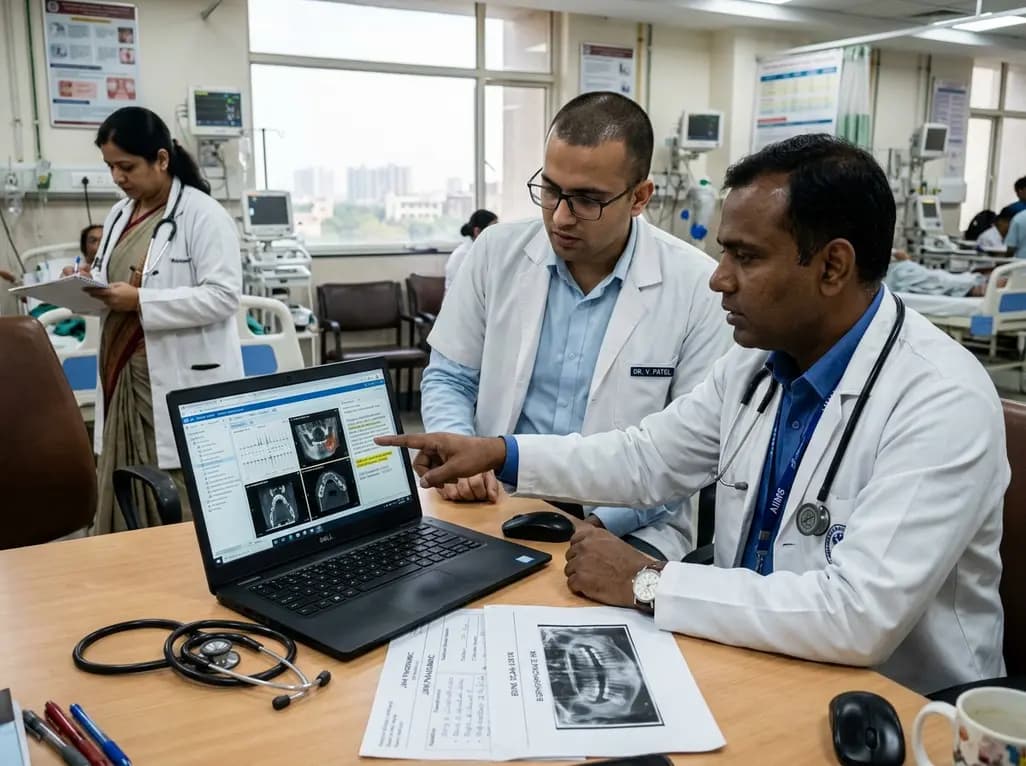
A breakthrough study leverages natural language processing to accurately identify incident medication-related osteonecrosis of the jaw and track antiresorptive drug holidays from clinical narratives in electronic health records, advancing osteoporosis pharmacovigilance and dental safety.
Last week

Recent research defines ferro-aging as a conserved iron-lipid axis driving organ decline across primates. Age-related iron dyshomeostasis stimulates ACSL4-mediated lipid peroxidation, promoting cellular senescence. Notably, vitamin C directly inhibits ACSL4, suppressing phospholipid oxidation and multi-organ decay.
Last week
