.webp&w=384&q=75)

Loading, please wait...
Loading, please wait...

The BEST randomized clinical trial compared laparoscopic sleeve gastrectomy with Roux-en-Y gastric bypass in adults undergoing metabolic surgery. The study found broadly comparable major short-term surgical safety, while highlighting differences in weight reduction and metabolic effects between the procedures. Rather than identifying a single universally superior operation, the trial reinforces the idea that procedure selection should be individualized. Gastric bypass may be particularly attractive when stronger metabolic effect or reflux control is a priority, while sleeve gastrectomy can offer technical simplicity and avoids creation of a gastrointestinal anastomosis. These differences matter because obesity surgery is not simply a weight-loss procedure; it changes gastrointestinal physiology and can influence diabetes, lipid management, reflux and medication needs. For surgeons, the practical message is to match procedure choice to baseline disease, comorbidities, anatomy, patient preferences and long-term follow-up capacity. High-quality randomized evidence such as BEST helps move counseling away from generic comparisons and toward personalized bariatric pathways.

Read summarized clinical updates, watch expert medical content, and earn CME certifications right from your smartphone.
Open your smartphone camera to scan and install.





The BEST randomized clinical trial compared laparoscopic sleeve gastrectomy with Roux-en-Y gastric bypass in adults undergoing metabolic surgery. The study found broadly comparable major short-term surgical safety, while highlighting differences in weight reduction and metabolic effects between the procedures. Rather than identifying a single universally superior operation, the trial reinforces the idea that procedure selection should be individualized. Gastric bypass may be particularly attractive when stronger metabolic effect or reflux control is a priority, while sleeve gastrectomy can offer technical simplicity and avoids creation of a gastrointestinal anastomosis. These differences matter because obesity surgery is not simply a weight-loss procedure; it changes gastrointestinal physiology and can influence diabetes, lipid management, reflux and medication needs. For surgeons, the practical message is to match procedure choice to baseline disease, comorbidities, anatomy, patient preferences and long-term follow-up capacity. High-quality randomized evidence such as BEST helps move counseling away from generic comparisons and toward personalized bariatric pathways.
last month
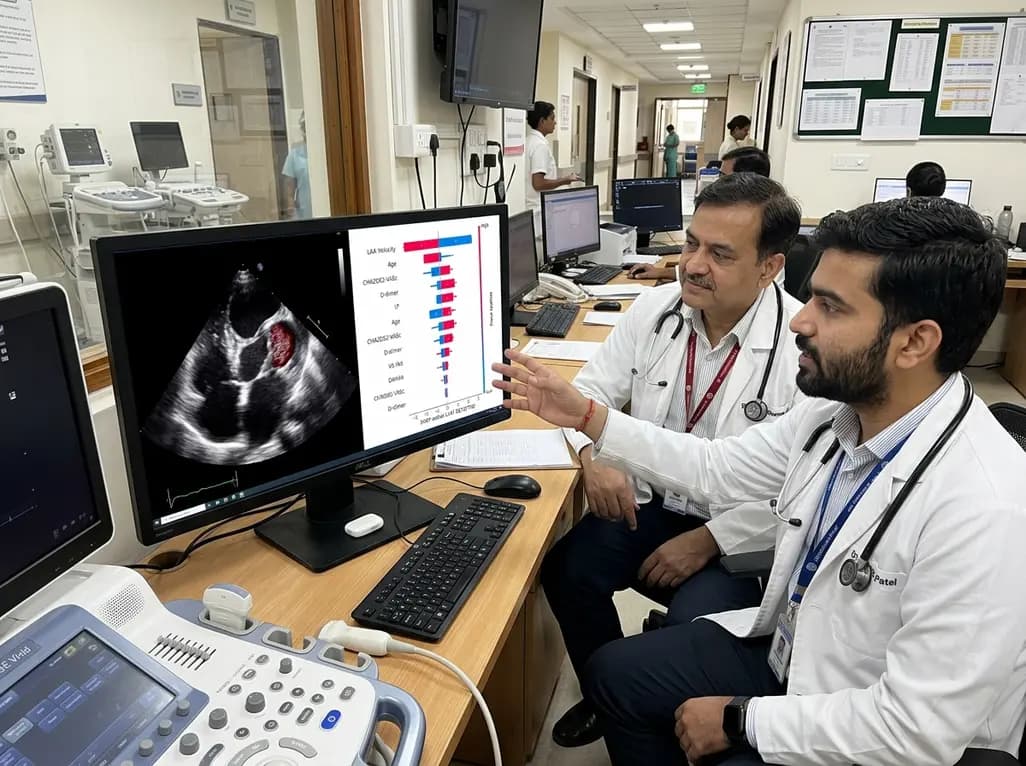
A study demonstrates an explainable machine learning framework integrating clinical and echocardiographic metrics to predict left atrial appendage thrombus in non-valvular atrial fibrillation, utilizing SHAP analysis for clinical interpretability.
Yesterday

Recent research reveals that downregulating YAP1/TAZ-TEAD via Hippo signaling triggers spontaneous human trophoblast syncytialization in 3D cultures, illuminating placental biology and preeclampsia.
4 weeks back

Abdominal aortic aneurysm rupture remains a catastrophic vascular emergency. Groundbreaking research reveals that USP53 accelerates aneurysm progression by reprogramming smooth muscle cell metabolism toward aerobic glycolysis, highlighting a promising target beyond conventional diameter-based surveillance.
Last week

A breakthrough study leverages natural language processing to accurately identify incident medication-related osteonecrosis of the jaw and track antiresorptive drug holidays from clinical narratives in electronic health records, advancing osteoporosis pharmacovigilance and dental safety.
Last week

Recent research defines ferro-aging as a conserved iron-lipid axis driving organ decline across primates. Age-related iron dyshomeostasis stimulates ACSL4-mediated lipid peroxidation, promoting cellular senescence. Notably, vitamin C directly inhibits ACSL4, suppressing phospholipid oxidation and multi-organ decay.
Last week
