.webp&w=384&q=75)

Loading, please wait...
Loading, please wait...

The KARMA-Dep 2 randomized clinical trial evaluated whether serial intravenous ketamine infusions improved depressive symptoms more effectively than midazolam when added to usual inpatient psychiatric care in adults hospitalized with moderate-to-severe unipolar or bipolar depressive episodes. A total of 65 participants were randomized to receive up to eight twice-weekly infusions of ketamine 0.5 mg/kg or midazolam 0.045 mg/kg, with 62 participants included in the final analysis. The primary endpoint was change in observer-rated MADRS score from baseline to the end of treatment. The adjusted mean difference in end-of-treatment MADRS scores favoured ketamine by −3.16 points, but the difference was not statistically significant (95% CI, −8.54 to 2.22; P=0.25; Cohen d=−0.29). Similarly, the between-group difference in self-reported Quick Inventory of Depressive Symptomatology scores was −0.002 points (95% CI, −2.71 to 2.71; P>0.99; Cohen d=−0.0004). No significant between-group differences were observed in secondary efficacy outcomes, cognition, cost-effectiveness, or quality of life. The trial was relatively small, and most participants and raters correctly guessed treatment allocation, raising concerns about the effectiveness of blinding. Serial ketamine infusions were not shown to be superior to an active psychoactive comparator when added to usual inpatient care, highlighting the need for adequately powered trials with robust blinding and longer-term follow-up

Read summarized clinical updates, watch expert medical content, and earn CME certifications right from your smartphone.
Open your smartphone camera to scan and install.





The KARMA-Dep 2 randomized clinical trial evaluated whether serial intravenous ketamine infusions improved depressive symptoms more effectively than midazolam when added to usual inpatient psychiatric care in adults hospitalized with moderate-to-severe unipolar or bipolar depressive episodes. A total of 65 participants were randomized to receive up to eight twice-weekly infusions of ketamine 0.5 mg/kg or midazolam 0.045 mg/kg, with 62 participants included in the final analysis. The primary endpoint was change in observer-rated MADRS score from baseline to the end of treatment. The adjusted mean difference in end-of-treatment MADRS scores favoured ketamine by −3.16 points, but the difference was not statistically significant (95% CI, −8.54 to 2.22; P=0.25; Cohen d=−0.29). Similarly, the between-group difference in self-reported Quick Inventory of Depressive Symptomatology scores was −0.002 points (95% CI, −2.71 to 2.71; P>0.99; Cohen d=−0.0004). No significant between-group differences were observed in secondary efficacy outcomes, cognition, cost-effectiveness, or quality of life. The trial was relatively small, and most participants and raters correctly guessed treatment allocation, raising concerns about the effectiveness of blinding. Serial ketamine infusions were not shown to be superior to an active psychoactive comparator when added to usual inpatient care, highlighting the need for adequately powered trials with robust blinding and longer-term follow-up
Today
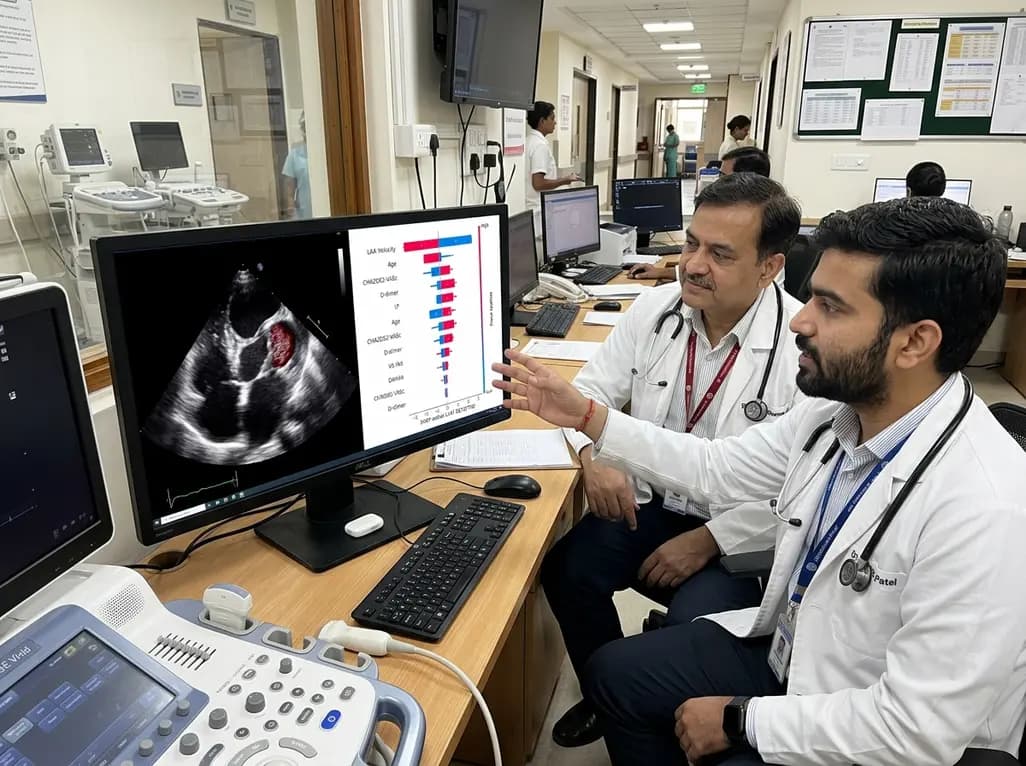
A study demonstrates an explainable machine learning framework integrating clinical and echocardiographic metrics to predict left atrial appendage thrombus in non-valvular atrial fibrillation, utilizing SHAP analysis for clinical interpretability.
2 days back

Recent research reveals that downregulating YAP1/TAZ-TEAD via Hippo signaling triggers spontaneous human trophoblast syncytialization in 3D cultures, illuminating placental biology and preeclampsia.
4 weeks back

Abdominal aortic aneurysm rupture remains a catastrophic vascular emergency. Groundbreaking research reveals that USP53 accelerates aneurysm progression by reprogramming smooth muscle cell metabolism toward aerobic glycolysis, highlighting a promising target beyond conventional diameter-based surveillance.
Last week

A breakthrough study leverages natural language processing to accurately identify incident medication-related osteonecrosis of the jaw and track antiresorptive drug holidays from clinical narratives in electronic health records, advancing osteoporosis pharmacovigilance and dental safety.
Last week

Recent research defines ferro-aging as a conserved iron-lipid axis driving organ decline across primates. Age-related iron dyshomeostasis stimulates ACSL4-mediated lipid peroxidation, promoting cellular senescence. Notably, vitamin C directly inhibits ACSL4, suppressing phospholipid oxidation and multi-organ decay.
Last week
