.webp&w=384&q=75)

Loading, please wait...
Loading, please wait...

Cervical carcinoma continues to represent a leading cause of gynecologic cancer mortality across the globe, especially in resource-limited environments. Although immune checkpoint inhibitors significantly improved survival outcomes for patients with advanced or recurrent malignancy, many tumors exhibit intrinsic resistance. Specifically, non-immunogenic or cold tumors harbor minimal immune infiltration and fail to trigger durable therapeutic responses. Consequently, researchers urgently explore novel cell death pathways that can remodel the tumor microenvironment. Recent findings highlight the fundamental role of necroptosis in cervical cancer as a potent, regulated necrotic cell death pathway capable of overcoming apoptosis resistance. Unlike quiet apoptotic events, necroptosis stimulates robust anti-tumor immunity by releasing damage-associated molecular patterns. Therefore, dissecting these cellular pathways helps oncologists identify high-risk patients and devise more targeted interventions.
Necroptosis represents a genetically programmed, caspase-independent form of inflammatory cell death. Classical apoptosis typically maintains membrane integrity and circumvents inflammatory cascades, whereas necroptosis promotes early membrane rupture. Key intracellular transducers, primarily receptor-interacting serine/threonine-protein kinase 1, kinase 3, and mixed lineage kinase domain-like pseudokinase, orchestrate this cascade. Consequently, the collapsing malignant cells release immunogenic cargo, including high mobility group box 1, calreticulin, and adenosine triphosphate, directly into the stroma. These damage-associated molecular patterns recruit antigen-presenting cells, notably dendritic cells, and initiate potent immune surveillance. In gynecologic malignancies, dysregulated apoptotic signaling often permits malignant clone survival during standard cytotoxic therapy. Therefore, reactivating necroptosis in cervical cancer provides an attractive mechanism to bypass established apoptotic roadblocks. Furthermore, cross-study transcriptomic evaluations indicate that tumors expressing robust necroptotic profiles display enriched neoantigen presentation and enhanced cytotoxic T-lymphocyte engagement. Accordingly, activating these inflammatory death cascades transforms resistant neoplastic niches into active targets for endogenous immunological clearance.
To establish a coherent understanding of necroptosis, investigators completed a systematic review following PRISMA guidelines to examine published transcriptomic studies. The consensus evaluation pooled data across seven independent prognostic models that utilized RNA sequencing and least absolute shrinkage and selection operator regression algorithms. These bioinformatic workflows derived prognostic risk scores to stratify patient cohorts based on survival trajectories. Interestingly, researchers discovered eight consistently overlapping genes across the evaluated studies, pinpointing a core signature of seven vital necroptosis-related biomarkers. Rather than acting as disparate entities, these consensus genes collectively determined patient stratification across independent cohorts. The meta-analytical synthesis revealed that patients exhibiting high necroptosis signature activity experienced significantly prolonged overall and progression-free survival. In contrast, tumors demonstrating suppressed necroptotic signaling maintained higher risk scores, aggressive clinicopathological behavior, and dismal long-term outcomes. Consequently, standardizing these bioinformatic models provides clinicians with validated tools to predict disease progression and individualize surveillance schedules.
Functional annotation and pathway enrichment of the identified consensus genes highlighted vital interconnections between necroptosis and cellular energetics. Most overlapping genes actively govern mitochondrial outer membrane permeability, transmembrane solute transport, and reactive oxygen species accumulation. When malignant cells undergo necroptotic stress, mitochondrial inner membrane potential collapses, causing severe bioenergetic failure and oxidative stress bursts. In addition, persistent intracellular reactive oxygen species production accelerates lipid peroxidation, which reinforces the terminal execution steps of cellular swelling and membrane lysis. Furthermore, these metabolic disturbances interface directly with innate immune receptors, triggering nuclear factor kappa B activation and downstream cytokine transcription. In cervical squamous cell carcinomas and endocervical adenocarcinomas, these metabolic cross-talk nodes determine whether a stressed cell successfully initiates necroptosis or survives through alternative metabolic adaptations. Thus, mapping mitochondrial transport regulators uncovers vulnerable metabolic nodes that clinicians can target to deliberately trigger inflammatory cellular breakdown.
A central therapeutic dilemma in gynecologic oncology involves overcoming the immune evasion tactics employed by cold cervical neoplasms. These immunologically silent lesions exhibit sparse CD8+ T-cell infiltration, elevated immunosuppressive myeloid checkpoints, and defective antigen processing machinery. However, inducing necroptotic death directly counteracts this immune exclusion. Because necroptotic cellular contents spill into the surrounding microenvironment, local dendritic cells ingest liberated tumor antigens and present them efficiently to naive T cells. Consequently, this inflammatory recruitment converts an immune-excluded stroma into a T-cell-inflamed microenvironment rich in interferon-gamma and chemokine gradients. Multi-omics analyses confirm that tumors harboring elevated necroptosis activity display higher scores for cytotoxic tumor-infiltrating lymphocytes, natural killer cells, and checkpoint molecules like PD-1 and PD-L1. Therefore, combining necroptosis-inducing compounds with programmed death receptor blockade creates synergistic anti-tumor pressure. This innovative paradigm directly addresses primary immunotherapy resistance, potentially extending clinical responses to populations that historically failed conventional regimens.
Integrating necroptotic profiling into routine oncology workflows could substantially optimize therapeutic stratification for advanced disease. Currently, clinicians rely heavily on clinical staging, histologic subtyping, and basic immunohistochemical biomarkers to direct cervical cancer care. However, adding necroptosis-related gene expression profiling provides profound insights into individual tumor biology and microenvironmental dynamics. Patients displaying low necroptosis scores might benefit from front-line therapy combined with necroptosis-sensitizing agents, such as second mitochondria-derived activator of caspase mimetics or epigenetic modulators. Conversely, patients presenting with naturally high necroptotic indices could represent optimal candidates for neoadjuvant or concurrent immune checkpoint inhibitor combinations. Moreover, these mechanistic signatures generate actionable clinical hypotheses for emerging clinical trials assessing targeted cell death inducers. While robust prospective clinical trials must still validate these genomic risk calculators, cross-study consensus analysis establishes a solid framework for translating necroptotic signaling into actionable clinical strategies.
Apoptosis operates as a non-inflammatory, highly regulated mode of programmed cell death where phagocytes systematically clear cellular debris without triggering local immune activation. In contrast, necroptosis causes cell swelling, membrane rupture, and the immediate expulsion of intracellular contents. This immunogenic release delivers powerful inflammatory signals that alert dendritic cells, recruit cytotoxic lymphocytes, and overcome intrinsic apoptotic resistance within malignant cervical lesions.
Immunologically cold tumors possess very few tumor-infiltrating lymphocytes and generate minimal inflammatory chemokines to attract immune cells. Furthermore, impaired antigen presentation and immunosuppressive stromal elements shield malignant clones from circulating T cells. Because standard immune checkpoint inhibitors require functional pre-existing immune infiltrates to generate efficacy, cold tumors consistently exhibit poor therapeutic responsiveness and elevated rates of disease progression.
Clinicians and researchers are investigating several innovative pharmacology-based approaches, including small-molecule inhibitors of apoptosis protein antagonists, known as SMAC mimetics, and specific death receptor agonists. Additionally, combining epigenetic agents or selected chemotherapeutic drugs with caspase inhibitors can effectively bypass apoptosis checkpoints. These pharmacological regimens selectively shift cellular machinery toward necroptotic death, restoring tumor immunogenicity and sensitizing stubborn malignancies to systemic immunotherapies.
Disclaimer: This content is for informational and educational purposes only. It does not constitute formal medical advice, diagnosis, or treatment recommendations. Always consult a qualified physician or healthcare provider regarding specific medical conditions or individual therapy protocols. Refer to the latest local and national guidelines for clinical practice.
References
1. Fobian SF et al. Necroptosis as a key player in cervical cancer progression and management: a systematic review and transcriptomic cross-study consensus analysis. Apoptosis. 2026 Oct 11. doi: undefined. PMID: 42859938.
2. Sun K, et al. Identification of a necroptosis-related prognostic gene signature associated with tumor immune microenvironment in cervical carcinoma and experimental verification. World J Surg Oncol. 2022;20(1):340.
3. Tang R, et al. Induced Necroptosis and Its Role in Cancer Immunotherapy. Cancers (Basel). 2024;16(19):3392.
4. Ou T, et al. Conduction and validation of a novel prognostic signature in cervical cancer based on the necroptosis characteristic genes via integrating of multiomics data. Comput Biol Med. 2023;167:107656.

Read summarized clinical updates, watch expert medical content, and earn CME certifications right from your smartphone.
Open your smartphone camera to scan and install.





A systematic review and transcriptomic cross-study consensus analysis illuminates the role of necroptosis in cervical cancer. By promoting anti-tumor immunogenicity and resolving apoptosis resistance, necroptotic pathways offer actionable prognostic signatures and promising avenues for combination immunotherapy.
Yesterday
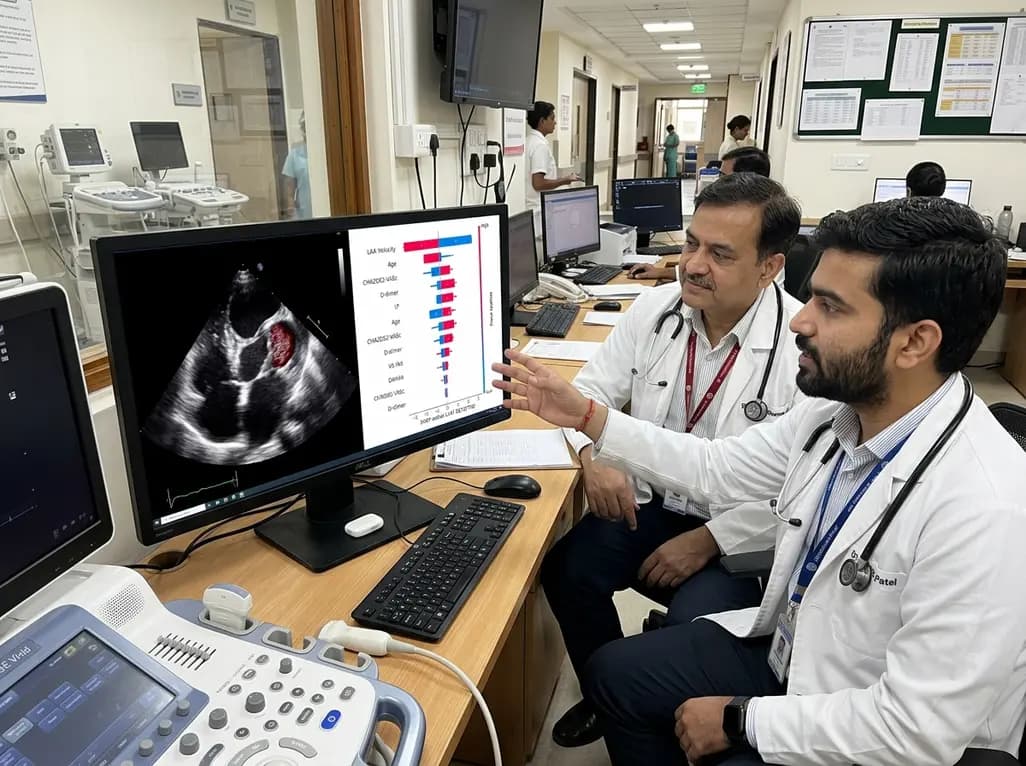
A study demonstrates an explainable machine learning framework integrating clinical and echocardiographic metrics to predict left atrial appendage thrombus in non-valvular atrial fibrillation, utilizing SHAP analysis for clinical interpretability.
2 days back

Abdominal aortic aneurysm rupture remains a catastrophic vascular emergency. Groundbreaking research reveals that USP53 accelerates aneurysm progression by reprogramming smooth muscle cell metabolism toward aerobic glycolysis, highlighting a promising target beyond conventional diameter-based surveillance.
Last week

A breakthrough study leverages natural language processing to accurately identify incident medication-related osteonecrosis of the jaw and track antiresorptive drug holidays from clinical narratives in electronic health records, advancing osteoporosis pharmacovigilance and dental safety.
Last week

Recent research defines ferro-aging as a conserved iron-lipid axis driving organ decline across primates. Age-related iron dyshomeostasis stimulates ACSL4-mediated lipid peroxidation, promoting cellular senescence. Notably, vitamin C directly inhibits ACSL4, suppressing phospholipid oxidation and multi-organ decay.
Last week
