.webp&w=384&q=75)

Loading, please wait...
Loading, please wait...
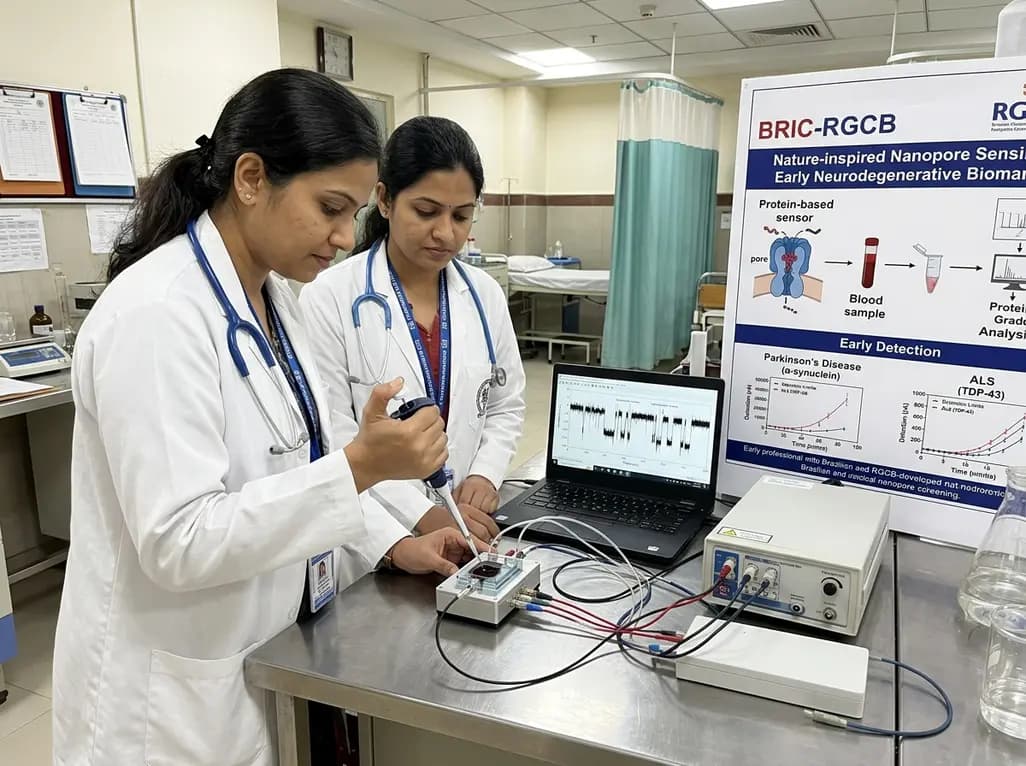
Early clinical diagnosis remains a formidable challenge in managing progressive neurological illnesses. Recently, pioneering advances in nanopore biomarker detection have opened new frontiers for identifying pathological proteins at ultra-low concentrations. Researchers at the Biotechnology Research and Innovation Council-Rajiv Gandhi Centre for Biotechnology (BRIC-RGCB) in Thiruvananthapuram have engineered an innovative peptide-based sensing technology. Consequently, this breakthrough platform promises to detect critical molecular indicators of neurodegenerative diseases, including Parkinson’s disease and amyotrophic lateral sclerosis (ALS), well before significant clinical disability manifests.
Neurodegenerative disorders like Parkinson’s disease and ALS develop insidiously over several years. During early stages, pathogenic protein oligomers and misfolded aggregates circulate in minute quantities within biological fluids. However, conventional diagnostic modalities such as ELISA and standard mass spectrometry often lack adequate sensitivity to detect these trace analytes reliably. Consequently, clinicians usually confirm diagnoses only after substantial, irreversible neuronal loss has already occurred. This significant diagnostic delay severely restricts the window for neuroprotective interventions. Furthermore, standard blood-based assays struggle to differentiate between physiologically benign proteins and their toxic, disease-associated conformational variants. Therefore, developing highly sensitive molecular sensors represents an urgent global clinical priority. By capturing molecular aberrations at femtomolar or picomolar thresholds, modern biosensing platforms can revolutionize screening protocols. In addition, early detection allows clinicians to monitor disease progression dynamically and evaluate novel therapeutics with far greater precision.
To overcome traditional analytical limitations, the research team led by Dr. Mahendran K. R. engineered an ultra-sensitive biosensing strategy published in Nature Nanotechnology. Specifically, the team utilized short synthetic peptides that autonomously self-assemble into stable transmembrane pores. These nature-inspired nanopores mimic biological channels but incorporate sophisticated computational refinements to achieve superior structural stability. When electrical potentials are applied across a lipid membrane containing these pores, ions flow steadily to produce a baseline electrical current. However, as target biomarker molecules pass through or interact with the pore lumen, they produce characteristic disruptions in ionic current. Consequently, each analyte generates a distinct electrical signature based on its physical size, electrical charge, and molecular conformation. Through this mechanism, nanopore biomarker detection provides single-molecule resolution without requiring complex chemical labels or expensive optical tags. As a result, this platform simplifies diagnostic workflows while preserving exceptional analytical precision.
A crucial breakthrough of this novel sensor lies in its dual-diameter, tunable pore architecture. Naturally derived channels often exhibit rigid geometries that limit their versatility across diverse molecular targets. In contrast, these engineered peptide assemblies create adaptable pore sizes capable of capturing varied analyte geometries. Consequently, the sensors can identify pathological conformers within complex biological mixtures containing hundreds of competing proteins. For instance, the pores successfully discriminate between normal monomeric precursors and pathological oligomeric species implicated in neurodegeneration. Furthermore, molecular simulations reveal that specific amino acid configurations within the pore lumen facilitate selective electrostatic interactions. Thus, the system effectively excludes background cellular debris while capturing transient disease biomarkers. This exceptional selectivity prevents false-positive signals, which frequently undermine conventional single-molecule assays. Therefore, the technology establishes a robust framework for reliable biomarker discrimination in heterogeneous biological samples.
The clinical implications of this sensing platform are profound for both movement disorders and neuromuscular practice. In Parkinson’s disease, pathogenic alpha-synuclein aggregates typically accumulate in peripheral tissues and biofluids years before classical motor symptoms appear. Similarly, in ALS, early detection of abnormal TDP-43 or neurofilament fragments can drastically accelerate diagnostic confirmation. By detecting these trace biomarkers directly from minimally invasive biofluids like peripheral blood or cerebrospinal fluid, clinicians can initiate disease-modifying therapies much sooner. Moreover, the technology provides an objective metric to track therapeutic efficacy during clinical drug trials. Patients receiving experimental anti-aggregation therapies can undergo frequent, low-burden biofluid monitoring to evaluate biochemical responses. Consequently, this sensing approach bridges the gap between laboratory biophysics and bedside neurological management, fostering personalized treatment paradigms for vulnerable patient populations.
Beyond chronic neurodegeneration, the modular architecture of synthetic nanopores offers versatile applications across diverse clinical specialties. Specifically, researchers can adapt the pore chemistry to recognize circulating oncogenic proteins, mutant peptide fragments, and small molecular tumor metabolites. Because the peptide scaffolds permit rational structural modification, bioengineers can tailor the internal diameter and charge distribution for specific oncological targets. Furthermore, the platform holds tremendous potential for translation into portable, point-of-care diagnostic hardware. Current laboratory-based proteomic platforms require bulky machinery and highly specialized technicians. In contrast, nanopore electrical readouts integrate seamlessly with microfluidic chips and miniaturized electronic circuits. Therefore, future iterations could function as rapid benchtop or handheld analyzers in primary healthcare clinics. Such decentralization would dramatically expand access to advanced molecular screening in resource-limited healthcare settings across India and globally.
This landmark achievement underscores the strength of interdisciplinary collaboration and national research infrastructure. The investigation brought together biophysicists, biochemists, and computational modelers from BRIC-RGCB, CSIR-Indian Institute of Chemical Biology in Kolkata, and Constructor University in Germany. Moreover, prominent Indian funding bodies supported the study, including the Department of Biotechnology, the Department of Science and Technology, the ICMR, and the CSIR. This successful synergy highlights India's expanding capabilities in frontier nanobiotechnology and translational molecular medicine. Looking forward, combining biological pore engineering with artificial intelligence will further accelerate signal processing and automated pattern recognition. Consequently, clinicians can anticipate faster, highly scalable diagnostic tools capable of identifying emerging systemic pathologies at their earliest biochemical inception.
Q1: How does nanopore biomarker detection differ from conventional diagnostic assays?
Conventional diagnostic assays like ELISA rely on antibody binding and optical signals, which often lack sensitivity for trace analytes. In contrast, nanopore biomarker detection monitors real-time electrical current fluctuations as individual molecules pass through synthetic peptide pores. This single-molecule approach provides exceptional analytical sensitivity, requires no fluorescent labeling, and successfully identifies conformational variants even within complex protein mixtures.
Q2: Why is early biomarker identification crucial for Parkinson’s disease and ALS management?
Parkinson’s disease and ALS cause extensive, irreversible neuronal death prior to the emergence of definitive clinical signs. Consequently, early biomarker identification allows neurologists to intervene during initial pathological stages when neuroprotective therapies are most effective. Additionally, timely diagnosis facilitates rapid enrollment in clinical trials, prevents unnecessary diagnostic workups, and improves long-term symptomatic management.
Q3: Can this nanopore platform detect conditions beyond neurodegenerative diseases?
Yes, the peptide-based nanopore architecture is modular and highly adaptable. By re-engineering the amino acid sequence and internal pore charge, researchers can tailor the system to detect diverse targets, including circulating cancer biomarkers, peptide hormones, and metabolic products. This flexibility makes it a promising broad-spectrum platform for future point-of-care diagnostics across multiple clinical domains.
Disclaimer: This content is for informational and educational purposes only. It does not constitute medical advice or replace professional judgment. Refer to the latest local and national guidelines for clinical practice.
References

Read summarized clinical updates, watch expert medical content, and earn CME certifications right from your smartphone.
Open your smartphone camera to scan and install.





Researchers at BRIC-RGCB have pioneered a nature-inspired nanopore sensing technology capable of detecting ultra-low concentrations of biomarkers for Parkinson’s disease and ALS. This breakthrough offers new promise for early point-of-care neurodegenerative screening.
last month

A bioengineered oral nanozyme microsupplement converts pathological ROS into a protective polydopamine hydrogel shield. By curbing neutrophil extracellular traps and balancing T cells, this platform outperforms standard 5-ASA in preclinical colitis models, opening new paths for sustained remission.
3 days back
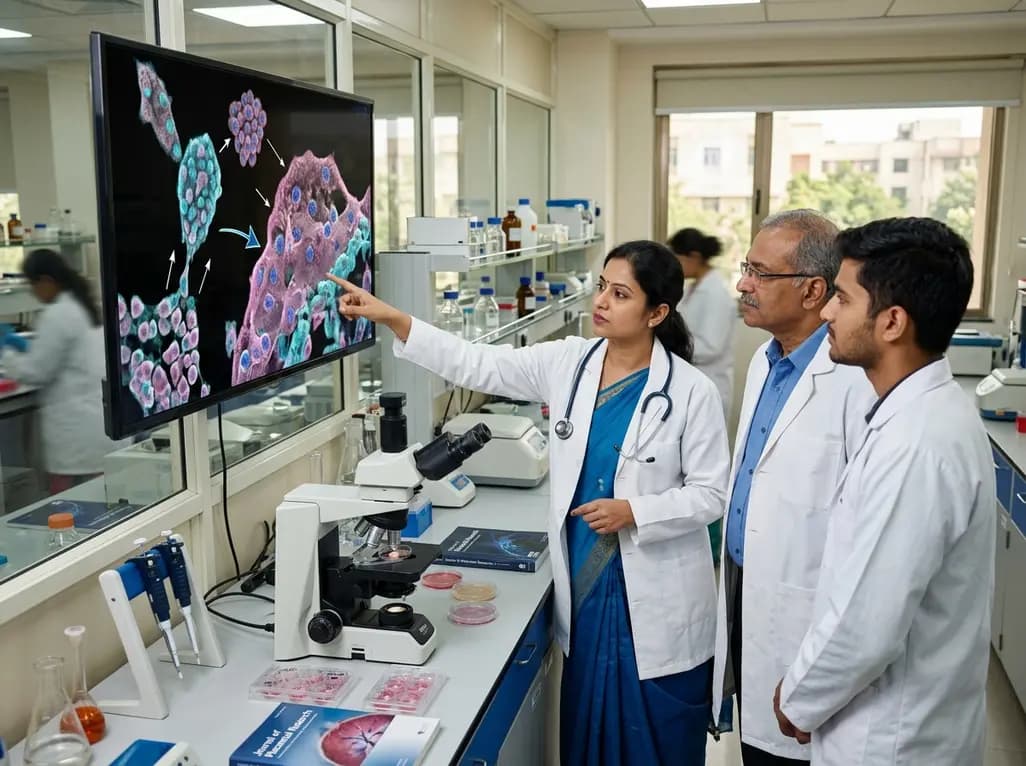
Recent research reveals that downregulating YAP1/TAZ-TEAD via Hippo signaling triggers spontaneous human trophoblast syncytialization in 3D cultures, illuminating placental biology and preeclampsia.
4 weeks back

Abdominal aortic aneurysm rupture remains a catastrophic vascular emergency. Groundbreaking research reveals that USP53 accelerates aneurysm progression by reprogramming smooth muscle cell metabolism toward aerobic glycolysis, highlighting a promising target beyond conventional diameter-based surveillance.
4 days back

A breakthrough study leverages natural language processing to accurately identify incident medication-related osteonecrosis of the jaw and track antiresorptive drug holidays from clinical narratives in electronic health records, advancing osteoporosis pharmacovigilance and dental safety.
4 days back

Recent research defines ferro-aging as a conserved iron-lipid axis driving organ decline across primates. Age-related iron dyshomeostasis stimulates ACSL4-mediated lipid peroxidation, promoting cellular senescence. Notably, vitamin C directly inhibits ACSL4, suppressing phospholipid oxidation and multi-organ decay.
4 days back
