.webp&w=384&q=75)

Loading, please wait...
Loading, please wait...
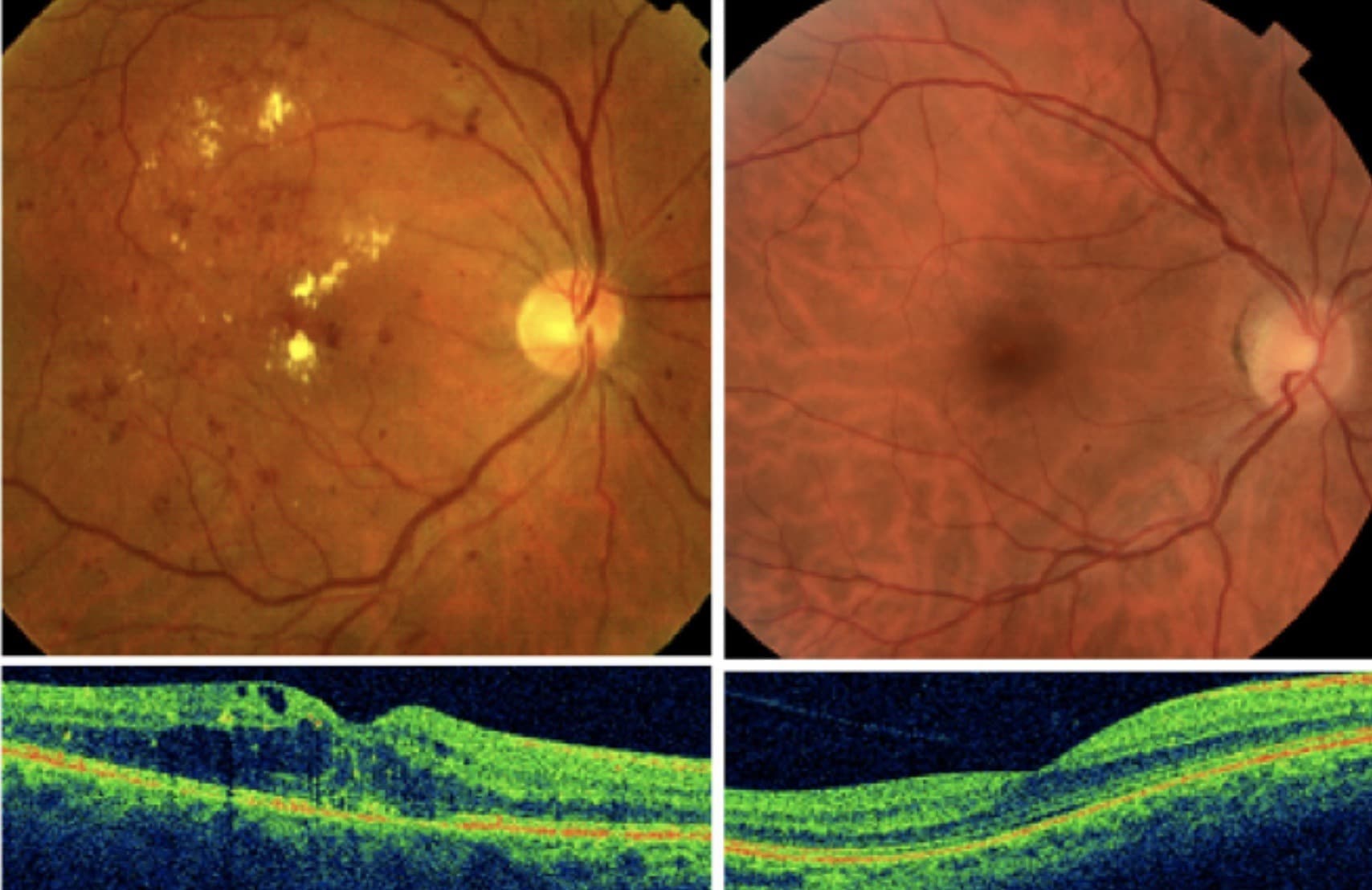
A pooled OCT biomarker analysis from the YOSEMITE and RHINE phase 3 trials examined how faricimab compared with aflibercept for anatomic disease control in diabetic macular edema. The analysis evaluated central subfield thickness and the presence or absence of intraretinal and subretinal fluid over time. Faricimab treatment produced sustained anatomic improvement, with higher proportions of eyes achieving important fluid-control endpoints at several study time points. These data complement visual-acuity outcomes by showing that anti-VEGF therapy can be assessed through multiple biologic and imaging markers rather than a single functional endpoint. For retina specialists, OCT remains central to deciding when to maintain, extend, or intensify treatment, and understanding how therapies influence persistent versus recurrent fluid can support more individualized follow-up. Importantly, anatomical improvement should still be interpreted alongside vision, diabetic control, treatment history, and structural sequelae. The publication highlights how modern DME management increasingly integrates functional and imaging outcomes to define durable disease control.

Read summarized clinical updates, watch expert medical content, and earn CME certifications right from your smartphone.
Open your smartphone camera to scan and install.





A pooled OCT biomarker analysis from the YOSEMITE and RHINE phase 3 trials examined how faricimab compared with aflibercept for anatomic disease control in diabetic macular edema. The analysis evaluated central subfield thickness and the presence or absence of intraretinal and subretinal fluid over time. Faricimab treatment produced sustained anatomic improvement, with higher proportions of eyes achieving important fluid-control endpoints at several study time points. These data complement visual-acuity outcomes by showing that anti-VEGF therapy can be assessed through multiple biologic and imaging markers rather than a single functional endpoint. For retina specialists, OCT remains central to deciding when to maintain, extend, or intensify treatment, and understanding how therapies influence persistent versus recurrent fluid can support more individualized follow-up. Importantly, anatomical improvement should still be interpreted alongside vision, diabetic control, treatment history, and structural sequelae. The publication highlights how modern DME management increasingly integrates functional and imaging outcomes to define durable disease control.
4 weeks back

A bioengineered oral nanozyme microsupplement converts pathological ROS into a protective polydopamine hydrogel shield. By curbing neutrophil extracellular traps and balancing T cells, this platform outperforms standard 5-ASA in preclinical colitis models, opening new paths for sustained remission.
3 days back

Recent research reveals that downregulating YAP1/TAZ-TEAD via Hippo signaling triggers spontaneous human trophoblast syncytialization in 3D cultures, illuminating placental biology and preeclampsia.
4 weeks back

Abdominal aortic aneurysm rupture remains a catastrophic vascular emergency. Groundbreaking research reveals that USP53 accelerates aneurysm progression by reprogramming smooth muscle cell metabolism toward aerobic glycolysis, highlighting a promising target beyond conventional diameter-based surveillance.
4 days back

A breakthrough study leverages natural language processing to accurately identify incident medication-related osteonecrosis of the jaw and track antiresorptive drug holidays from clinical narratives in electronic health records, advancing osteoporosis pharmacovigilance and dental safety.
4 days back

Recent research defines ferro-aging as a conserved iron-lipid axis driving organ decline across primates. Age-related iron dyshomeostasis stimulates ACSL4-mediated lipid peroxidation, promoting cellular senescence. Notably, vitamin C directly inhibits ACSL4, suppressing phospholipid oxidation and multi-organ decay.
5 days back
