

Loading, please wait...
Loading, please wait...

The C-GALL randomized trial compared conservative management with laparoscopic cholecystectomy in adults with uncomplicated symptomatic gallstone disease. The study is important because it challenges the assumption that every symptomatic gallstone patient should undergo immediate surgery. Conservative management allowed some patients to avoid an operation during follow-up, while surgery provided a more definitive treatment pathway for those with persistent or recurrent symptoms. The findings support a shared decision-making model in which clinicians discuss the natural history of gallstone symptoms, the likelihood of future problems, operative risks and the patient’s preferences. The trial applies to uncomplicated symptomatic disease, not to patients with acute cholecystitis, obstruction, pancreatitis or other clear indications for urgent intervention. For surgeons, the practical implication is that the consultation should distinguish between conditions where surgery is clearly indicated and those where a period of observation is reasonable. C-GALL adds randomized evidence to a growing literature supporting individualized treatment rather than an automatic operation based solely on the presence of gallstones.

Read summarized clinical updates, watch expert medical content, and earn CME certifications right from your smartphone.
Open your smartphone camera to scan and install.





The C-GALL randomized trial compared conservative management with laparoscopic cholecystectomy in adults with uncomplicated symptomatic gallstone disease. The study is important because it challenges the assumption that every symptomatic gallstone patient should undergo immediate surgery. Conservative management allowed some patients to avoid an operation during follow-up, while surgery provided a more definitive treatment pathway for those with persistent or recurrent symptoms. The findings support a shared decision-making model in which clinicians discuss the natural history of gallstone symptoms, the likelihood of future problems, operative risks and the patient’s preferences. The trial applies to uncomplicated symptomatic disease, not to patients with acute cholecystitis, obstruction, pancreatitis or other clear indications for urgent intervention. For surgeons, the practical implication is that the consultation should distinguish between conditions where surgery is clearly indicated and those where a period of observation is reasonable. C-GALL adds randomized evidence to a growing literature supporting individualized treatment rather than an automatic operation based solely on the presence of gallstones.
last month
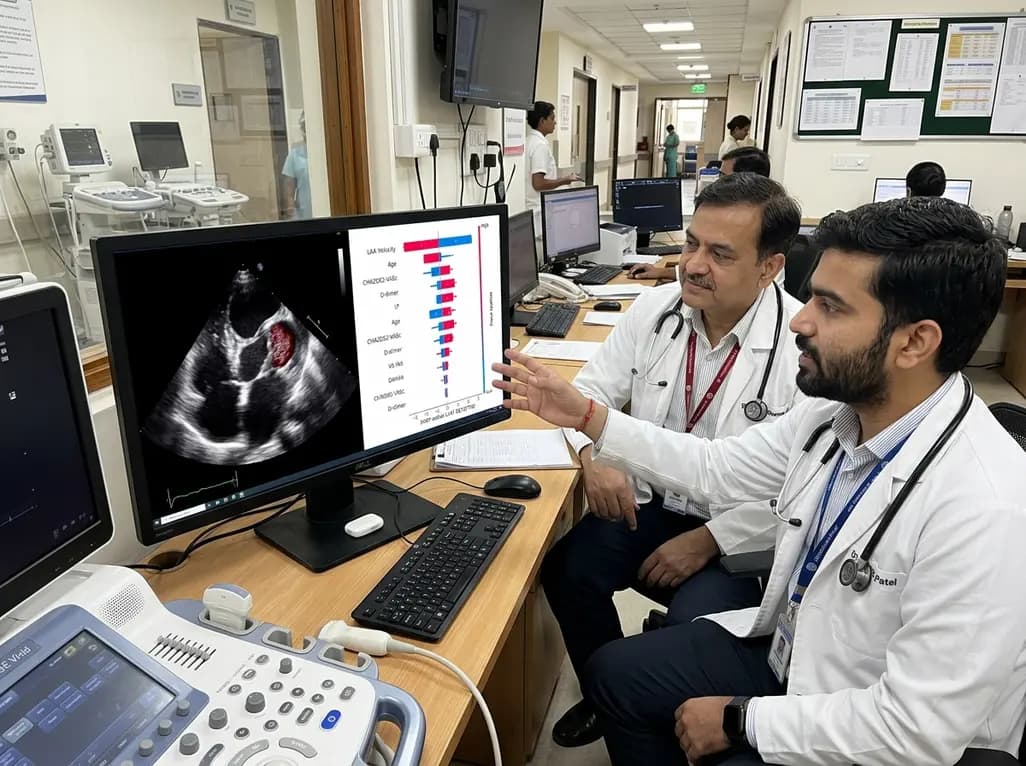
A study demonstrates an explainable machine learning framework integrating clinical and echocardiographic metrics to predict left atrial appendage thrombus in non-valvular atrial fibrillation, utilizing SHAP analysis for clinical interpretability.
4 days back

A systematic review and transcriptomic cross-study consensus analysis illuminates the role of necroptosis in cervical cancer. By promoting anti-tumor immunogenicity and resolving apoptosis resistance, necroptotic pathways offer actionable prognostic signatures and promising avenues for combination immunotherapy.
2 days back

Abdominal aortic aneurysm rupture remains a catastrophic vascular emergency. Groundbreaking research reveals that USP53 accelerates aneurysm progression by reprogramming smooth muscle cell metabolism toward aerobic glycolysis, highlighting a promising target beyond conventional diameter-based surveillance.
Last week

A breakthrough study leverages natural language processing to accurately identify incident medication-related osteonecrosis of the jaw and track antiresorptive drug holidays from clinical narratives in electronic health records, advancing osteoporosis pharmacovigilance and dental safety.
Last week

Recent research defines ferro-aging as a conserved iron-lipid axis driving organ decline across primates. Age-related iron dyshomeostasis stimulates ACSL4-mediated lipid peroxidation, promoting cellular senescence. Notably, vitamin C directly inhibits ACSL4, suppressing phospholipid oxidation and multi-organ decay.
Last week
