

Loading, please wait...
Loading, please wait...
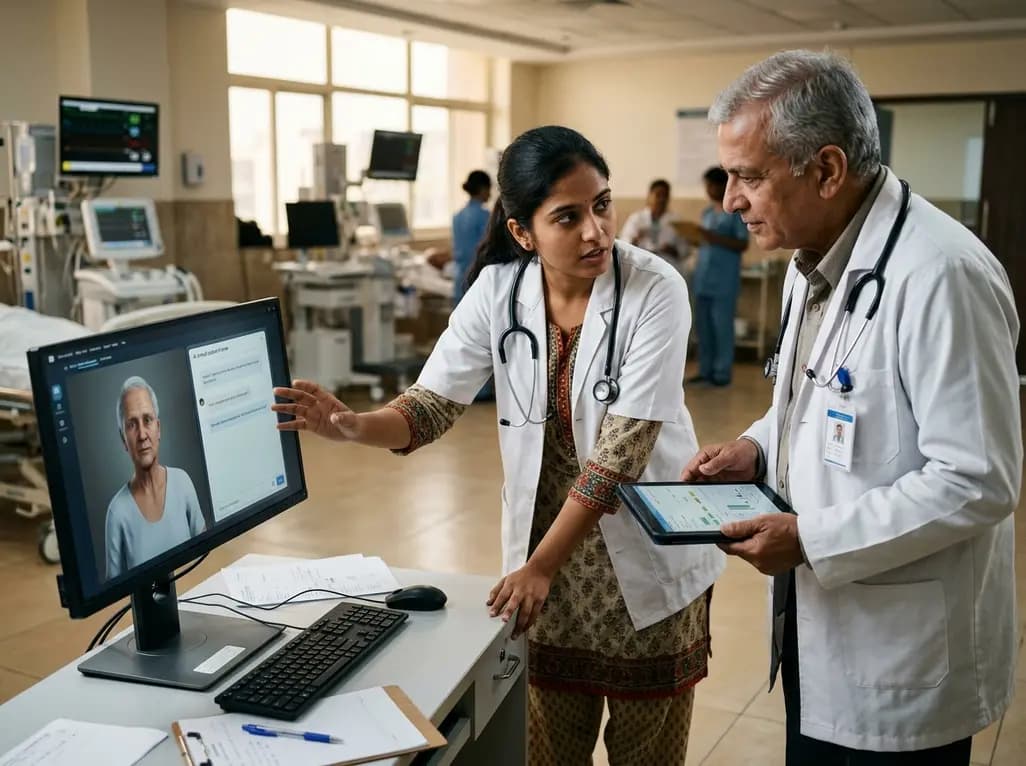
Modern medical education demands reliable and scalable methods to teach diagnostic communication. An advanced AI virtual patient trainer provides an interactive digital environment where students refine complex history-taking skills repeatedly. However, medical educators previously lacked robust criterion-related evidence confirming whether virtual simulation scores translate to standardized clinical examinations. A groundbreaking observational cohort study investigated this vital question. Researchers evaluated second-year medical students who completed mandatory simulated clinical scenarios using the AI-Powered Medical History-Taking Training and Evaluation System, known as AMTES. They subsequently compared preexamination practice metrics with end-of-course Objective Structured Clinical Examination station scores. Consequently, the investigation offers empirical validation that conversational simulation platforms reliably mirror human-rated clinical competence. For Indian medical institutions implementing the National Medical Commission competency-based curriculum, these findings arrive at a pivotal moment. Academic institutions often experience significant constraints regarding standardized patient availability and faculty supervision hours. Therefore, validated artificial intelligence platforms present an effective tool to standardize diagnostic interviewing training across large trainee cohorts.
The observational investigation evaluated 473 medical students who completed required preexamination cases on the AMTES platform before taking their summative examination. Students engaged with six distinct clinical case modules designed to assess targeted symptom exploration, logical flow, and therapeutic communication. Subsequently, each student completed a single history-taking station during their end-of-course clinical examination. A single faculty examiner rated each encounter using an official 100-point rubric. Additionally, this scoring framework allocated 70 points to clinical history gathering and 30 points to interpersonal communication. To ensure rigorous evaluation, the examination featured four distinct clinical diagnoses, including chest pain, dyspnea, rash with fever, and low back pain. Interestingly, three examination stations shared presenting complaints with the virtual trainer modules. In contrast, one station presented an entirely unmatched clinical complaint. Researchers calculated the mean normalized practice score achieved before each student's examination day cut-off. Furthermore, the analysts utilized Spearman rank correlation, multivariable fixed-effects regression models, and repeated cross-validation to assess predictive stability across independent student subsets.
The statistical analysis revealed a strong and statistically significant correlation between preexamination virtual scores and human-rated examination performance. The student cohort achieved an average clinical examination score of 81.5 points. Students who excelled on the digital platform consistently achieved higher marks during their human examiner assessments, demonstrating a Spearman correlation of 0.388. Moreover, fixed-effects regression demonstrated that every one standard deviation increase in platform practice score yielded a 2.83-point gain in final examination performance. Consequently, this substantial positive association persisted across diverse clinical presentations. Notably, the correlation remained evident even in the complaint-unmatched low back pain station, producing a correlation coefficient of 0.370. This remarkable finding indicates that the software cultivates generalized clinical reasoning rather than rote memorization of specific case scripts. In addition, when analysts incorporated the platform metrics into existing models evaluating prior physical examination performance, predictive accuracy increased markedly. Therefore, the combined model expanded the explained variance substantially, confirming the additive prognostic utility of objective digital metrics.
These findings offer compelling strategic insights for undergraduate medical training across India. The National Medical Commission mandates structured skill verification through objective structured clinical assessments under the competency-based medical curriculum. Nevertheless, medical colleges frequently encounter formidable hurdles when recruiting and training standardized human patients for hundreds of undergraduate candidates. An intelligent simulation platform directly addresses this administrative challenge. Because students can practice clinical history gathering independently at any hour, they develop structured diagnostic habits before entering live examination halls. Furthermore, the automated system provides instantaneous formative feedback on missed historical details, patient communication, and question sequencing. Thus, learners can correct diagnostic blind spots before interacting with real patients in outpatient clinics or inpatient wards. Additionally, medical educators can utilize aggregated cohort metrics to identify struggling trainees early in the academic term. Faculty can then deliver targeted, individualized remedial coaching, maximizing teaching efficiency while maintaining rigorous clinical standards across expanding college batches.
Although automated trainers demonstrate substantial promise, academic departments must implement these digital tools thoughtfully. Large language model architectures occasionally generate subtle hallucinations if clinical prompts lack rigorous editorial oversight. Therefore, medical faculty must continuously audit simulated patient cases to verify clinical fidelity and alignment with local disease epidemiology. In India, clinical presentations frequently involve region-specific infectious conditions, nutritional disorders, and culturally distinct communication nuances. Consequently, institutions must tailor virtual patient conversational algorithms to match regional demographic expectations. Furthermore, digital simulation should augment, rather than replace, bedside clinical teaching. Genuine patient interactions teach empathy, non-verbal observation, and physical examination nuances that software cannot replicate. Educators should view conversational trainers as formative stepping stones that build foundational competence and diagnostic confidence. By combining automated digital practice with robust bedside mentorship, medical institutions can prepare well-rounded graduates capable of delivering empathetic, evidence-based patient care.
An AI virtual patient trainer provides an interactive, low-stakes environment where medical students practice diagnostic interviews repeatedly. The conversational system evaluates history-taking completeness, question sequencing, and communication clarity in real time. Consequently, trainees receive immediate formative feedback, highlighting overlooked symptoms or differential diagnoses. This repetitive deliberate practice helps students internalize structured clinical interview habits, refine diagnostic hypotheses, and build measurable confidence before they enter high-stakes examinations or real-world clinical ward rotations.
Yes, robust clinical evidence demonstrates that preexamination practice scores on validated virtual patient systems significantly correlate with actual OSCE performance. In clinical cohort studies, higher simulation scores predicted superior station marks from independent human examiners. Crucially, this positive predictive association remained consistent even when students evaluated clinical complaints that differed from their virtual training cases. This indicates that virtual trainers foster generalized clinical reasoning and structured interviewing competencies rather than simple memorization of specific clinical vignettes.
Indian medical colleges can incorporate AI virtual patient systems into foundation courses and clinical clerkships under the National Medical Commission curriculum. Faculty can deploy automated cases as mandatory self-directed learning modules prior to bedside clinical postings. Furthermore, educators can track automated analytics to identify struggling students early and provide targeted remediation. While virtual systems standardize history-taking instruction across large student cohorts, colleges must combine them with direct bedside patient interactions to ensure comprehensive clinical skill development.
Disclaimer: This content is for informational and educational purposes only. It is not intended to be a substitute for professional medical advice, diagnosis, or treatment. Always seek the advice of your physician or other qualified health provider with any questions you may have regarding a medical condition. Never disregard professional medical advice or delay in seeking it because of something you have read here. Refer to the latest local and national guidelines for clinical practice.
References

Read summarized clinical updates, watch expert medical content, and earn CME certifications right from your smartphone.
Open your smartphone camera to scan and install.





A landmark cohort study evaluates whether practice scores on an AI virtual patient trainer correlate with objective structured clinical examination (OSCE) performance. The results confirm strong predictive validity, offering significant value for medical training institutions across India.
Today
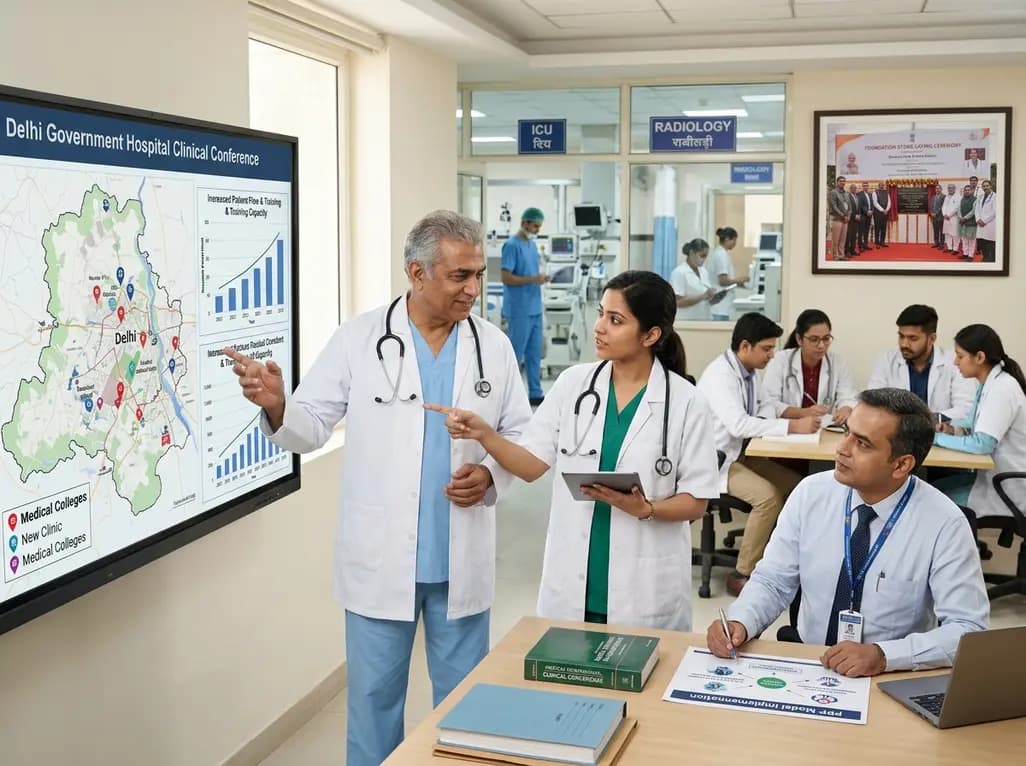
Delhi is undergoing a major healthcare overhaul with enhanced Ayushman Bharat insurance up to ₹10 lakh, increased MBBS and PG medical training seats, expanded primary network mandirs, new tertiary neuro-ICUs, and public-private reproductive technology initiatives to build a resilient, preventative healthcare model.
Today
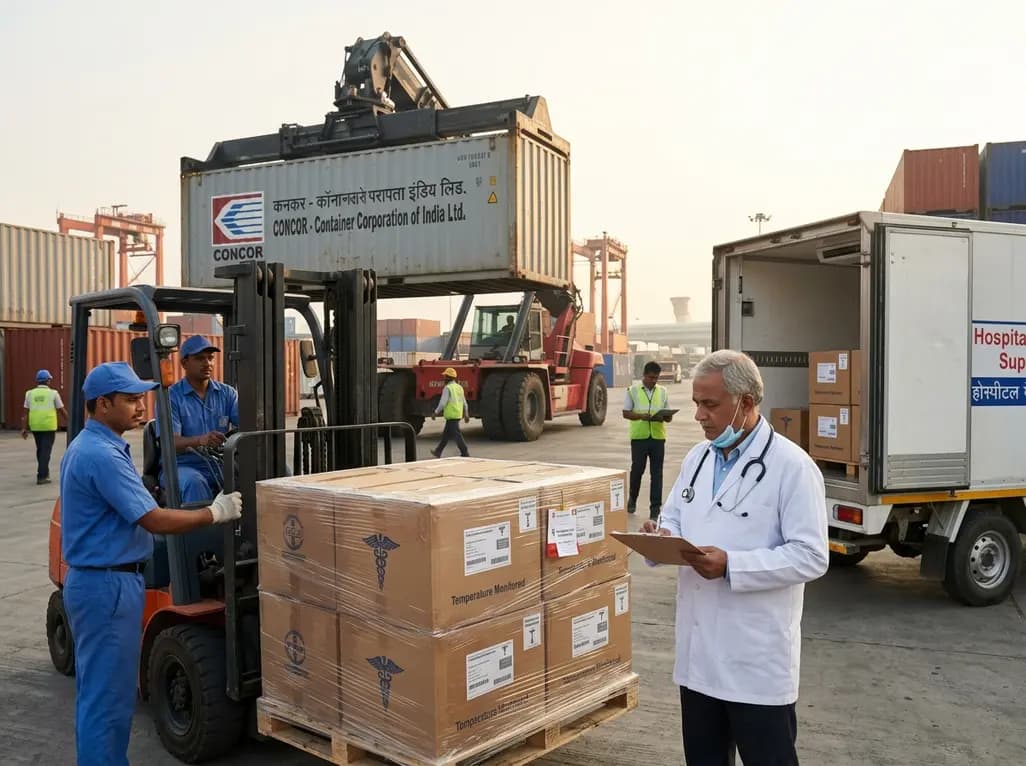
The Union Health Ministry has proposed amending Rule 43A of the Drugs Rules, 1945, to add new Inland Container Depots, a Special Economic Zone, and Noida International Airport as authorised entry hubs. This strategic move aims to decentralise customs clearance, cut transit times, and boost hospital supply security.
Today
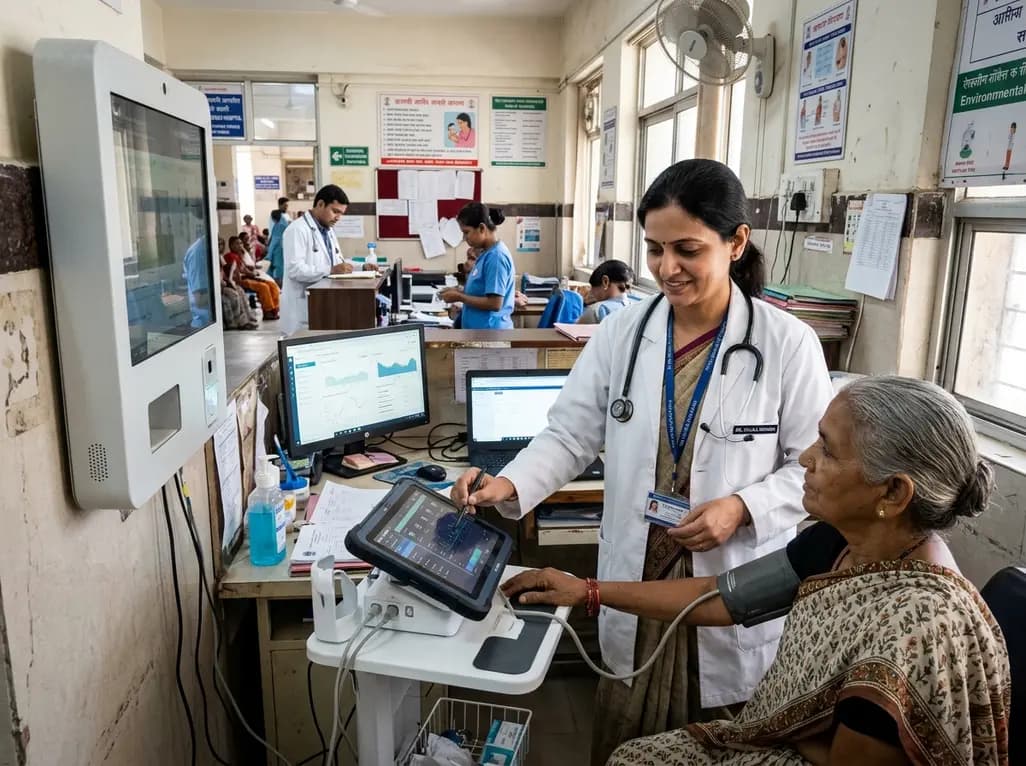
Clinics on Cloud secured $12.5 million in Series A funding to scale connected microclinics, integrate AI-driven screening, and expand point-of-care health infrastructure. This investment accelerates preventive diagnostic access across primary care networks, community hubs, and international markets.
Today
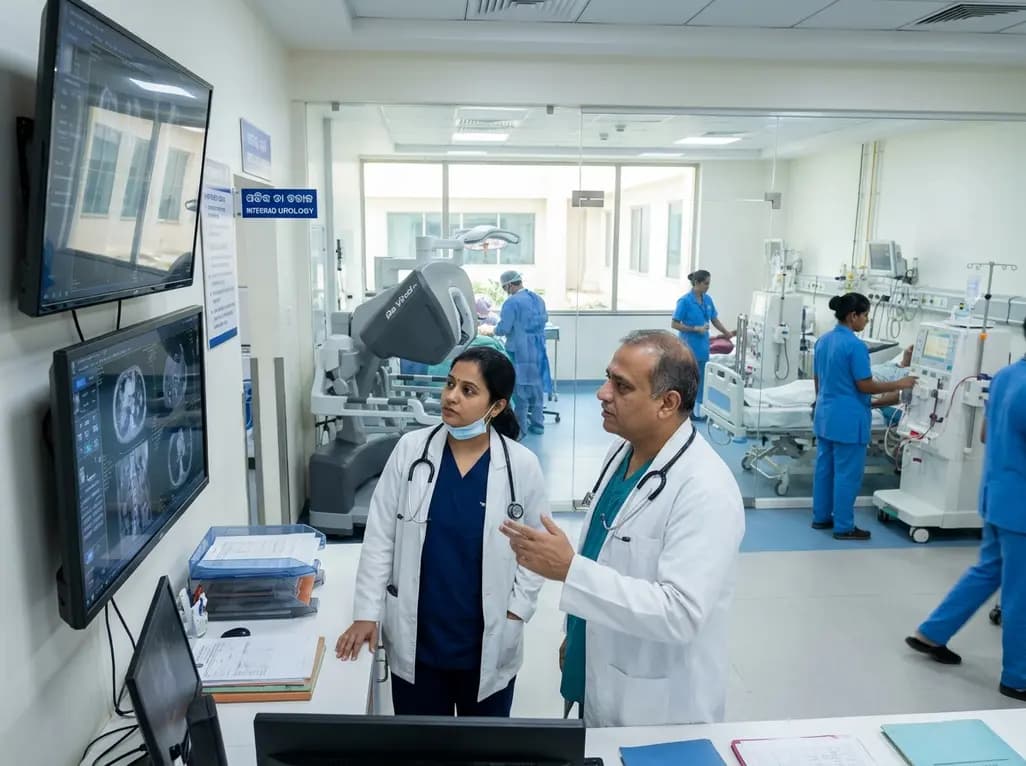
Asia Healthcare Holdings commits ₹100 crore to expand renal and urological services across Odisha, inaugurating a cutting-edge hospital in Bhubaneswar. The facility integrates robotic surgery, advanced lasers, and hemodialysis units to tackle the escalating regional burden of kidney disease.
Today
