.webp&w=384&q=75)

Loading, please wait...
Loading, please wait...
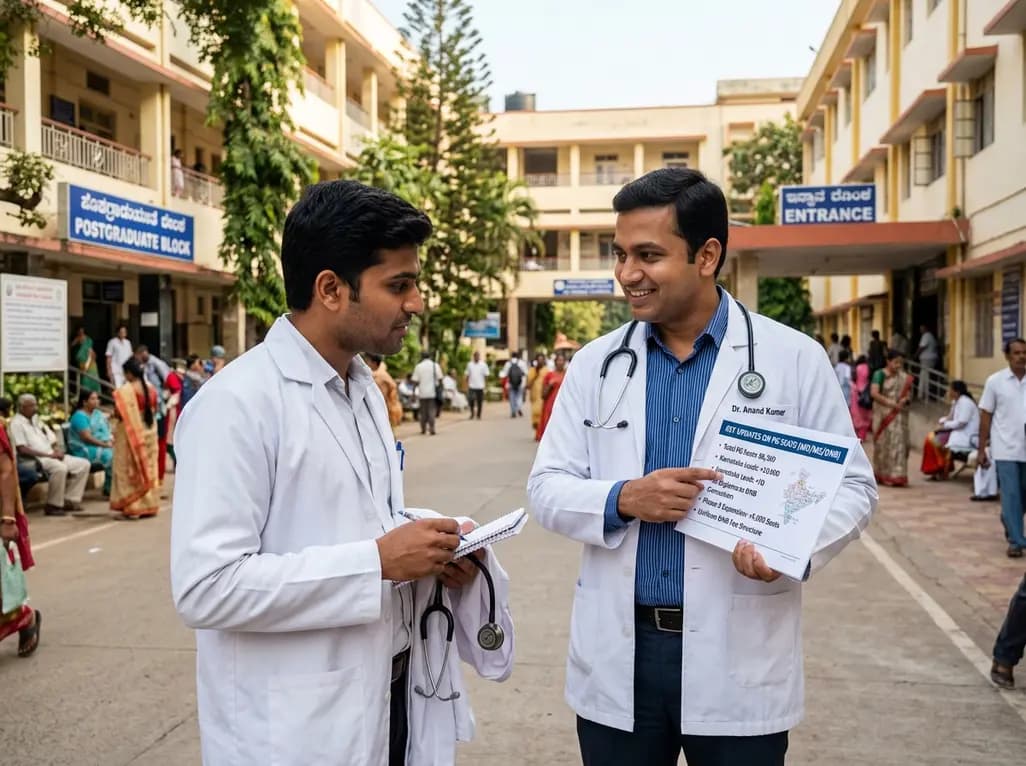
The Ministry of Health and Family Welfare recently provided a comprehensive update regarding PG medical seats across India during a parliamentary session in the Lok Sabha. Consequently, medical educators, resident doctors, and aspirants now have direct official clarity on seat distribution, regulatory frameworks, fee structures, and future expansion plans. Notably, Union Health Minister J P Nadda presented official figures submitted by the National Medical Commission and the National Board of Examinations in Medical Sciences. Overall, these official declarations reflect ongoing structural reforms aimed at systematically expanding specialist medical capacity while maintaining high clinical training standards.
Currently, official government figures confirm that India offers a total of 86,360 PG medical seats across central, state, and private institutions. Furthermore, state-wise data highlights significant variations in post-graduate training capacity across different regions of the country.
Karnataka leads the nation by providing 10,092 PG medical seats, which includes 2,805 seats in government institutions and 7,287 in private medical colleges. Maharashtra follows in second position with 9,216 total seats, comprising 4,277 government seats and 4,939 private seats. Similarly, Tamil Nadu ranks third nationwide with 8,023 available seats, divided between 3,030 government and 4,993 private institution seats.
In addition, Uttar Pradesh maintains 7,437 seats, consisting of 3,568 government seats and 3,869 private seats. Telangana offers 5,248 seats, while Rajasthan provides 5,025 total seats. Meanwhile, Andhra Pradesh accounts for 4,782 seats, and Delhi offers 4,729 seats, with 3,448 located in government institutions.
Consequently, these statistics demonstrate that southern and western states currently account for a high concentration of post-graduate medical training opportunities. However, ongoing national infrastructure expansion aims to systematically balance seat availability across all states and Union Territories. Overall, tracking these state-wise allocations helps policy planners address regional disparities in specialist healthcare delivery. Additionally, these detailed state-wise records enable medical graduates to better evaluate residency admission opportunities during counseling rounds.
During the Lok Sabha session, parliamentary members specifically raised questions regarding whether diploma seats would be converted into full-fledged Diplomate of National Board seats this year. However, Union Health Minister J P Nadda explicitly clarified that no such proposal is currently under consideration by the government.
Specifically, the National Board of Examinations in Medical Sciences confirmed that it has no official plans to automatically convert all diploma seats into full-fledged DNB post-graduate degree seats. Consequently, post-graduate diploma seats will remain separate training pathways under existing statutory guidelines. Therefore, candidates pursuing post-graduate diplomas must follow standard established progression rules if they wish to acquire higher specialist qualifications.
Furthermore, healthcare educators emphasize that post-graduate diploma programs continue to play a crucial clinical role in regional healthcare systems. Indeed, diploma courses offer targeted practical training that equips medical professionals to deliver essential specialty care in community settings. Consequently, maintaining diploma seats alongside degree programs ensures diverse educational opportunities for young doctors.
In addition, the central government emphasizes that structural changes to specialist medical qualifications require extensive feasibility studies and consensus. Therefore, medical institutions and prospective applicants should rely strictly on official policy notifications rather than unverified reports regarding diploma conversions. Consequently, resident doctors should focus on completing their current curriculum while monitoring official NBEMS updates.
The creation and maintenance of PG medical seats rely strictly on established regulatory standards enacted by national health administrative authorities. Specifically, the National Medical Commission oversees seat approvals through the Post Graduate Medical Education Regulations, 2023, alongside the Post Graduate Minimum Standards Requirement, 2024.
Consequently, medical colleges seeking to establish new post-graduate courses or expand existing seat capacity must submit formal applications to the NMC. Subsequently, the Medical Assessment and Rating Board evaluates these institutional proposals through structured evaluation criteria. Specifically, seat approvals depend on fulfilling mandatory requirements regarding qualified teaching faculty, physical infrastructure, adequate clinical material, and daily hospital patient volumes.
Furthermore, these regulations aim to protect medical education quality while systematically expanding post-graduate training capacity nationwide. Therefore, institutions must demonstrate fully functional intensive care units, modern operation theaters, digital library facilities, and advanced diagnostic laboratories. Consequently, the regulatory framework ensures that increased seat numbers directly translate into high-quality clinical learning environments for resident doctors.
In addition, the NMC framework emphasizes standardized competency-based training models across all recognized medical specialties. As a result, post-graduate trainees receive uniform clinical exposure, structured academic mentoring, and fair evaluation standards regardless of institutional location. Therefore, strict adherence to these established minimum standards ensures that patient safety and resident welfare remain paramount.
To address the growing national demand for specialist healthcare providers, the central government has launched structured capacity expansion programs. Notably, the government approved Phase-3 of the Centrally Sponsored Scheme to strengthen existing medical colleges, standalone postgraduate institutes, and government hospitals.
Consequently, this scheme aims to create 5,000 additional PG medical seats between the financial years 2025-26 and 2028-29. Furthermore, the government enhanced the financial support ceiling to Rs 1.50 crore per seat. Therefore, state governments and central institutions receive substantial financial backing to upgrade clinical facilities and academic infrastructure.
Meanwhile, the National Board of Examinations in Medical Sciences has implemented several parallel initiatives to boost specialist training capacity. Specifically, NBEMS eased accreditation criteria for training institutions without compromising teaching standards. Additionally, NBEMS introduced new post-graduate courses and launched a Joint Accreditation Scheme to encourage institutional collaboration.
Furthermore, NBEMS actively encourages district hospitals, public sector undertakings, and Employees' State Insurance Corporation hospitals to seek accreditation. Consequently, these outreach efforts bring high-quality post-graduate clinical training into secondary public healthcare facilities nationwide. Overall, these combined measures significantly enhance candidate accessibility to post-graduate medical education. Indeed, incorporating district healthcare infrastructure into post-graduate education significantly expands rural specialist medical care.
Regarding tuition fees, Union Health Minister J P Nadda clarified that fee fixation for post-graduate medical courses falls primarily within the domain of respective state governments and Union Territories. Consequently, tuition costs for degree courses vary significantly across different states, private institutions, and deemed universities.
In February 2022, the National Medical Commission issued regulatory guidelines to determine fees and other charges for 50 percent of seats in private medical institutions and deemed universities. However, these fee guidelines were subsequently challenged in various courts across India and currently remain sub judice. Consequently, individual states continue to enforce local fee fixation mechanisms pending final judicial resolution.
Conversely, post-graduate tuition fees charged for National Board of Examinations courses are centrally regulated and strictly uniform across the nation. Specifically, annual course fees for DNB, DrNB, Fellowship of National Board, and NBEMS diploma programs are fixed at Rs 1.25 lakh. Therefore, candidates entering NBEMS training programs benefit from predictable, transparent tuition costs regardless of their geographical location.
Furthermore, this central fee cap reduces financial stress for post-graduate trainees serving in accredited public and private hospitals. As a result, standardized fees help make specialist clinical training accessible to deserving medical graduates across all economic backgrounds. Consequently, transparent fee policies enable medical graduates to plan their academic career trajectories without unexpected financial burdens.
Q1: What is the total number of PG medical seats available in India currently?
India currently offers a total of 86,360 post-graduate medical seats across the country. These official figures combine seats approved by both the National Medical Commission and the National Board of Examinations in Medical Sciences. Furthermore, Karnataka leads all states with 10,092 seats, followed by Maharashtra with 9,216 seats. Consequently, the central government plans to create 5,000 additional seats under Phase-3 expansion by 2028-29.
Q2: Is there a proposal to convert all diploma seats into DNB degree seats?
No, the central government officially clarified that there is no proposal under consideration to convert all diploma seats into full-fledged DNB degree seats. Specifically, the National Board of Examinations in Medical Sciences confirmed that diploma programs will continue in their current regulatory format. Therefore, medical diploma seats remain distinct post-graduate training pathways under existing statutory regulations.
Q3: How are post-graduate medical tuition fees regulated across Indian medical colleges?
Fixation of tuition fees for MD and MS courses falls under individual state government jurisdiction, leading to state-wise fee variations. Furthermore, NMC fee guidelines for private medical colleges remain sub judice in court. Conversely, tuition fees for NBEMS courses, including DNB, DrNB, and diploma programs, are centrally regulated and fixed at a uniform annual fee of Rs 1.25 lakh nationwide.
Disclaimer: This content is for informational and educational purposes only. It does not constitute medical advice or replace professional judgment. Refer to the latest local and national guidelines for clinical practice.
References

Read summarized clinical updates, watch expert medical content, and earn CME certifications right from your smartphone.
Open your smartphone camera to scan and install.





The Indian government confirmed total post-graduate medical seats have reached 86,360. Karnataka leads with over 10,000 seats. Officials clarified there is no proposal to convert all diploma seats to DNB degree seats, while announcing 5,000 additional seats under Phase-3 expansion and uniform DNB fee structures.
last month
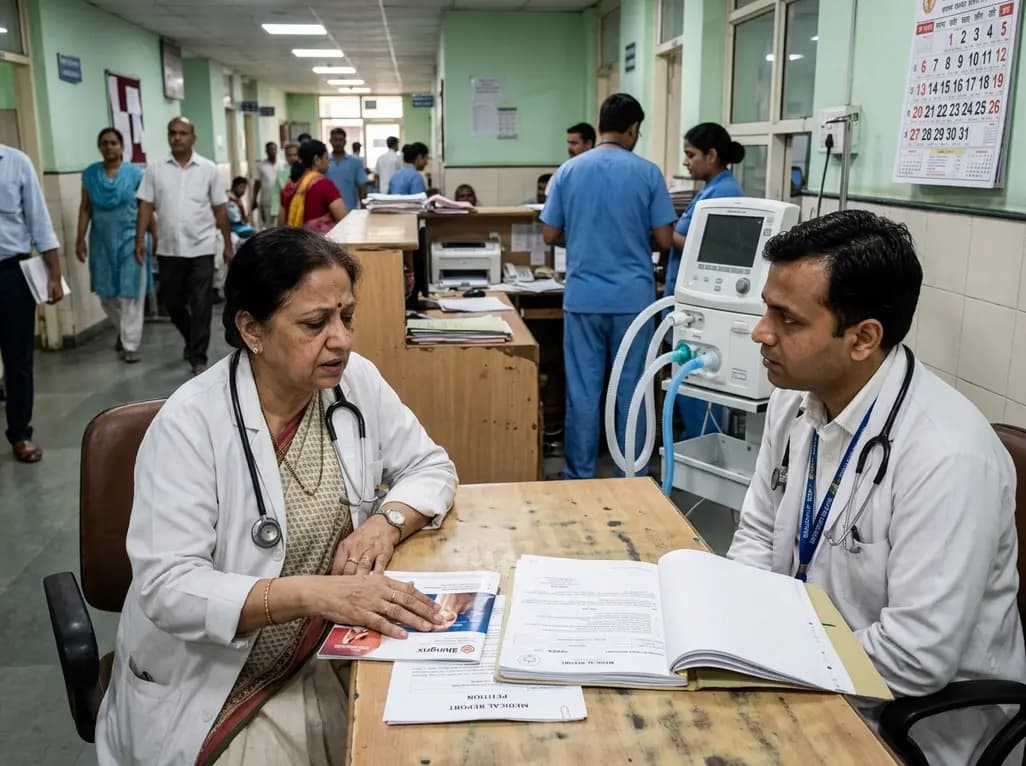
A special Delhi court has directed former DGHS Dr. Vatsala Aggarwal to surrender after refusing her relief plea. Despite clinical submissions citing immunocompromised status, scheduled Shingrix immunization, and adaptive servo-ventilation needs, the court held that jail authorities can manage these medical requirements.
Last week
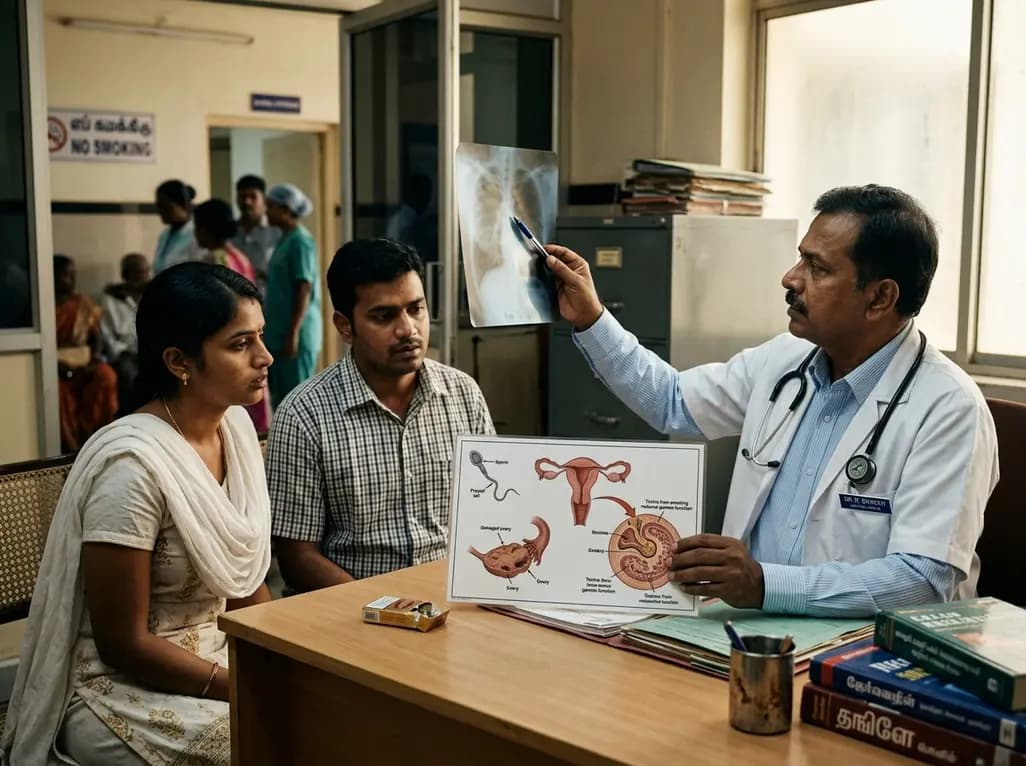
A global knowledge summary from the World Health Organization warns that tobacco smoking significantly increases infertility risks in women and causes substantial sperm and erectile dysfunction in men. Fortunately, quitting smoking substantially lowers these risks, providing clear reproductive benefits.
Last week
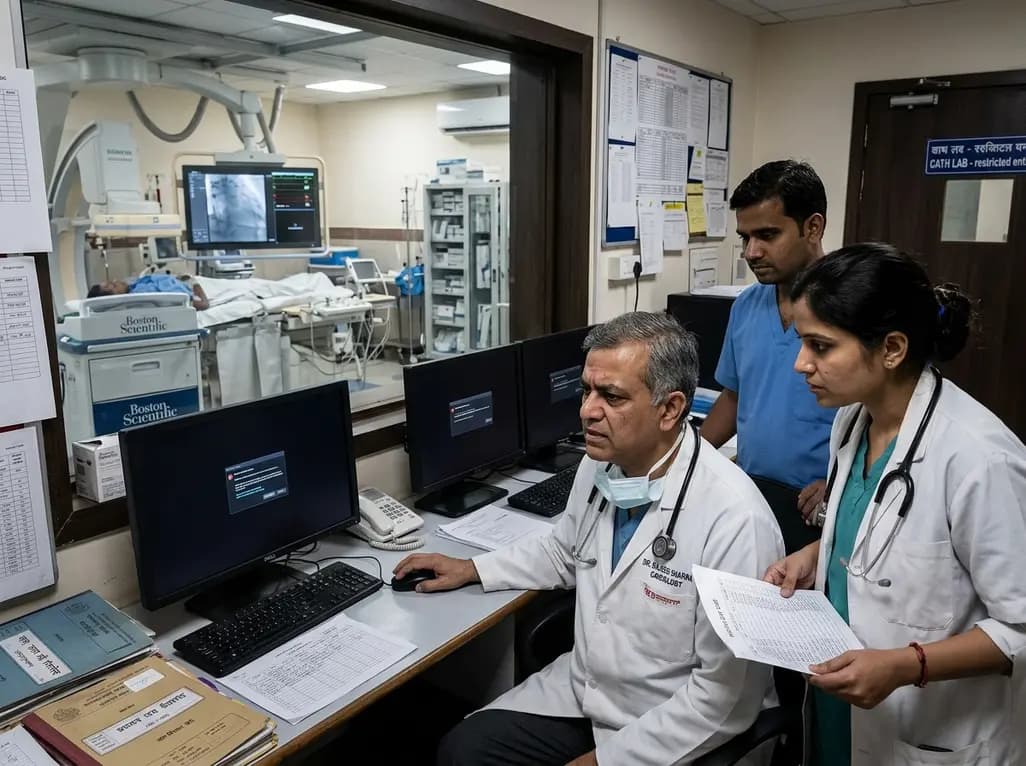
A major cybersecurity breach disrupted global operations at Boston Scientific, delaying device distribution and remote cardiac monitoring activations. This analysis examines the immediate consequences for clinical catheterization suites, electrophysiology teams, hospital inventory systems, and patient care safety.
Last week
Nearly 80% of Indians suffer from inadequate Vitamin D, causing silent bone weakening and sudden fractures. This expert guide reviews why mega-dose therapy is critical for high-risk patients, the key factors driving widespread deficiency, and the mandatory medical evaluations needed to protect skeletal health.
3 months ago

A nationwide mixed-methods study evaluated hospital glycemic management systems across 265 hospitals. While real-time alerts and automatic data sync are highly valued, significant disparities in digital maturity and low satisfaction with decision support highlight the need for standardized implementation.
3 weeks back
