.webp&w=384&q=75)

Loading, please wait...
Loading, please wait...

The National Medical Commission (NMC) has introduced significant clarifications regarding NMC Faculty Eligibility for teaching positions in medical institutions. A Public Notice issued on July 17, 2026, by the Post Graduate Medical Education Board (PGMEB) of the NMC, provides crucial insights into the implementation of the Medical Institutions (Qualifications of Faculty) Regulations, 2025 (MIQFR-2025). This notice effectively streamlines the process for determining faculty eligibility, shifting primary responsibility to individual institutions while outlining specific procedures for complex cases. Therefore, understanding these new guidelines is essential for all current and prospective medical faculty and institutions throughout India.
The MIQFR-2025 regulations, initially issued on June 30, 2025, are comprehensive. They detail the necessary qualifications, teaching experience, research publication requirements, and training for appointment and promotion to various faculty positions. Consequently, these regulations aim to broaden the pool of eligible faculty and address the persistent shortage of qualified medical educators across the country. Moreover, the shift away from routine PGMEB intervention emphasizes institutional autonomy and accountability. Indeed, the NMC seeks to enhance the quality and scalability of medical education, which is crucial for meeting India's growing healthcare demands.
A fundamental change introduced by the NMC's Public Notice dated July 17, 2026, concerns the determination of NMC Faculty Eligibility. Formerly, the Post Graduate Medical Education Board (PGMEB) often issued eligibility certificates or clarifications on a routine basis. However, the new directive clearly states that the responsibility for assessing a candidate's eligibility for appointment, promotion, or designation now primarily rests with the concerned appointing authority. This includes medical institutions, universities, or other competent bodies, adhering strictly to their respective rules and regulations. Consequently, the PGMEB will no longer issue eligibility certificates or clarifications for routine cases where eligibility can be directly ascertained from the provisions of MIQFR-2025 and other applicable regulations. This measure significantly empowers institutions. Furthermore, it necessitates a thorough understanding of the MIQFR-2025 by all stakeholders at the institutional level. Institutions must proactively ensure their faculty appointments comply with the updated norms, thereby reducing reliance on central intervention. Ultimately, this change promotes greater transparency and efficiency in the appointment process. Additionally, it encourages self-governance within medical educational bodies.
The Medical Institutions (Qualifications of Faculty) Regulations, 2025, comprehensively detail the criteria for various faculty positions. For instance, specialists with 2 years of experience in 220-bed government hospitals can now be Assistant Professors, eliminating the mandatory Senior Residency requirement, provided they complete a Basic Course in Biomedical Research within two years. Furthermore, those with 10 years of experience can become Associate Professors. Similarly, the regulations have reinstated a 30% quota for non-medical M.Sc/PhD holders in five non-clinical subjects: Anatomy, Physiology, Biochemistry, Pharmacology, and Microbiology. This expansion of eligibility criteria is designed to address the chronic faculty shortage. Moreover, diploma holders with specific experience pathways are also now eligible for Assistant Professor roles, offering relief to thousands previously restricted. Clearly, these reforms reflect a strategic effort to optimize human resource potential in medical education.
Despite the emphasis on institutional determination, the NMC acknowledges that certain situations may present ambiguous or difficult interpretations regarding NMC Faculty Eligibility. In such exceptional circumstances, references may still be considered by the PGMEB. However, strict conditions apply. First, these references must be forwarded exclusively through the Dean, Director, Principal, or Registrar of the concerned university or appointing authority. Individual submissions are explicitly not entertained. Secondly, the reference must clearly specify which provision(s) of MIQFR-2025 are unclear or difficult to interpret, supported by comprehensive documentation, relevant records, and a detailed justification. Additionally, a non-refundable processing fee of ₹25,000 (plus 18% GST, totaling ₹29,500) is mandatory for each reference, payable by the applicant through the forwarding institution. Consequently, careful adherence to these procedural requirements is vital for any case to be considered. Otherwise, direct submissions from individuals will be rejected, and their fees will not be refunded. This structured approach ensures that only genuinely complex cases reach the PGMEB, preserving its resources for critical interpretations. Therefore, institutions must scrutinize cases thoroughly before forwarding them, ensuring all necessary prerequisites are met. This also ensures greater institutional responsibility in initial assessments. Understand the nuances of medical education reforms.
The Public Notice further delineates a pathway for aggrieved applicants who believe their genuine, ambiguous cases have not been forwarded by their institution. If an institution fails to forward such a case to the NMC within 60 days of submission, the applicant may directly submit a representation to the PGMEB/NMC. However, this direct submission requires several critical documents. It necessitates a duly executed undertaking affirming the correctness of the facts presented, documentary evidence proving the institution's refusal or failure to forward the case, and all complete supporting documents. Moreover, proof of payment of the prescribed processing fee to the concerned competent authorities, along with an additional ₹25,000 plus applicable GST directly to the NMC, is required. The PGMEB/NMC will then examine these cases on their merits, providing interpretation or clarification directly to the applicant, with intimation to the competent authority. This mechanism serves as a crucial safeguard for faculty members. Ultimately, it ensures that legitimate concerns about eligibility are addressed, even if initial institutional processes falter. Consequently, both faculty and institutions must be aware of these pathways. The NMC strives to maintain a fair and transparent system for all stakeholders involved in medical education.
The NMC's updated guidelines also provide a robust mechanism for applicants dissatisfied with their institution's decision regarding NMC Faculty Eligibility. If an institution's determination is deemed unsatisfactory, applicants have the right to refer their case directly to the NMC for review. This recourse is available along with the original application submitted to the competent authority, the letter issued by them, and all supporting documents. Significantly, such a direct referral must be made within 30 days of the institution's decision. Additionally, a fee of ₹25,000 plus applicable GST (presently 18%) is required for this review process. Upon receipt, the PGMEB/NMC will review the case and issue appropriate orders. This provision ensures a fair appellate process. It prevents arbitrary or incorrect institutional decisions from going unchallenged. Consequently, faculty members have a clear path to seek redressal. This bolsters confidence in the overall system. Furthermore, it reinforces the NMC's commitment to equitable evaluation. Therefore, understanding this review pathway is paramount for any faculty member facing an unfavorable eligibility decision. The timeline for submission is critical and must be strictly adhered to. It is important to note that the PGMEB/NMC reserves the right to make the final determination on whether a case is routine or difficult to interpret.
The PGMEB/NMC's role is to examine cases involving genuine regulatory ambiguity or interpretation issues, while summarily rejecting routine eligibility assessments that institutions themselves can resolve using MIQFR-2025. When necessary, the PGMEB/NMC may request further documents from the competent authority for examination. It may also issue a letter of eligibility, convey ineligibility with reasons, or return the case for re-examination at the institutional level if it is not deemed complex. Additionally, the PGMEB/NMC will review cases received directly from applicants, as outlined in the review mechanism described earlier. While efforts will be made to process complex cases and reviews promptly, there is a time limit of 60 days for disposal by the PGMEB/NMC. Until further notice, existing forms available on the NMC website may continue to be used for submissions. The Commission's proactive stance aims to clarify and simplify processes. Thus, the system is designed to be responsive yet principled, ensuring all decisions are well-founded. This systematic approach is vital for maintaining high standards in medical education.
The National Medical Commission's new public notice and the underlying MIQFR-2025 are driven by several key objectives. Primarily, these measures are intended to promote institutional accountability in faculty appointments and promotions. By placing the onus on institutions for routine eligibility determinations, the NMC fosters greater responsibility and adherence to regulations at the local level. Secondly, the initiative aims to reduce the repetitive processing of routine eligibility requests by the PGMEB, thereby minimizing administrative burden. This directly contributes to more efficient operations within the Commission. Consequently, it allows PGMEB to focus on more complex, policy-level matters.
Furthermore, these changes are designed to minimize public grievances, RTI applications, and avoidable litigations related to faculty eligibility. A clearer, more decentralized process should lead to fewer disputes. Effectively, this ensures efficient and optimal utilization of available resources. By clarifying roles and procedures, the NMC also facilitates the timely disposal of genuine cases that require regulatory interpretation. The broader impact of MIQFR-2025 extends to a significant restructuring of medical college faculty eligibility, aiming to address critical faculty shortages across India. For example, it allows non-teaching consultants with relevant experience in 220-bed government hospitals to become faculty, and reintroduces a quota for non-medical M.Sc/PhD faculty in basic sciences. These progressive changes are poised to enhance the capacity and quality of medical education in India, supporting the national goal of expanding medical seats and strengthening institutional capabilities. Ultimately, the collective aim is to ensure a robust and well-qualified medical teaching workforce, which is foundational to producing competent healthcare professionals for the nation.
Disclaimer: This content is for informational and educational purposes only. It is not intended to be a substitute for professional medical advice, diagnosis, or treatment. Always seek the advice of your physician or other qualified health provider with any questions you may have regarding a medical condition. Refer to the latest local and national guidelines for clinical practice.
References

Read summarized clinical updates, watch expert medical content, and earn CME certifications right from your smartphone.
Open your smartphone camera to scan and install.





The National Medical Commission (NMC) has redefined faculty eligibility under MIQFR-2025. This guide clarifies the new procedures for obtaining eligibility certificates, the role of institutions, and avenues for exceptional cases, directly impacting medical educators and institutions across India.
3 months ago

Kenya's confirmation of its eighth Ebola infection highlights the acute risk of secondary transmission in hospital environments. Clinicians must maintain high vigilance, enforce strict infection prevention protocols, and implement rapid triage mechanisms for viral hemorrhagic fevers across healthcare settings.
3 days back
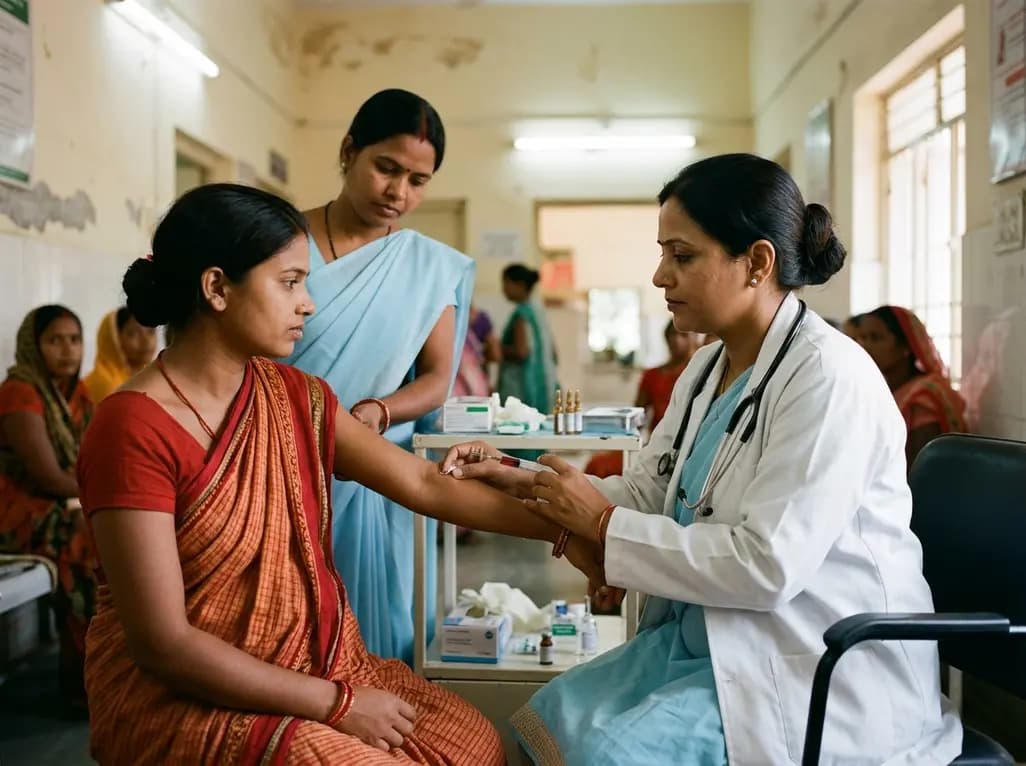
Maternal anaemia contributes to nearly half of pregnancy-related fatalities across India. To prevent complications, Uttar Pradesh has added single-dose parenteral iron to its essential medicines list. This clinical transition aims to restore haemoglobin rapidly and protect high-risk mothers across rural facilities.
Last week

India's food safety authority FSSAI has issued show-cause notices to Gemini Edibles, BigBasket, and Flipkart for unpermitted cardiovascular claims regarding Freedom Rice Bran Oil. This regulatory move highlights the strict enforcement of advertising standards and the clinical necessity of evidence-based lipid care.
5 days back

The state government is deploying helicopter emergency medical services across the Mumbai-Pune Expressway, Samruddhi Mahamarg, and Mumbai-Goa Highway. This initiative establishes unified standard operating procedures to enable rapid triage, advanced prehospital resuscitation, and seamless trauma care transfers.
Last week

Atherosclerotic cardiovascular disease guidelines often rely on European-derived lipoprotein(a) cutoffs. However, baseline Lp(a) levels vary widely across ancestries, including South Asians and Africans. Clinicians must interpret Lp(a) values within overall absolute cardiovascular risk.
Last week
