.webp&w=384&q=75)

Loading, please wait...
Loading, please wait...

The United States is actively advocating for strict Ebola travel restrictions to prevent global transmission. Consequently, Washington has urged European nations to align their border policies ahead of the upcoming FIFA World Cup. This diplomatic push follows a severe outbreak of the Bundibugyo strain of Ebola in Central Africa. Specifically, the outbreak centers primarily in the Democratic Republic of Congo and Uganda. Therefore, the U.S. has already barred non-citizens traveling from these affected regions.
However, European Union officials are resisting these urgent demands. Specifically, the European Commission stated that current exit screenings remain entirely adequate. Furthermore, the European Centre for Disease Prevention and Control assesses the transmission risk to Europe as very low. Thus, major European nations see no immediate need for entry bans. Meanwhile, this transatlantic disagreement highlights deeper friction regarding global public health strategies.
The timing of this outbreak is highly critical because of the FIFA World Cup. Indeed, millions of international fans, athletes, and tourists will soon travel to North America. Consequently, the United States fears that massive global travel could accelerate the viral spread. To mitigate this risk, Canada and Mexico have joined the U.S. in enacting coordinated 90-day travel bans. In contrast, European partners believe that aggressive restrictions may unnecessarily disrupt travel. Therefore, they prefer to rely on standard surveillance and direct aid to affected countries.
Additionally, Washington has pledged over 200 million dollars directly to the containment efforts. They have also delivered massive medical supplies to Central Africa. Nevertheless, American officials insist that global coordination is vital. For instance, failure to align policies could impact transatlantic travel. Thus, healthcare providers worldwide must stay informed about changing immigration and screening requirements.
Q1: Why is the US urging Europe to implement Ebola travel restrictions?
The US is urging European nations to adopt these measures ahead of the FIFA World Cup to minimize the risk of global transmission of the Bundibugyo Ebola strain from affected Central African countries.
Q2: Which African countries are currently affected by this Ebola outbreak?
The outbreak is centered primarily in the Democratic Republic of Congo and Uganda, involving the Bundibugyo strain of the virus.
Q3: What is the European Commission's stance on these proposed travel bans?
The European Commission has declined the US demands, stating that current exit screening in the affected region is sufficient and that the transmission risk to Europe remains very low.
Disclaimer: This content is for informational and educational purposes only. It does not constitute medical advice or replace professional judgment. Refer to the latest local and national guidelines for clinical practice.
References

Read summarized clinical updates, watch expert medical content, and earn CME certifications right from your smartphone.
Open your smartphone camera to scan and install.





The United States is urging European nations to implement strict travel curbs on individuals from Ebola-hit African countries ahead of the 2026 FIFA World Cup. While Washington has barred entry for non-citizens from affected areas, European health officials argue current exit screenings are sufficient.
4 months ago
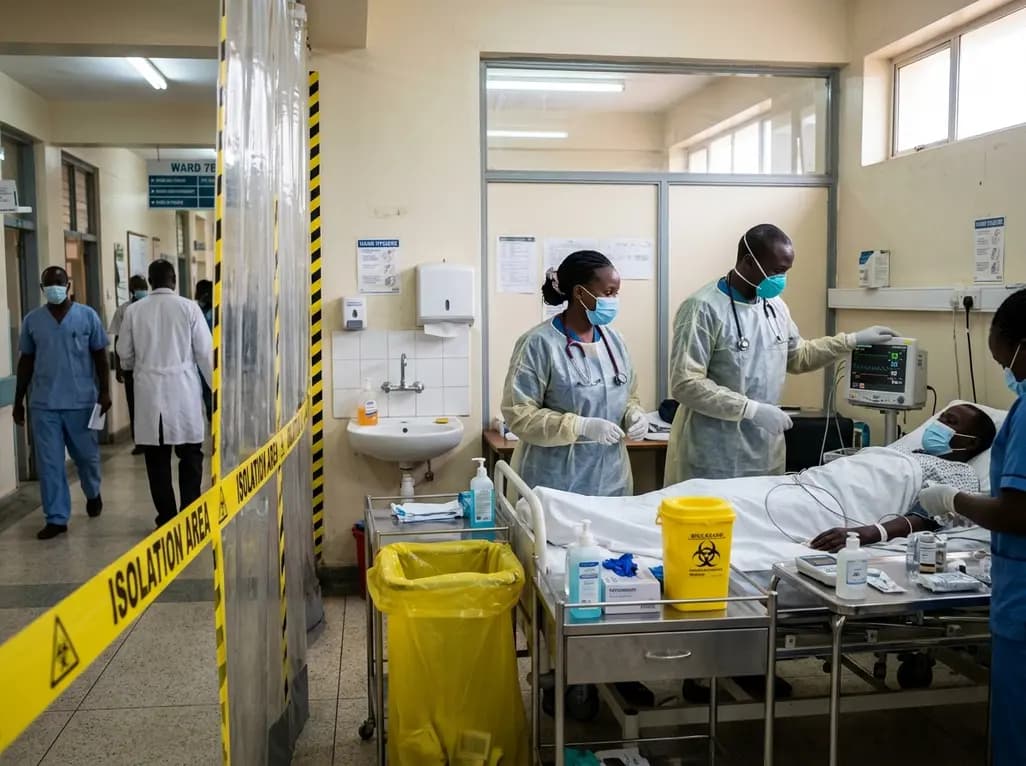
Kenya's confirmation of its eighth Ebola infection highlights the acute risk of secondary transmission in hospital environments. Clinicians must maintain high vigilance, enforce strict infection prevention protocols, and implement rapid triage mechanisms for viral hemorrhagic fevers across healthcare settings.
3 days back

Maternal anaemia contributes to nearly half of pregnancy-related fatalities across India. To prevent complications, Uttar Pradesh has added single-dose parenteral iron to its essential medicines list. This clinical transition aims to restore haemoglobin rapidly and protect high-risk mothers across rural facilities.
Last week

India's food safety authority FSSAI has issued show-cause notices to Gemini Edibles, BigBasket, and Flipkart for unpermitted cardiovascular claims regarding Freedom Rice Bran Oil. This regulatory move highlights the strict enforcement of advertising standards and the clinical necessity of evidence-based lipid care.
5 days back

The state government is deploying helicopter emergency medical services across the Mumbai-Pune Expressway, Samruddhi Mahamarg, and Mumbai-Goa Highway. This initiative establishes unified standard operating procedures to enable rapid triage, advanced prehospital resuscitation, and seamless trauma care transfers.
Last week

Atherosclerotic cardiovascular disease guidelines often rely on European-derived lipoprotein(a) cutoffs. However, baseline Lp(a) levels vary widely across ancestries, including South Asians and Africans. Clinicians must interpret Lp(a) values within overall absolute cardiovascular risk.
Last week
