

Loading, please wait...
Loading, please wait...

The recent negotiations surrounding the WHO Pandemic Agreement highlight an urgent need for an effective PABS system to safeguard global public health. During international health crises, rapid access to physical biological samples and genetic sequence data determines the speed of countermeasure development. However, historical outbreaks have repeatedly exposed deep divides between high-income nations and low- and middle-income countries. Furthermore, wealthier states frequently secured priority supplies of vaccines and therapeutics, while resource-constrained territories faced severe delays. Consequently, regional frameworks and voluntary mechanisms failed to guarantee equitable medical delivery. To prevent similar catastrophes, global health authorities must overhaul international pathogen governance. A resolute response framework must align pathogen access directly with mandatory benefit sharing. In addition, this structural reform directly impacts clinicians and healthcare infrastructures worldwide, ensuring frontline medical workers receive timely diagnostic kits, antiviral agents, and preventive countermeasures before pathogens escalate into uncontrollable pandemics.
The Pathogen Access and Benefit-Sharing framework originated to rectify persistent imbalances in international health security. In past emergencies, developing countries routinely shared biological samples and genetic data through open repositories. However, multinational pharmaceutical manufacturers utilized these critical materials to develop patented countermeasures without reciprocal guarantees for the originating nations. As a result, low-income nations encountered severe shortages while waiting for voluntary donations from high-income jurisdictions. Furthermore, bilateral arrangements and regional consortiums proved largely ineffective during widespread cross-border contagion. These decentralized solutions failed to dismantle monopolistic market barriers or prevent national hoarding. In particular, existing legal systems, such as the Nagoya Protocol, focus on bilateral transactions rather than coordinated emergency responses. Consequently, standard contracts create bureaucratic hurdles that slow scientific exchange during critical early containment windows. Without legally enforceable obligations, the disconnect between biological sharing and product access continues to undermine global solidarity. Therefore, international policymakers must transform the system from a transactional negotiation into a standardized, multilateral operational engine.
Building a functional pathogen-sharing network requires sovereign nations to reconsider traditional governance models. Historically, states have guarded biological resources under national sovereignty doctrines, restricting sample transit until they secure bilateral agreements. However, pathogenic threats do not respect territorial borders or national legal jurisdictions. When sovereign states delay material sharing, global genomic surveillance stalls, compromising international vaccine matching. Therefore, member nations must cede a defined, limited degree of sovereignty to an authoritative central governing entity. This collective delegation empowers an international body to mandate real-time pathogen dissemination during declared public health emergencies. Moreover, central oversight prevents individual governments from enacting unilateral export bans on critical biological isolates or medical tools. Some policymakers argue that sovereignty cession infringes on constitutional independence. Nevertheless, limited multilateral delegation actually safeguards national security by establishing reciprocal access guarantees. In fact, a binding global structure ensures that no sovereign entity gets left behind without essential medical resources. Accordingly, centralized authority provides the legal certainty necessary to coordinate rapid transnational countermeasures.
To implement binding central oversight, global health architects can draw upon proven multilateral precedents. Specifically, the Chemical Weapons Convention offers a robust institutional blueprint for binding international compliance. The convention relies on an empowered executive body capable of enforcing strict technical obligations and conducting rapid inspections. Similarly, the World Health Organization can establish a specialized subsidiary body under the Conference of the Parties. This subsidiary committee would oversee biological compliance, verify laboratory networks, and manage benefit allocations without political paralysis. Furthermore, an executive agency modeled after this disarmament structure creates swift accountability mechanisms for non-compliant actors. If a country or commercial entity withholds biological materials or contracted countermeasures, the governing council can impose standardized multilateral sanctions. Additionally, this institutional design replaces ambiguous diplomatic promises with transparent administrative protocols. Consequently, the operational framework converts voluntary goodwill into enforceable collective action. By emulating established treaties, the international health community gains a tested governance framework capable of containing deadly novel outbreaks.
Traditional global health assemblies often suffer from diplomatic gridlock because consensus-based decision rules delay urgent interventions. Conversely, pure one-nation-one-vote formats or economic wealth-dominated systems create persistent structural inequities. To resolve this governance dilemma, the governing council must institute an objective weighted voting formula. This formula should integrate four fundamental factors: total population, public health vulnerability, technological manufacturing capacity, and financial contributions. For example, incorporating the public health vulnerability index guarantees that under-resourced developing regions retain decisive voting power. Simultaneously, recognizing manufacturing capacity ensures that countries producing vaccines and diagnostic tools remain actively engaged in distribution logistics. Moreover, population weighting reflects true demographic exposure, preventing small wealthy blocs from dominating global medical allocations. Therefore, this calibrated mechanism prevents both financial hegemony and operational paralysis during acute emergencies. As a result, the governing council can authorize rapid resource reallocations through decisive, rules-based majority thresholds. Ultimately, balanced representation fosters durable international trust and compliance.
For physicians and healthcare professionals in India, global pathogen-sharing policies directly dictate everyday clinical capabilities. India possesses immense pharmaceutical manufacturing capabilities, yet domestic clinical centers still depend on rapid access to global reference isolates for diagnostic assay validation. When novel variants emerge overseas, local laboratories require immediate genomic sequences to design accurate multiplex PCR assays. Furthermore, an equitable distribution mechanism ensures that domestic manufacturing hubs produce countermeasures not only for export, but also for regional clinical distribution. Consequently, primary care clinics, critical care units, and infectious disease specialists can access therapeutic antivirals and monoclonal antibodies during early outbreak waves. In addition, transparent benefit sharing protects low-income communities from exorbitant drug prices and artificial supply rationing. Without centralized guarantees, frontline clinicians must manage severe clinical surges without sufficient protective tools or targeted treatments. Thus, operationalizing an enforceable multilateral mechanism translates directly into lower case-fatality rates and protected hospital systems. In conclusion, equitable international pathogen governance serves as a critical clinical asset for frontline healthcare delivery.
The PABS system accelerates domestic preparedness by guaranteeing rapid, unhindered access to international pathogen isolates and genetic sequence data. Consequently, domestic laboratories can rapidly design diagnostic assays, validate predictive genomic models, and formulate targeted therapeutics. Furthermore, by linking pathogen sharing directly to binding benefit obligations, the mechanism guarantees that developing countries receive dedicated allocations of finished vaccines and antiviral medications, preventing catastrophic supply deprivations during escalating global health emergencies.
Pathogenic microorganisms spread across national boundaries without regard for jurisdictional sovereignty or diplomatic borders. Historically, absolute territorial sovereignty allowed individual states to withhold pathogen samples or hoard lifesaving medical countermeasures for domestic use. Therefore, ceding limited sovereignty to a centralized multilateral body creates enforceable rules for real-time biological sharing. This collective governance model eliminates bilateral bargaining delays, restricts unilateral export embargoes, and guarantees that global medical resources reach vulnerable populations rapidly during acute emergencies.
Consensus-based decision systems often paralyze emergency responses because single nations can veto collective actions during critical containment windows. In contrast, a weighted voting formula establishes an equitable mathematical framework based on population, health vulnerability, manufacturing capacity, and financial contributions. Consequently, this voting design prevents wealthy nations from monopolizing decision authority while ensuring practical operational feasibility. Ultimately, weighted voting enables executive committees to enact rapid, binding resource reallocations without succumbing to protracted diplomatic stalemates.
Disclaimer: This content is for informational and educational purposes only. It is not intended to substitute for professional medical advice, diagnosis, or treatment. Always seek the advice of your physician or another qualified healthcare provider with any questions you may have regarding a medical condition or treatment options. Never disregard professional medical advice or delay in seeking it because of something you have read here. Refer to the latest local and national guidelines for clinical practice.
References

Read summarized clinical updates, watch expert medical content, and earn CME certifications right from your smartphone.
Open your smartphone camera to scan and install.





The Pathogen Access and Benefit-Sharing (PABS) system under the WHO Pandemic Agreement addresses deep global inequities. By ceding limited sovereignty to an executive body using weighted voting, the framework ensures rapid biological sample sharing and equitable access to lifesaving countermeasures for LMICs.
Today
A retrospective benchmarking study of 46 LLMs reveals that open-weights models like Llama 3.3 70B match commercial models in labeling clinical notes for comorbidities, achieving F-scores above 70% while enabling secure, on-premise healthcare deployment.
Today
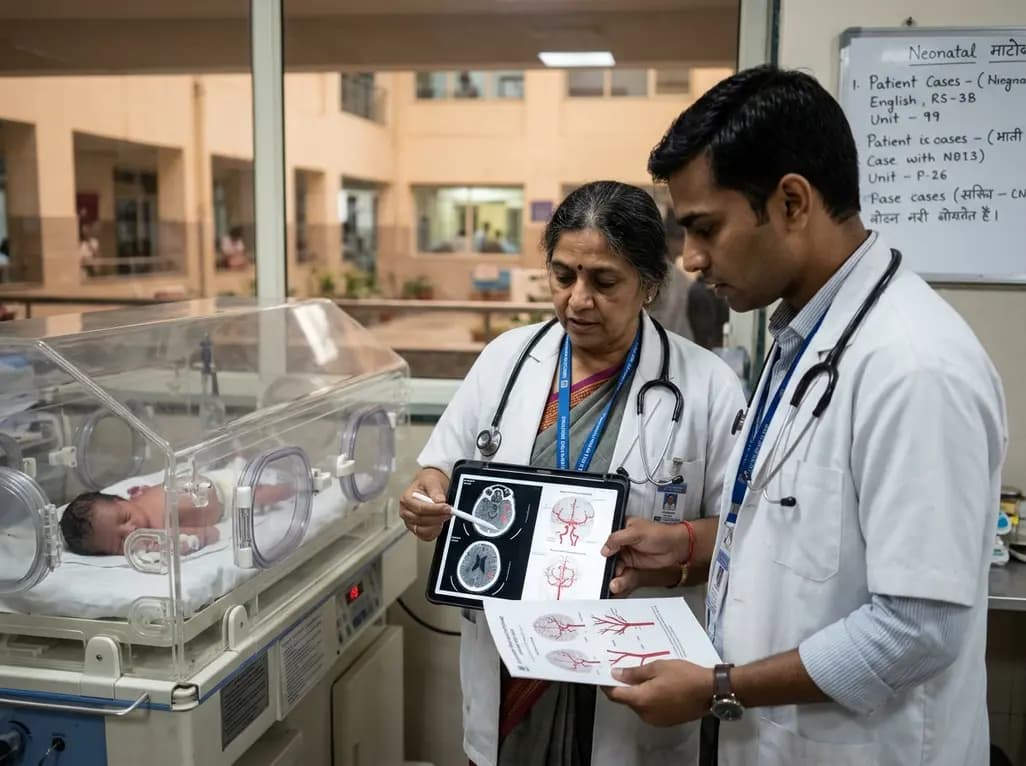
Prenatal exposure to preeclampsia programs permanent cerebrovascular deficits in adult offspring. Males exhibit smaller leptomeningeal anastomoses, impaired collateral flow, and increased stroke infarct volumes via altered VEGF-Notch signaling, while females demonstrate intrinsic neuroprotection.
Today
Isolated persistent left superior vena cava is an exceedingly rare congenital venous anomaly. Understanding its embryology, diagnostic evaluation, and procedural risks ensures accurate clinical decision-making.
Today

A comprehensive network meta-analysis evaluated six bDMARD classes for halting radiographic progression in rheumatoid arthritis. B-cell depletors and IL-23 inhibitors showed notable structural benefits over TNF-alpha inhibitors, providing essential insights for long-term joint preservation and clinical practice.
Today

A systematic review evaluates psychological interventions for smoking cessation in diabetes, showing short-term success but highlighting challenges in long-term abstinence.
Today
