.webp&w=384&q=75)

Loading, please wait...
Loading, please wait...
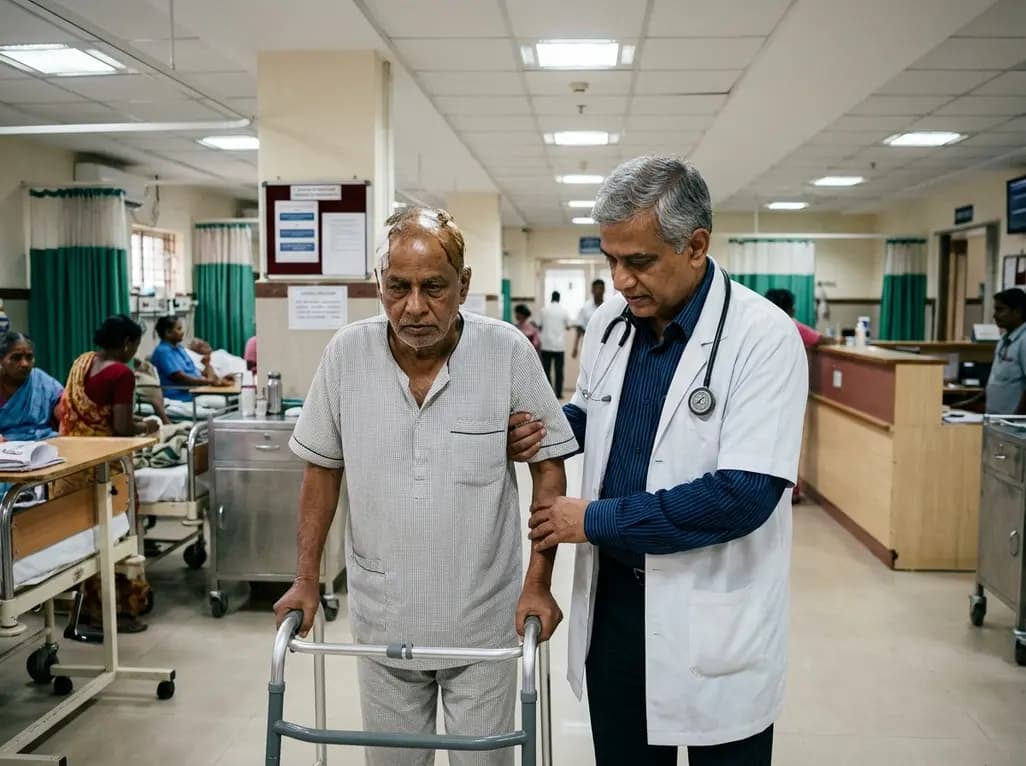
Glioblastoma remains among the most aggressive primary central nervous system malignancies in adult oncology. Clinicians routinely depend on age, surgical resection margins, and baseline functional scores to estimate clinical trajectory. Specifically, the Karnofsky Performance Status provides standard clinical stratification during primary management. However, broad scales often fail to capture subtle physical declines or focal motor limitations that influence clinical outcomes. A pivotal study recently investigated the prognostic value of walking ability in glioblastoma across six critical peri-treatment intervals. The findings demonstrate that patient ambulation at hospital discharge provides substantial prognostic information regarding overall survival. Furthermore, this simple bedside assessment outperforms traditional performance metrics when predicting long-term survival outcomes. Incorporating functional gait assessment allows oncologists and neurosurgeons to identify vulnerable patients early in the survivorship continuum.
Global performance metrics like the Karnofsky Performance Status and Eastern Cooperative Oncology Group score heavily influence therapeutic decision-making in neuro-oncology. Although these classical tools provide valuable prognostic insight, they frequently bundle disparate physical capabilities into subjective composite ratings. Consequently, two patients with identical performance scores may display markedly different degrees of gait impairment. Locomotion requires complex neural coordination involving motor planning, vestibular balance, cerebellar integration, and musculoskeletal strength. Therefore, focal brain tumors or perioperative neural injuries often compromise ambulation before causing global physical collapse.
To address these assessment limitations, investigators have turned to validated physical therapy tools. The Functional Ambulation Category represents an efficient six-point ordinal scale that categorizes walking independence based on needed physical assistance. Patients classified at level 0 cannot walk or require manual assistance from two individuals. Conversely, patients achieving level 5 achieve complete ambulation independence on uneven surfaces and stairs. Because clinicians can perform this test within minutes at the bedside, it imposes no administrative burden on busy inpatient wards. Thus, the category offers an objective, reproducible metric for evaluating targeted motor recovery throughout aggressive oncologic treatments.
The landmark investigation evaluated a cohort of 185 adult patients with newly diagnosed glioblastoma treated between 2011 and 2020. Researchers tracked ambulation metrics across six distinct peri-treatment assessment time points. These clinical intervals comprised preoperative baseline, postoperative day five, the start of chemoradiotherapy, hospital discharge, and follow-up visits at one and four months. At each milestone, physical therapists and clinical teams rigorously scored walking capability alongside standard performance metrics.
By analyzing longitudinal trajectories, the researchers sought to identify which specific clinical interval provided the highest prognostic utility for overall survival. Patients underwent multimodal therapy consisting of maximal safe surgical resection followed by radiotherapy with concurrent temozolomide. The median overall survival was analyzed against ambulation categories grouped into non-functional ambulation, dependent walking, and independent gait. Importantly, the researchers selected hospital discharge as the primary landmark analysis point. This milestone represents a key physiological transition where acute surgical recovery concludes and outpatient oncologic management begins. Ultimately, 162 patients reached this landmark analysis milestone with complete clinical follow-up data, enabling robust multi-variable modeling.
The study results revealed that higher ambulation scores correlated significantly with prolonged overall survival across all six peri-treatment assessment points. However, the strongest univariable association with survival occurred specifically at hospital discharge. Patients exhibiting independent ambulation at discharge achieved substantially longer survival times compared to those requiring continuous physical assistance.
In the multivariable landmark model adjusting for age, sex, extent of tumor resection, and discharge performance status, ambulation remained independently predictive. Specifically, patients with dependent walking ability demonstrated a 55 percent reduction in mortality risk compared to non-ambulatory individuals. Furthermore, patients achieving complete walking independence demonstrated a 67 percent reduction in mortality risk relative to the non-ambulatory cohort. Subsequent sensitivity analyses confirmed that these prognostic associations remained virtually unchanged after adjusting for post-discharge temozolomide cycles and bevacizumab administration. These compelling hazard ratios highlight that ambulatory status reflects unique prognostic biology. Consequently, discharge mobility assessments provide vital prognostic intelligence that conventional baseline parameters cannot provide alone.
Clinicians have long considered performance status as the definitive bedside prognostic marker in malignant brain tumors. Nevertheless, this retrospective analysis proved that adding gait categories significantly improved statistical model fit and discriminative power. Specifically, incorporating ambulation data reduced the Akaike information criterion by 8.4 points, demonstrating a markedly superior model fit. Concurrently, Harrell's concordance index increased by 0.022, reaching statistical significance with a p-value of 0.002.
These mathematical improvements confirm that ambulation status captures unique clinical variance overlooked by standard performance scales. Global scales often inflate functional scores if a patient remains communicative and continent despite severe gait instability. In contrast, gait evaluation captures uncompensated corticospinal disruption, subclinical hydrocephalus, and subtle neuromuscular decline. Because independent ambulation reflects intact multi-system physiological resilience, it accurately differentiates patients likely to thrive during post-discharge maintenance therapy. Therefore, relying exclusively on global scores creates blind spots in routine neuro-oncology risk stratification.
Multiple physiological pathways explain why ambulatory competence serves as a potent surrogate for glioblastoma survival. First, walking requires extensive cerebral networking across the primary motor cortex, supplemental motor areas, basal ganglia, and cerebellum. Extensive peritumoral edema, deep white matter invasion, or high tumor burdens frequently compromise these vulnerable locomotion networks. Therefore, poor ambulation often signifies aggressive infiltrative disease that resists surgical cytoreduction and localized radiation.
Second, ambulatory patients avoid the severe catabolic cascades associated with prolonged bed rest and immobility. Immobility accelerates skeletal muscle sarcopenia, impairs systemic immune surveillance, and drastically elevates the risk of venous thromboembolism. Because deep vein thrombosis and pulmonary embolism cause substantial non-cancer mortality in glioblastoma, maintaining mobility confers direct protective advantages. Additionally, mobile patients demonstrate greater metabolic tolerance for sustained cytotoxic chemotherapy, suffering fewer dose reductions or treatment delays. Thus, preserved ambulation protects systemic physiology, reinforcing resilience against tumor progression and treatment-related toxicity.
Incorporating standardized ambulation testing into neurosurgical and neuro-oncological workflows offers significant practical benefits without increasing institutional costs. Multidisciplinary care teams can rapidly evaluate patient mobility before discharge using standardized physical therapy categories. When teams identify patients with impaired ambulation at discharge, they can immediately prioritize aggressive post-acute inpatient or home-based rehabilitation. Tailored physical therapy interventions aim to restore motor autonomy and prevent rapid functional deterioration.
Furthermore, ambulation status provides valuable guidance when counseling families and planning follow-up oncology consultations. Identifying high-risk individuals with severe mobility deficits allows oncologists to adjust supportive care proactively. For example, clinicians can intensify physical therapy, initiate early palliative care engagement, and implement rigorous venous thromboembolism prophylaxis. Rather than serving as a stand-alone predictive tool, discharge ambulation functions as a practical risk-stratification biomarker. By routinely measuring bedside mobility, neuro-oncology teams can deliver personalized, proactive supportive interventions that optimize patient quality of life and clinical management.
The Karnofsky Performance Status offers a broad estimate of overall functional independence and medical assistance requirements. In contrast, the Functional Ambulation Category specifically evaluates gait independence and physical assistance required during locomotion. Consequently, this targeted ambulation tool detects subtle motor deficits that broader performance scales often overlook during clinical oncology evaluations.
Hospital discharge represents a crucial clinical turning point following primary surgery and chemoradiotherapy initiation. At this stage, acute postoperative edema and surgical disruptions have largely stabilized. Therefore, functional mobility at discharge reflects true neurological recovery, patient physiological reserve, and readiness to tolerate aggressive adjuvant oncology maintenance regimens without severe treatment interruptions.
Current evidence does not yet prove that gait rehabilitation independently extends biological overall survival in malignant glioma. However, structured physical therapy maintains functional ambulation, prevents debilitating deconditioning, and reduces secondary immobility complications. By sustaining functional independence, targeted rehabilitation enables patients to successfully complete planned adjuvant chemoradiation courses, which improves long-term clinical outcomes.
Disclaimer: This content is for informational and educational purposes only and does not constitute medical advice, diagnosis, or treatment regimens. Healthcare professionals must exercise independent clinical judgment. Refer to the latest local and national guidelines for clinical practice.
References

Read summarized clinical updates, watch expert medical content, and earn CME certifications right from your smartphone.
Open your smartphone camera to scan and install.





A landmark study reveals that bedside walking ability assessed by the Functional Ambulation Category (FAC) at hospital discharge provides independent prognostic value for overall survival in glioblastoma, significantly refining traditional Karnofsky Performance Status predictions.
last month
A retrospective cohort study reveals that frailty quadruples the odds of pressure injuries in hospitalized older adults. Integrating the Clinical Frailty Scale with comprehensive geriatric care is crucial for identifying vulnerability early and implementing targeted multidisciplinary prevention.
Today

Occult maternal malignancy accounts for 3.82% of persistent unreportable NIPT results with genomic noise. Multiple chromosomal aberrations, notably on chromosome 18, warrant thorough oncological evaluation and whole-body MRI to ensure timely maternal diagnosis while preserving fetal care.
Today

This article reviews the forensic and clinical complexities of acute myocarditis arising on left ventricular hypertrophy in children, highlighting early diagnostic red flags and multidisciplinary postmortem autopsy protocols.
Today

A randomized controlled trial demonstrates that an eight-week dual-task training intervention significantly improves static and dynamic postural control over standard balance exercises in individuals with chronic ankle instability, addressing critical neurocognitive deficits during athletic and daily activities.
Today

A retrospective cohort study of 7,716 ICU patients from the MIMIC-IV database demonstrates that Gradient Boosting Decision Trees significantly outperform traditional SOFA scores in predicting in-hospital mortality among patients with sepsis and diabetes, with SHAP analysis providing clinical interpretability.
Today
