.webp&w=384&q=75)

Loading, please wait...
Loading, please wait...
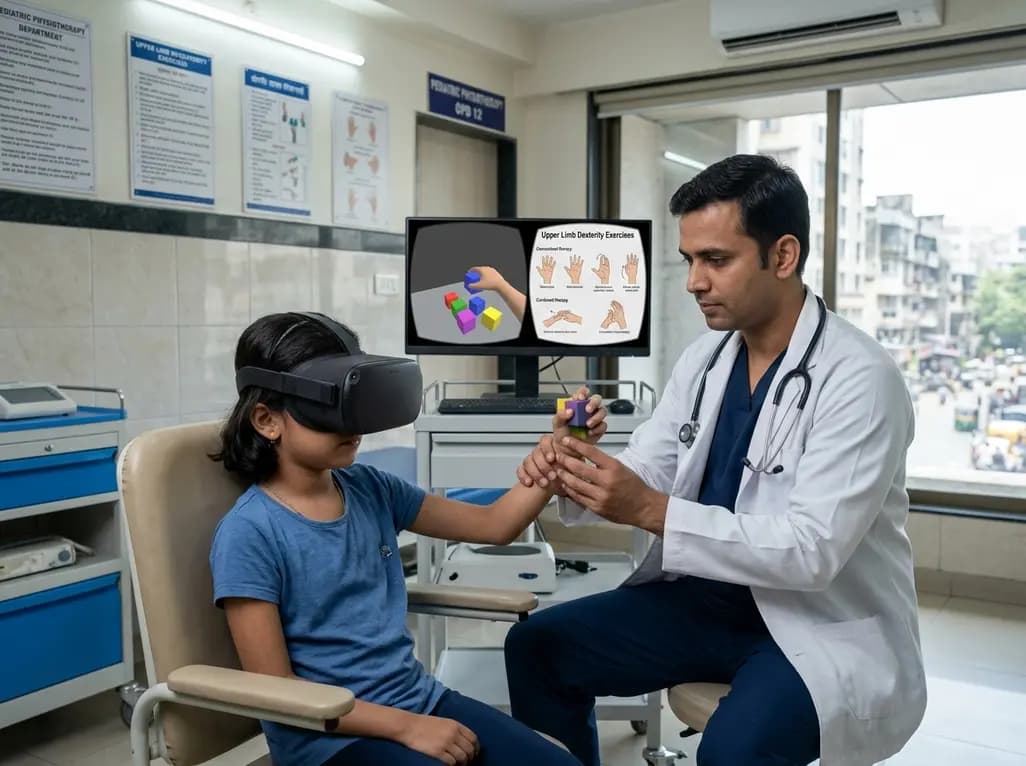
Hemiplegic cerebral palsy represents one of the most common presentations of pediatric motor impairment, significantly affecting unilateral arm and hand movement. Clinicians continuously seek innovative modalities to augment traditional physical and occupational therapy. Recently, researchers have increasingly investigated virtual reality in cerebral palsy rehabilitation to determine whether interactive digital environments improve upper-extremity motor skills. Virtual systems offer immersive, task-oriented exercises and visual feedback, which theoretically stimulate neuroplasticity. However, clinical trials evaluating these digital adjuncts have historically yielded mixed findings due to heterogeneous cohorts and diverse outcome measures. A newly published systematic review and meta-analysis synthesizes randomized controlled trials to evaluate whether combining virtual reality with conventional therapy produces superior functional gains compared with standard therapy alone. The study specifically analyzes children aged 12 years and younger diagnosed with unilateral spastic cerebral palsy. By rigorously evaluating functional activity, dexterity, motor control, activities of daily living, and grip strength, this analysis provides crucial clarity for pediatric specialists, neurologists, and allied rehabilitation teams worldwide.
Digital health technologies have emerged rapidly across pediatric neurorehabilitation centers. Consequently, therapists frequently incorporate commercial gaming consoles and custom virtual reality systems into routine clinical sessions. These interactive platforms motivate children through gamified motor tasks, encouraging repetitive reach, grasp, and manipulation practice. In hemiplegic presentations, children often develop learned non-use of the impaired upper limb. Therefore, immersive visual feedback and real-time movement tracking may theoretically drive central neuroplastic adaptations. Nevertheless, pediatric clinicians require robust evidence before investing institutional resources or modifying validated rehabilitation pathways. Previous systematic reviews frequently combined diverse cerebral palsy subtypes, varying age groups, and disparate comparator treatments. Such broad inclusion criteria obscured domain-specific benefits for unilateral motor deficits. To address these methodological gaps, investigators conducted a focused systematic review registered prospectively with PROSPERO. The authors systematically searched major biomedical databases, including PubMed, Embase, Web of Science, and the Cochrane Central Register of Controlled Trials through April 2026. They specifically isolated randomized controlled trials comparing combined therapy against conventional physiotherapy or occupational therapy alone.
The systematic review pooled data from thirteen randomized controlled trials involving 458 pediatric participants with hemiplegic cerebral palsy. Investigators categorized outcomes into five distinct clinical domains to assess upper-limb capacity comprehensively. These core domains encompassed upper-limb activity, manual dexterity, motor control and movement quality, activities of daily living, and grip strength. When researchers applied random-effects meta-analyses with Hartung-Knapp-Sidik-Jonkman adjustments, the pooled effect estimates generally favored the combination of virtual reality and conventional therapy. Specifically, the standardized mean difference for upper-limb activity was 0.28, while manual dexterity demonstrated a standardized mean difference of 0.26. Similarly, motor control and movement quality yielded a standardized mean difference of 0.29, and activities of daily living showed a modest effect size of 0.17. Additionally, grip strength demonstrated a mean difference of 0.89 kilograms. However, none of these observed differences achieved statistical significance. The 95% confidence intervals for every functional domain crossed the null value. Thus, while the numerical trends favored the digital adjunct, the data did not demonstrate a clear therapeutic advantage over conventional therapy alone.
Beyond standard pooled effect estimates, investigators calculated Nagashima-corrected prediction intervals to estimate treatment effects in future clinical settings. Notably, the prediction intervals for all five outcome categories crossed the null value. For example, the prediction interval for upper-limb activity ranged widely from -0.51 to 1.04. Similarly, the prediction interval for grip strength spanned between -4.89 and 6.45 kilograms. These wide intervals indicate that treatment outcomes may vary substantially across different clinical environments and patient subsets. Furthermore, between-study heterogeneity remained low to moderate for dexterity, movement quality, and daily activities, but proved substantial for grip strength. Methodological evaluations using the revised Cochrane risk-of-bias 2 tool revealed notable concerns across most included trials. Common limitations included small sample sizes, lack of therapist or participant blinding, and variable treatment compliance. Consequently, when applying the Grading of Recommendations Assessment, Development, and Evaluation framework, researchers rated the certainty of evidence as low for activity, dexterity, motor quality, and daily living. Grip strength received a very low certainty rating due to marked imprecision and heterogeneity.
These findings offer practical, grounded guidance for pediatric neurologists, physiatrists, and occupational therapists managing unilateral cerebral palsy. While commercial marketing often portrays digital gamification as a revolutionary breakthrough, empirical data demonstrate that virtual reality cannot replace dedicated, therapist-guided motor training. Conventional occupational and physical therapy remain the indispensable cornerstone of motor skill acquisition. Therapists provide hands-on facilitation, biomechanical alignment, tactile cues, and personalized adaptations that digital avatars cannot replicate. However, clinicians should not completely dismiss virtual platforms. Virtual reality can serve as an engaging adjunct that enhances patient motivation, session adherence, and enjoyable home practice. In pediatric rehabilitation, maintaining high engagement during repetitive motor exercises is notoriously difficult. Interactive games can transform tedious movement drills into exciting challenges. Therefore, practitioners may thoughtfully integrate virtual games alongside traditional therapy, provided families understand that digital tools supplement rather than substitute core clinical interventions. Clinicians must balance enthusiasm for novel technology with realistic expectations regarding therapeutic outcomes.
To resolve remaining clinical uncertainties, future neurorehabilitation trials must adopt more rigorous methodological standards. Currently, available studies feature significant variability in hardware specifications, immersive depth, software algorithms, and exercise dosing. Some protocols utilize off-the-shelf gaming consoles with basic motion sensing, whereas others deploy specialized, high-immersion headsets or sensorized robotic gloves. Consequently, pooling disparate technologies introduces unavoidable clinical heterogeneity. Future investigations must clearly document specific virtual reality parameters, including total intervention hours, session frequency, and task specificity. Furthermore, researchers should explore whether specific developmental windows or baseline functional classifications predict greater responsiveness to digital interventions. Adequately powered multicenter randomized controlled trials with blinded outcome assessors are essential to establish definitive efficacy. Long-term follow-up assessments are equally vital to determine whether functional gains endure after children stop active gaming protocols. Until such robust evidence emerges, multidisciplinary teams must prioritize evidence-based conventional therapies while judiciously employing virtual reality as an adjunct for pediatric motivation and engagement.
The meta-analysis evaluated thirteen randomized controlled trials involving 458 children with hemiplegic cerebral palsy. Although pooled estimates numerically favored virtual reality combined with conventional therapy across upper-limb activity, dexterity, motor quality, daily activities, and grip strength, none reached statistical significance. All confidence and prediction intervals crossed the null value, demonstrating that adding virtual reality does not provide definitive additional functional benefit over conventional therapy alone.
No, current clinical evidence does not support replacing therapist-led conventional rehabilitation with virtual reality systems. Hands-on physical and occupational therapies provide essential tactile feedback, biomechanical correction, and individualized task training that digital games cannot provide. Virtual reality serves best as an engaging supplementary tool to increase exercise motivation, treatment adherence, and active movement repetition alongside standard therapeutic protocols.
The certainty of evidence was graded as low to very low using the GRADE framework due to methodological limitations across trials. Most included studies featured small sample sizes, risk-of-bias concerns regarding blinding, and wide confidence intervals that crossed null thresholds. Furthermore, substantial clinical heterogeneity in virtual reality hardware, intervention dosing, and outcome measurement protocols reduced overall statistical confidence.
Disclaimer: This content is for informational and educational purposes only and does not constitute medical advice, diagnosis, or treatment. It is intended to support, not replace, the relationship between healthcare professionals and their patients. Clinicians should evaluate evidence within the context of individual patient needs, clinical judgment, and institutional protocols. Refer to the latest local and national guidelines for clinical practice.
References

Read summarized clinical updates, watch expert medical content, and earn CME certifications right from your smartphone.
Open your smartphone camera to scan and install.





A systematic review and meta-analysis of 13 RCTs evaluates virtual reality combined with conventional therapy for upper-limb function in pediatric hemiplegic cerebral palsy, finding no statistically significant additional benefits over conventional therapy alone across motor activity, dexterity, and grip strength.
last month

Abdominal aortic aneurysm rupture remains a catastrophic vascular emergency. Groundbreaking research reveals that USP53 accelerates aneurysm progression by reprogramming smooth muscle cell metabolism toward aerobic glycolysis, highlighting a promising target beyond conventional diameter-based surveillance.
Today

A pharmacometric and machine learning study reveals that specific vaginal bacteria alter cervical antiretroviral exposure, highlighting the need for precision HIV PrEP strategies.
Today

A nationwide Swedish cohort study shows oral glucocorticoid exposure over 1-2 years strongly predicts overall organ damage in SLE, while cardiovascular risk reflects cumulative doses across 3 years. These findings reinforce early steroid minimization and cautious long-term maintenance.
Today

A scoping review highlights neural mobilization as a promising adjunct in managing cervicogenic headache. Integrating neurodynamics into multimodal physical therapy improves pain, range of motion, and posture, though standardized protocols and larger clinical trials are still needed.
Today

Recent research defines ferro-aging as a conserved iron-lipid axis driving organ decline across primates. Age-related iron dyshomeostasis stimulates ACSL4-mediated lipid peroxidation, promoting cellular senescence. Notably, vitamin C directly inhibits ACSL4, suppressing phospholipid oxidation and multi-organ decay.
Today
